Toloka and Prodigy both excel in AI data labeling but cater to different user needs. Toloka offers a comprehensive crowdsourcing platform with integrations across cloud services and analytics, whereas Prodigy provides a local, developer-focused tool with strong privacy controls. Toloka's reputation stems from collaborations with Hugging Face and ServiceNow, while Prodigy is known for its powerful built-in workflows and usability in AI-driven tasks.
Best for
Toloka is the better choice when integrating large-scale data labeling processes into existing workflows, especially for teams needing partnerships with major cloud platforms and detailed analytics.
Best for
Prodigy is the better choice when requiring privacy-focused, on-premises solutions for individual or small team use, particularly for those already using spaCy or Hugging Face for NLP tasks.
Key Differences
Verdict
Toloka is ideal for organizations that need cloud-integrated, scalable data labeling capabilities with an emphasis on collaboration, making it well-suited for larger enterprises. Prodigy is best for smaller teams or individuals needing high privacy and flexibility, especially those familiar with spaCy or requiring an on-premise solution. Choose based on your integration needs and preferred data handling approach.
Toloka
From agentic skills to coding and AI safety — we build data solutions integrating human expertise and technology to accelerate AI developmen
Toloka is praised for enhancing AI and data science projects through efficient data labeling and adaptive ML model capabilities. Social mentions emphasize its involvement in significant collaborations, like those with Hugging Face and ServiceNow, and its innovative approaches, such as hackathons and webinars on AI biases. The pricing sentiment appears neutral, with no direct feedback indicating dissatisfaction or commendation. Overall, Toloka has a positive reputation as a reliable and innovative tool for streamlining data tasks in AI projects.
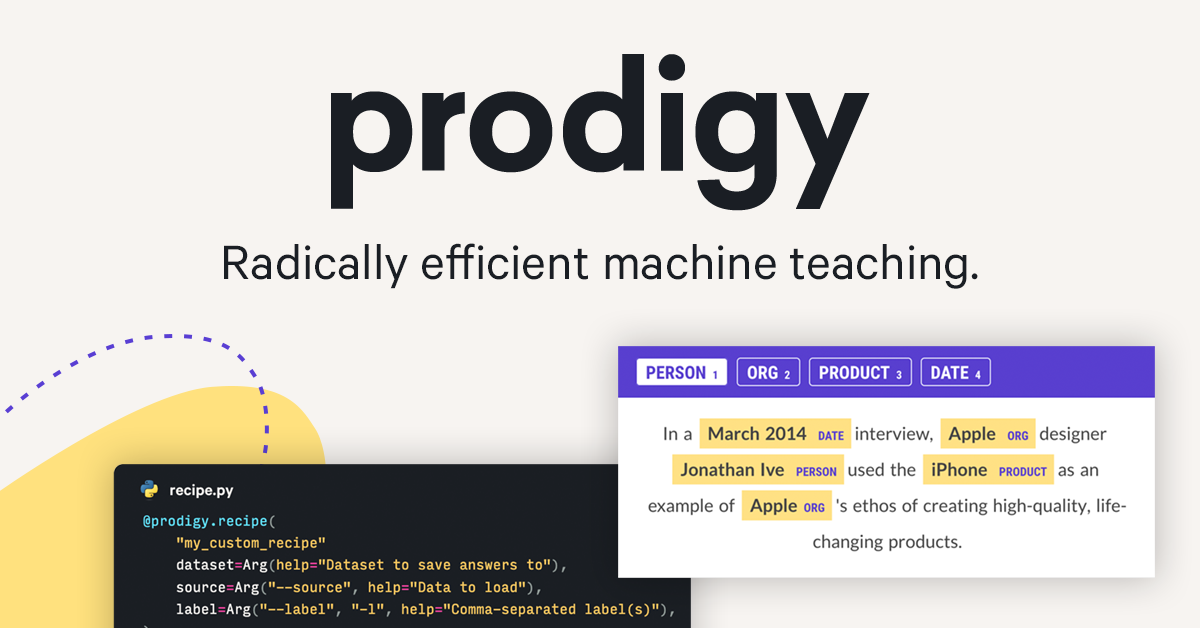
Prodigy
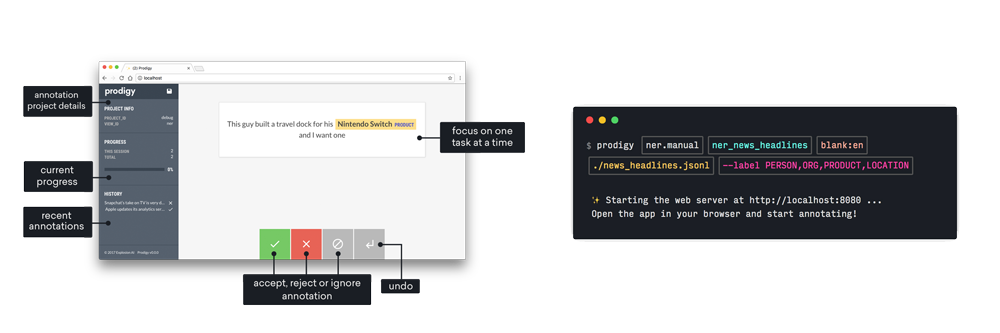
A downloadable annotation tool for LLMs, NLP and computer vision tasks such as named entity recognition, text classification, object detection, image
Prodigy is generally praised for its advanced AI capabilities and user-friendly interface, making it a popular choice among those looking for efficient software solutions. However, detailed insights into user feedback regarding specific strengths or complaints are limited in the available data. Pricing sentiment is not mentioned, so it is unclear how users feel about the cost of the tool. Overall, Prodigy seems to have a positive reputation, particularly in the realm of AI-driven technologies.
Toloka
-50% vs last weekProdigy
Stable week-over-weekToloka
Prodigy
Toloka
Prodigy
Toloka
Prodigy
Toloka (8)
Prodigy (8)
Only in Toloka (8)
Only in Prodigy (10)
Only in Toloka (10)
Only in Prodigy (15)
Toloka
Prodigy
No complaints found
Toloka
Prodigy
No data
Toloka
Prodigy
Toloka
How do you get AI art generators to produce amazing images that look like real art? Take a text-guided diffusion model and feed it the ideal text prompt with the right keywords 😎Take a peek at our fa
How do you get AI art generators to produce amazing images that look like real art? Take a text-guided diffusion model and feed it the ideal text prompt with the right keywords 😎Take a peek at our favorite images, then check out this paper: https://t.co/SBTl2nUnow https://t.co/Mgrw37sxwi
Prodigy
Shared (4)
Only in Prodigy (1)
Prodigy is better suited for medical image classification, as it focuses on local, privacy-driven solutions and supports specific use cases like image classification directly.
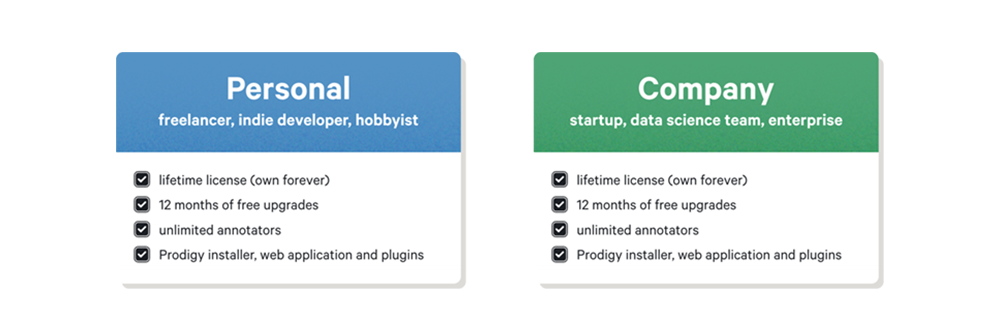
Toloka uses a tiered pricing model, which can scale with usage, whereas Prodigy offers a subscription plus a lifetime license, potentially making it more cost-effective over time.
Toloka is noted for its collaborations with known entities like Hugging Face, suggesting strong community involvement, while detailed community ratings for Prodigy are limited.
Yes, they can complement each other, with Toloka handling large-scale, crowdsourced tasks and Prodigy focusing on specific, privacy-sensitive annotations.
Prodigy's installation process is straightforward for developers familiar with Python libraries, making it potentially easier to start for those users, while Toloka may involve more setup for crowdsourced task management.


