Surge AI and Prodigy are two distinct tools in the AI-labeling and data-collection space, with each excelling in different areas. Surge AI is known for its broad integration capabilities and focus on raising AGI with human-like intelligence, whereas Prodigy is praised for its advanced AI annotation capabilities and user-friendly interface. Surge AI has a larger employee base at approximately 110 and has raised $25.0M in Series A funding.
Best for
Surge AI is the better choice when you need to streamline data labeling and annotation processes with extensive integrations and support for complex AI workloads.
Best for
Prodigy is the better choice when you require a more straightforward annotation tool that runs locally, allowing for complete data privacy and integration with popular AI frameworks.
Key Differences
Verdict
Both Surge AI and Prodigy offer robust features, but they cater to different needs. Surge AI is ideal for teams looking for comprehensive integrations with existing workflows and real-time data collection capabilities. Prodigy suits teams prioritizing data privacy and advanced AI annotation on local machines. Choose based on your organizational priorities regarding data security and tool integrations.
Surge AI
Our mission is to raise AGI with the richness of human intelligence — curious, witty, imaginative, and full of unexpected brilliance.
The user feedback on Surge AI is not directly evident from the social mentions provided. However, it can be inferred that there is a general interest in AI tools like Surge AI, as it appears in discussions involving AI reliability and the ethics behind AI deployment in military contexts. Due to the lack of specific user reviews, key strengths, complaints, and pricing are not identified. Surge AI's reputation seems mixed, likely tied into the larger discourse on AI responsibility and trustworthiness.
Prodigy
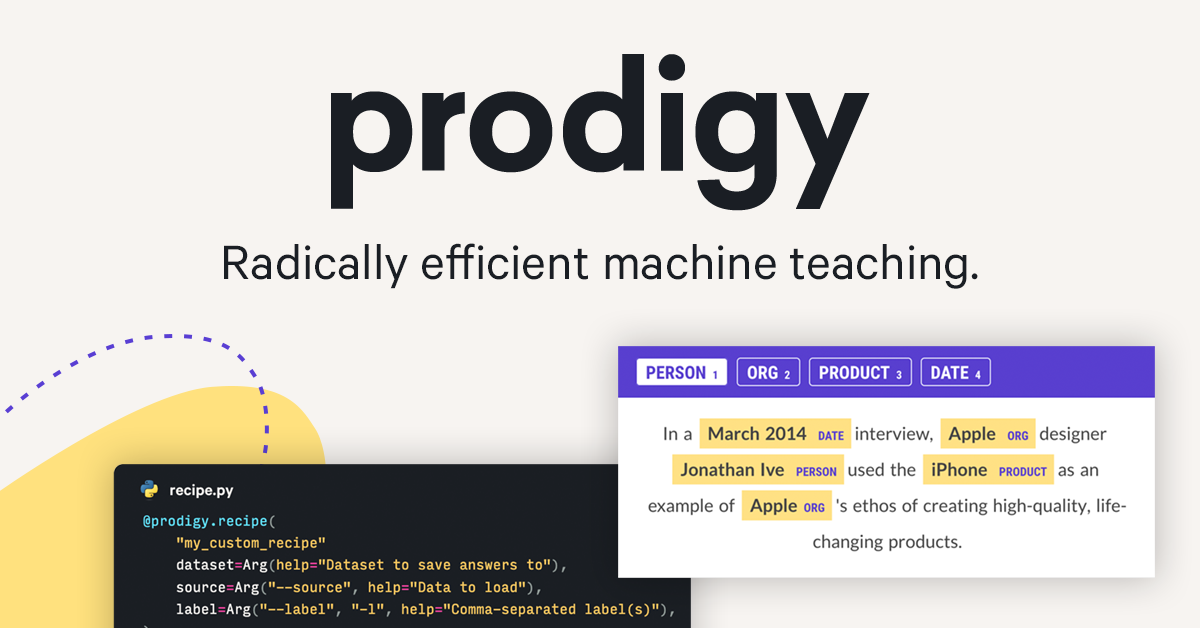
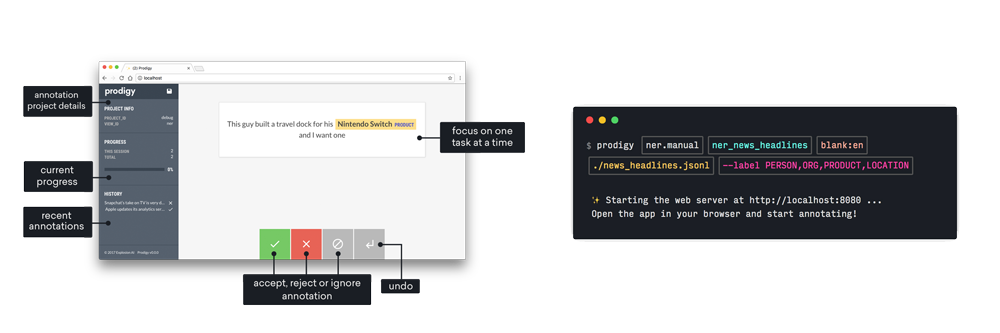
A downloadable annotation tool for LLMs, NLP and computer vision tasks such as named entity recognition, text classification, object detection, image
Prodigy is generally praised for its advanced AI capabilities and user-friendly interface, making it a popular choice among those looking for efficient software solutions. However, detailed insights into user feedback regarding specific strengths or complaints are limited in the available data. Pricing sentiment is not mentioned, so it is unclear how users feel about the cost of the tool. Overall, Prodigy seems to have a positive reputation, particularly in the realm of AI-driven technologies.
Surge AI
Stable week-over-weekProdigy
Stable week-over-weekSurge AI
Prodigy
Surge AI
Prodigy
Surge AI
Prodigy
Surge AI (8)
Prodigy (8)
Only in Surge AI (1)
Only in Prodigy (10)
Shared (4)
Only in Surge AI (11)
Only in Prodigy (11)
Only in Prodigy (5)
Prodigy is better for named entity recognition and sentiment analysis in industries like legal and media, while Surge AI excels in real-time data collection and moderation tasks.
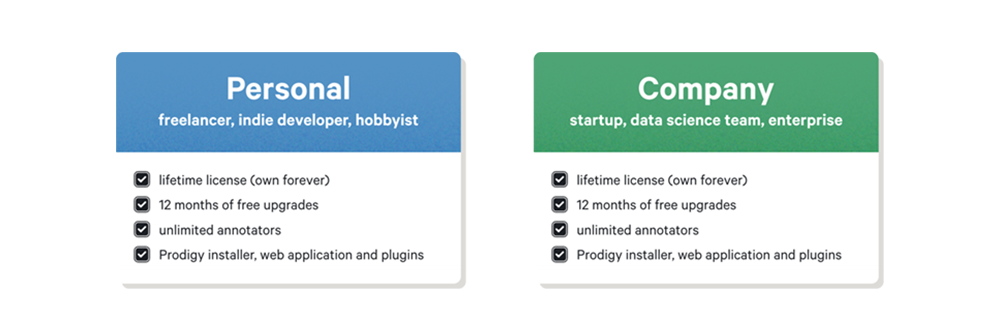
Surge AI offers tiered pricing, which may provide more flexibility for scaling, whereas Prodigy has a subscription model with a lifetime license option, possibly offering long-term cost efficiency.
Community support specifics aren't detailed, but Prodigy’s integration with widely-used AI frameworks like spaCy and PyTorch suggests a robust user base and community involvement.
Yes, they can be used together to leverage Prodigy’s local AI-driven annotations alongside Surge AI's cloud integrations and data curation capabilities.
Prodigy might offer an easier start due to its user-friendly interface and local installation, while Surge AI requires more initial setup with cloud integrations.