Sigma and Observable both excel in data analytics, but they cater to different user needs. Sigma is ideal for organizations needing robust integrations with large-scale cloud data warehouses, while Observable provides a more interactive and flexible environment for users comfortable with JavaScript. With Sigma boasting a $566.3M funding round, it demonstrates a stronger market presence compared to Observable's $46.1M in Series B funding.
Best for
Sigma is the better choice when your team needs to perform extensive data warehouse analytics with direct integrations into platforms like Snowflake and BigQuery, especially for financial reporting and operational efficiency in large enterprises.
Best for
Observable is the better choice when your team values dynamic data visualization and collaboration in real-time, perfect for data science projects and prototyping machine learning models, particularly in smaller, agile teams.
Key Differences
Verdict
For teams requiring in-depth integration with cloud data warehouses and needing to optimize financial or operational reports at scale, Sigma is the clear choice. Observable, on the other hand, should be the go-to tool for teams focusing on rapid data visualization and needing to work collaboratively with a strong emphasis on frontend JavaScript capabilities.
Sigma
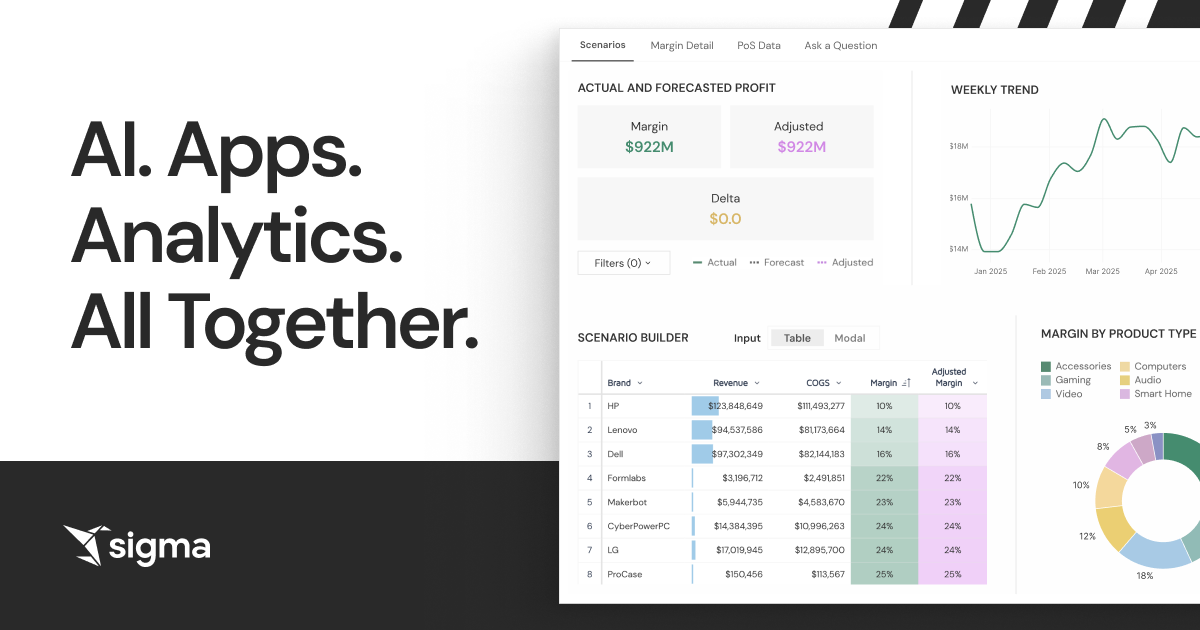
Sigma is the AI analytics workspace for warehouse data. Build governed dashboards, spreadsheets, and workflows with live query, writeback, and collabo
Sigma is praised for its user-friendly interface that allows users to harness the power of cloud data warehouses with spreadsheet-like simplicity. A key strength is its integration with platforms like Snowflake and Databricks, which enhances its data analytics capabilities. Users generally appreciate the new features and continuous improvements, although detailed complaints about pricing are sparse in the data provided. Overall, Sigma enjoys a positive reputation, bolstered by significant funding rounds and strategic partnerships, positioning it as an innovative force in the data analytics space.
Observable
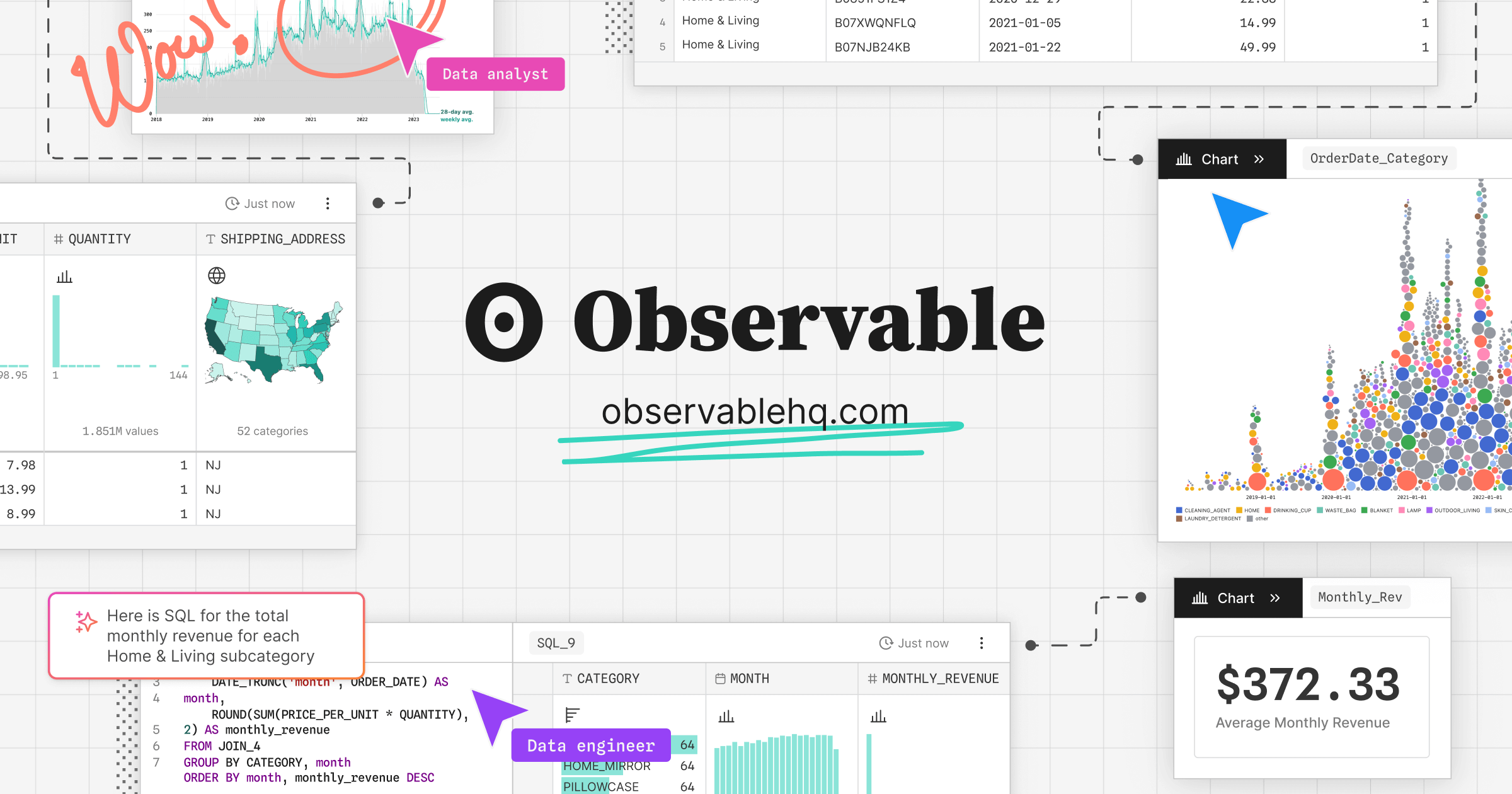
Quickly explore and analyze data, build prototype data visualizations, and collaborate with your team in real-time with live JavaScript notebooks.
Observable has been positively received for its interactive data visualization capabilities, allowing users to easily create and share dynamic visualizations in a collaborative environment. Key complaints primarily revolve around a steep learning curve for new users, especially those unfamiliar with JavaScript. Sentiment regarding pricing is generally neutral, with some users finding value in its offerings but others noting it can be pricey for small projects. Overall, Observable is regarded as a powerful tool within data science communities, particularly valued for its flexibility and collaborative features.
Sigma
Stable week-over-weekObservable
+23% vs last weekSigma
Observable
Sigma
Observable
Sigma
Observable
Pricing found: $22/mo, $10/mo
Sigma (10)
Observable (8)
Only in Sigma (10)
Only in Observable (10)
Shared (3)
Only in Sigma (12)
Only in Observable (12)
Sigma
Observable
Sigma
Observable
Sigma

How Makena Capital Turned Investment Analysts into Data Builders in 1–2 Projects
Apr 10, 2026

Stratum Data Services Cuts Decision Latency from Weeks to Minutes
Apr 7, 2026

Chat Agents in Sigma: From Insight to Action with Sigma Agents | Workflow Session
Apr 3, 2026

AI, Agents, and Apps with Sigma and Databricks
Apr 3, 2026
Sigma

Observable


Sigma
Observable
Sigma
Today, we’re announcing that we’ve raised $200M in Series D funding. Read more about our Series D in @TechCrunch, on how we’re building a data workspace for everyone: https://t.co/oBL3Krirbi And, ch
Today, we’re announcing that we’ve raised $200M in Series D funding. Read more about our Series D in @TechCrunch, on how we’re building a data workspace for everyone: https://t.co/oBL3Krirbi And, check out our press release announcement here: https://t.co/GfWHppbjn4 https://t.co/4UyUsdDY9c
Observable
Shared (3)
Only in Sigma (2)
Only in Observable (1)
Sigma is better suited for real-time analytics in large-scale environments, particularly where integration with cloud data warehouses is required.
Sigma uses a tiered pricing model based on query usage, making it potentially more expensive for heavy users, whereas Observable’s set subscription pricing at $10/mo or $22/mo may be more predictable for smaller scale projects.
Given its larger company size, Sigma benefits from more structured support likely due to its 1500-employee base, whereas Observable, with its smaller team, may rely more on community engagement for support.
Yes, Sigma and Observable can be used in tandem; Sigma for warehouse data analysis and Observable for frontend visualization and collaborative prototyping.
Sigma is more user-friendly for teams familiar with business intelligence dashboards, while Observable could be more challenging initially for those unfamiliar with JavaScript, despite its interactive tools.