Semgrep and OpenHands are both powerful tools with distinct focuses: Semgrep excels in application security with 14,868 GitHub stars, while OpenHands leads in business process automation, boasting 70,510 stars. Both offer strong capabilities in their respective domains but differ significantly in community engagement and complexity of integrations.
Best for
Semgrep is the better choice when your team needs to enhance security practices with AI-supported static analysis and custom rule creation, particularly suited for mid-sized development teams.
Best for
OpenHands is the better choice when you aim to automate business operations and streamline workflows, especially if your team is involved in broader coding process automation and prefers open-source customization.
Key Differences
Verdict
Semgrep is ideal for development teams focusing on application security with a need for robust static analysis and swift integration into existing workflows. OpenHands suits organizations seeking to automate broader workflows with flexibility in cloud deployment. Engineering leaders should assess the primary operational needs of their teams to decide between in-depth security versus extensive process automation.
Semgrep
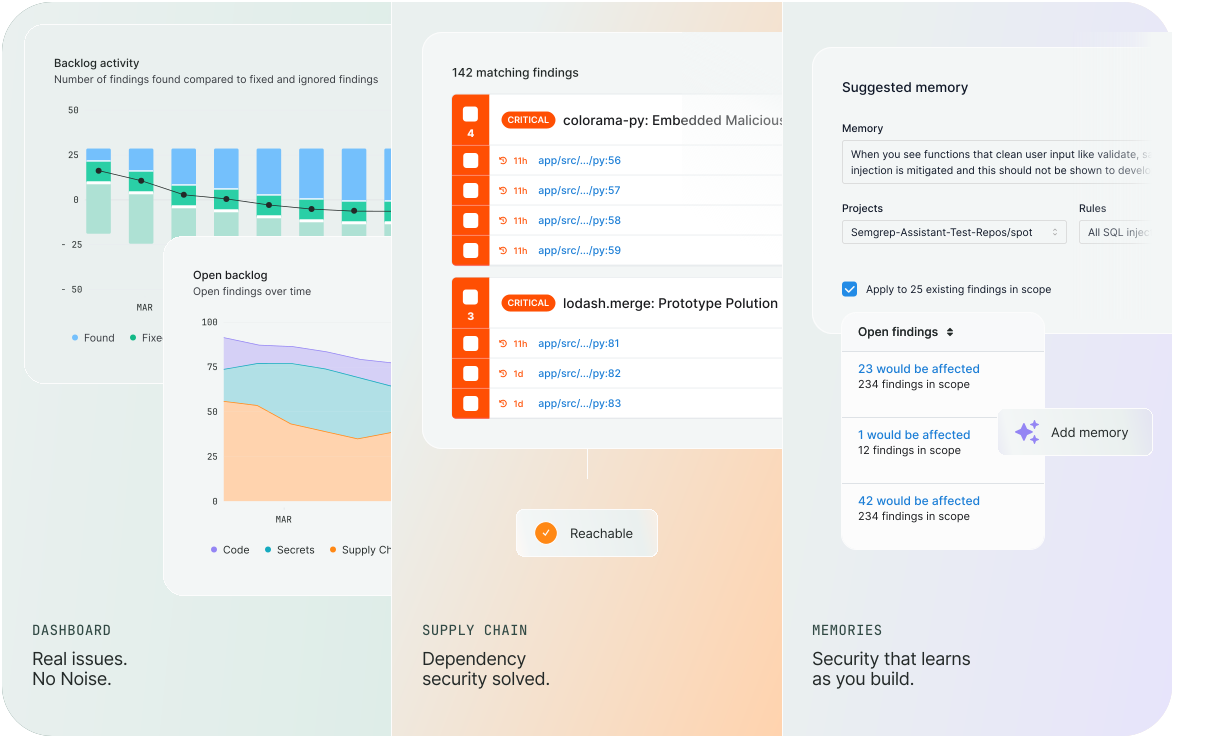
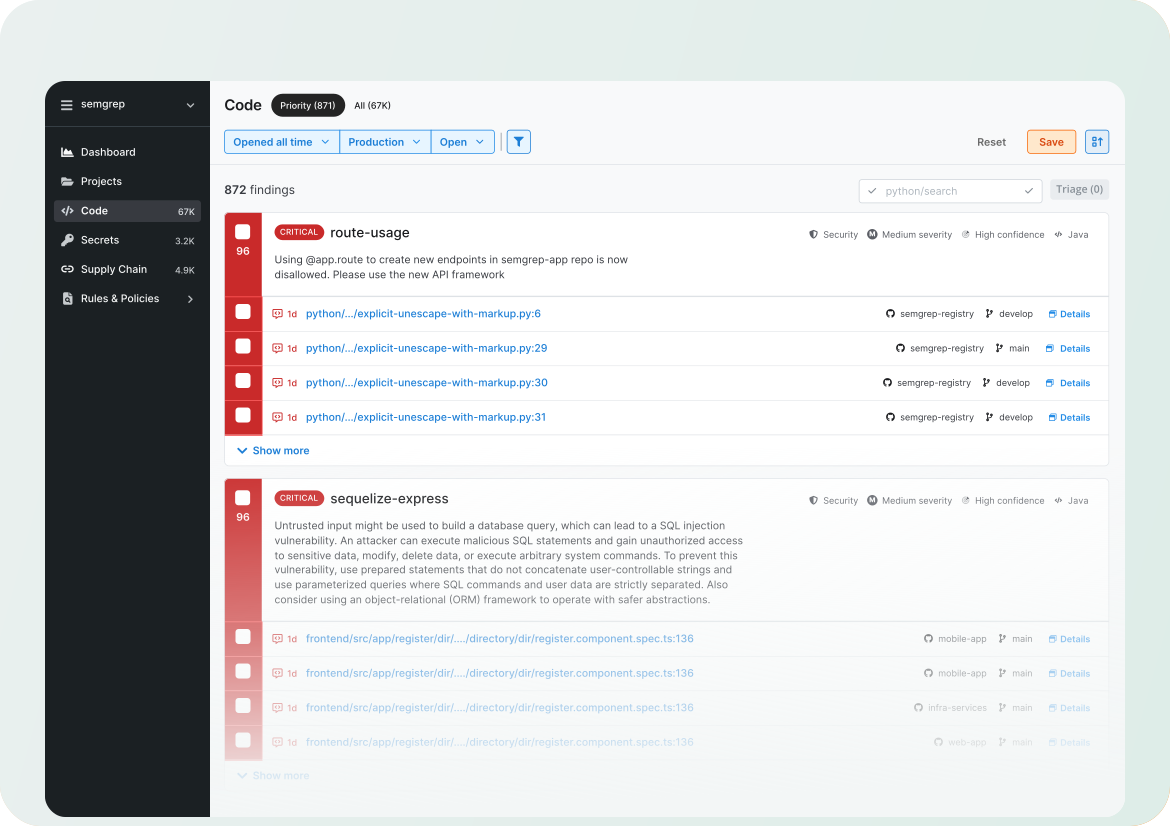
An extensible developer-friendly application security platform that scans source code to surface true and actionable security issues with AI-assisted
Semgrep is highly appreciated for its ability to efficiently detect vulnerabilities and enforce code standards through static analysis, often noted for its ease of integration and use. Users frequently mention its comprehensive rule set and flexibility in creating custom rules tailored to specific needs. However, some express concerns about its performance impacting larger codebases. Sentiment around pricing is generally neutral, with users valuing the cost relative to the functionality offered. Overall, Semgrep enjoys a strong reputation as a reliable and versatile security tool among developers and security professionals.
OpenHands
Meet OpenHands, the open-source, model-agnostic platform for cloud coding agents. Automate real engineering work securely and transparently. Build fas
OpenHands is praised for its user-friendly interface and strong capabilities in managing workflows, particularly for non-developers who need to streamline business operations. However, users have expressed dissatisfaction with occasional bugs and the complexity of setting up integrations from GitHub, which can hinder the overall experience. Pricing sentiment seems mixed, with some users finding it valuable while others complain about pricing surprises coupled with perceived diminished service over time. Overall, OpenHands maintains a good reputation for reliability in business automation but has room to improve in user guidance and support.
Semgrep
-50% vs last weekOpenHands
-28% vs last weekSemgrep
OpenHands
Semgrep
OpenHands
Semgrep
Pricing found: $0/month, $0/month, $30 / month, $30/month, $30/month
OpenHands
Semgrep (5)
OpenHands (8)
Only in Semgrep (10)
Only in OpenHands (9)
Shared (7)
Only in Semgrep (8)
Only in OpenHands (8)
Semgrep
No complaints found
OpenHands
Semgrep
No data
OpenHands
Semgrep

Introducing Semgrep Workflows: a platform for building automated code security pipelines.
Mar 18, 2026

Shift Left Without the Friction: A Developer's Guide to Semgrep Pro
Dec 12, 2025

Streamlining AppSec Triage: What’s New in the Semgrep Dashboard
Dec 10, 2025

Imagine Zero False Positive AppSec
Nov 5, 2025
OpenHands
No YouTube channel
Semgrep
OpenHands
Semgrep
OpenHands
Shared (3)
Only in Semgrep (2)
Only in OpenHands (1)
Semgrep is better for static code analysis due to its comprehensive rule sets and strong IDE integrations.
Semgrep offers tiered pricing with a free tier and starts at $30/month, whereas OpenHands uses a contract and per-seat pricing model, which could vary significantly based on user needs.
OpenHands has better community support as evidenced by its higher GitHub star count of 70,510 compared to Semgrep's 14,868.
Yes, both tools can be used together, especially when a team wants to leverage Semgrep's security capabilities alongside OpenHands' automation features.
Semgrep is generally easier to get started with due to its simpler integration process and focus on security-specific use cases, while OpenHands may require more setup for integration-driven workflows.


