Atomic Agents and Relevance AI both focus on building AI agents but differ in their market positioning and feature sets. Atomic Agents is well-established with 5,827 GitHub stars, providing comprehensive multi-agent workflows, while Relevance AI emphasizes automation in business processes but lacks direct community feedback or comparable metrics.
Best for
Relevance AI is the better choice when your organization requires automated go-to-market strategies and values enterprise-level security features like SOC 2 Type II compliance.
Best for
Atomic Agents is the better choice when your team needs advanced multi-agent capabilities, seamless integration with existing platforms, and access to a diverse set of search functionalities.
Key Differences
Verdict
Choose Atomic Agents if your team prioritizes integration with existing tools and agent-based task automation. On the other hand, Relevance AI is more suited for companies looking to automate sales and customer success pipelines with strong data privacy assurances. Each tool offers unique strengths tailored to different organizational needs.
Relevance AI
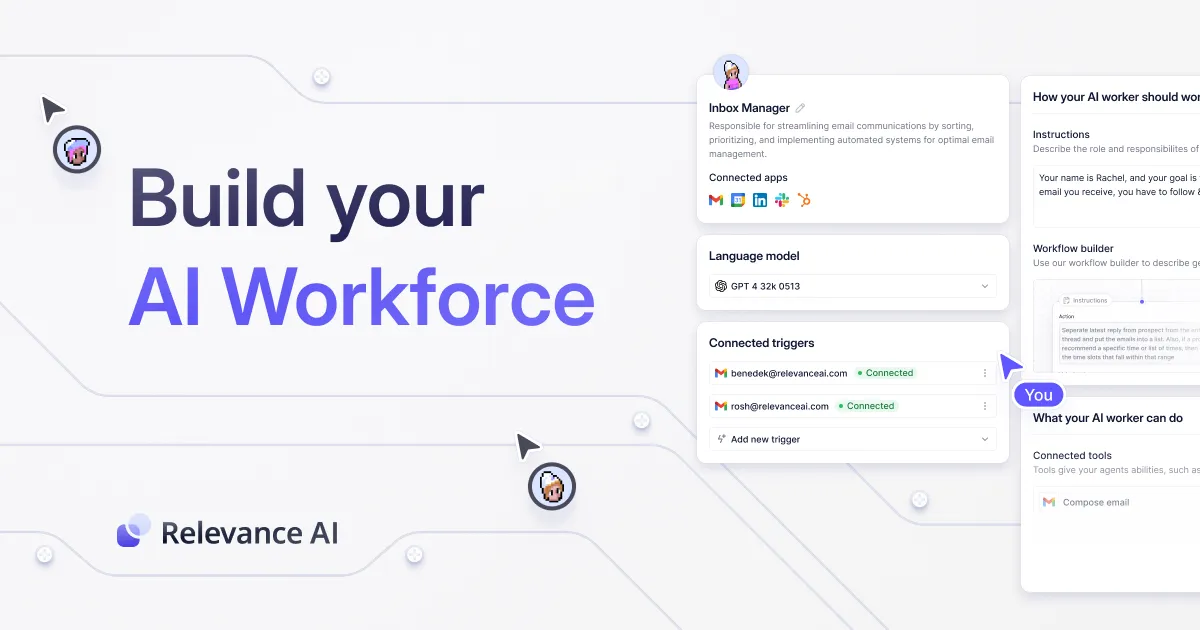
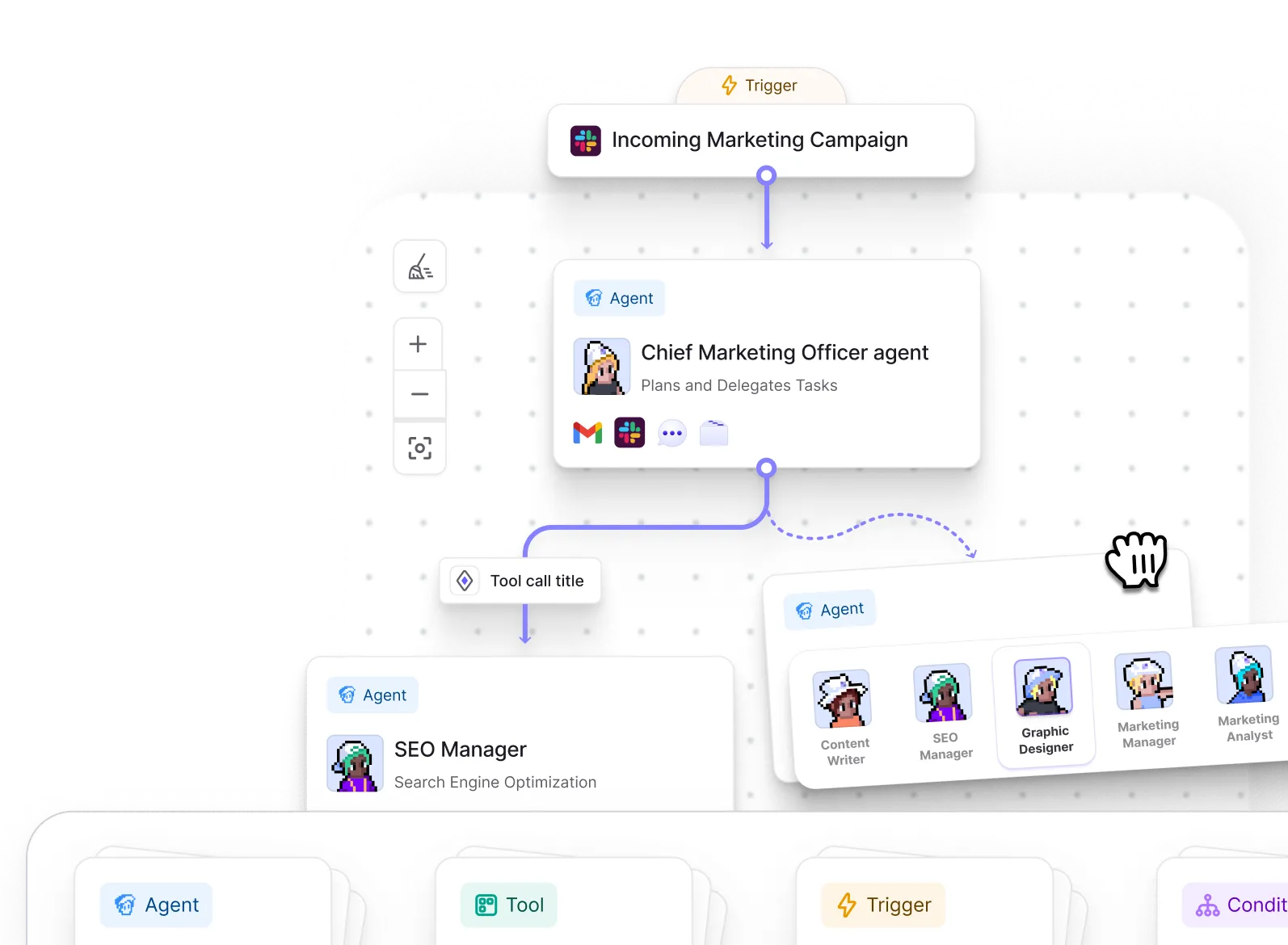
Your domain experts build and manage your agents. Enterprise-grade governance keeps them accountable. The platform for AI agents you can trust.
Relevance AI is appreciated for its innovative approach to AI memory systems and open-source solutions, which allows AI applications to remember contextual information across sessions. However, there isn't much direct feedback on the tool from the provided sources. Pricing sentiment is not explicitly addressed, and as for reputation, it remains relatively low-profile with very few mentions across social platforms. Overall, the product seems to be flying under the radar without substantial positive or negative buzz.
Atomic Agents
Building AI agents, atomically. Contribute to BrainBlend-AI/atomic-agents development by creating an account on GitHub.
"Atomic Agents" has received praise for its advanced agentic workflows, which enhance productivity during complex coding tasks, and its strong multi-step task performance. However, users have expressed concerns over its transition to a usage-based billing model, which may lead to increased costs for frequent users. The pricing change has been met with mixed sentiment, as it could benefit casual users but potentially burden heavy users. Overall, the tool enjoys a solid reputation for boosting coding efficiency and integrating seamlessly with popular development platforms.
Relevance AI
-43% vs last weekAtomic Agents
-82% vs last weekRelevance AI
Atomic Agents
Relevance AI
Atomic Agents
Relevance AI
Pricing found: $2, $240, $840
Atomic Agents
Atomic Agents (6)
Only in Relevance AI (10)
Only in Atomic Agents (10)
Only in Atomic Agents (15)
Relevance AI
Atomic Agents
Relevance AI
Atomic Agents
Relevance AI
Atomic Agents
No YouTube channel
Relevance AI

Atomic Agents

Relevance AI
Atomic Agents
Relevance AI
Atomic Agents
Brazil, Indonesia, Japan, Germany, and India fueled a massive surge in 2025, adding nearly 36 million new developers to GitHub. 🌏 India alone added 5.2 million. 🇮🇳
Brazil, Indonesia, Japan, Germany, and India fueled a massive surge in 2025, adding nearly 36 million new developers to GitHub. 🌏 India alone added 5.2 million. 🇮🇳
Shared (4)
Only in Relevance AI (1)
Only in Atomic Agents (1)
Atomic Agents is better suited for building modular AI applications due to its robust multi-agent framework and diverse integration options.
Atomic Agents uses a tiered pricing model, which may increase costs for heavy users, whereas Relevance AI combines subscription and tiered pricing, with known plans at $2, $240, and $840.
Atomic Agents has better community support indicated by its 5,827 GitHub stars, while Relevance AI lacks such community visibility metrics.
While there is no direct mention of interoperability, both tools could potentially complement each other if used for distinct parts of a workflow given their unique strengths.
Atomic Agents may have a steeper learning curve due to its technical integrations, whereas Relevance AI might offer simpler onboarding with its focus on business automation.


