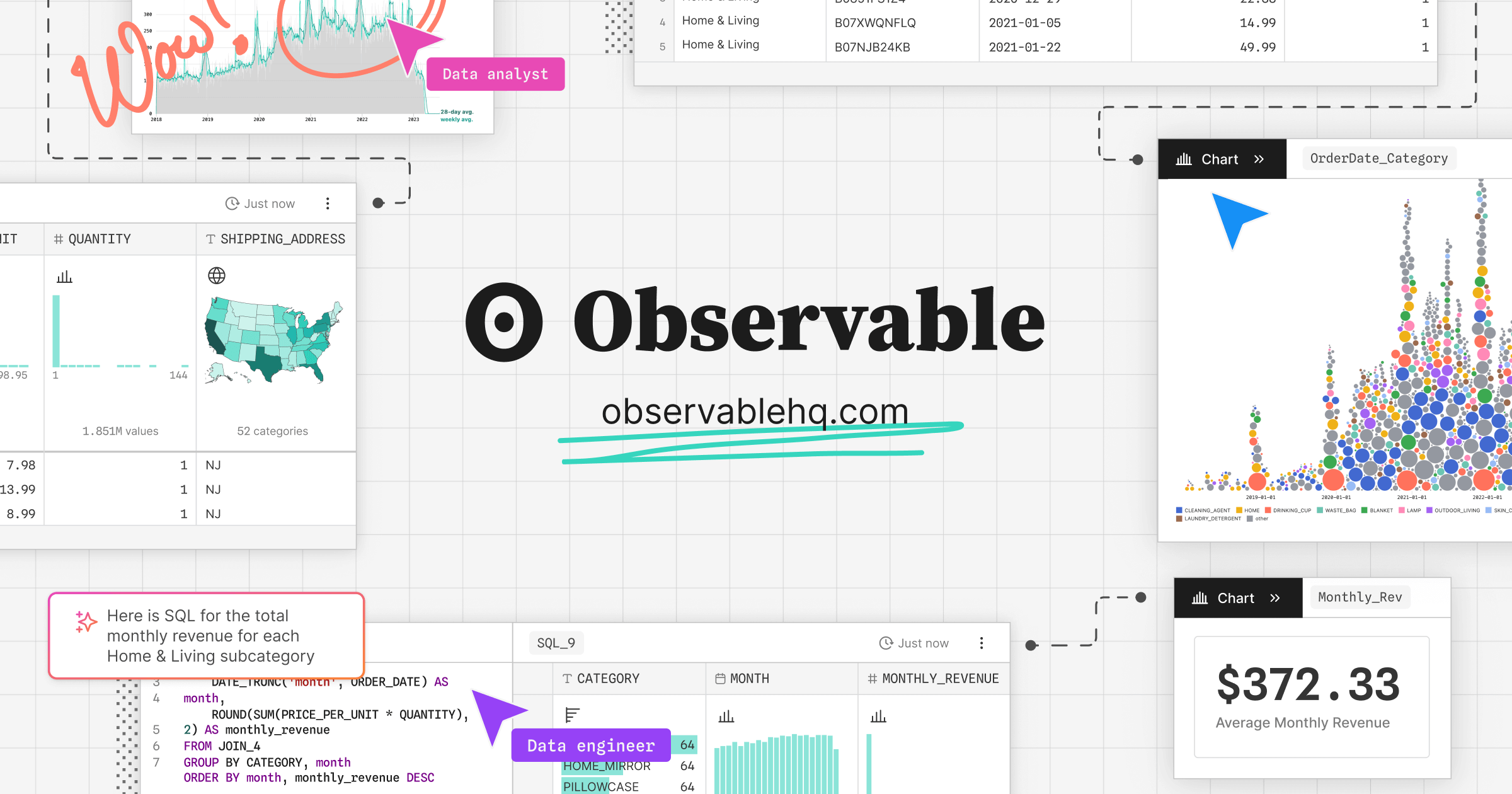
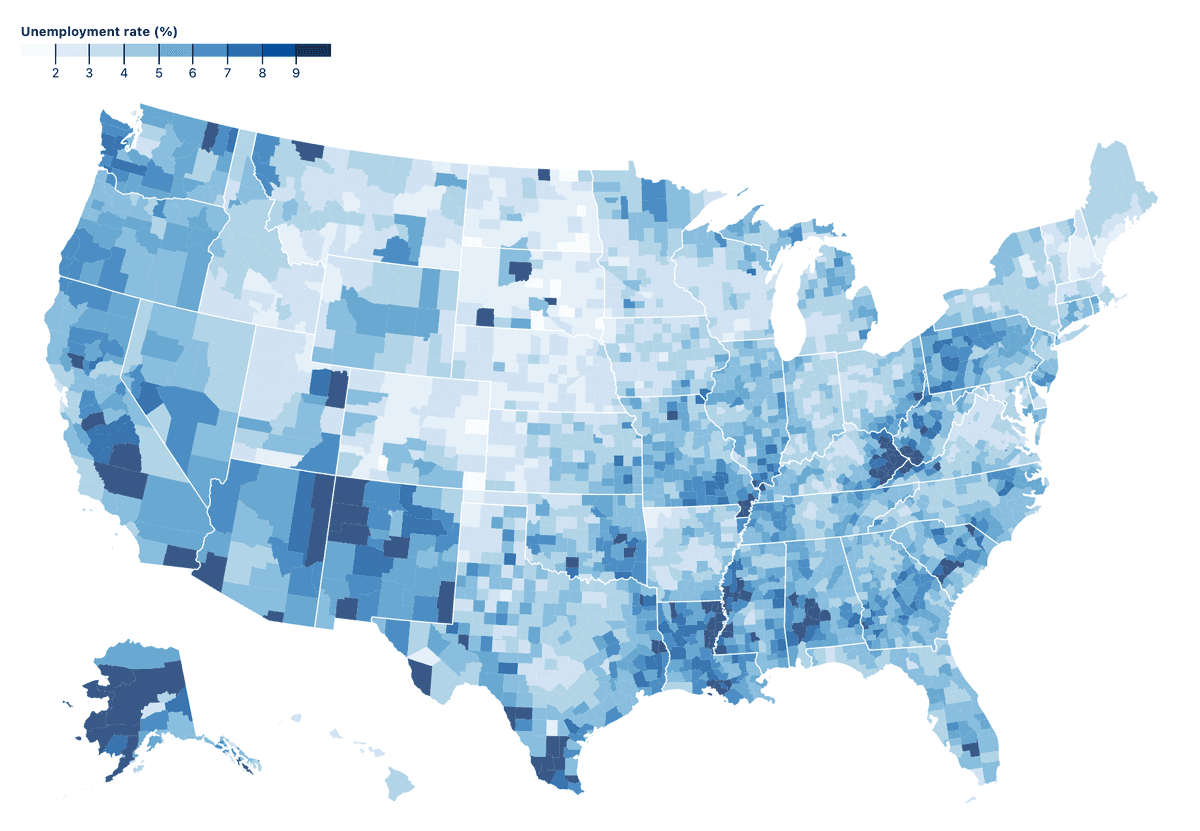
Observable excels in interactive data visualization, offering a collaborative environment with rich integrations like D3.js and Tableau, which is ideal for data science teams. In contrast, DuckDB offers fast and scalable SQL analytics solutions, especially for large datasets, praised for its performance with datasets up to 200GB. Its open-source nature and low setup requirement make it a well-regarded choice in the developer community.
Best for
DuckDB is the better choice when processing large datasets locally without major infrastructure, focusing on performance and cost-efficiency in data exploration and ETL processes.
Best for
Observable is the better choice when your team requires real-time collaboration on data visualizations and leverages JavaScript for interactive dashboards and educational applications.
Key Differences
Verdict
Engineering leaders should choose Observable if their primary focus is interactive data visualization and collaboration among team members. On the other hand, teams focusing on high-speed data processing and cost-effectiveness would benefit more from DuckDB's capabilities. The decision should align with the specific needs of handling data visualization versus data processing speed and scale.
DuckDB
DuckDB is an in-process SQL OLAP database management system. Simple, feature-rich, fast & open source.
Users appreciate DuckDB for its speed and efficiency, especially in handling large datasets like querying 200GB CSV files in under a second. Its ability to explore and query data locally without extensive setup is highlighted as a strength. Key complaints are minimal but may relate to initial setup complexities as suggested by discourse around boilerplate code in related projects. The overall sentiment is positive, and users perceive DuckDB as a cost-effective, high-performance solution, especially favorable for local data processing without significant infrastructure demands.
Observable
Quickly explore and analyze data, build prototype data visualizations, and collaborate with your team in real-time with live JavaScript notebooks.
Observable has been positively received for its interactive data visualization capabilities, allowing users to easily create and share dynamic visualizations in a collaborative environment. Key complaints primarily revolve around a steep learning curve for new users, especially those unfamiliar with JavaScript. Sentiment regarding pricing is generally neutral, with some users finding value in its offerings but others noting it can be pricey for small projects. Overall, Observable is regarded as a powerful tool within data science communities, particularly valued for its flexibility and collaborative features.
DuckDB
-50% vs last weekObservable
+23% vs last weekDuckDB
Observable
DuckDB
Observable
DuckDB
Observable
Pricing found: $22/mo, $10/mo
DuckDB (8)
Observable (8)
Only in DuckDB (6)
Only in Observable (10)
Shared (2)
Only in DuckDB (6)
Only in Observable (13)
DuckDB
Observable
DuckDB
Observable
DuckDB

Observable


DuckDB
Observable
Shared (2)
Only in Observable (2)
DuckDB is better suited for large-scale data processing, especially where SQL performance on large datasets is crucial.
Observable's pricing is subscription-based starting at $10/month, whereas DuckDB, being open source, incurs no licensing costs.
Community support for DuckDB may be more robust due to its open-source nature, inviting contributions and widespread community discourse.
Yes, both tools can be integrated, particularly with DuckDB's support for data processing and exporting insights for visualization in Observable.
For users familiar with SQL, DuckDB may be easier to start with due to its simplicity, while Observable may require familiarity with JavaScript to leverage its full capabilities.