Deepnote and Observable are significant players in the collaborative data science and visualization space, each offering unique benefits. Deepnote excels in ease of use, particularly praised for its user-friendly interface and competitive pricing with various subscription tiers, while Observable stands out with its interactive data visualization capabilities despite a steeper learning curve for JavaScript newcomers. Observable's unique advantage lies in its flexibility to connect with various data sources and create dynamic visualizations quickly.
Best for
Deepnote is the better choice when seamless collaborative features and affordability for teams focusing on Python and SQL are crucial.
Best for
Observable is the better choice when real-time interactive data visualization and working with JavaScript are top priorities for the team.
Key Differences
Verdict
Deepnote is ideal for teams that prioritize ease of use, affordability, and strong integration with Python and SQL for collaborative data projects, especially in education and research. Observable, on the other hand, is recommended for teams that value interactive visualizations, have a JavaScript proficiency, and need to develop quickly adaptable visual dashboards. Both platforms excel in collaboration but cater to slightly different use cases and expertise levels.
Deepnote
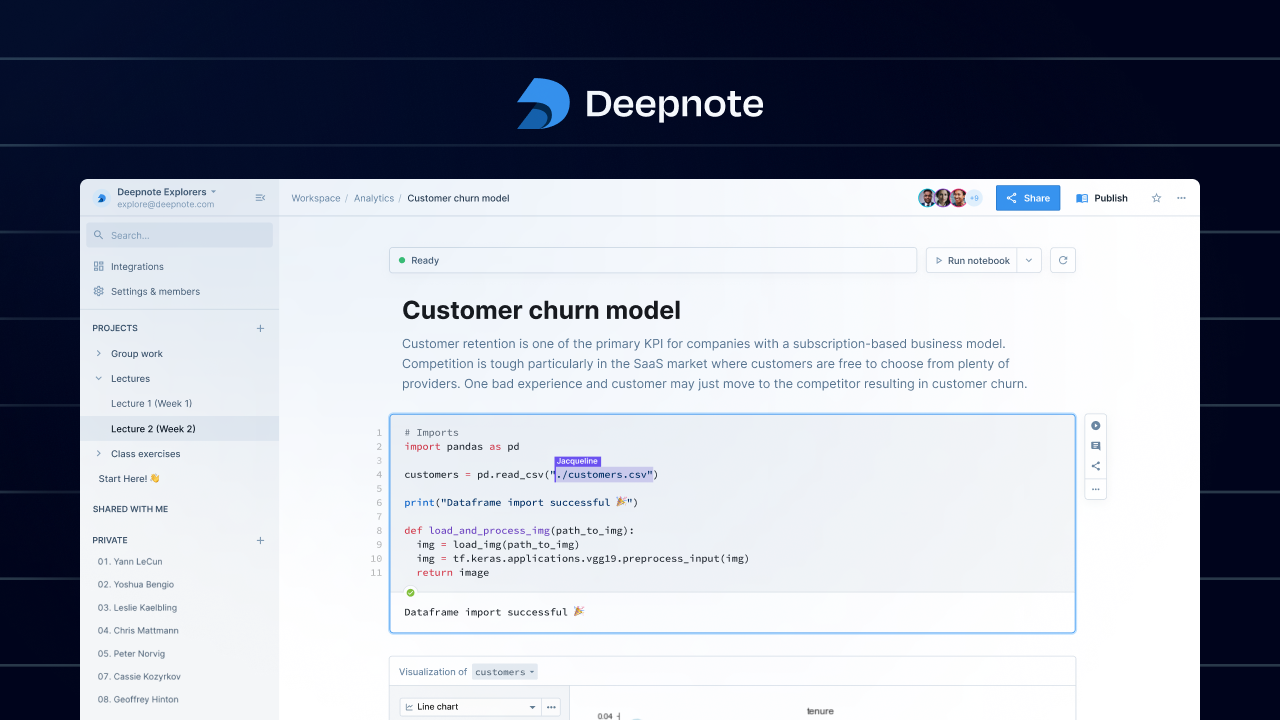
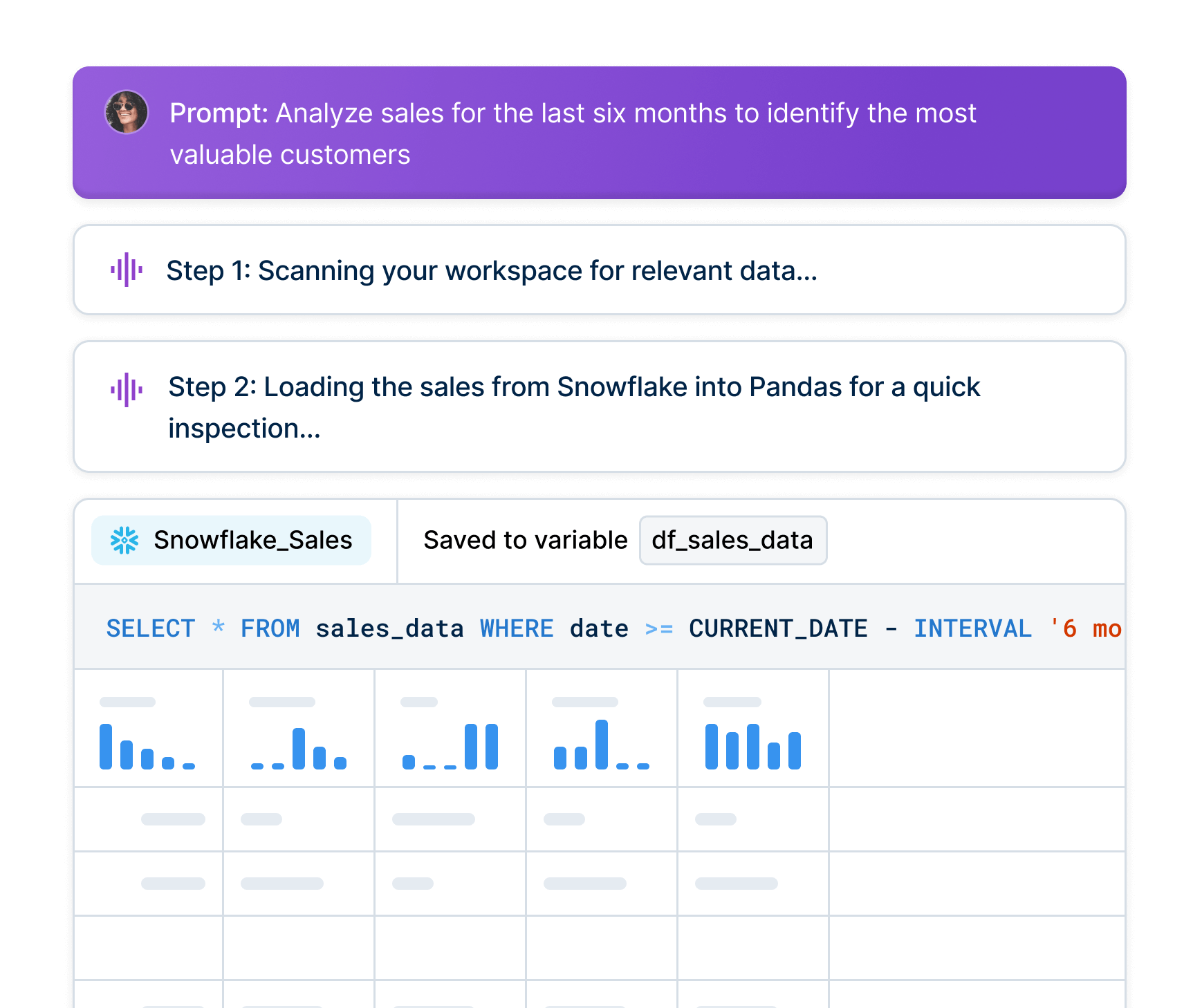
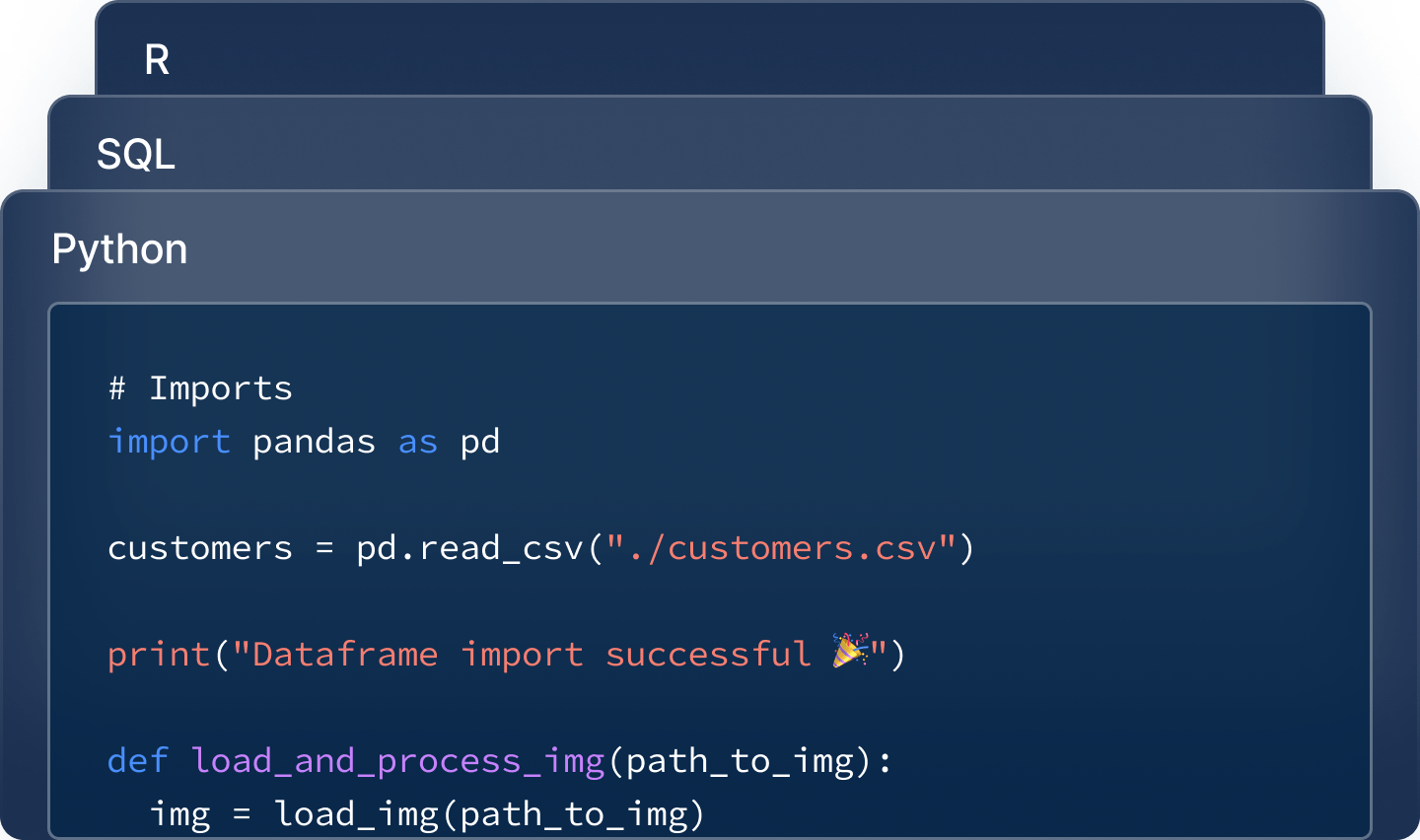
Explore data with Python & SQL, work together with your team, and share insights that lead to action — all in one place with Deepnote.
Deepnote is praised for its collaborative features and intuitive interface, making it especially valued in educational and team-based research settings. Users appreciate its smooth integration with existing data science tools, enhancing productivity and workflow. However, some mention that the platform can be limited in handling very large datasets. Overall, Deepnote is well-regarded with positive sentiments towards its pricing, considered fair and competitive in the market.
Observable
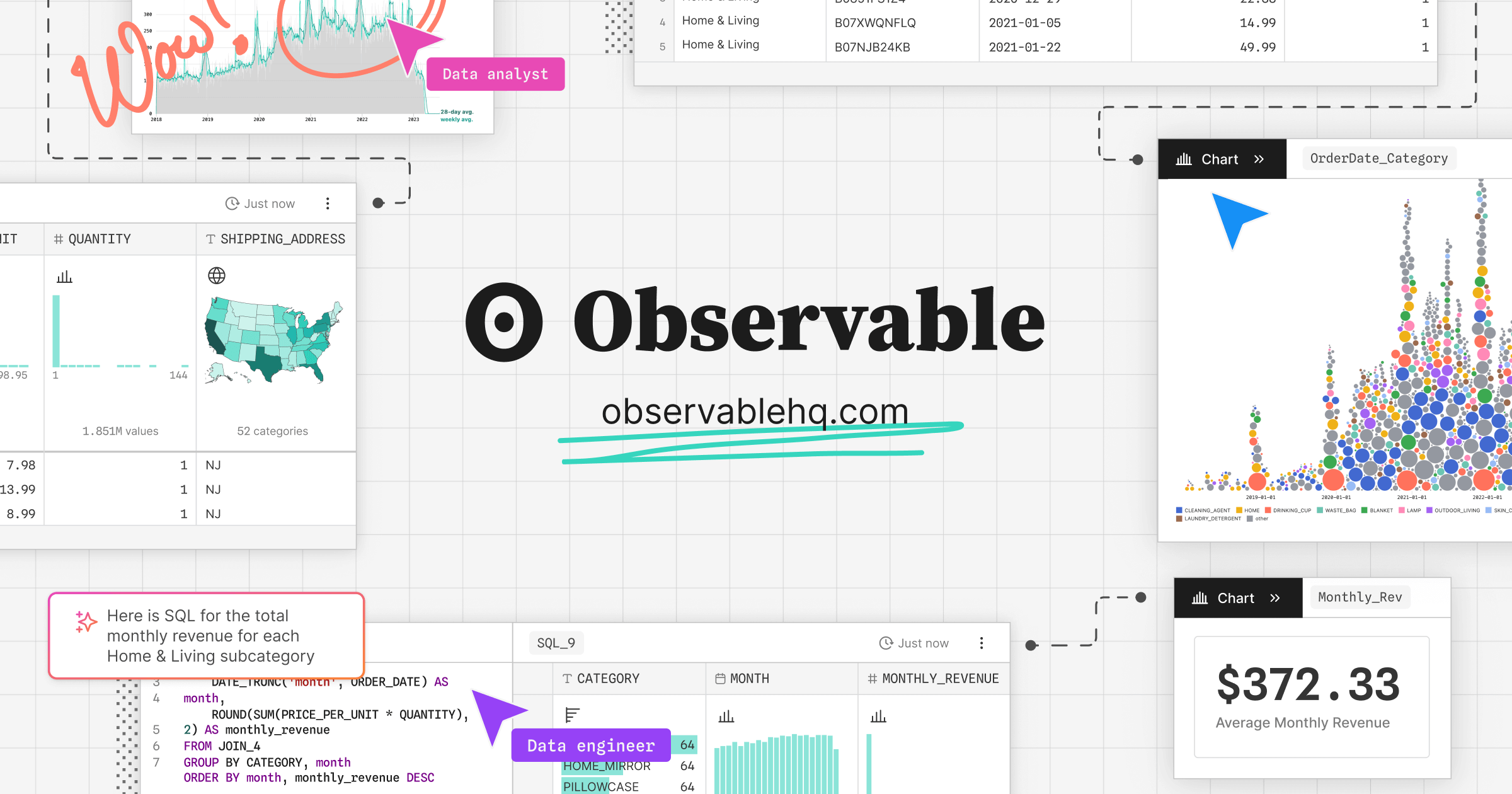
Quickly explore and analyze data, build prototype data visualizations, and collaborate with your team in real-time with live JavaScript notebooks.
Observable has been positively received for its interactive data visualization capabilities, allowing users to easily create and share dynamic visualizations in a collaborative environment. Key complaints primarily revolve around a steep learning curve for new users, especially those unfamiliar with JavaScript. Sentiment regarding pricing is generally neutral, with some users finding value in its offerings but others noting it can be pricey for small projects. Overall, Observable is regarded as a powerful tool within data science communities, particularly valued for its flexibility and collaborative features.
Deepnote
Not enough dataObservable
+23% vs last weekDeepnote
Observable
Deepnote
Observable
Deepnote
Pricing found: $39, $39, $280, $50, $112/month
Observable
Pricing found: $22/mo, $10/mo
Deepnote (1)
Observable (8)
Only in Deepnote (10)
Only in Observable (10)
Shared (3)
Only in Deepnote (5)
Only in Observable (12)
Deepnote
No complaints found
Observable
Deepnote
No data
Observable
Deepnote
Deepnote

Observable



Shared (3)
Only in Deepnote (2)
Only in Observable (1)
Deepnote is better suited for educational purposes due to its intuitive interface and strong collaboration tools, making it ideal for classrooms and research teams.
Deepnote offers a freemium tier with paid plans from $39/month, considered competitive for its feature set, while Observable starts at $10/month, which may become costly with premium features.
Observable might have an edge in community support due to its longer presence in the market and larger Series B funding, suggesting a potentially broader community engagement.
Yes, they can be used together, particularly in workflows where data analysis from Deepnote is visualized in Observable for enhanced dynamic presentation.
Deepnote is generally easier to get started with due to its user-friendly interface and lower technical barrier for those familiar with Python and SQL, unlike Observable which requires familiarity with JavaScript.