Cosine excels in optimizing AI models and offers advanced features for complex coding tasks, supported by integrations with major platforms like GitHub and Slack. On the other hand, Pieces is appreciated for its intuitive design and cost-effective use, particularly in automating repetitive tasks and improving daily productivity, although it suffers from occasional glitches.
Best for
Cosine is the better choice when your team requires high-efficiency agent collaboration and precision in AI-driven tasks, benefiting from a focus on token consumption and retrieval processes.
Best for
Pieces is the better choice when your team needs an intuitive, productivity-enhancing tool that seamlessly integrates with multiple environments and offers personalized coding assistance.
Key Differences
Verdict
Choose Cosine if your primary goal is to enhance AI efficiency with complex coding tasks, requiring high precision and agent collaboration. Opt for Pieces if you seek an intuitive, reasonably priced solution that enhances daily developer tasks with solid productivity features but are tolerant to minor stability issues. Both tools offer unique advantages depending on your company's specific needs for integrations and task automation.
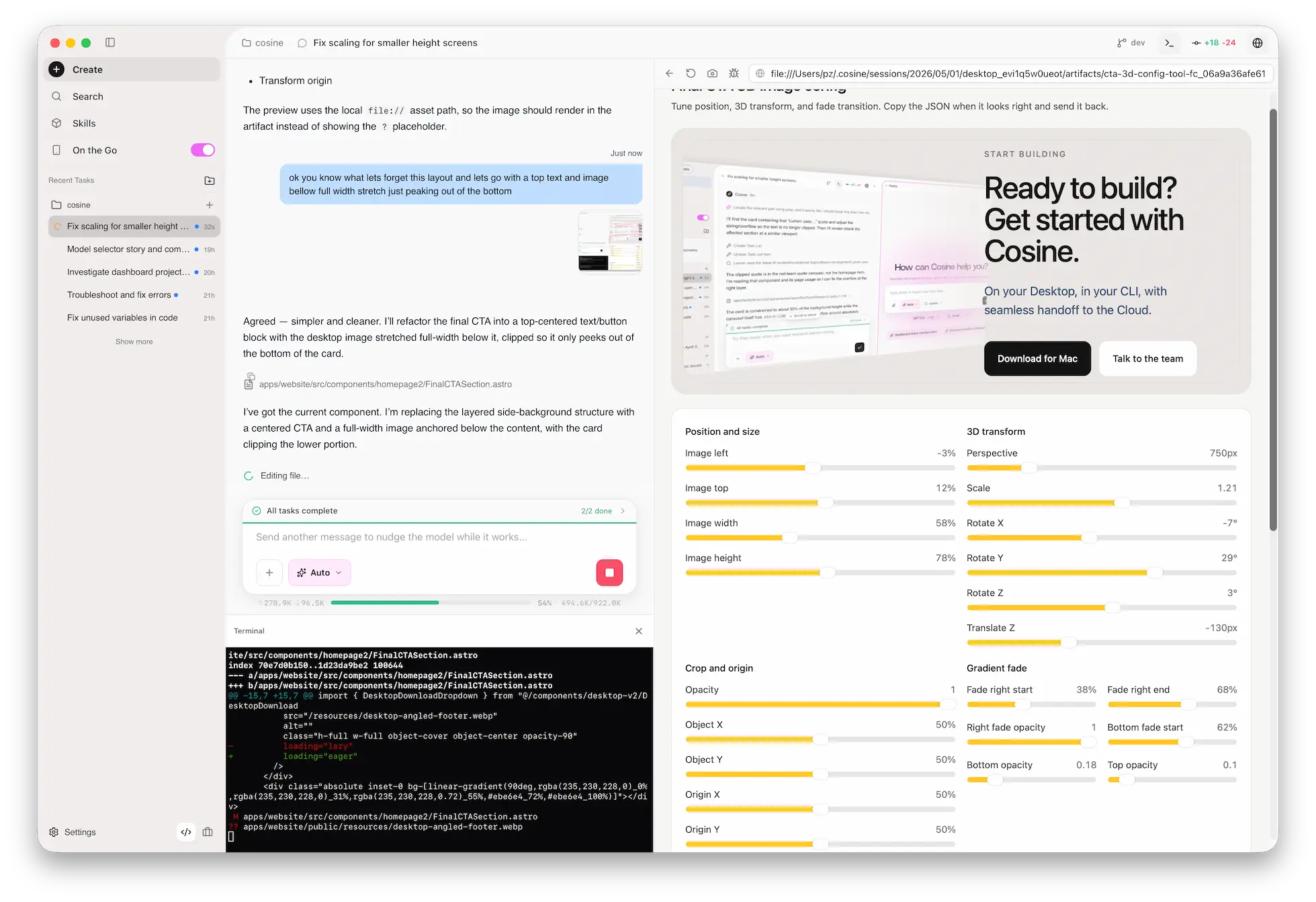
Cosine
Hand off complex coding tasks without sacrificing maintainability or visibility.
"Cosine" is recognized for enhancing AI agent efficiency, notably by reducing token consumption when deploying cosine similarity in the retrieval layer. Users find this aspect particularly beneficial for streamlining processes involving extensive document retrieval. However, there are no specific user complaints or detailed mention of pricing in the available discussions. Overall, "Cosine" appears to have a solid reputation as a useful tool for optimizing AI models, especially within contexts that demand high precision and resource management.
Pieces
Pieces is your AI companion that captures live context from browsers to IDEs and collaboration tools, manages snippets and supports multiple llms - al
Pieces is praised for its intuitive design and efficient workflow organization, which many users find significantly boosts productivity. However, some users express concerns about occasional glitches and the lack of extensive customization options. The pricing tends to be viewed positively, seen as reasonable for the features offered. Overall, Pieces holds a solid reputation for its utility in enhancing daily tasks, yet there is room for improvement in stability and personalizability.
Cosine
Stable week-over-weekPieces
-72% vs last weekCosine
Pieces
Cosine
Pieces
Cosine
Pricing found: $20, $20, $200, $200, $20
Pieces
Both tools (2)
Cosine (4)
Pieces (6)
Only in Cosine (7)
Only in Pieces (4)
Shared (12)
Only in Cosine (3)
Only in Pieces (3)
Cosine
No complaints found
Pieces
Cosine
No data
Pieces
Cosine
No YouTube channel
Cosine


Pieces

Cosine
Pieces
Cosine
Pieces
Show HN: I turned a sketch into a 3D-print pegboard for my kid with an AI agent
We have pegboards and plywood all over our apartment, and I had an idea to make a tiny pegboard for my kid, Oli. So I naturally cut the wood, drilled in the holes, sat down at the computer to open Fusion 360 and spend an hour or two drawing the pieces by hand.<p>Then I looked at the rough sketch Oli
Shared (2)
Only in Cosine (1)
Only in Pieces (2)
Cosine is better if you need high precision and agent collaboration in code reviews, while Pieces offers more intuitive features for improving productivity during code reviews.
Cosine uses a subscription and per-seat tiered model with prices around $20-$200 per seat, whereas Pieces follows a tiered pricing approach, generally viewed as more cost-effective by users.
Both tools have active discussions focusing on similar topics; however, Pieces has broader community support given its larger funding and employee count, allowing more rapid response to community needs.
Yes, they can be used together, especially as they both integrate with platforms like GitHub, Slack, and CircleCI, enhancing project management and coding efficiency.
Pieces generally offers a more intuitive start with its user-friendly design and focus on improving daily productivity, while Cosine requires a deeper focus on resource optimization.


