Zerox
OCR & Document Extraction using vision models. Contribute to getomni-ai/zerox development by creating an account on GitHub.
A dead simple way of OCR-ing a document for AI ingestion. Documents are meant to be a visual representation after all. With weird layouts, tables, charts, etc. The vision models just make sense! Zerox is available as both a Node and Python package. (Node.js SDK - supports vision models from different providers like OpenAI, Azure OpenAI, Anthropic, AWS Bedrock, Google Gemini, etc.) The maintainFormat option tries to return the markdown in a consistent format by passing the output of a prior page in as additional context for the next page. This requires the requests to run synchronously, so it's a lot slower. But valuable if your documents have a lot of tabular data, or frequently have tables that cross pages. Zerox supports structured data extraction from documents using a schema. This allows you to pull specific information from documents in a structured format instead of getting the full markdown conversion. Use extractPerPage to extract data per page instead of from the whole document at once. Zerox supports a wide range of models across different providers: (Python SDK - supports vision models from different providers like OpenAI, Azure OpenAI, Anthropic, AWS Bedrock, etc.) The pyzerox.zerox function is an asynchronous API that performs OCR (Optical Character Recognition) to markdown using vision models. It processes PDF files and converts them into markdown format. Make sure to set up the environment variables for the model and the model provider before using this API. Refer to the LiteLLM Documentation for setting up the environment and passing the correct model name. Note the output is manually wrapped for this documentation for better readability. This project is licensed under the MIT License. OCR Document Extraction using vision models There was an error while loading. Please reload this page. There was an error while loading. Please reload this page. There was an error while loading. Please reload this page. There was an error while loading. Please reload this page.
Contextual AI
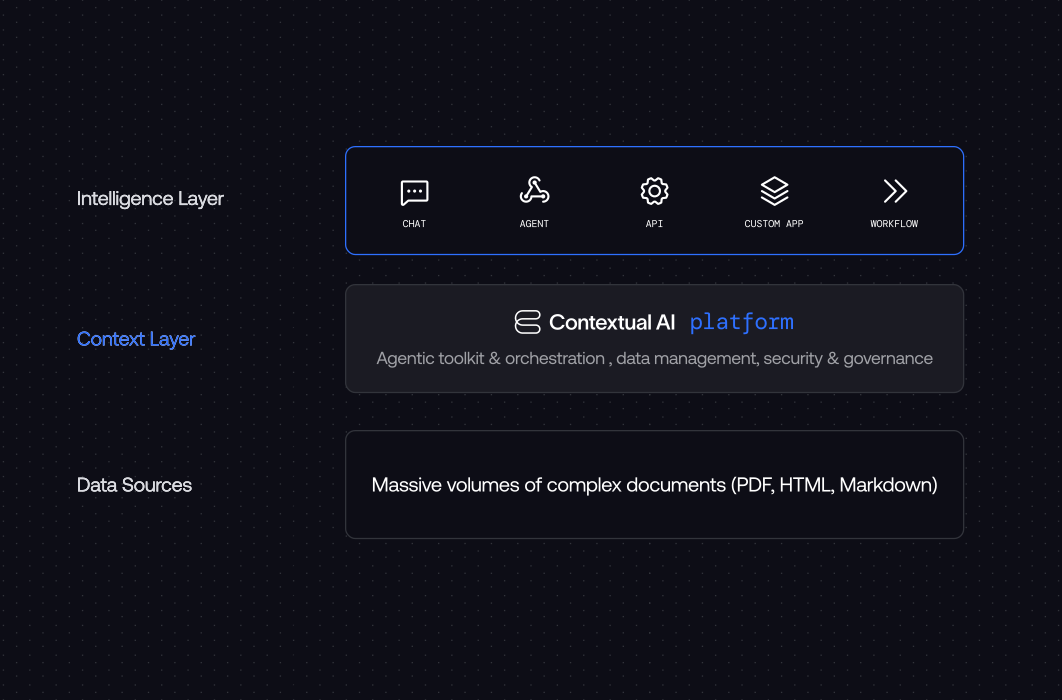
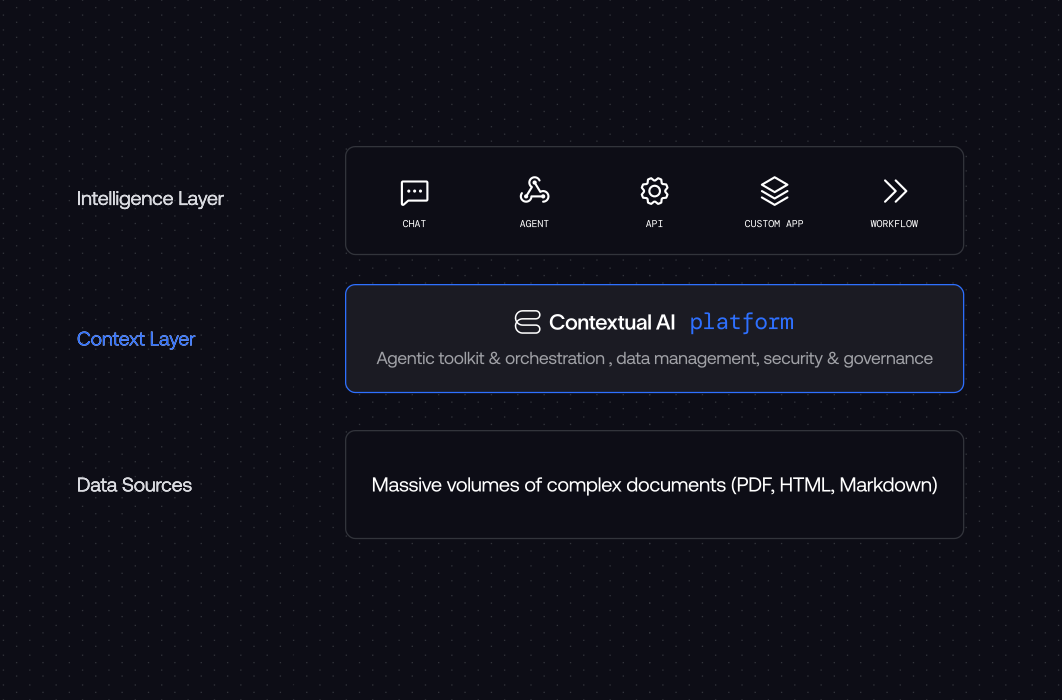
Replace DIY complexity with the context engineering platform built for accuracy. Ship production-grade AI that is secure, scalable, and specialized.
Based on the available social mentions, users appear to view Contextual AI tools (particularly Claude) as highly effective for development and automation tasks. **Strengths include strong contextual understanding, versatility across different use cases (from quick fixes to complex architecture decisions), and the ability to maintain coherence across extended conversations.** Users praise features like parallel session management, voice-to-text switching, and autonomous task handling for professional workflows like LinkedIn management. **Key complaints center around inconsistent behavior and concerns about "fake AI" posts potentially misrepresenting capabilities.** **No clear pricing sentiment emerges from these mentions, but the overall reputation appears positive among technical users who appreciate the sophisticated contextual reasoning and practical applications.**
Zerox
Contextual AI
Zerox
Pricing found: $50.10, $48.71, $48.71, $48.71, $9.74
Contextual AI
Pricing found: $25, $3 / 1, $40 / 1, $0.05, $0.02
Contextual AI (6)
Only in Zerox (10)
Only in Contextual AI (10)
Zerox

Contextual AI


Zerox
Contextual AI


