
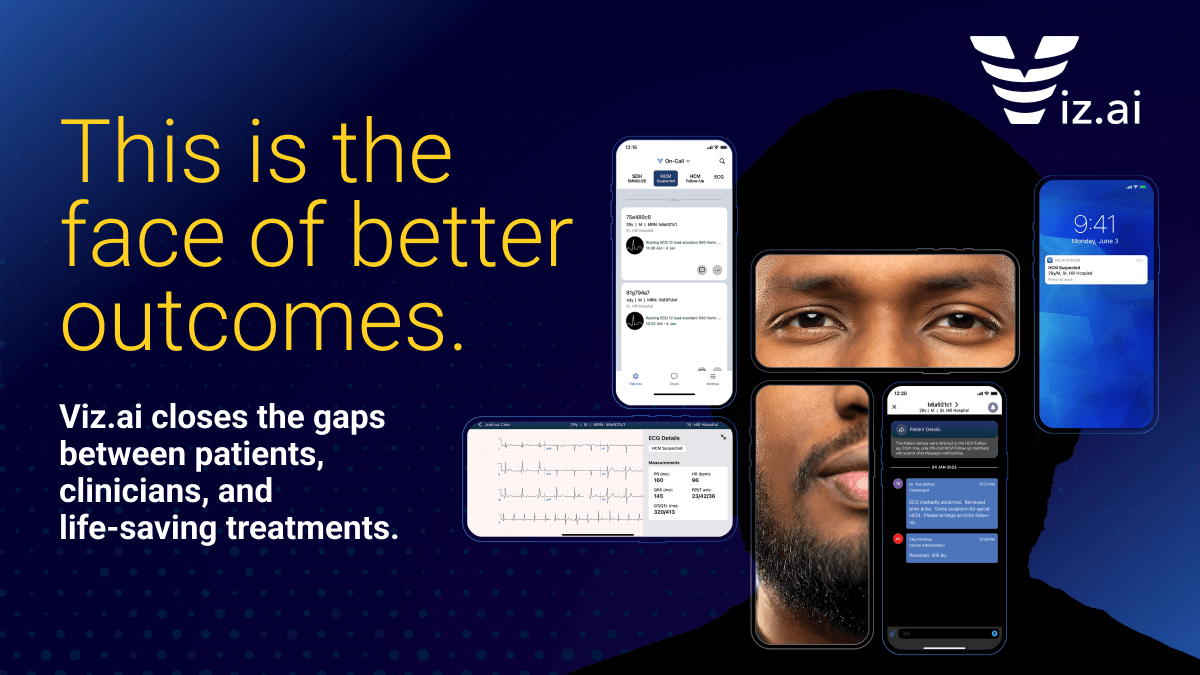
Viz.ai closes the gaps between patients, clinicians, and life-saving treatments with its leading-edge AI-powered care coordination solution.
The main strength of Viz.ai is its advanced AI capabilities which are highly regarded in the medical field, particularly for enhancing diagnostic accuracy and speed. Users appreciate its seamless integration into existing workflows, which improves clinical outcomes. However, there are complaints about the initial learning curve and setup complexity. Pricing sentiment is generally neutral, with some users noting it as an investment worth its value due to the potential for improved patient care. Overall, Viz.ai has a strong reputation for transforming healthcare processes through innovative AI solutions.
Mentions (30d)
0
Reviews
0
Platforms
2
Sentiment
0%
0 positive


The main strength of Viz.ai is its advanced AI capabilities which are highly regarded in the medical field, particularly for enhancing diagnostic accuracy and speed. Users appreciate its seamless integration into existing workflows, which improves clinical outcomes. However, there are complaints about the initial learning curve and setup complexity. Pricing sentiment is generally neutral, with some users noting it as an investment worth its value due to the potential for improved patient care. Overall, Viz.ai has a strong reputation for transforming healthcare processes through innovative AI solutions.
Features
Use Cases
Industry
hospital & health care
Employees
320
Funding Stage
Venture (Round not Specified)
Total Funding
$291.5M
How I achieved 3.7x less memory usage than Cursor by ripping out Electron
https://preview.redd.it/m9dr0yr2snbh1.png?width=1080&format=png&auto=webp&s=83d9ed88235f8ec7186ee5df1885768ed73cab60 Hey everyone, My background is in high-performance systems architecture and low-level optimization, and recently, the memory bloat in modern AI editors has been driving me crazy (WE OBVIOUSLY CAN DO BETTER, WHY ARENT WE???) So, I decided to build something significantly leaner and minimal. I built Axiom which uses up to 3.7x less memory than Cursor and 33% less than VSCode. To hit this benchmark, I took VSCode OSS and stripped Electron out completely. Instead of relying on the bundled Chromium instance, I made the editor run inside LaVista (https://github.com/IASoft-PVT-LTD/LaVista). This allowed me to drop the footprint of three idle windows down to just 759 MB, compared to the 2,802 MB you'd see in Cursor. What I added on top: AxiomAI: A Bring Your Own Key (BYOK) setup with a local autocomplete and local router system. Token Management: Built-in tracking to monitor, analyze, and set hard limits on your API token usage so you never get a surprise bill. FlowViz: A native visualization engine that lets you render plots, flowcharts, and fully interactive 3D scenes directly in the editor. I am currently rolling out the beta and would love for some technical folks to try it out and try to break it. You can check it out and register for the beta here: https://iasoft.dev/software-engineering/products/axiom/ Would def love to hear your thoughts on the native webview approach or answer any questions about the LaVista implementation! submitted by /u/I-A-S- [link] [comments]
View originalCache reads / writes are expensive!!
~90% of my Claude token usage came from cache read/writes for me, according to my local JSONL files. I started a project/convo browsing tool (posted a couple of days ago) recently, and got caught up in scope creep / curiosity. Looking at my \~/.claude/projects JSONL files more, there's actually a lot more info and things you can do in there The JSONL files literally hold data for token usage used by the Claude API, and it can also be used to estimate what your token costs are if you break it down by model In short, even though this is a smaller side project of mine, API costs for this one project alone would've been ~$350 (‼) in Claude Code API calls without a subscription. Also in the to your clipboard - collapsed view of tool usage / thinking turns Installing/running pipx install llm-lens-web # one time install (Python 3.8+) llm-lens-web # start server GitHub: https://github.com/jajanet/llm-lens Open-source, all local, just kinda cool to have on hand :) submitted by /u/jajanet [link] [comments]
View originalNeed cool ideas to play with the interactive chat feature!
I don't know since when this is a thing because i was researching something and claude ai chat -- and claude generated an interactive report. Tried this out a bit more and looks like you can do a lot of cool stuff. I love this feature! Figured out you can make more interactive stuff like satellite viz, canvas games, and it made me wonder what is the coolest (probably useful) thing people must have built submitted by /u/sahil044 [link] [comments]
View originalI gave Claude Code a knowledge graph, spaced repetition, and semantic search over my Obsidian vault — it actually remembers things now
# I built a 25-tool AI Second Brain with Claude Code + Obsidian + Ollama — here's the full architecture **TL;DR:** I spent a night building a self-improving knowledge system that runs 25 automated tools hourly. It indexes my vault with semantic search (bge-m3 on a 3080), builds a knowledge graph (375 nodes), detects contradictions, auto-prunes stale notes, tracks my frustration levels, does autonomous research, and generates Obsidian Canvas maps — all without me touching anything. Claude Code gets smarter every session because the vault feeds it optimized context automatically. --- ## The Problem I run a solo dev agency (web design + social media automation for Serbian SMBs). I have 4 interconnected projects, 64K business leads, and hundreds of Claude Code sessions per week. My problem: **Claude Code starts every session with amnesia.** It doesn't remember what we did yesterday, what decisions we made, or what's blocked. The standard fix (CLAUDE.md + MEMORY.md) helped but wasn't enough. I needed a system that: - Gets smarter over time without manual work - Survives context compaction (when Claude's memory gets cleared mid-session) - Connects knowledge across projects - Catches when old info contradicts new reality ## What I Built ### The Stack - **Obsidian** vault (~350 notes) as the knowledge store - **Claude Code** (Opus) as the AI that reads/writes the vault - **Ollama** + **bge-m3** (1024-dim embeddings, RTX 3080) for local semantic search - **SQLite** (better-sqlite3) for search index, graph DB, codebase index - **Express** server for a React dashboard - **2 MCP servers** giving Claude native vault + graph access - **Windows Task Scheduler** running everything hourly ### 25 Tools (all Node.js ES modules, zero external dependencies beyond what's already in the repo) #### Layer 1: Data Collection | Tool | What it does | |------|-------------| | `vault-live-sync.mjs` | Watches Claude Code JSONL sessions in real-time, converts to Obsidian notes | | `vault-sync.mjs` | Hourly sync: Supabase stats, AutoPost status, git activity, project context | | `vault-voice.mjs` | Voice-to-vault: Whisper transcription + Sonnet summary of audio files | | `vault-clip.mjs` | Web clipping: RSS feeds + Brave Search topic monitoring + AI summary | | `vault-git-stats.mjs` | Git metrics: commit streaks, file hotspots, hourly distribution, per-project breakdown | #### Layer 2: Processing & Intelligence | Tool | What it does | |------|-------------| | `vault-digest.mjs` | Daily digest: aggregates all sessions into one readable page | | `vault-reflect.mjs` | Uses Sonnet to extract key decisions from sessions, auto-promotes to MEMORY.md | | `vault-autotag.mjs` | AI auto-tagging: Sonnet suggests tags + wikilink connections for changed notes | | `vault-schema.mjs` | Frontmatter validator: 10 note types, compliance reporting, auto-fix mode | | `vault-handoff.mjs` | Generates machine-readable `handoff.json` (survives compaction better than markdown) | | `vault-session-start.mjs` | Assembles optimal context package for new Claude sessions | #### Layer 3: Search & Retrieval | Tool | What it does | |------|-------------| | `vault-search.mjs` | FTS5 + chunked semantic search (512-char chunks, bge-m3 1024-dim). Flags: `--semantic`, `--hybrid`, `--scope`, `--since`, `--between`, `--recent`. Retrieval logging + heat map. | | `vault-codebase.mjs` | Indexes 2,011 source files: exports, routes, imports, JSDoc. "Where is the image upload logic?" actually works. | | `vault-graph.mjs` | Knowledge graph: 375 nodes, 275 edges, betweenness centrality, community detection, link suggestions | | `vault-graph-mcp.mjs` | Graph as MCP server: 6 tools (search, neighbors, paths, common, bridges, communities) Claude can use natively | #### Layer 4: Self-Improvement | Tool | What it does | |------|-------------| | `vault-patterns.mjs` | Weekly patterns: momentum score (1-10), project attention %, velocity trends, token burn ($), stuck detection, frustration/energy tracking, burnout risk | | `vault-spaced.mjs` | Spaced repetition (FSRS): 348 notes tracked, priority-based review scheduling. Critical decisions resurface before you forget them. | | `vault-prune.mjs` | Hot/warm/cold decay scoring. Auto-archives stale notes. Never-retrieved notes get flagged. | | `vault-contradict.mjs` | Contradiction detection: rule-based (stale references, metric drift, date conflicts) + AI-powered (Sonnet compares related docs) | | `vault-research.mjs` | Autonomous research: Brave Search + Sonnet, scheduled topic monitoring (competitors, grants, tech trends) | #### Layer 5: Visualization & Monitoring | Tool | What it does | |------|-------------| | `vault-canvas.mjs` | Auto-generates Obsidian Canvas files from knowledge graph (5 modes: full map, per-project, hub-centered, communities, daily) | | `vault-heartbeat.mjs` | Proactive agent: gathers state from all services, Sonnet reasons about what needs attention, sends WhatsApp alerts | | `vault-dashboard/` | React SPA dashboard (Expre
View originalfinally took AI video seriously after dismissing it for two years and have some thoughts
Hey everyone! I do real estate videography in LA, mostly higher end residential stuff in areas like Los Feliz and Silver Lake, and for the past year or so I've been slowly incorporating AI video into my pre-production process in a way that has genuinely changed how I work with clients. I wanted to share what that actually looked like in practice because most of what I see online about AI video is either people hyping it up way too much or dismissing it entirely, and the reality for working videographers is somewhere messier and more interesting than either of those takes. How it started About a year ago I had a client, a real estate agent who works with a lot of out of state buyers, ask me if I could show her roughly what a property walkthrough would look like before we committed to a shoot day. She wanted to send something to her client overseas to get buy-in before flying them out. I didn't really have a good answer for her at the time. I sent over some reference videos from past projects and she was polite about it but I could tell it wasn't what she was asking for. That stuck with me. I started looking into whether AI video tools could fill that gap, not as a replacement for the actual shoot but as a way to give clients a rough visual direction early in the process. What I found was that the tools varied a lot more than I expected in ways that took me a while to understand. What I actually learned from using them The first thing that surprised me was how differently each model handles interior spaces. Lighting consistency from room to room, the way natural light comes through windows, how furniture reads on screen. These things matter a lot for real estate work and some models handled them way better than others. Veo ended up being the most reliable for that kind of controlled interior work, the output was clean enough that two clients I showed early concepts to didn't realize it wasn't footage I had already shot. For exterior shots and neighborhood context, wider establishing stuff, I got better results from Sora even though getting access was more annoying than it should be. And for anything more stylized, like a concept reel to help a client visualize a renovation before it happened, Wan turned out to be more useful than I expected going in. The bigger problem I ran into was that managing all of these tools separately was eating up way more time than I anticipated. Different platforms, different credit systems, files scattered all over the place. I was spending a chunk of every morning just getting organized before I could do any actual work. Someone in a Facebook group for videographers mentioned Prism as a way to manage multiple models from one place and that ended up solving most of that problem for me. There's also a pretty good discussion on r/videography from a few months back about AI pre-viz workflows that's worth reading if you want more perspectives on this, and this breakdown on YouTube goes into how other commercial shooters are thinking about integrating these tools without it replacing their core work. What my process looks like now I now offer a concept preview as part of my standard package for any listing over a certain price point. It takes me a couple of hours to put together something rough enough to be useful and clients respond really well to it. The agent I mentioned at the beginning has referred me to three other agents in her office specifically because of this, she brings it up every time. The actual shoot still matters just as much as it always did. The AI stuff is just a way to get everyone on the same page before we get there so we're not making decisions on the day that should have been made weeks earlier. If anyone has questions about how this works in practice for real estate specifically I'm happy to go into more detail. submitted by /u/SpecificFee6350 [link] [comments]
View originalHow do I share my HTML dashboard I made with Claude?
How do I share my HTML dashboard with my boss? I kept running into the same problem when generating data visualizations, so I built a solution to fix it. What I built and what it does: I created The Viz Republic (https://www.thevizrepublic.com/). It is a simple platform that allows you to upload and share your best AI-generated HTML dashboards and vizzes via a direct link. How Claude helped: I built this project myself from scratch, and I relied heavily on Claude to make it happen. Claude helped me write the boilerplate HTML/CSS for the interface, debug the backend logic for securely hosting the HTML files, and streamline the user upload flow. It is completely free to try and use! Let me know if you have any feedback or if you test it out with your own Claude-generated vizzes. Link:https://www.thevizrepublic.com/ submitted by /u/premium_brick [link] [comments]
View original[P] Prompt optimization for analog circuit placement — 97% of expert quality, zero training data
Analog IC layout is a notoriously hard AI benchmark: spatial reasoning, multi-objective optimization (matching, parasitics, routing), and no automated P&R tools like digital design has. We evaluated VizPy's prompt optimization on this task. The optimizer learns from failure→success pairs and improves the LLM's layout reasoning across iterations — no domain-specific training data required. Results and methodology: https://vizops.ai/blog/prompt-optimization-analog-circuit-placement/ Happy to discuss the benchmark setup and optimization loop in comments. submitted by /u/se4u [link] [comments]
View originalViz.ai uses a tiered pricing model. Visit their website for current pricing details.
Key features include: Agentic AI — Healthcare Isn’t Waiting. Pharma Can’t Either, Experience the power of AI.
Viz.ai is commonly used for: Accelerating stroke diagnosis and treatment coordination, Enhancing triage processes in emergency departments, Facilitating timely interventions for heart attack patients, Improving patient flow management in hospitals, Streamlining communication between healthcare providers, Automating the identification of critical care needs.
Viz.ai integrates with: Epic EHR, Cerner EHR, Allscripts EHR, Meditech EHR, GE Healthcare imaging systems, Philips imaging systems, Siemens imaging systems, IBM Watson Health, Microsoft Azure, Amazon Web Services.
Based on user reviews and social mentions, the most common pain points are: token usage, token cost, API costs.
Based on 12 social mentions analyzed, 0% of sentiment is positive, 100% neutral, and 0% negative.
