Neptune excels in machine learning experiment tracking with an average rating of 4.2/5 from 16 reviews, while Unsloth offers strong integration capabilities and a user-friendly interface, evidenced by its 63,241 GitHub stars. Neptune is recognized for its comprehensive feature set in model versioning and data tracking, whereas Unsloth stands out for its no-code approach and rapid MoE LLM training.
Best for
Unsloth is the better choice when teams seek a no-code solution for local training and management of large language models, benefiting smaller organizations or startups focused on quick, flexible development.
Best for
Neptune is the better choice when detailed experiment tracking and model versioning in a collaborative environment are priorities for a medium to large AI research team.
Key Differences
Verdict
Choose Neptune if your organization needs comprehensive experiment tracking and collaboration features suited for larger teams handling complex ML projects. Opt for Unsloth if you require a flexible, no-code solution focused on rapid local model training, especially beneficial for start-ups or smaller teams looking to quickly adapt AI capabilities without extensive coding experience.
Unsloth
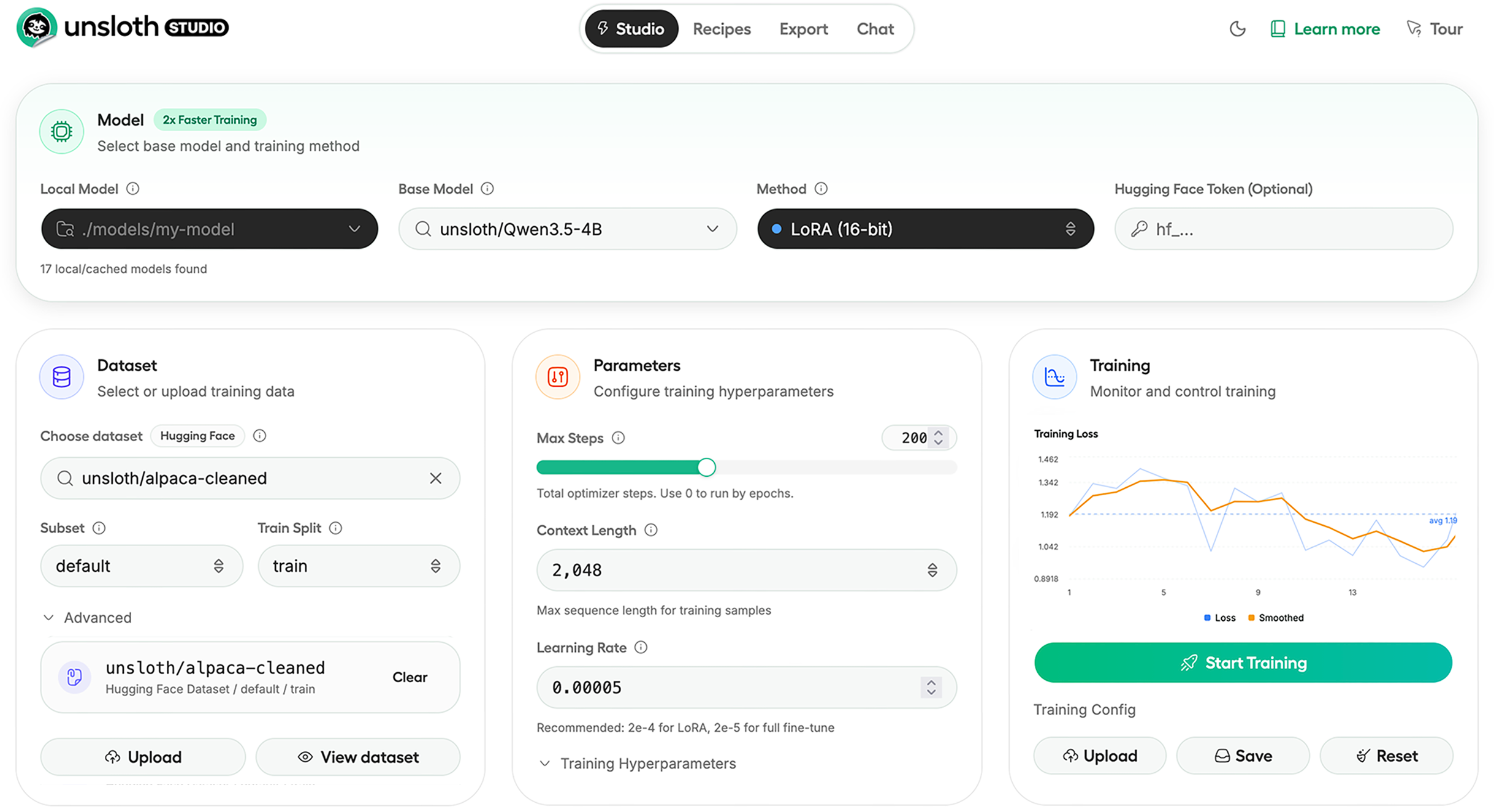
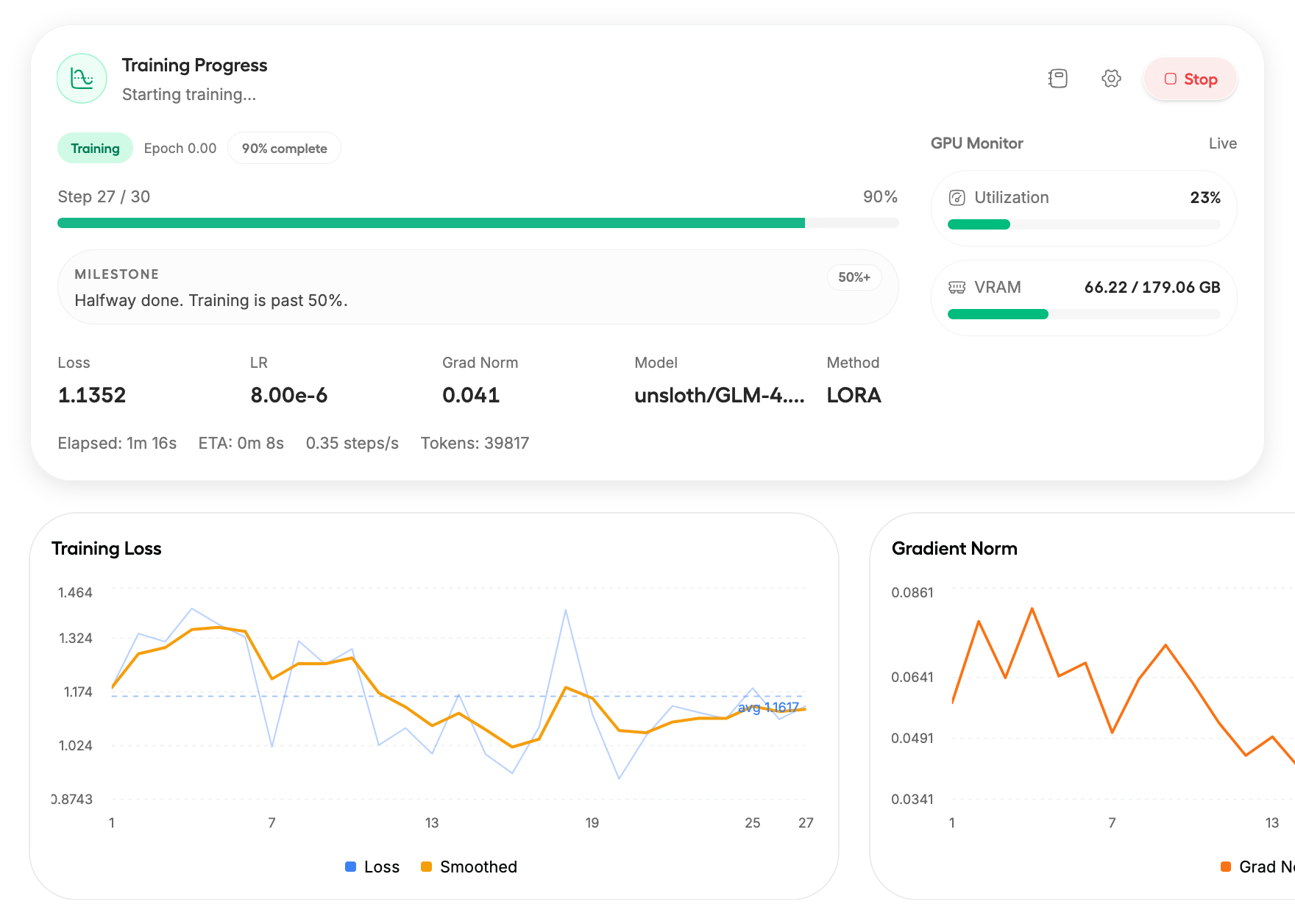
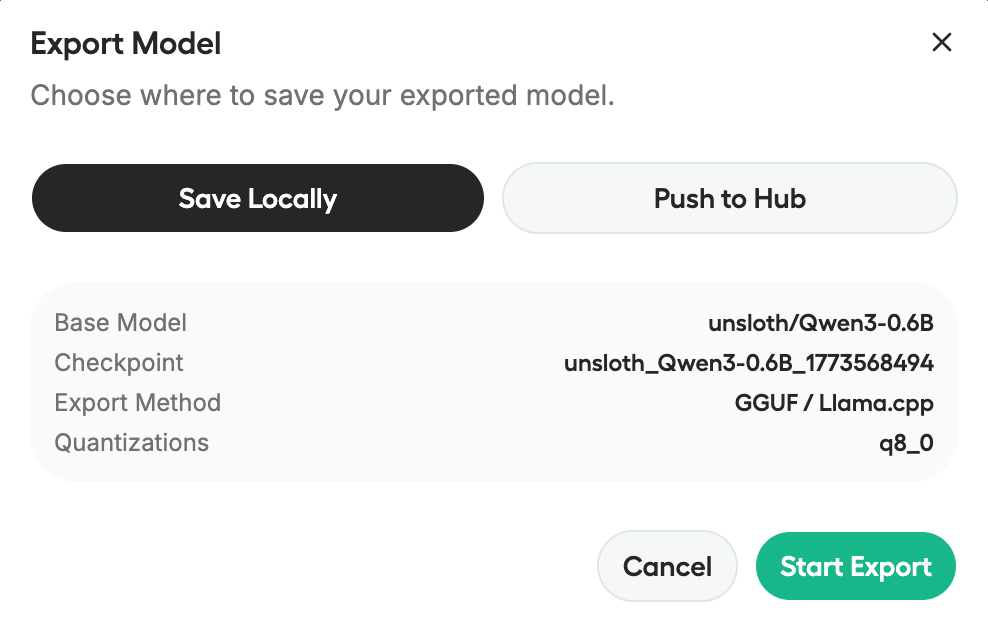
Unsloth is an open-source, no-code web UI for training, running and exporting open models in one unified local interface.
Reviews and social mentions of Unsloth suggest that its main strength lies in its integration capabilities and user-friendly interface, which attract positive feedback. However, there are few explicit user complaints or discussions about the software, indicating a potential gap in awareness or limited critical engagement among the existing user base. The lack of detailed user opinions on pricing sentiments makes it hard to assess the financial aspect, but overall, Unsloth appears to have a neutral to positive reputation largely due to its limited high-profile mentions.
Neptune
OpenAI is acquiring Neptune to deepen visibility into model behavior and strengthen the tools researchers use to track experiments and monitor trainin
Neptune is praised for its robust machine learning experiment tracking capabilities, earning generally high ratings across reviews with many users highlighting its user-friendly interface and effective tracking capabilities. However, some users express moderate dissatisfaction, indicating room for improvement in certain areas. The sentiment around pricing is not clearly expressed, but users transitioning to alternatives like GoodSeed suggest potential price-related concerns. Overall, Neptune maintains a good reputation in the industry, though it faces competition from newer, simpler tools.
Unsloth
-50% vs last weekNeptune
Stable week-over-weekUnsloth
Neptune
Unsloth
Neptune
Unsloth
Neptune
Pricing found: $122
Unsloth (6)
Neptune (6)
Only in Unsloth (8)
Only in Neptune (8)
Shared (2)
Only in Unsloth (13)
Only in Neptune (13)
Unsloth

Neptune

Unsloth
Neptune
Unsloth
Neptune
[P] We made GoodSeed, a pleasant ML experiment tracker
# GoodSeed v0.3.0 🎉 I and my friend are pleased to announce **GoodSeed** \- a ML experiment tracker which we are now using as a replacement for Neptune. # Key Features * **Simple and fast**: Beautiful, clean UI * **Metric plots:** Zoom-based downsampling, smoothing, relative time x axis, fullscr
Shared (1)
Only in Unsloth (1)
Only in Neptune (2)
For large-scale model tracking and versioning, Neptune is better suited, whereas Unsloth is preferable for no-code model training and rapid experimentation.
Neptune's pricing starts at $122 and is tiered, while Unsloth's pricing is also tiered but lacks detailed user opinion which might suggest more variability.
Unsloth, with 63,241 GitHub stars, indicates a more active open-source community, while Neptune's community engagement is moderated by its user reviews and OpenAI backing.
Yes, both tools can be integrated with MLflow for complementary usage, allowing for experiment tracking in Neptune and model training in Unsloth.
Unsloth is easier to start with for users unfamiliar with coding due to its no-code interface, compared to Neptune's more technically demanding setup.


