Ultralytics is a powerful tool for end-to-end computer vision applications, with robust features like YOLO-driven automation and a strong community presence with 55,249 GitHub stars. MultiOn, with a focus on AI agents for structured task execution and broad integration capabilities, appeals to those needing structured AI management. While Ultralytics excels in model accuracy and deployment scalability, MultiOn provides versatile multi-agent execution possibilities, though it raises concerns around cost transparency and conflict resolution.
Best for
Ultralytics is the better choice when focusing on computer vision projects across sectors like Robotics, Logistics, and Retail, especially for teams looking to leverage YOLO models with a user-friendly interface.
Best for
MultiOn is the better choice when the need is for versatile AI agents that integrate with various platforms to enhance automated workflows in structured environments, beneficial for enterprises with complex task management requirements.
Key Differences
Verdict
Engineering leaders should consider Ultralytics for projects heavily reliant on computer vision as it provides a rich feature set and scalability across global regions. Conversely, MultiOn is suited for organizations needing robust AI agent management and versatile integrations for automated workflows. Both tools are proficient within their domains, but consideration of specific use cases, pricing models, and team expertise will guide the better choice.
Ultralytics
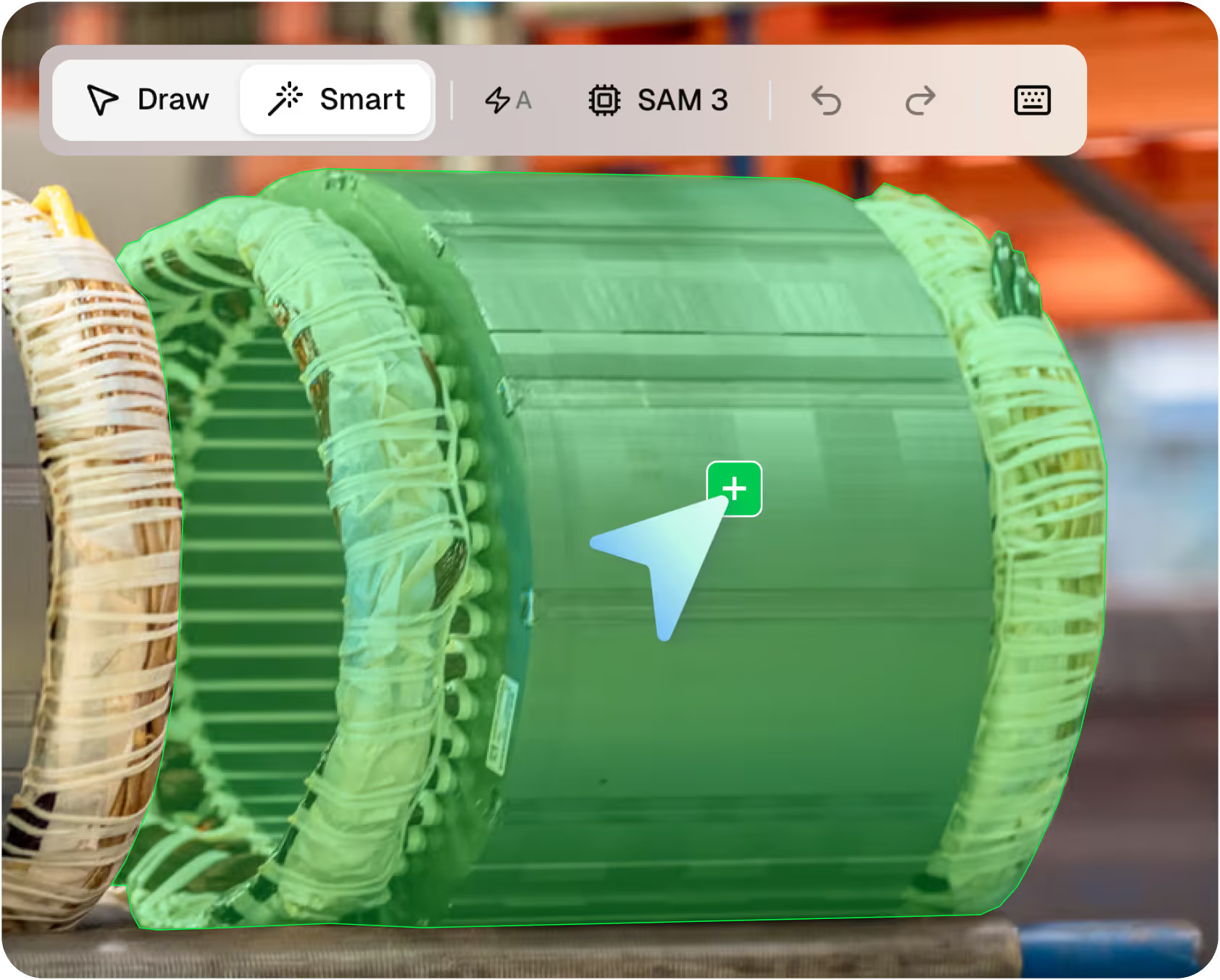
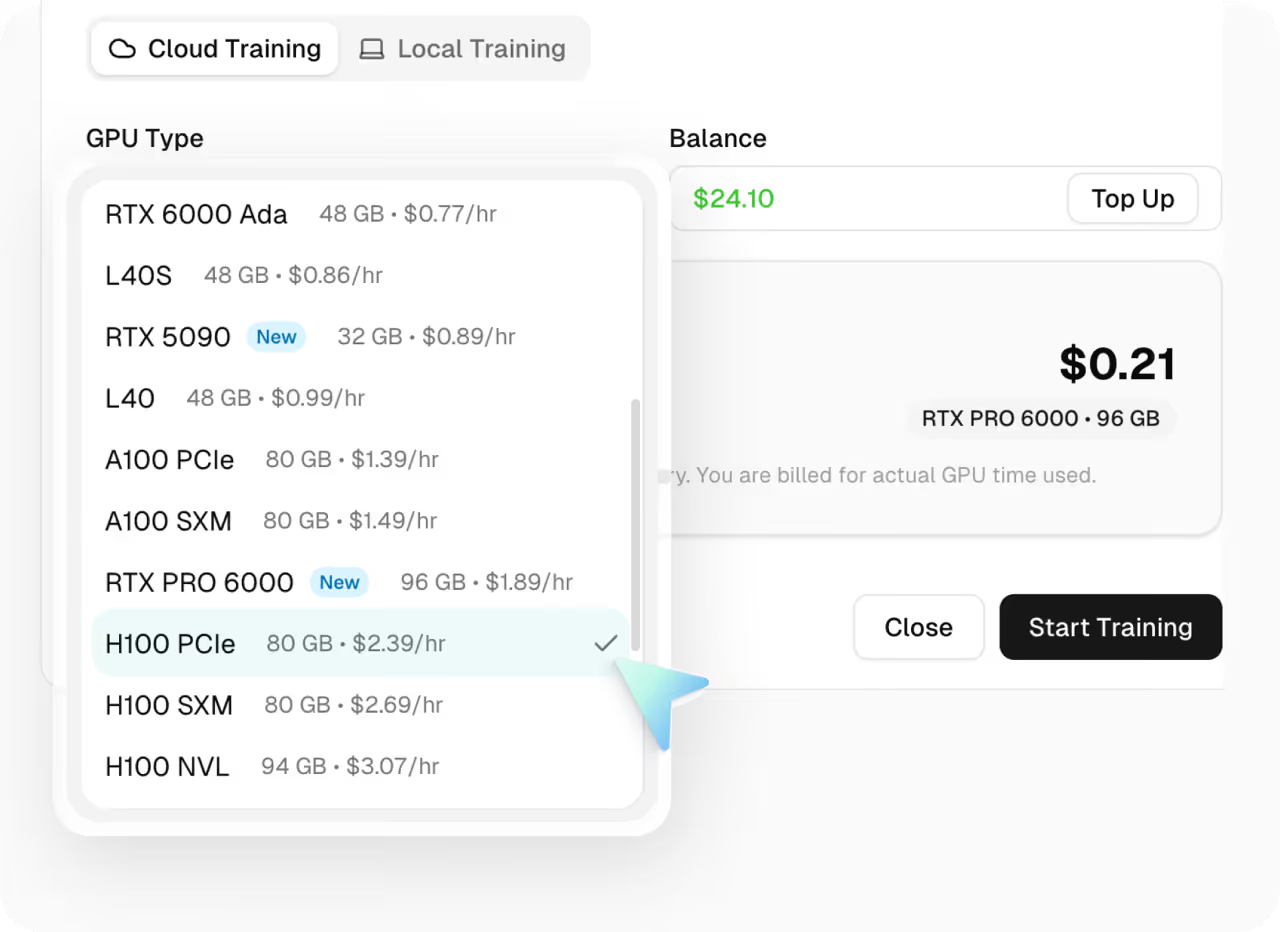
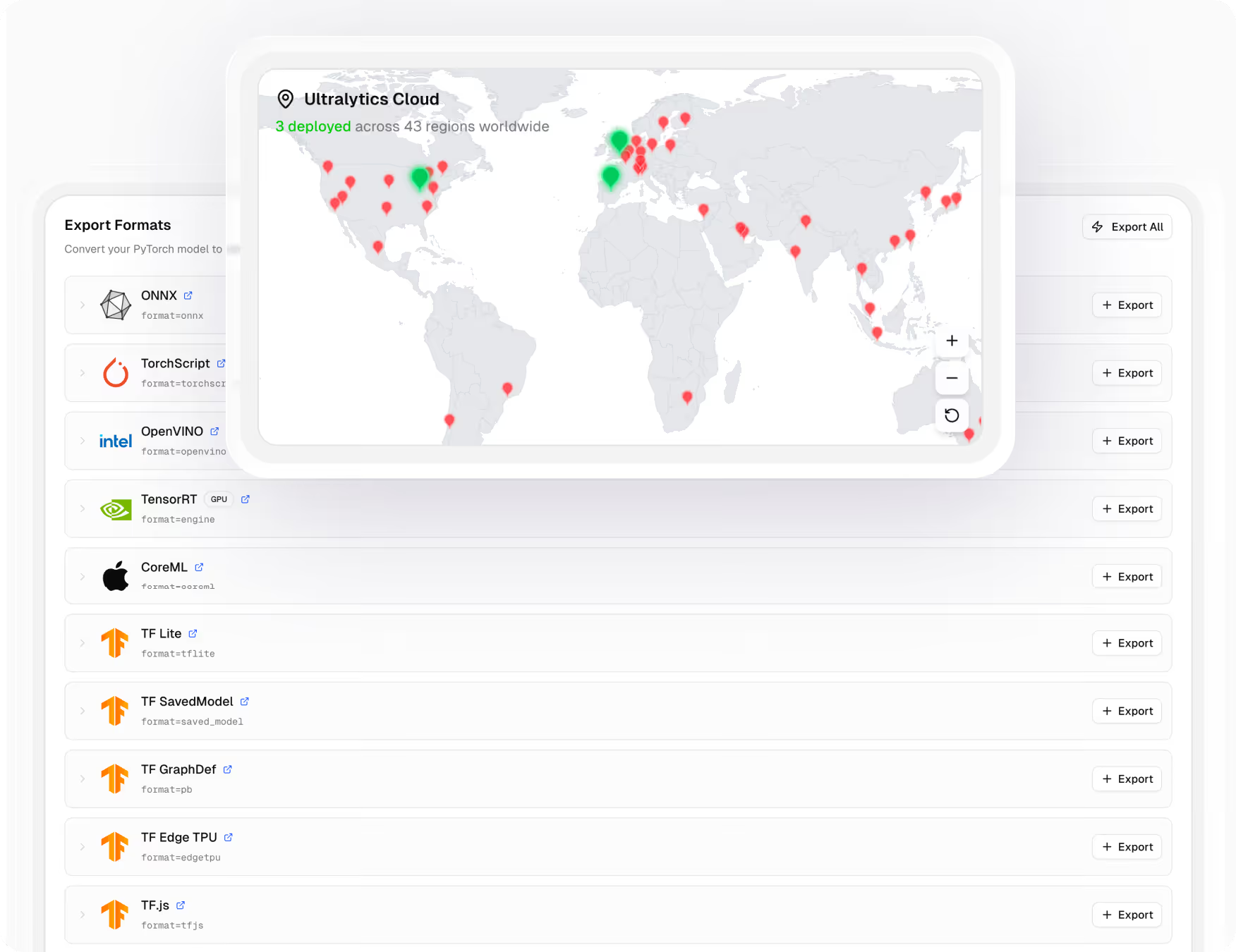
End-to-end computer vision platform. Annotate data, train YOLO models, and deploy to 43 global regions. Trusted by Siemens, Intel, Shell & more.
Ultralytics is recognized for its powerful AI capabilities, particularly in enhancing efficiency and accuracy in machine learning projects. Users appreciate its user-friendly interface, which makes sophisticated AI accessible even to those with less technical expertise. Key complaints revolve around occasional bugs and limited customer support options. Pricing sentiments are generally positive, with many considering the tool to be a cost-effective solution given its functionalities, and it maintains a strong overall reputation in the AI community.
MultiOn
Designing everyday AGI.
Users generally appreciate MultiOn for its versatility in facilitating multi-agent execution and its ability to handle structured work efficiently under governance rules. However, some users express concerns about potential conflicts or data overwriting when multiple agents engage simultaneously. The pricing sentiment is mixed, as some value the capabilities provided, while others find it challenging to justify the cost. Overall, MultiOn is seen as a robust tool with a good reputation among those needing structured AI management solutions, but it may require improvements in conflict resolution and cost transparency.
Ultralytics
Not enough dataMultiOn
-46% vs last weekUltralytics
MultiOn
Ultralytics
MultiOn
Ultralytics
Pricing found: $0, $25, $5, $20, $29
MultiOn
Ultralytics (6)
MultiOn (10)
Only in Ultralytics (10)
Only in MultiOn (10)
Only in Ultralytics (16)
Only in MultiOn (15)
Ultralytics
No complaints found
MultiOn
Ultralytics
No data
MultiOn
Ultralytics
MultiOn

Ultralytics
MultiOn
Ultralytics
MultiOn
eTPS — Effective Tokens Per Second: A Better Way to Measure Local LLM Performance
# [](https://www.reddit.com/r/ArtificialInteligence/?f=flair_name%3A%22%F0%9F%9B%A0%EF%B8%8F%20Project%20%2F%20Build%22)We're obsessed with raw tokens per second. Every hardware post leads with it. Every quantization comparison is ranked by it. It's the one number everyone agrees to report. It's al
Shared (1)
Only in Ultralytics (4)
For computer vision applications, such as object detection and image classification, Ultralytics is more suitable. For structured task automation and multi-agent orchestration, MultiOn is recommended.
Ultralytics offers a more transparent pricing structure starting from $0 with a free tier, whereas MultiOn uses a tiered pricing model with less clarity on specific cost allocations.
Ultralytics appears to have better community support with 55,249 GitHub stars and a strong reputation, while MultiOn's community presence is less documented.
While they serve different purposes, it is technically possible to use both in a complementary manner, with Ultralytics handling computer vision tasks and MultiOn managing structured AI agent workflows.
Ultralytics may offer an easier start for those with machine learning backgrounds due to its user-friendly interface and clear documentation for computer vision tasks.


