TensorDock is highly appreciated for its powerful and cost-effective GPU cloud infrastructure, ideal for high-performance tasks, though it suffers from instability issues. ExLlamaV2, on the other hand, is valued for its efficient local inference capabilities and seamless integration with GitHub Copilot, though users express concern over potential pricing changes.
Best for
TensorDock is the better choice when your team needs high-performance cloud GPU resources for tasks like deep learning model training and 3D rendering, and can manage occasional VM instability.
Best for
ExLlamaV2 is the better choice when you aim to run large language models locally on consumer-grade hardware, focusing on improving developer productivity with advanced inference and integration features.
Key Differences
Verdict
TensorDock is ideal for teams needing potent GPU computation in the cloud, especially in resource-intensive fields like AI and 3D rendering. ExLlamaV2 is better suited for development teams seeking productivity enhancements and local ML model inference without heavy reliance on cloud services. Choose based on your focus between cloud computational power versus local inference efficiency and integrations.
TensorDock
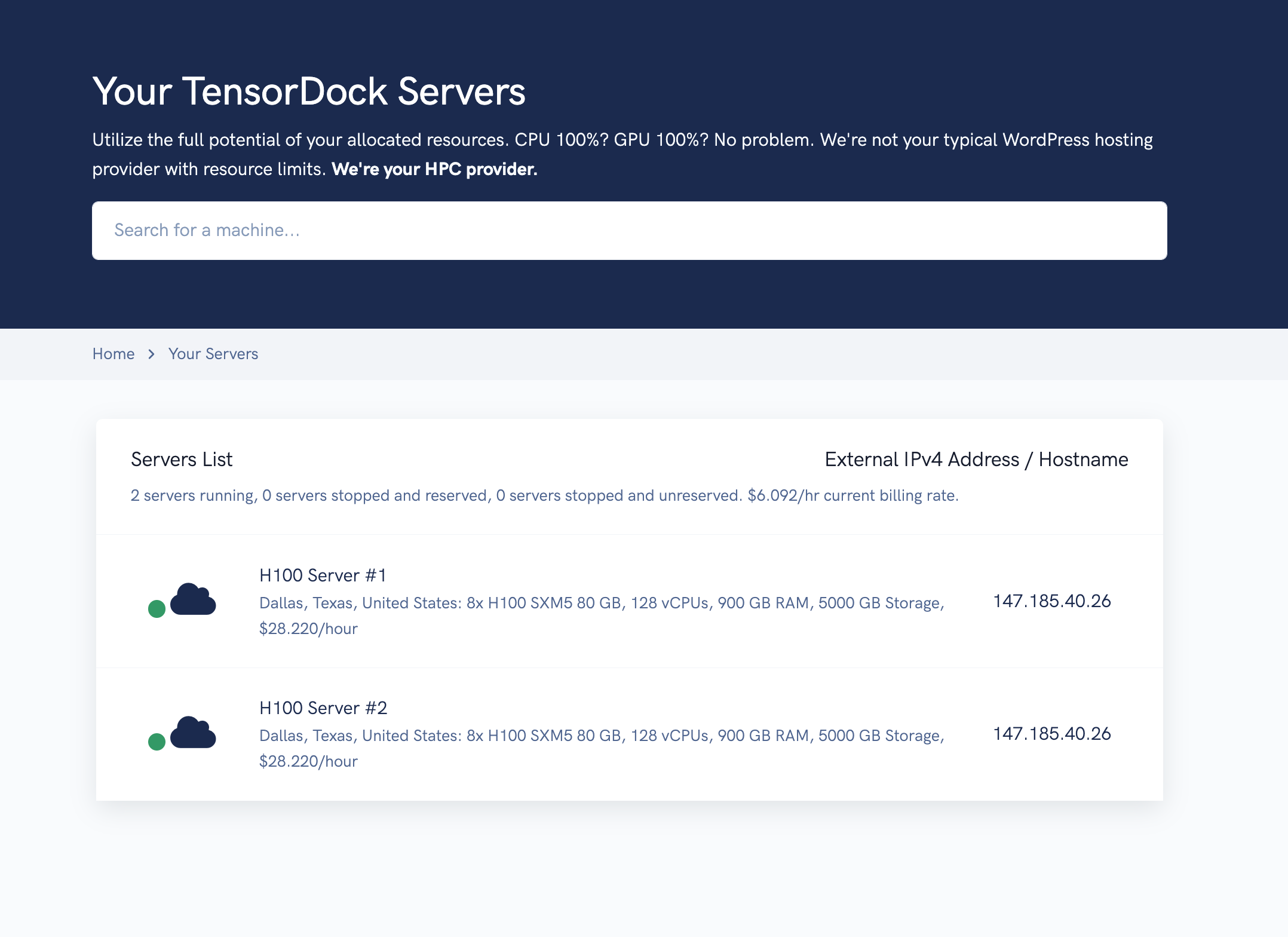
Save over 80% on GPUs. Train your machine learning models, render your animations, or cloud game through our infrastructure. Secure and reliable. Ente
Users appreciate TensorDock for its powerful GPU instances and effective AI capabilities, highlighting its strength in delivering high-performance computing solutions. However, key complaints focus on the instability of virtual machines, with users experiencing issues like failing instances. The sentiment around pricing seems neutral without specific mentions, but the need for continuous storage payments indicates potential cost concerns. Overall, TensorDock has a mixed reputation; while it is valued for its technical specifications, reliability and operational issues present challenges for users.
ExLlamaV2
A fast inference library for running LLMs locally on modern consumer-class GPUs - turboderp-org/exllamav2
While "ExLlamaV2" is not explicitly mentioned in the provided social mentions and reviews, the context around software development and tools highlights the strengths of integration with platforms like GitHub Copilot for efficient coding and workflow enhancements. Users generally appreciate tools that streamline processes and incorporate advanced features for complex tasks. The evolving nature of billing models, like the move to usage-based pricing for GitHub Copilot, indicates mixed feelings about pricing, with some users potentially wary of increased costs. Overall, software tools that improve developer productivity and offer seamless integration tend to have a positive reputation, though concerns around pricing changes can impact user sentiment.
TensorDock
Not enough dataExLlamaV2
-86% vs last weekTensorDock
ExLlamaV2
TensorDock
ExLlamaV2
TensorDock
Pricing found: $2.25/hr, $2.25/hr, $5, $0.12/hr, $2.25/hr
ExLlamaV2
TensorDock (8)
ExLlamaV2 (8)
Only in TensorDock (10)
Only in ExLlamaV2 (10)
Only in TensorDock (15)
Only in ExLlamaV2 (15)
TensorDock
No complaints found
ExLlamaV2
TensorDock
No data
ExLlamaV2
TensorDock
ExLlamaV2


TensorDock
ExLlamaV2
TensorDock
ExLlamaV2
Cooking up something new 🧑🍳 Join the waitlist for early access to technical preview of the GitHub Copilot app 👇 https://t.co/ODODKdvzOA https://t.co/1h7AJPAhiH
Cooking up something new 🧑🍳 Join the waitlist for early access to technical preview of the GitHub Copilot app 👇 https://t.co/ODODKdvzOA https://t.co/1h7AJPAhiH
Shared (4)
Only in TensorDock (1)
Only in ExLlamaV2 (1)
ExLlamaV2 is better suited for large-scale inference, particularly if leveraging local consumer-grade hardware.
TensorDock charges around $2.25/hour with tiered pricing, whereas ExLlamaV2 may face varying costs due to GitHub's evolving usage-based billing.
ExLlamaV2, backed by a larger company, likely benefits from stronger community support and integration with major platforms like GitHub.
Yes, TensorDock and ExLlamaV2 can be used together if your workflow involves both cloud-based GPU computation and local model inference, optimizing resource allocation.
ExLlamaV2 might be easier to begin with for users familiar with local setups and GitHub integrations, while TensorDock requires handling cloud environments.


