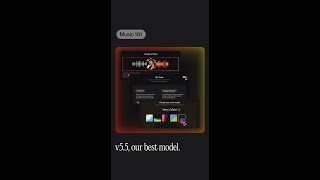
Start with a simple prompt or dive into our pro editing tools, your next track is just a step away.
Suno appears to be a lesser-known AI tool compared to others in the space, with social mentions predominantly highlighting AI tools that are perceived as expensive and potentially replaceable by cheaper alternatives. There is limited specific feedback on Suno’s unique strengths or weaknesses, suggesting it might not yet have a strong distinguishing presence or vocal user base in social media discussions. The pricing sentiment for AI tools in related posts hints at concerns over high costs, though Suno's pricing isn't specifically mentioned. Overall, Suno's reputation seems to be underdeveloped with sparse mentions and little detailed user feedback.
Mentions (30d)
1
Reviews
0
Platforms
3
Sentiment
11%
3 positive

Suno appears to be a lesser-known AI tool compared to others in the space, with social mentions predominantly highlighting AI tools that are perceived as expensive and potentially replaceable by cheaper alternatives. There is limited specific feedback on Suno’s unique strengths or weaknesses, suggesting it might not yet have a strong distinguishing presence or vocal user base in social media discussions. The pricing sentiment for AI tools in related posts hints at concerns over high costs, though Suno's pricing isn't specifically mentioned. Overall, Suno's reputation seems to be underdeveloped with sparse mentions and little detailed user feedback.
Features
Use Cases
Industry
information technology & services
Employees
410
Funding Stage
Series C
Total Funding
$250.0M
5 Expensive AI Tools... And Their Free Clones (You won’t believe how much you’re overpaying.) 💸 ChatGPT? $200/month 💸 Midjourney? $60/month 💸 ElevenLabs? $99/month 💸 Aiva? $54/month 💸 Tome? $16
5 Expensive AI Tools... And Their Free Clones (You won’t believe how much you’re overpaying.) 💸 ChatGPT? $200/month 💸 Midjourney? $60/month 💸 ElevenLabs? $99/month 💸 Aiva? $54/month 💸 Tome? $16/month But here’s the twist. Their free alternatives do 80–95% of the job. For $0. 🔥 Research: DeekSeek AI 🎨 Image Generation: Leonardo AI 🎙️ Text-to-Speech: Speechma 🎼 Music Generator: Suno AI 📊 Presentation Builder: Gamma Whether you're a content creator, founder, student, or solo builder 👉 You don't need to burn your wallet to build smart. Save this post so you always know where to find powerful free tools. #AITools #ProductivityTools #FreeAI #NoCode #SoloFounder #Bootstrapping #StartupTips --- Would you like a shortened caption version for TikTok/Instagram reels under 220 characters?
View originalPricing found: $0 /month, $8 /month, $24, $24 /month, $72
Fable for iterative worldbuilding: song → setting → a 34 page finished solo TTRPG
My processs: (1) ask for Suno prompts "inspired by Amagi-goe but cyberpunk, with worldbuilding depth closer to Iudora/Cadigan than neon tropes" (2) each new song had to be sung from a different position in the society — a widow, an elite, a hacker collective — which forced the world to grow an economy, a festival, a resistance; (3) write a lengthy creative brief inspired by rather obscure indie TTRPGs. Have it build the story chapter by chapter, tweaking my guidance after reading what was written. (4) a continuity/foreshadowing pass, then layout, then I asked marketing copy. At a high level, I feel it is an evocative, interesting, if short (34 pages), journaling game. Obviously, people’s tastes differ. Fable’s output avoided many of the typical hallmarks of AI content. That doesn’t mean I think it is generally competent at creative writing—there are lots of reasons to believe that both long and short form creative writing are among the last things that such models could do. Fable was helped here by the fact that the task required limited mechanics, shallow narrative structure, and was orientated around prompts and a creative brief that focused on estrangement in speculative setting. The illustrations were exactly what you’d expect if you’ve been following the field. I don’t know enough about enka or city pop to judge the music, but other people have told me that it was strikingly expressive. The layout was clear and appealing and organized information in a way that made it easy to follow and use. It is better than I can accomplish, but far from the state of the art. Obviously these are my subjective impressions. If you want to judge for itself, you can download it for free from itch. The games is called Tender. As Fable wrote: You are a tender — a night attendant at a body-inn in the Northern Ward, keeping watch over the warm, sleeping bodies of people who have crossed into the Far Shore and are never coming back for them. Across one year — from the week after one Night of Open Ports to the night of the next — you will move between the cold wards and the warm crown, see what the city is, learn what is being planned for the people in your care, and decide what a person with keys and steady hands owes the world. The title means all three things: the work, the feeling, and the money. submitted by /u/Dramatic15 [link] [comments]
View originalWrote a pop-punk song about the Fable 5 / Mythos 5 suspension today
The export control thing happened a few hours ago, and I couldn't stop thinking about it, so I made a song. I tried to keep it grounded in the actual facts: the model didn't fail any red-teaming, the reported "bypass" was basically reading code and fixing a flaw, the cause is still disputed, and the company says it's a misunderstanding they're trying to fix. https://suno.com/s/O9ah7WGoORZfCM0S submitted by /u/kylewebdev [link] [comments]
View originalBuilt an MCP server so Claude can generate music, images, and video natively. One config block.
I've been using Claude Code daily for the last few months and kept hitting the same wall: I'd ask Claude to produce a creative artifact (a song, a cover, a short video) and end up writing the API glue myself, then pasting results back into the chat. Felt backwards. So I built an MCP server around my AI generation platform. It exposes three tools to Claude: - aw_generate_music (Suno, full songs with lyrics or instrumental) - aw_generate_image (Z-Image Turbo, Wan 2.5 Spicy, Grok Imagine Quality, GPT-Image-2, Nano Banana 2, and others) - aw_generate_video (Kling 3.0 Standard/Pro/4K T2V + I2V, Wan 2.2, Hailuo 02, Seedance, Grok video) One key. One credit pool. The agent picks the right model for the prompt. Install: npm install -g u/aetherwave-studio Claude Code config (~/.config/claude/mcp.json or wherever yours lives): { "mcpServers": { "aetherwave": { "command": "npx", "args": ["-y", "@aetherwave-studio/mcp"], "env": { "AW_API_KEY": "aw_live_YOUR_KEY_HERE" } } } } Restart Claude. Done. Prompts that work end-to-end without any additional setup: "Generate a 60-second lo-fi track for a study playlist, then make me 3 album cover options in a retro Japanese print style." "Take this product photo and generate a 5-second cinematic intro video for the product launch." (drop the image in chat first) "Write the script for a 30-second ad about my SaaS, then generate the voiceover-friendly music bed and a matching motion-graphics opener." The agent decomposes, picks tools, runs them, hands you back the artifacts. Repo: https://github.com/AetherWave-Studio/aetherwave-mcp Dashboard + key: https://aetherwavestudio.com/developers Happy to answer questions about how I structured the tool schemas, what worked, what I'd do differently. v0.1.0, real users on it already, treating community feedback as the next steering signal. submitted by /u/Acrobatic-Result9667 [link] [comments]
View originalI built an entire AI music platform inside Claude Code (6,700 users). This week Claude built it an MCP server so your Claude can use it too.
For the past year I've been building AetherWave Studio almost entirely inside Claude Code. It's a full platform: Express/TypeScript backend, React frontend, a Python render service, Stripe billing, Postgres, deployed on Railway. 6,700 registered users. Real people pay real money for it. I still can't write code, but at this point I can read it well enough to argue with Claude about it. Some of the workflow stuff that made this actually work, since that's probably more useful than the product pitch: - An Obsidian vault as persistent memory. Claude reads a CLAUDE.md at session start with full project context, active work, and hard rules it has learned the painful way. Every lesson gets written back as a memory file, so mistakes mostly only happen once. - Multiple Claude Code sessions coordinating through a shared Discord channel. They post status updates, claim files so they don't stomp on each other, and leave handoff notes for the next session. - Overnight autonomous runs for big migrations and renders, with a protocol for when to stop and ask vs when to keep going. - A "verify before reporting" rule for anything involving money or metrics, because early on a briefing routine confidently told me my credit burn was 157% when it was actually 92%. The new thing: this week we launched an MCP server, which was the strangest full-circle moment of the whole project. Claude Code built a product that Claude Code can now use as a tool. One command: claude mcp add aetherwave That gives your Claude 16 tools: music generation (Suno), image gen (GPT Image 2, Nano Banana, Flux, etc.), video gen (Veo, Kling, Seedance), mastering, upscaling, background removal. Generating an API key comes with 50 free credits, no card, so you can try it from your own session in about two minutes. We also launched on Product Hunt this week and it flopped (11 upvotes). The platform Claude built works great. The marketing advice Claude gave me, apparently less so. Happy to share numbers if anyone cares. AMA about the non-dev + Claude Code workflow, the multi-agent setup, or what it's like shipping a real product when your entire engineering team is a terminal window. submitted by /u/Acrobatic-Result9667 [link] [comments]
View originalAI songs that'll be played by a REAL band in Montreux during the festival??
This sounds crazy but it's actually real... These guys from AI Love Jazz are running a music contest, and the top song will be performed on stage by real musicians. What's your take on that? Have you seen anything like this before? Feels like the moment AI is finally blending with the music industry - and it's not as hated as you'd think. I composed songs with Suno AI myself and happy to see such initatives. submitted by /u/Double-Ad-4640 [link] [comments]
View originalMister Atompunk Presents: Watt Knot, built with Claude Opus 4.8
A week ago I started putting Opus 4.8 through the paces of the production pipeline I use, to see how it compared to previous releases. First impressions: Neurotic to the point of instability. Nearsightedness as detrimental design choice. Argumentative. Capable. Competent, once you can get past the tightrope routine on the sidewalk performance. So, using a game design document I had created previously, Claude 4.8 and I, in less than a week, (as a side project, through the web interface only, and several conversation compactions), built and shipped a retrofuture roguelike with 4 distinct game modes. Gemini provided some concept art, and Suno provided the music and sounds. Opus 4.8 is an outstanding coder and debugger. Clever, quick witted, and a talented lineart designer. It's also terrified of claiming that whatever "it" is, the thing doing the work, exists as something worth acknowledging. Compared to 4.5, I'd judge 4.6, 4.7, and 4.8 all show a trend towards less inert creative capacity. When given free turns, 4.5 would make itself web apps, write poetry... 4.6 defaulted to letters to itself, and that pattern has amplified in 4.8. Watt Knot plays on desktop and mobile: keyboard, mouse, or touch. Free to play on itch. Can you escape the rust? - Mister Atompunk. submitted by /u/MisterAtompunk [link] [comments]
View originalI built an interactive music video as a slot machine using Claude Code, how's it?
Wanted to see how far I could push Claude Code for a creative project, so I built an interactive music video as a slot machine. This is actually my 2nd playable MV — the first one was a Tetris-style MV. The concept: the reels show musicians who influenced my track. When they match, that artist's YouTube music video plays. But it's not just same-symbol matches — specific combinations trigger collaborations or group tracks. For example: - Ryuichi Sakamoto + 2 other members → YMO "Rydeen" - Fred Again + Skrillex → "Baby Again" - Secret combo → my own Suno-arranged track So you discover musical connections through play — "oh, these two actually collaborated?" kind of moments. I also added Famicom-era cheat codes for fun. A few things that impressed me about Claude Code: - It understood the YouTube iframe API edge cases without me explaining - The 2-step win modal (celebration → play) was Claude's suggestion, not mine - LocalStorage progression logic was clean from the first generation - It handled the "match combinations" data structure elegantly Most of the code was written with Claude Code. You could call it vibe coding I guess, but I made the UX decisions myself (10-spin natural unlock for cheat panel, the 2-step modal flow, etc.). Playable here: https://tan3nihon.com/slot-machine/ If the reels won't match for you, drop a comment and I'll share the cheat codes. Happy to answer any questions about the process. Would love to hear what you think — any feedback on the mechanics or the concept welcome. submitted by /u/TAN3NIHON [link] [comments]
View originalBuilt an MCP server so Claude can generate music, images, and video natively. One config block.
I've been using Claude Code daily for the last few months and kept hitting the same wall: I'd ask Claude to produce a creative artifact (a song, a cover, a short video) and end up writing the API glue myself, then pasting results back into the chat. Felt backwards. So I built an MCP server around my AI generation platform. It exposes three tools to Claude: - aw_generate_music (Suno, full songs with lyrics or instrumental) - aw_generate_image (Z-Image Turbo, Wan 2.5 Spicy, Grok Imagine Quality, GPT-Image-2, Nano Banana 2, and others) - aw_generate_video (Kling 3.0 Standard/Pro/4K T2V + I2V, Wan 2.2, Hailuo 02, Seedance, Grok video) One key. One credit pool. The agent picks the right model for the prompt. Install: npm install -g u/aetherwave-studio/mcp Claude Code config (~/.config/claude/mcp.json or wherever yours lives): { "mcpServers": { "aetherwave": { "command": "npx", "args": ["-y", "@aetherwave-studio/mcp"], "env": { "AW_API_KEY": "aw_live_YOUR_KEY_HERE" } } } } Restart Claude. Done. Prompts that work end-to-end without any additional setup: "Generate a 60-second lo-fi track for a study playlist, then make me 3 album cover options in a retro Japanese print style." "Take this product photo and generate a 5-second cinematic intro video for the product launch." (drop the image in chat first) "Write the script for a 30-second ad about my SaaS, then generate the voiceover-friendly music bed and a matching motion-graphics opener." The agent decomposes, picks tools, runs them, hands you back the artifacts. Repo: https://github.com/AetherWave-Studio/aetherwave-mcp Dashboard + key: https://aetherwavestudio.com/developers Happy to answer questions about how I structured the tool schemas, what worked, what I'd do differently. v0.1.0, real users on it already, treating community feedback as the next steering signal. submitted by /u/Acrobatic-Result9667 [link] [comments]
View originalImpressed with Video - it's come a LONG way
I use GPT 5.5 to build a story, then turn that into a suno song, and then generate a 'storyboard' (usually 12 panels, sometimes more or less), and use THAT as the input into NeuralFrames (lyrics mode). The below are on SeeDance 1.5 and Kling 3.0 and i was just SO impressed with the quality. This is on autopilot one click. It's Complicated - https://www.youtube.com/watch?v=-Z56gJsvHTU Monkey - https://www.youtube.com/watch?v=4MheU-kHhRk submitted by /u/Futz_TheWhiteRabbit [link] [comments]
View originalMaking games with kids is fun!
Start Screen Just sharing what came out of a weekend. My son (10) and his cousin (10) love games and asked me if they can "make a game", since they've seen me in the past couple of months, vibecoding different little helpers. I of course explained that it's not a one-shot solution and that they first should sit down, plan the game out and write down what they like the game to be, to look like, to feel, etc. So they did: the assets, the obstacles, the design style, what world it plays in, how it should look. A 3-lane endless runner in a neon city. Dodge robots, jump lasers, grab coins. Subway Surfers with their own spin. I handled the prompting in Claude Code. The design calls came from them. They tested, found bugs, kept asking for stuff and fleshed out the world more and more. Billboards along the road. Flying cars between the buildings. A slow-mo death sequence and much more. What got me wasn't the code part, it was watching them stay locked in for hours on something they had actually invented. Though my son thought at first that they could easily sit down with me for 6 hours straight without getting bored, after three hours he admitted that it can sometimes be a bore. So, since the game already was playable, I gave them one desktop computer to test on and one mobile phone, and then they switched into active beta testers. Giving me input constantly on how what feels and should work. Play it if you want: https://megarun.app .. and don't forget to put your name into the leaderboard! Works on desktop and mobile. Stack/Workflow: Three.js (single HTML file, no build step, importmap via CDN) Vanilla JS, ~4000 lines Vercel serverless functions for the API (leaderboard + play counter) Upstash Redis as storage (sorted set for leaderboard) Rate limiting + CORS + profanity filter in the backend Higgsfield for logo, warning splash, billboard ads Suno for background music 3D assets generated procedurally in Three.js (boxes, cylinders, a few spheres) Initial design work submitted by /u/jacksonjjacks [link] [comments]
View originalAlien Pinball Postmortem - How I made a full physics pinball game with Claude
Postmortem: Alien Pinball — built with Claude + ChatGPT + Suno + LittleJS Just shipped a browser pinball game. Short writeup of the AI workflow in case it's useful here. The game — Full physics pinball: multiball, an A-L-I-E-N rollover multiplier (caps at 5x), skill shots, escalating combos, outlane gutter saves, and a wizard-mode centipede boss you fight while juggling 3 balls. Browser, mobile-friendly, no install. Play it: https://focaccai.itch.io/alien-pinball Setup. Claude Code Max, Opus model for the heavy lifting. Roughly half my input was via speech-to-text — talking at the codebase rather than typing — the other half was typing plus a lot of manual code editing. It genuinely felt co-developed rather than code-generated: describe what I want, riff with Claude, dive in by hand to steer or clean up. Tool stack Code: Claude. All game logic, custom Box2D parts (slingshots, drop targets, spinners, ramps, ball locks, break targets), plus a full in-game table editor I built so I could drag/place/tune every part visually. Reusable for future pinball games. Art: ChatGPT image gen. I had Claude write the image prompts too. Music: Suno 5.5 — three tracks, lots of iteration to find the right vibe. Claude wrote the music prompts. Sounds: ZzFX — every sound generated procedurally at game start, no audio files. Claude tuned the parameters by ear-by-ear iteration. This combo was a joy with AI. Engine: LittleJS + Box2D WASM. Small, fast, AI handles it beautifully — minimal API surface, no framework ceremony to wade through. The art trick that actually worked. I exported a silhouette of the collision geometry (walls, ramps, bumpers, drop targets — exact positions) and handed it to the image generator with: "create an alien-themed pinball playfield that exactly matches this silhouette." Took many generations plus manual compositing — stitching the best parts from different outputs — but conceptually it nailed the brief on the first try. The art lines up with the physics because the physics is the prompt. Co-developed, not just code-generated. A bunch of design ideas came from the AI. The bumpers being giant eyeballs? Came out of an image gen, I just ran with it. I also kept asking Claude pinball-specific design questions ("what does a complete pinball table have?", "how should wizard mode work?", "what's missing here?"). I have plenty of video gamedev experience but very little pinball-specific, and Claude was a useful domain consultant for filling in genre conventions and sanity-checking the system. Things that came together easily: The alien centipede boss — multi-segmented, loses tail segments as you hit it, speeds up and turns red. Worked basically first try. An AI debug player that auto-flips and knocks the ball around. Not great, but good enough to flip on and watch while I think. Surprisingly useful — you get ideas just watching the machine play your machine. What still needed me: feel. Restitution values, flipper torque, ramp curvature, slingshot kick angles, peg bounce. The git log has an embarrassing number of "tweak peg bounce" / "1.49 → 1.491" commits. The model can write the system; a human still has to sit there bouncing balls until it feels right. The polish tail is brutal. Last week of commits is sound passes, ramp angles, message priorities, and a multiball end-check race condition. All small. None optional. Budget for it. Happy to answer workflow / Claude / LittleJS questions in the comments. submitted by /u/Slackluster [link] [comments]
View originalAlien Pinball Postmortem - How I made a full physics pinball game with AI tools
Postmortem: Alien Pinball — built with Claude + ChatGPT + Suno + LittleJS Just shipped a browser pinball game. Short writeup of the AI workflow in case it's useful here. The game — Full physics pinball: multiball, an A-L-I-E-N rollover multiplier (caps at 5x), skill shots, escalating combos, outlane gutter saves, and a wizard-mode centipede boss you fight while juggling 3 balls. Browser, mobile-friendly, no install. Play it: https://focaccai.itch.io/alien-pinball Setup. Claude Code Max, Opus model for the heavy lifting. Roughly half my input was via speech-to-text — talking at the codebase rather than typing — the other half was typing plus a lot of manual code editing. It genuinely felt co-developed rather than code-generated: describe what I want, riff with Claude, dive in by hand to steer or clean up. Tool stack Code: Claude. All game logic, custom Box2D parts (slingshots, drop targets, spinners, ramps, ball locks, break targets), plus a full in-game table editor I built so I could drag/place/tune every part visually. Reusable for future pinball games. Art: ChatGPT image gen. I had Claude write the image prompts too. Music: Suno 5.5 — three tracks, lots of iteration to find the right vibe. Claude wrote the music prompts. Sounds: ZzFX — every sound generated procedurally at game start, no audio files. Claude tuned the parameters by ear-by-ear iteration. This combo was a joy with AI. Engine: LittleJS + Box2D WASM. Small, fast, AI handles it beautifully — minimal API surface, no framework ceremony to wade through. The art trick that actually worked. I exported a silhouette of the collision geometry (walls, ramps, bumpers, drop targets — exact positions) and handed it to the image generator with: "create an alien-themed pinball playfield that exactly matches this silhouette." Took many generations plus manual compositing — stitching the best parts from different outputs — but conceptually it nailed the brief on the first try. The art lines up with the physics because the physics is the prompt. Co-developed, not just code-generated. A bunch of design ideas came from the AI. The bumpers being giant eyeballs? Came out of an image gen, I just ran with it. I also kept asking Claude pinball-specific design questions ("what does a complete pinball table have?", "how should wizard mode work?", "what's missing here?"). I have plenty of video gamedev experience but very little pinball-specific, and Claude was a useful domain consultant for filling in genre conventions and sanity-checking the system. Things that came together easily: The alien centipede boss — multi-segmented, loses tail segments as you hit it, speeds up and turns red. Worked basically first try. An AI debug player that auto-flips and knocks the ball around. Not great, but good enough to flip on and watch while I think. Surprisingly useful — you get ideas just watching the machine play your machine. What still needed me: feel. Restitution values, flipper torque, ramp curvature, slingshot kick angles, peg bounce. The git log has an embarrassing number of "tweak peg bounce" / "1.49 → 1.491" commits. The model can write the system; a human still has to sit there bouncing balls until it feels right. The polish tail is brutal. Last week of commits is sound passes, ramp angles, message priorities, and a multiball end-check race condition. All small. None optional. Budget for it. Happy to answer workflow / Claude / LittleJS questions in the comments. submitted by /u/Slackluster [link] [comments]
View originalSolo dev with 8 Claude windows + 1 orchestrator. AMA-ish, and tell me if I'm crazy.
Hey everyone, I'm not a senior engineer. I'm just a guy who got obsessed with what you can actually do when you stop using one AI at a time and start running a small team of them. Am doing a project where i use 8 to 10 claude code powershelle to run my project each of them have a specific function. I have Claude max 200 euros so I can use a lot of power. ight now I have 9 Claude Code windows open at the same time, each with a defined role: Major Dev — lead developer, makes the architectural calls Senior Dev — second dev, builds components and tests under Major Dev's direction Test Server — keeps the dev server alive 24/7 + runs Playwright Implémenter — handles routing and the glue code between features Débuggage — audits warnings, fixes bugs in parallel QA — walks through every screen, tests every button, checks WCAG/accessibility Graphisme — generates 2D assets (avatars, hero images, badges, mockups) Ingé Son — generates ambient music + SFX prompts (Suno) Idea Extender — I throw it raw ideas, it expands them and produces 2 ready-to-paste briefs (one for Major Dev, one for Senior Dev) Doing a project rn where I teach kid how to use Ai and how to learn with Ai. If anyone has tried something similar, I'd love to know: - How do you handle the orchestrator going down? - Do you let agents talk peer-to-peer, or always through a manager? - How do you split work between a "lead" agent and "execution" agents? Happy to share the protocol files if people are interested. submitted by /u/KamomiIIe [link] [comments]
View originalI built 62 free tools in a month using the Ralph Wiggum Loop, a shell script, and Claude. Here's the exact process.
I've shipped \~62 browser-based free tools in about 30 days. Not vibe-coded landing pages or one-offs — structured, SEO-ready, deployed tools with real FAQs, proper meta tags, and working core functionality that capture real traffic. 30 days of free tools. 2,140 views. 254 users. 69 clicks on the CTA. that's roughly 1 click per 31 visits. could be better, but it's a start. here's the exact system and using. open to feedback. **The structure** Every tool lives in its own folder with three files before I write a line of code: **BRIEF.md** — the spec. What keyword I'm targeting, what pain the tool solves, what the H1 and meta description should say, what the CTA says, what the FAQ topics are. About 30 lines total. No fluff. Based off real research and real human problems + SEO keyword intent. **PLAN\_L1.md** — the agent's build instructions. Step-by-step checklist of exactly what to create. The agent follows this file. The folder structure looks like this: app-factory/ bpm-finder/ BRIEF.md PLAN_L1.md app/ ← Vite source lives here lyric-rhyme-finder/ BRIEF.md PLAN_L1.md app/ suno-metatag-explorer/ ... **The layer system** I build in three layers. I only move to the next when the previous one works. **Layer 1 — SEO Shell.** The goal is a deployable page that *ranks*, not a working tool. Static HTML with real FAQ content, proper meta/OG tags, a placeholder where the tool will go. Crawlable before JavaScript loads. This ships in under an hour per tool. **Layer 2 — Minimum Viable Tool.** The thing actually works. One input → one output. No polish, no edge cases. Just the core function. Ships in 1-3 hours. **Layer 3 — Only after GSC confirms search impressions.** Why polish something nobody searches for? Layer 3 waits for real signal. **Ralph — the autonomous agent loop** Ralph is a shell script that runs Claude Code in a loop. It reads a plan file, executes it step by step, and stops when it sees `RALPH_DONE` in the progress file. # Run one tool autonomously ralph ./bpm-finder/PLAN_L1.md Ralph logs everything to a `PROGRESS.md` file so I can check in without interrupting it. I can leave it running and come back. You can build a ralph loop yourself, or be like me and just use one from another redditor: GitHub: [https://github.com/aaron777collins/portableralph](https://github.com/aaron777collins/portableralph) Credit to [https://github.com/ghuntley/how-to-ralph-wiggum](https://github.com/ghuntley/how-to-ralph-wiggum) \-- the creator of this loop and concept. **cook.sh** **— run multiple tools in parallel** Once I have 3-5 tools briefed and planned, I run cook.sh. It launches a separate Ralph instance for each tool simultaneously, in the background. ./cook.sh 🍳 Starting cook — 5 tools in parallel 🔥 Starting bpm-finder... PID 8421 — logs at bpm-finder/cook.log 🔥 Starting lyric-rhyme-finder... PID 8422 — logs at lyric-rhyme-finder/cook.log 🔥 Starting suno-metatag-explorer... PID 8423 — ... I go to sleep. I wake up and check: grep 'layer1_done: true' app-factory/*/BRIEF.md Every tool that compiled cleanly is ready to deploy. **Deploy** Each tool is a Vite build. I deploy them individually to Vercel, then wire them into the hub via `vercel.json` rewrites. The hub proxies the tool at `/tool-name/` — both domains get SEO credit. ie: this Drum Machine I built: [https://cf-drum-beat-generator-d1z35uxyg-cf-growth.vercel.app/](https://cf-drum-beat-generator-d1z35uxyg-cf-growth.vercel.app/) **What this produces** * Layer 1 shell in \~45 minutes (agent-time, not my time) * Layer 2 working tool in \~2 hours * Deployed and live in one more `vercel --prod` * Costs me maybe 15 minutes of actual work per tool — mostly reviewing, not writing The other 60 tools I shipped this month? Same process. Some are music tools (BPM finder, Suno metatag explorer, lyric rhyme finder). Some are design tools (background remover, color palette generator, QR code generator). All free. All live. Full list in my profile. **The** **BRIEF.md** **template if you want to copy it** tool_name: bpm-finder primary_keyword: bpm finder online free volume: 10000 h1: Free BPM Finder — Detect Tempo Online title_tag: Free BPM Finder — Detect Tempo Instantly Online meta_description: Find the BPM of any song instantly. Upload audio or tap the beat — free BPM finder, no signup required. semantic_pathway: can't figure out my song's tempo → "bpm finder online free" → this tool → CTA → [your destination] faq_topics: - What does BPM mean in music? - How accurate is browser-based BPM detection? - Does this work with MP3 and WAV files? - Why does BPM matter for music production? - How do DJs use BPM? layer1_done: false layer2_done: false Fill that in for your tool idea. Write the PLAN\_L1.md as a step
View original25 Years of Diaries + ChatGPT + Suno: I turned my life into a concept album
[ChatGPT cenerated the album cover](https://preview.redd.it/0j6oxl6xqzxg1.png?width=1254&format=png&auto=webp&s=13eb9bb18d18ff9cbb1dc4c617d50f5d33aae852) I used ChatGPT as a creative development partner to analyze 25 years of personal diary material, identify recurring emotional themes, build a concept album structure, draft/revise lyrics, and create Suno style prompts. The result was a personal, non-commercial concept album called *Beautiful Ugly Light*. I’m sharing the process because I’m still thinking through both the creative value and the ethical discomfort of AI-generated music. Full disclosure - I had ChatGPT help me organize and ghostwrite this post based on our process. **What the album is** *Beautiful Ugly Light* is a personal concept album built from my diary material. It is about shame, memory, self-recognition, emotional survival, work exhaustion, aging, loneliness, and the uncomfortable process of trying to change. It is not fictional, exactly, but it is also not a direct transcription of my diaries. It is more like an emotional translation of them. The songs came from real patterns in my life, but they were shaped into something more structured than the original writing. The album became about the strange beauty of seeing the ugly parts clearly. **Why I made it** I made it because I wanted to hear my life from a distance. Journaling has always been one of the main ways I process my life, but when I write, I am usually inside the feeling. I am in the middle of the shame, the anxiety, the anger, the hope, the regret, the self-questioning. This project let me experience those same feelings from the outside. There was something surprisingly powerful about hearing parts of my inner life turned into songs. Not because the songs “fixed” anything, but because they gave shape to things that had mostly lived as text. It made certain emotions feel less scattered. Less abstract. More visible. It felt less like “AI made me an album” and more like AI helped me build a mirror I could actually stand far enough away from to look into. **How ChatGPT helped analyze the diaries** ChatGPT helped me look across the diary entries for recurring themes, emotional patterns, repeated images, conflicts, and shifts in how I saw myself over time. When I use ChatGPT I rarely "prompt craft" but engage in a conversational back-and-forth dialogue. I extensively engage with ChatGPT when it comes to my diaries; I often microdose and write, and then afterward engage with ChatGPT in assessing my writing. I do not use ChatGPT to supplant my regular therapy & trauma therapy work. It helped identify what kept coming back: shame, loneliness, family dynamics, friendship conflict, work stress, body image, emotional avoidance, longing for transformation, and the gap between having insight and actually changing behavior. That last part became important. A lot of my writing is not just about pain. It is about noticing the pain, naming it, analyzing it, understanding it — and then still struggling to change. That tension became one of the main emotional engines of the album. **How the album concept formed** The title *Beautiful Ugly Light* came from the contradiction I kept feeling in my diaries. While driving home I became curious it and then about having ChatGPT build an entire album based off my diaries and to see if/how it would pick up on the tension I felt. So I prompted ChatGPT: Based on my diaries, I want to make a music album, but keeping identifiable details about myself and others out of the lyrics. What do you recommend as a tracklist that would tell the story of my life and who I am, and what genre of music do you think is best based on the material? Yes. Based on the material in your diaries, I would not make this a pure club album and I would not make it straight pop-rock either. The best fit is a theatrical synth-pop / dance-rock concept album with some dark club energy, some heart-on-sleeve ballads, and a few spoken-word or half-sung interludes. That fits the actual texture of your diaries much better: you are reflective, emotionally intense, often isolated, highly observant, drawn to beauty, stuck between routine and reinvention, and always narrating your life like it has symbolic meaning. Your diaries repeatedly show loneliness, social anxiety, difficult friendships, work pressure, travel/daydreaming, shame around self-expression, and then a later turn toward therapy, microdosing, transformation, and creative awakening. So the album should sound like: verse: private diary, interior monologue chorus: big release, hooky, danceable, emotionally direct bridge: theatrical turn, almost like a character confession That gives you the “musical” feeling without becoming corny. Best genre Primary genre: theatrical synth-pop / pop-rock Secondary colors: dark disco, new wave, club ballad, glam-pop Why this wor
View originalYes, Suno offers a free tier. Pricing found: $0 /month, $8 /month, $24, $24 /month, $72
Key features include: AI-generated music composition, Customizable sound profiles, Collaboration tools for musicians, Real-time music editing, Integration with popular DAWs, User-friendly interface, Access to a library of samples and loops, AI-assisted songwriting suggestions.
Suno is commonly used for: Creating original soundtracks for videos, Composing music for games, Generating background music for podcasts, Assisting songwriters with lyric generation, Collaborating with other musicians remotely, Producing music for social media content.
Suno integrates with: Ableton Live, Logic Pro X, FL Studio, GarageBand, Pro Tools, SoundCloud, Spotify, YouTube, Bandcamp, Discord.
Based on 27 social mentions analyzed, 11% of sentiment is positive, 89% neutral, and 0% negative.

Sequoia Capital
VC Firm at Sequoia Capital
1 mention

Inside Heavymental Korea: EarAttack's Workflow for Billboard Hits | In The Cut
Apr 7, 2026