Slite and MultiOn cater to different needs: Slite excels as a user-friendly, AI-powered knowledge base, ideal for remote teams needing quick access to organized information; while MultiOn leads in multi-agent AI frameworks for complex automation. Slite's pricing is straightforward at $8-$20 per seat, while MultiOn's structure is tiered and focuses more on enterprise utility with a stronger emphasis on AI capabilities.
Best for
Slite is the better choice when teams need a streamlined, collaborative knowledge base to enhance communication and documentation, especially suited for small to medium-sized teams.
Best for
MultiOn is the better choice when businesses seek a sophisticated AI framework for automating multifaceted tasks using multiple agents, especially in advanced AI, marketing, or automation sectors.
Key Differences
Verdict
Slite is ideal for teams prioritizing organizational clarity and efficient documentation, especially when starting out or growing within a remote work environment. MultiOn, conversely, is better suited for enterprises aiming to push the boundaries with AI by employing multiple agents for task-specific capabilities, thus serving complex operational contexts. Organizations should evaluate their primary needs, whether task automation or document management, to make the most informed decision.
Slite
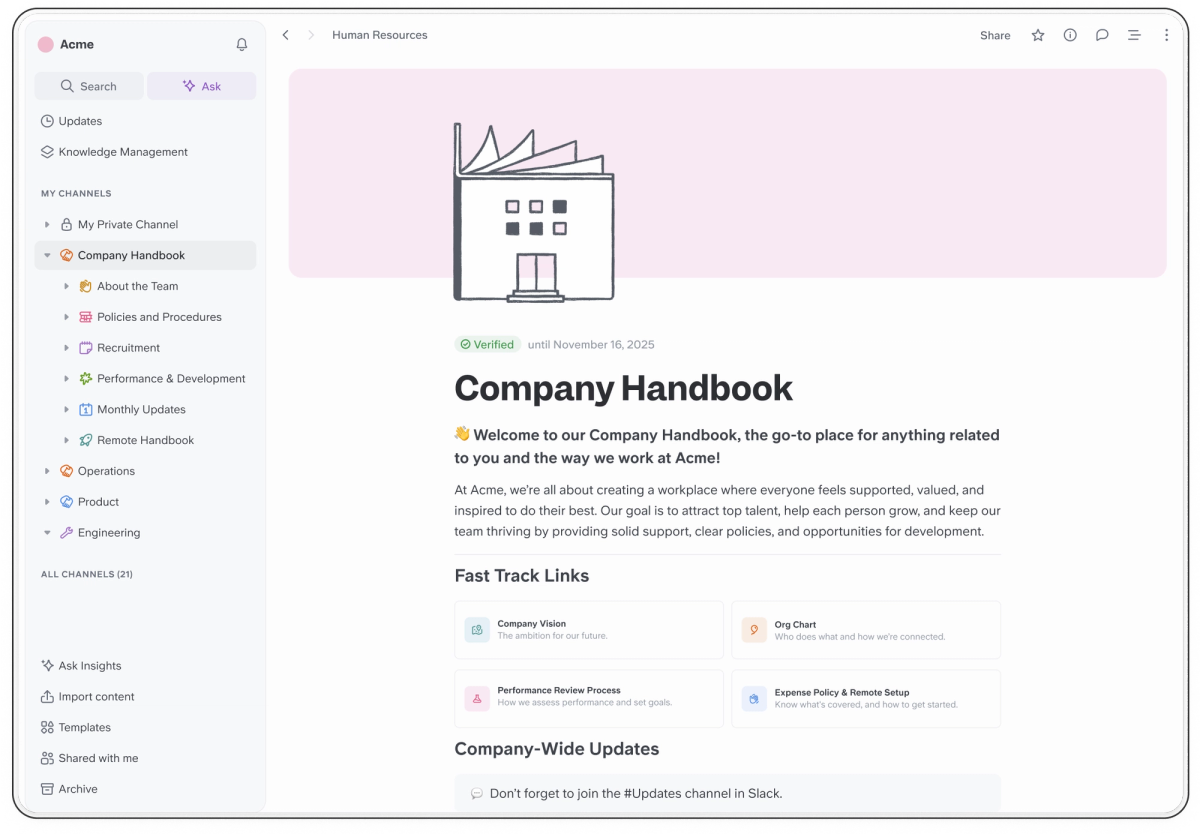
Discover Slite's AI powered knowledge base for quick access to trusted company info. Simply ask Slite and get the answers you need. Start for fre
Users generally appreciate Slite for its user-friendly interface and efficient collaboration features, which make team communication and document organization seamless. The introduction of Slite AI has particularly been highlighted positively for enhancing productivity. However, some users have raised concerns about limited customization options and occasional syncing issues. In terms of pricing, most find it fair for the offered features, contributing to an overall solid reputation, particularly for small to medium-sized teams.
MultiOn
Designing everyday AGI.
Users generally appreciate MultiOn for its versatility in facilitating multi-agent execution and its ability to handle structured work efficiently under governance rules. However, some users express concerns about potential conflicts or data overwriting when multiple agents engage simultaneously. The pricing sentiment is mixed, as some value the capabilities provided, while others find it challenging to justify the cost. Overall, MultiOn is seen as a robust tool with a good reputation among those needing structured AI management solutions, but it may require improvements in conflict resolution and cost transparency.
Slite
Not enough dataMultiOn
-46% vs last weekSlite
MultiOn
Slite
MultiOn
Slite
Pricing found: $8, $20, $8, $20
MultiOn
Slite (8)
MultiOn (10)
Only in Slite (10)
Only in MultiOn (10)
Only in Slite (15)
Only in MultiOn (15)
Slite
No complaints found
MultiOn
Slite
No data
MultiOn
Slite

MultiOn

Slite
MultiOn
Slite
MultiOn
eTPS — Effective Tokens Per Second: A Better Way to Measure Local LLM Performance
# [](https://www.reddit.com/r/ArtificialInteligence/?f=flair_name%3A%22%F0%9F%9B%A0%EF%B8%8F%20Project%20%2F%20Build%22)We're obsessed with raw tokens per second. Every hardware post leads with it. Every quantization comparison is ranked by it. It's the one number everyone agrees to report. It's al
Shared (1)
Only in Slite (4)
Slite is better suited for centralized document management due to its focus on a collaborative, AI-powered knowledge base designed for easy information retrieval and sharing.
Slite offers a clear per-seat pricing model starting from $8 to $20, whereas MultiOn adopts a tiered pricing approach, typically leaning towards enterprise solutions without specified base prices.
Both communities are relatively comparable given their similar company sizes, but Slite's engagement through integration with commonly used tools might offer a slight edge.
Yes, both tools can be integrated into a workflow, particularly given their overlapping integrations such as Slack and Google-related products.
Slite is generally easier to adopt initially due to its freemium model and focus on user-friendly interface, allowing teams simple onboarding and setup for document management.


