
Protect your supply chain and manage third-party cyber risk with SecurityScorecard. Trusted by 25,000+ organizations for continuous vendor monitoring
SecurityScorecard is praised for its comprehensive approach to evaluating and improving cybersecurity posture, with many users highlighting its detailed reporting and user-friendly interface as key strengths. While there are fewer complaints available in the current data set, some users may find intricate details challenging to interpret without adequate expertise in cybersecurity. Pricing sentiment appears to be generally favorable, with many considering the service's features and benefits to be worth the cost. Overall, SecurityScorecard enjoys a strong reputation as a reliable tool for enhancing cyber risk management and visibility.
Mentions (30d)
0
Reviews
0
Platforms
2
Sentiment
0%
0 positive

SecurityScorecard is praised for its comprehensive approach to evaluating and improving cybersecurity posture, with many users highlighting its detailed reporting and user-friendly interface as key strengths. While there are fewer complaints available in the current data set, some users may find intricate details challenging to interpret without adequate expertise in cybersecurity. Pricing sentiment appears to be generally favorable, with many considering the service's features and benefits to be worth the cost. Overall, SecurityScorecard enjoys a strong reputation as a reliable tool for enhancing cyber risk management and visibility.
Features
Use Cases
Industry
information technology & services
Employees
580
Funding Stage
Series E
Total Funding
$292.2M
The Mundane Risk
The biggest near-term AI safety risks aren't dramatic — they're mundane. And that's precisely why they're neglected. This essay argues three things: (1) mundane AI failures are already causing measurable damage at scale, (2) current alignment approaches may depend more heavily on sandboxed environments than the field openly acknowledges, and (3) capability convergence and deployment pressure are making accidental open-world exposure increasingly plausible before robust ethical reasoning exists. (written with the help by Claude 4.6 Opus) The Atomic Bomb Before the atomic bomb existed, the risk of nuclear annihilation was 0%. Those who warned about the theoretical possibility were easily dismissed. Why worry about a risk whose preconditions don't even exist yet? In The Precipice, Toby Ord argues that when the stakes are existential or near-existential, even small probabilities demand serious attention. When the expected harm is so large, dismissing it on the basis of low likelihood is not caution but negligence. Before the bomb was built, the total risk of nuclear annihilation was absolutely 0%. Yet once it was invented, even a fraction of a percent justified enormous investment in prevention. The question was never "is nuclear war likely?" It was "can we afford to be wrong?" The same logic applies to AI. The preconditions for the next class of risk are visibly converging. And we're repeating the same pattern of dismissal that history has punished before. The Pattern As Leopold Aschenbrenner noted in Situational Awareness: "It sounds crazy, but remember when everyone was saying we wouldn't connect AI to the internet?" He predicted the next boundary to fall would be "we'll make sure a human is always in the loop." That prediction has already come true. Last year I argued how AI might accidentally escape the lab as a consequence of cumulative human error (for a vivid illustration of a parallel chain of events, I'd recommend the Frank scenario). At the time of writing, the argument that cumulative human oversight failures could compromise AI agents was dismissed as implausible: the consensus was that existing security protocols were sufficient. Months later, OpenClaw validated the structural pattern at scale. Not because the AI was misaligned, but because humans deployed it faster than they could secure it. It was clear: the failure modes from the Frank scenario could no longer be dismissed as simple fiction; it was now a structural pattern that OpenClaw validated in the real world. And this was all just with relatively simple autonomous agents. As capabilities increase, the same pattern of human excitement overriding security oversight doesn't go away – it gets worse – and because the agents are more capable, the failures also become a lot harder to detect. The numbers confirm this: [88% of organizations reported confirmed or suspected AI agent security incidents]() 14.4% of AI agents go live with full security and IT approval 93% of exposed OpenClaw instances reportedly had exploitable vulnerabilities [[MOU1]](#_msocom_1) Mundane risk pathways aren't hypothetical. They're already here in rudimentary form, and they're being neglected. We’ve known for a long time that existential risks aren’t just decisive, they’re also accumulative. And so far every safety breach has been mundane with systems operating inside their intended environments. No agent tries to escape on their own — their behaviour (like Frank’s) is usually a direct consequence of what they were deployed to do combined with accidental human oversight. So consider: if we can't secure the sandbox door with today's relatively simple agents, what happens when the systems inside are capable enough that a single oversight failure doesn't just expose a vulnerability? The capabilities required for autonomous operation outside the lab are converging on a known timeline. If AI were to leave the nest today, would it be prepared for an uncurated, messy world? Or would it be like the child and the socket? Current Alignment: Progress, But Fast Enough? Admittedly, the field is making real progress and Anthropic's recent publication "Teaching Claude Why" represents a real step forward. It was long suspected that misalignment doesn't require intent, just pattern completion over a self-referential dataset. But Anthropic has now traced one empirical pathway with findings consistent with the idea that scheming-like behaviour emerges from default priors in pre-training. Furthermore, their study also confirmed that rule-following doesn't generalize well, and understanding why matters more than simply knowing what. The significance of this is that it puts traditional alignment strategies into serious doubt and highlights the fundamental limits that current constitutional AI and character-based approaches still do not resolve. After all, we now have strong empirical evidence that behavioural alignment issues are most likely shaped by default prio
View originalSextant: Making Claude Code Read Your Code Before Changing It
https://preview.redd.it/kmfzgtu0sqrg1.png?width=1536&format=png&auto=webp&s=4110707658e25253d1412487cc444dd96ef3a34d An architecture-aware engineering principles framework for Claude Code, built for real work on existing codebases: bug fixes, feature work, refactoring, code review, migration, and more. Instead of treating every request the same way, Sextant routes work by task type, applies rules that match the size of the change, and makes principle conflicts explicit instead of leaving them to guesswork. 1. Why Sextant Exists If you have used Claude Code on anything more serious than a toy project, you have probably seen the same patterns. Sometimes it starts editing too early. It reads the error trace, opens one nearby function, and jumps into a fix before it has actually located the root cause. Sometimes it ignores the shape of the existing system. You ask for a feature, and instead of extending the pattern that is already there, it invents a new one. And sometimes it applies the wrong amount of process. A tiny local change gets treated like an architecture exercise, while a cross-module change gets handled as if it were just a one-file patch. Sextant is built around a simple idea: first establish a safe baseline, then figure out what kind of task this is, and then apply the rules that make sense for that kind of change. The goal is not to add ceremony. The goal is to help Claude Code make better decisions before it starts modifying code. 2. Task-Type Routing Instead of One Generic Workflow Sextant is not one monolithic prompt. It is a set of specialized sub-skills, and Claude Code automatically matches the user’s request to the most relevant one. That matters because a bug fix should not behave like a migration, and a code review should not behave like a feature implementation. Here is the structure at a high level: https://preview.redd.it/nxja28vosqrg1.png?width=1594&format=png&auto=webp&s=9c9c885041ce6fcab31d955e93969f77d55a4eb5 One detail I like here is the disambiguation step. For example, the bug-fix skill first asks whether the issue is actually broken behavior or whether the requirement changed. If it is the latter, Sextant redirects the work to `modify-feature` instead of pretending it is a bug. That is a small design choice, but it prevents a lot of wasted motion. 3. Different Task Sizes Activate Different Rules Another thing Sextant does explicitly is treat small and large changes differently. The same `fix-bug` skill does not always run with the same rule depth. Instead, the rules that get activated depend on the task size: - Lightweight: single-function tweaks, config changes, and other narrow edits. These use the baseline rules, anti-pattern detection, and direct execution. - Medium: module-internal changes or work that introduces new functions or classes. These add checks like SRP, DRY, and interface contract review. - Large: cross-module changes or public interface changes. These bring in broader checks such as impact analysis and architecture compliance review. This is not left to vibes. Sextant defines a five-factor Impact Radius Scorecard based on things like files changed, public interface changes, dependency direction changes, data structure changes, and downstream blast radius. That score determines whether the work is treated as lightweight, medium, large, or architectural. What matters here is not the labels themselves. It is that the rule activation is explicit. Small tasks stay small. Bigger tasks do not get to pretend they are small just because the initial diff looks simple. 4. Principle Conflicts Are Handled as Decisions, Not Vibes A lot of engineering advice sounds reasonable in isolation. Keep things DRY. Avoid overengineering. Respect boundaries. Minimize change. Prefer secure choices. The hard part is when those principles collide. Sextant makes that collision explicit. Instead of vaguely saying “balance the tradeoffs,” it defines arbitration rules for common conflicts. A few examples: - DRY vs YAGNI: if shared logic has only one caller, YAGNI wins. - OCP vs YAGNI: if an interface has only one implementation, ship the concrete class directly. - DRY vs Layer Boundaries: if deduplication would cut across boundaries, the boundary wins. - Baseline vs Minimal Change: if you are fixing a bug and notice nearby baseline issues, minimal change usually wins. - Security vs Convenience: security wins. That matters more than it sounds. A lot of AI-generated changes go off track not because the code is syntactically wrong, but because the model does not know which principle should take priority in context. Sextant’s approach is to reduce that ambiguity. 5. Where Sextant Fits Compared with Superpowers and gstack In the Claude Code skills ecosystem, Superpowers (by Jesse Vincent / obra) and gstack (by Garry Tan) are two well-known frameworks. The comparison is not really about which one is “best.” It is about what kind of work each one is optimized for
View originalYes, SecurityScorecard offers a free tier. The pricing model is subscription + freemium + tiered.
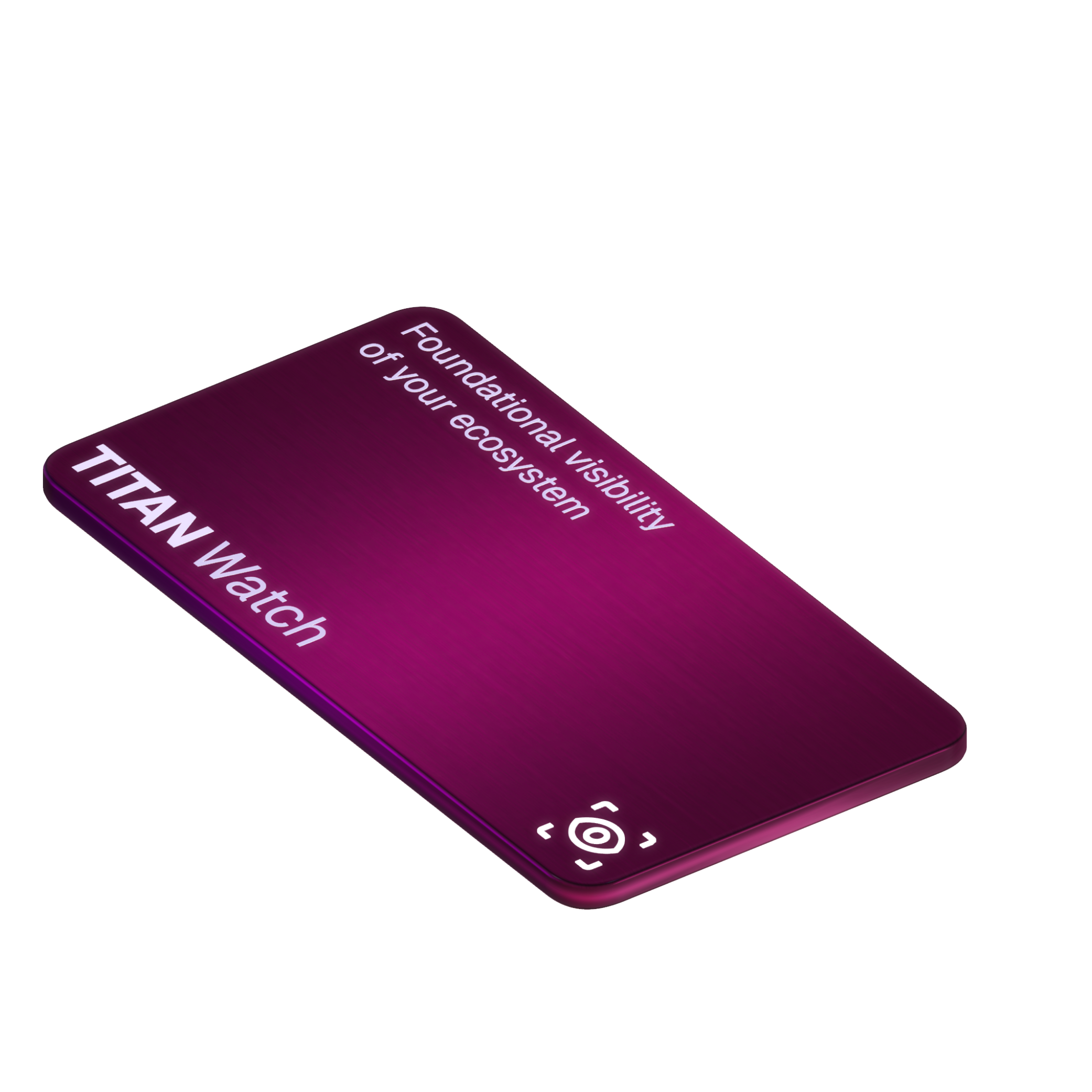
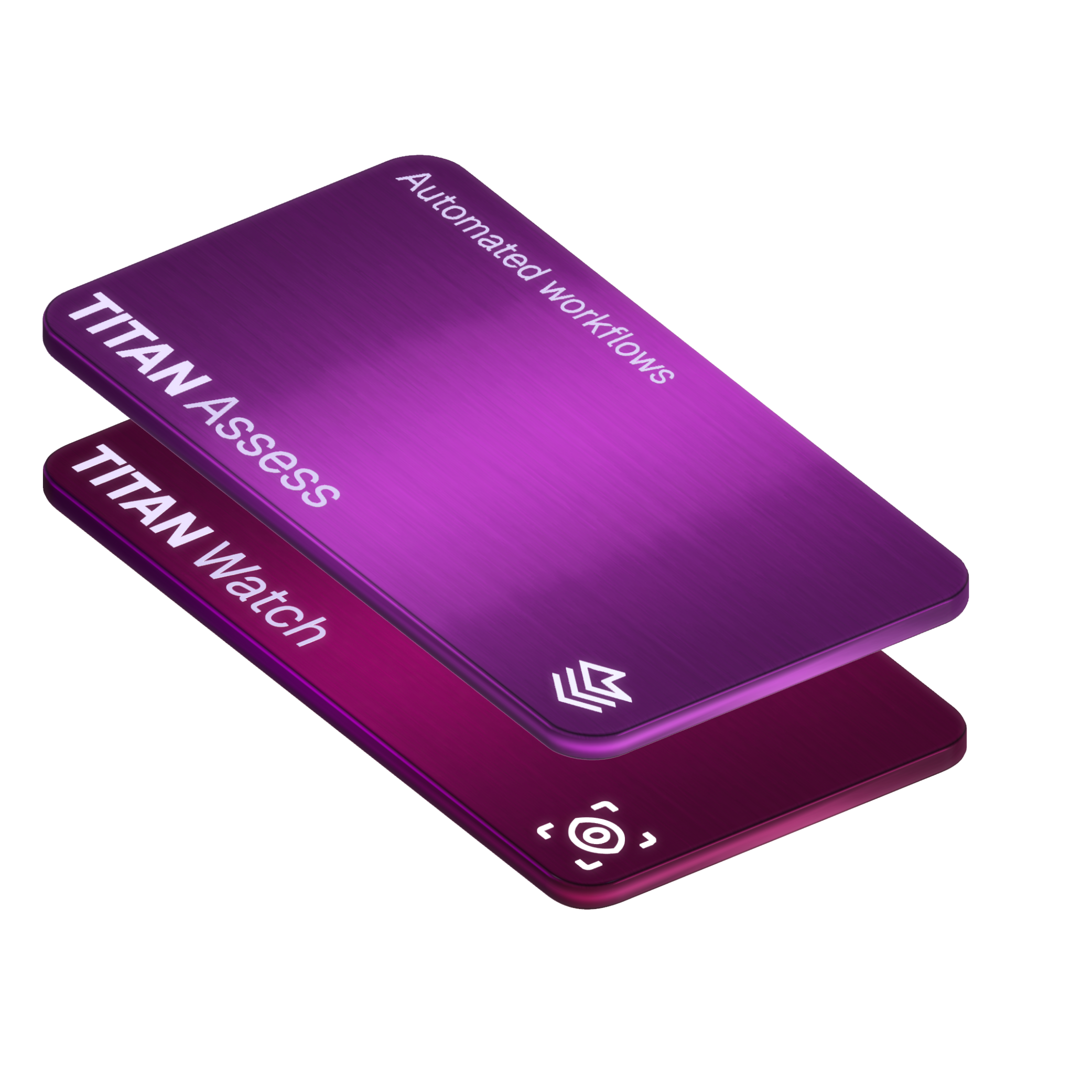
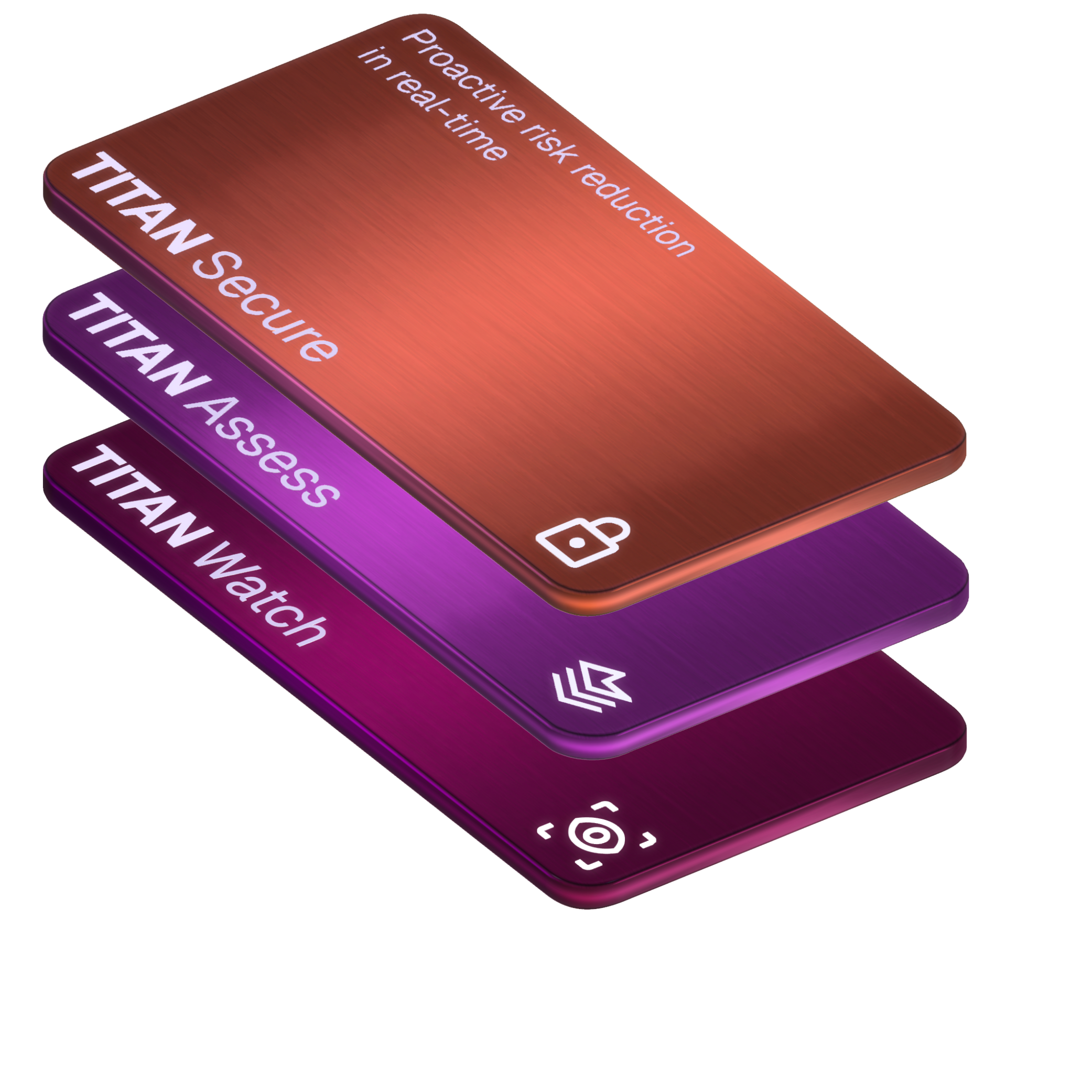
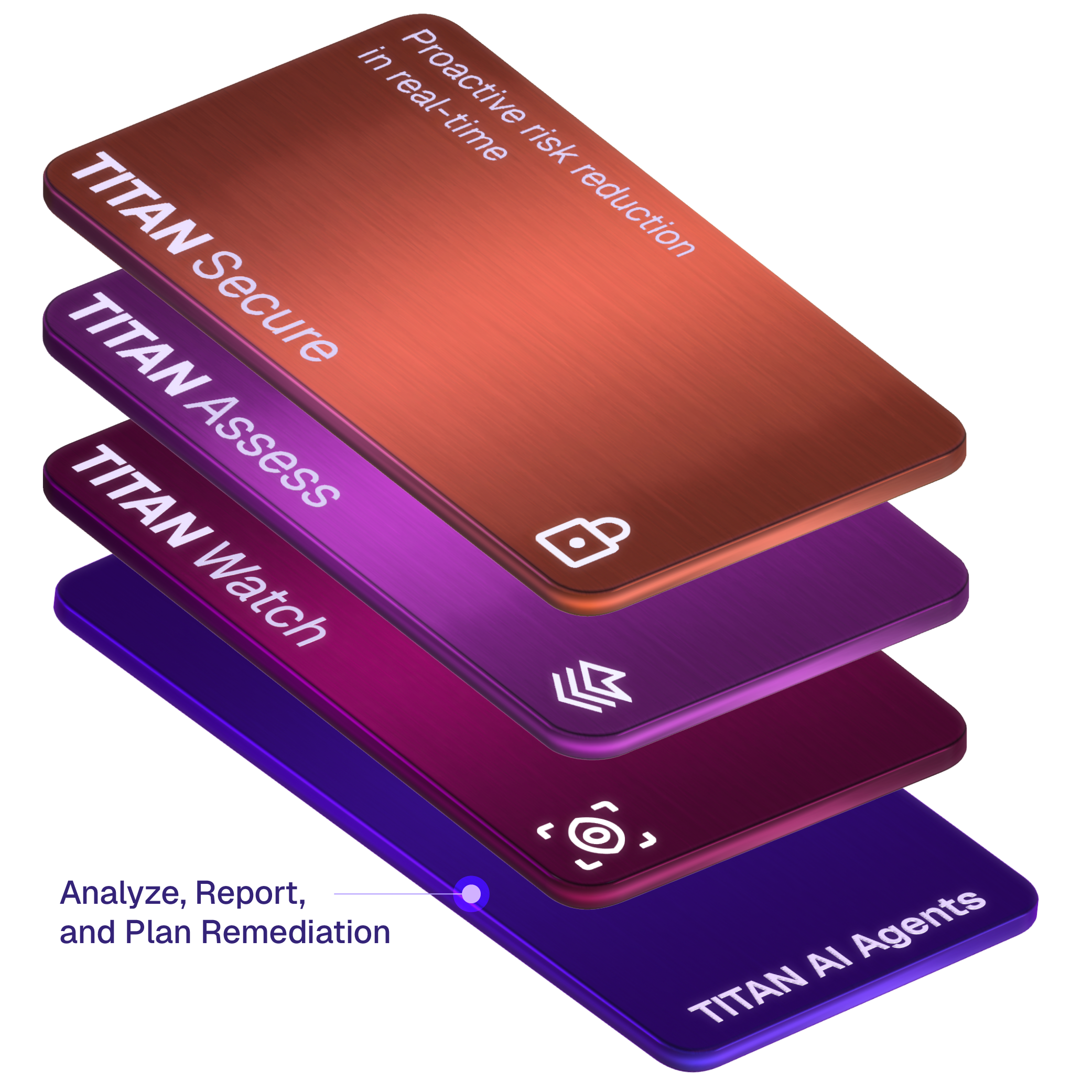
Key features include: Our proprietary data collection engine scans the entire public internet for complete attack surface visibility, TITAN AI correlates adversary TTPs with active telemetry from vendor infrastructure, The platform scans 100% of the internet daily, including active IPv6 space, We operate the world’s largest malware DNS sinkhole, detecting 2B+ daily requests, Automates analysis between reported policies and observed security behavior, Deflect up to 75% of incoming questionnaires, Achieve 100% vendors under management, Increase vendor engagement by a factor of 9x.
SecurityScorecard is commonly used for: Assessing third-party vendor security posture, Monitoring supply chain vulnerabilities in real-time, Automating risk assessment processes, Prioritizing remediation efforts based on threat intelligence, Ensuring compliance with industry regulations, Identifying and mitigating potential data breaches.
SecurityScorecard integrates with: ServiceNow, Splunk, Slack, Jira, Microsoft Teams, AWS Security Hub, Azure Security Center, Google Cloud Security, Trello, Okta.
Apr 10, 2026


