
The #1 rated sales lead AI software for businesses to do B2B direct dials, mobile numbers, and find emails. Join 1,000,000+ Sales Execs and sign up fo
Seamless.AI is generally praised for its user-friendly interface and effective lead generation capabilities, with many users giving high ratings of 4.5 to 5 stars. However, there are some complaints about the accuracy of data and occasionally limited customer support. Pricing sentiment is generally neutral, as it is deemed reasonable by many, but specific critiques are not highlighted in reviews or mentions. Overall, Seamless.AI has a positive reputation, though with some room for improvement in data reliability and support services.
Mentions (30d)
12
1 this week
Avg Rating
4.4
20 reviews
Platforms
2
Sentiment
14%
7 positive
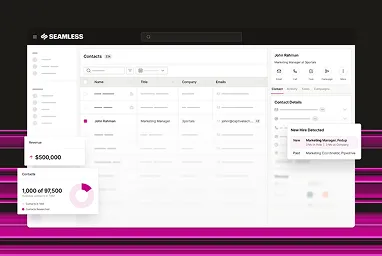
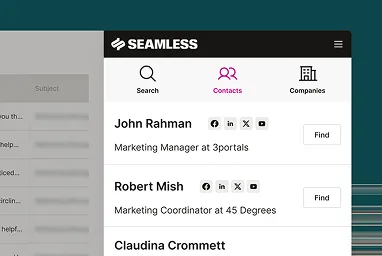

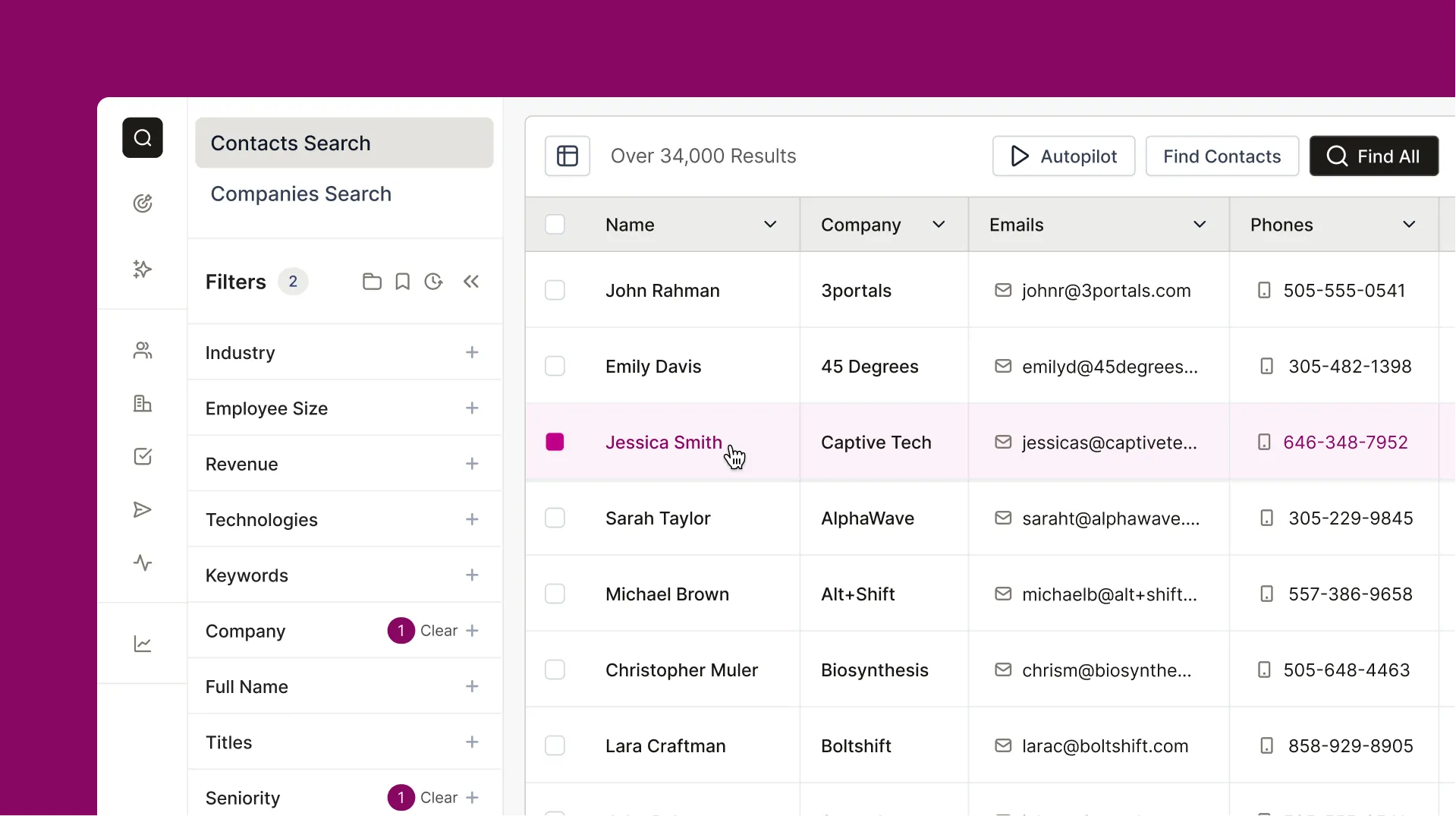

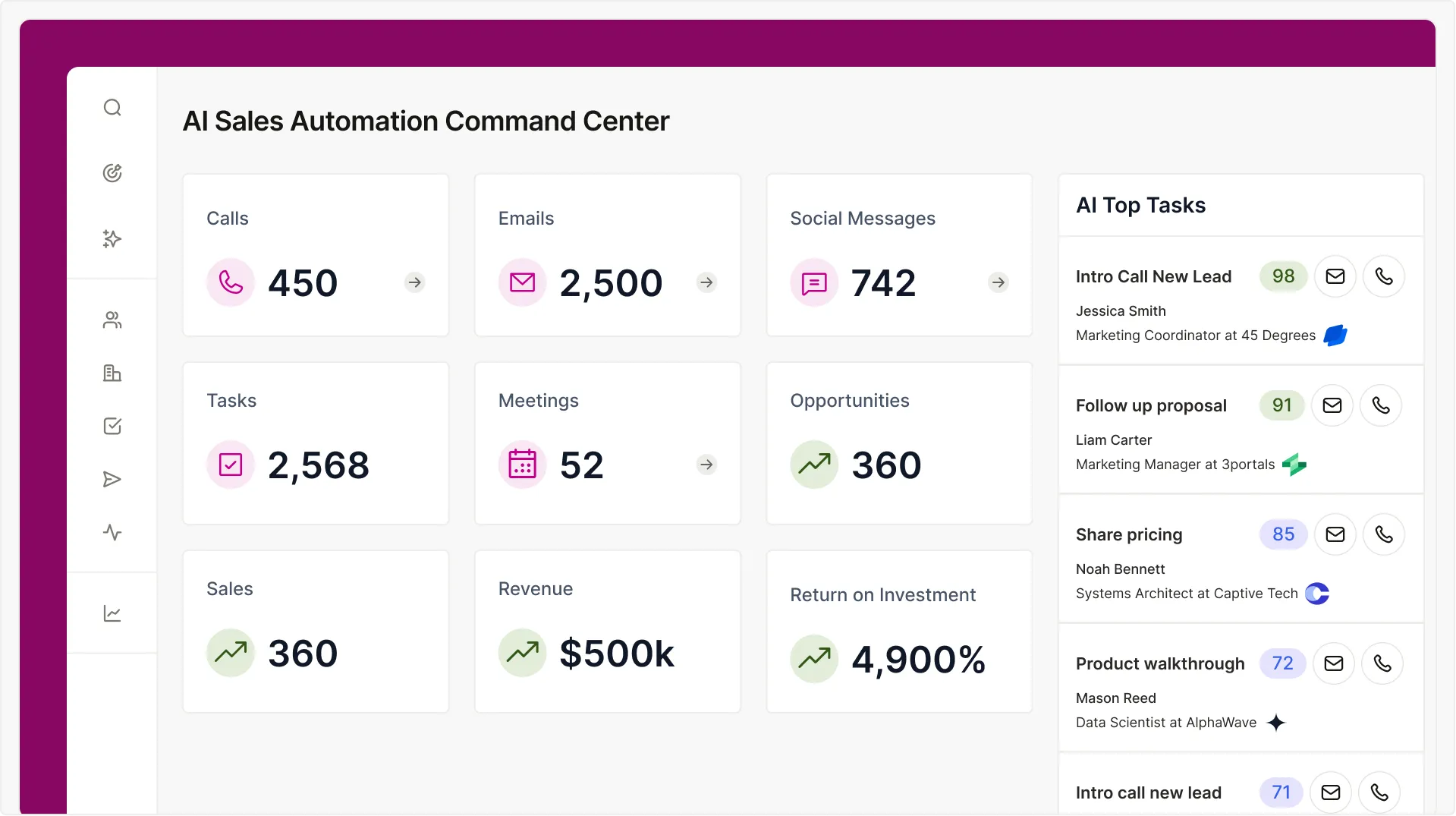
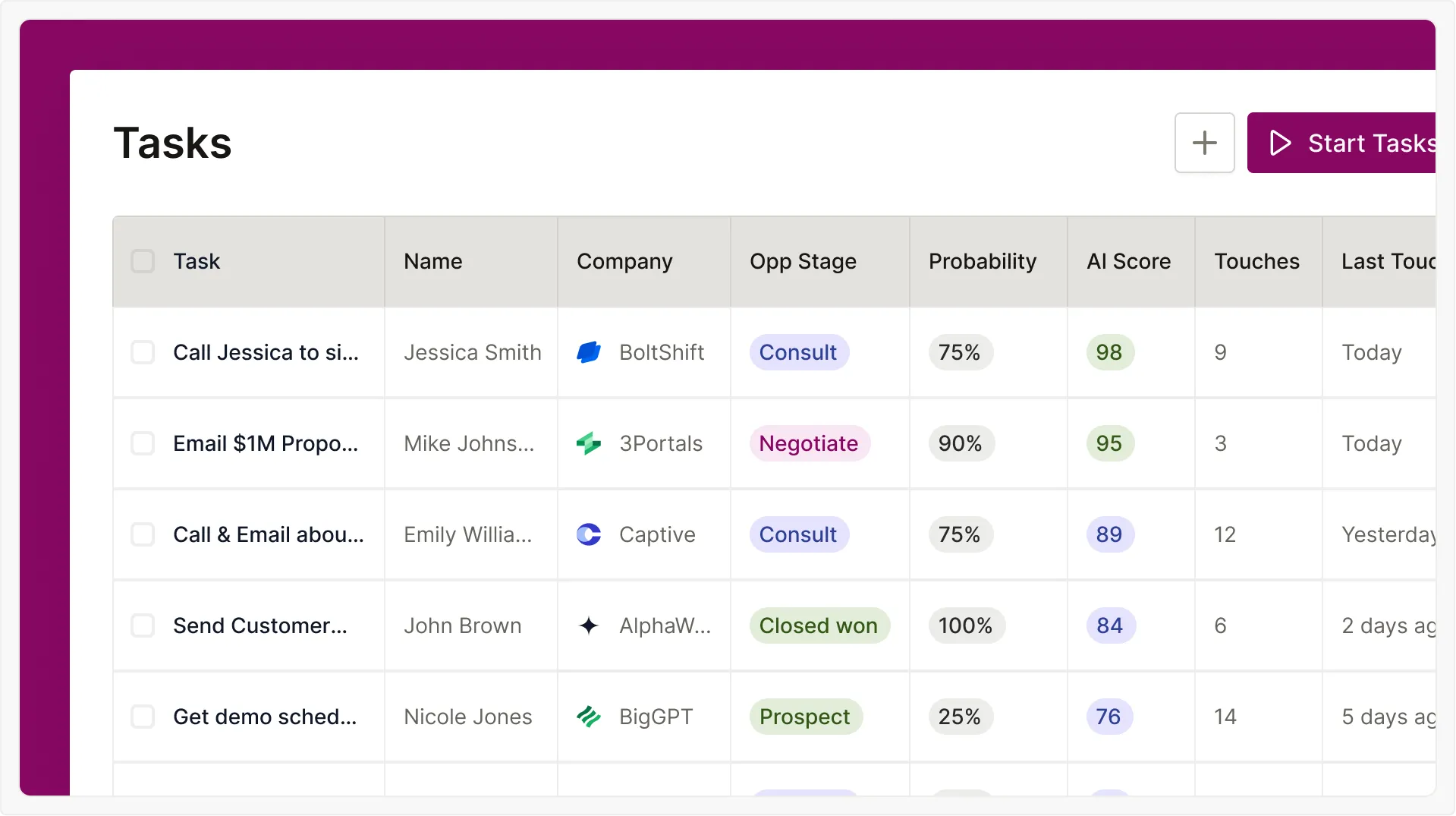
Seamless.AI is generally praised for its user-friendly interface and effective lead generation capabilities, with many users giving high ratings of 4.5 to 5 stars. However, there are some complaints about the accuracy of data and occasionally limited customer support. Pricing sentiment is generally neutral, as it is deemed reasonable by many, but specific critiques are not highlighted in reviews or mentions. Overall, Seamless.AI has a positive reputation, though with some room for improvement in data reliability and support services.
Features
Use Cases
Industry
information technology & services
Employees
2
Funding Stage
Series A
Total Funding
$77.7M
Why AI is erasing your mental map of your projects
Lately, a concerning pattern is emerging: developers are struggling to maintain a mental map of their own projects. We can recall the logic of a project we hand-coded five years ago, yet the one we built with an LLM last week feels like a blur. You aren't losing your edge—your brain is simply reacting to a drastic shift in how you process information. Here is why relying on LLMs is erasing our mental models: 1. The GPS Effect: before smartphones, you built a spatial map of cities. Today, a GPS gets you there seamlessly—but if the screen turns off, you’re lost. Reading LLM-generated code is a passive activity. It delivers the destination but skips the "route-building" required for long-term memory. 2. The Loss of Micro-Decisions: deep learning requires struggle. When you code line-by-line, you make dozens of micro-decisions: naming variables, choosing loops, catching edge cases. LLMs remove this cognitive friction. Without the frustration and the "eureka!" moments, your brain lacks the "hooks" it needs to store the logic. 3. The Speed Trap: memory needs time to consolidate. When you work at the high velocity of AI, your brain lacks the "cool-down" period to archive logic. Memories of the project overlap, blur, and eventually overwrite each other. The bottom line: architecture requires Intimacy The narrative that we can "just focus on the big picture" is a trap. Good architecture requires an intimate understanding of the materials. If you externalize all the implementation to AI, your high-level architecture inevitably becomes brittle. We cannot be "pure architects" if we no longer understand how the bricks are laid.
View originalg2
What do you like best about Seamless (formally Seamless.AI)?It is good for cleaning lists and building CRM database. Review collected by and hosted on G2.com.What do you dislike about Seamless (formally Seamless.AI)?It's not as clean as ZoomInfo was. It is much cheaper though which is why we switched. It doesn't allow custom import fields. Review collected by and hosted on G2.com.
What do you like best about Seamless (formally Seamless.AI)?I use Seamless to find accurate contact data and build targeted prospect lists for faster sales outreach. It solves the problem of slow, manual, and inaccurate lead generation by instantly finding and verifying the right contacts for sales outreach. I like that it gives instant, accurate leads without the manual searching. The initial setup was easy. Review collected by and hosted on G2.com.What do you dislike about Seamless (formally Seamless.AI)?Sometimes I find it consuming to use certain tabs. Review collected by and hosted on G2.com.
What do you like best about Seamless (formally Seamless.AI)?honestly the chrome extension is the best part. i use it a lot when scrolling linkedin to find emails for b2b partnerships and software companies for my site. finding the right contact info used to take forever but now it just takes seconds. data quality is surprisingly good, especially for tech startups. Review collected by and hosted on G2.com.What do you dislike about Seamless (formally Seamless.AI)?the dashboard is a bit cluttered when you first log in. there are just too many buttons everywhere so it takes a couple of days to figure things out. also emails are mostly accurate but sometimes direct phone numbers are old. it's kinda expected with this type of tool though. Review collected by and hosted on G2.com.
What do you like best about Seamless (formally Seamless.AI)?We love the flexibility that the Seamless system provides! We appreciate having the ability to select and target new prospects by any variable we choose and to do so however and whenever it suits our needs. Review collected by and hosted on G2.com.What do you dislike about Seamless (formally Seamless.AI)?We're still getting to know the application Review collected by and hosted on G2.com.
What do you like best about Seamless (formally Seamless.AI)?Customer support. I'm working with Daniel Anderer and his customer support has been fantastic. Patient, informative, and friendly. I’m currently trying to use it as a lead gen site, and this partnership only began about a week ago. So far, I haven’t received a single reply to the email blasts I’ve sent out, but it’s still early and the sample size is on the smaller side. Since I’m only sending around 1K emails at a time (approx.), it’s hard to be too critical at this point. Review collected by and hosted on G2.com.What do you dislike about Seamless (formally Seamless.AI)?Hard to tell just yet. Only about a week into having access to the service thus far. Only being able to "Find" 50 contacts a page thing is a major drag. Additionally, if someone doesn't "Find" all their 1K contacts every day, the contacts should role over to the next day. Additionally, isn't this automated? Why wouldn't I start out every Monday with access to 3K contacts if I didn't "Find"/Research any over the weekend? Review collected by and hosted on G2.com.
What do you like best about Seamless (formally Seamless.AI)?What I like best about Seamless.AI is how quickly it finds accurate contact info and keeps data up to date, saving a lot of time in prospecting. Review collected by and hosted on G2.com.What do you dislike about Seamless (formally Seamless.AI)?What I dislike about Seamless.AI is that the data can sometimes be inaccurate or outdated, and the platform can feel unreliable at times. Many users also mention poor customer support and a frustrating cancellation process. Review collected by and hosted on G2.com.
What do you like best about Seamless (formally Seamless.AI)?The only redeeming quality of Seamless.AI was its integration with Salesforce — that part worked. Unfortunately, much of the contact data populated into our CRM was inaccurate, which ultimately defeated the purpose. Review collected by and hosted on G2.com.What do you dislike about Seamless (formally Seamless.AI)?Terrible customer service experience. I reached out multiple times to discuss amending my contract due to changes in our systems — a completely reasonable request — and was met with complete silence. No response to emails, no response through the help desk. They simply ghosted me. What's most frustrating is that I wasn't asking for anything unreasonable. I just wanted the opportunity to explain my situation and work together toward a solution. They wouldn't even give me that. Zero communication, zero flexibility, zero accountability. The product may work for some, but if you ever run into a contract or account issue, don't expect any support. I would not use Seamless.AI again and would not recommend them to anyone who values responsive, professional customer service. Review collected by and hosted on G2.com.
What do you like best about Seamless (formally Seamless.AI)?I like being able to search on Titles across up to 15 accounts. Everything is working great with Seamless. The lower price point was another reason for switching to it. The initial setup was super easy. Review collected by and hosted on G2.com.What do you dislike about Seamless (formally Seamless.AI)?Everything works great Review collected by and hosted on G2.com.
What do you like best about Seamless (formally Seamless.AI)?Seamless.ai (the B2B sales intelligence platform) consistently highlight its real-time search engine as its most powerful asset. Unlike static databases, the platform uses AI to crawl the web instantly, often uncovering verified emails and direct dials that competitors miss. Sales teams value the Chrome Extension, which allows them to capture leads directly from LinkedIn or company websites and sync them to CRMs like Salesforce or HubSpot with one click. Additionally, users appreciate the "Autopilot" feature for automating list-building and the "Smart Lists" that provide fresh daily leads, significantly reducing manual research time and boosting overall prospecting efficiency. Review collected by and hosted on G2.com.What do you dislike about Seamless (formally Seamless.AI)?While the lead generation is fast, the data accuracy can be a major headache. I’ve run into too many "verified" emails that ended up bouncing, which puts my domain reputation at risk. The user interface also feels a bit cluttered and overwhelming, making the learning curve steeper than it needs to be. Review collected by and hosted on G2.com.
What do you like best about Seamless (formally Seamless.AI)?The data looks accurate and is properly saved. Great job keeping everything updated! Having buyer intent really helps with profiling and filtering, especially since we’re dealing with construction and trade contractors. Review collected by and hosted on G2.com.What do you dislike about Seamless (formally Seamless.AI)?The only challenge is that several people with the same title may appear separately across different pages during searches. We raised this with Seamless, and they responded right away. They are still updating and improving the system, which is promising. Review collected by and hosted on G2.com.
"I'm switching to the new hotness" - but is it that simple?
Every time a new frontier AI model drops, or a lab adjusts limits\guardrails; the various subreddits seem to light up with a cycle of upset people saying they're are going to drop their lab A subscription for lab B. And others then chime in saying you should switch to whatever model and plan is tops at any given moment and\or works best for your needs - have no loyalty. But none of these statements and the follow-on discussions ever seems to account for the harness experiences provided by each lab - each of which have their own pros\cons\features\UX\etc. I assume folks on these Max/Pro subs are leveraging the included 1st-party harnesses, and it sure feels in my own experience so far like rotating harness setups every few months would be massively disruptive to established workflows. Am I missing something? Are there setups or other sorcery that can make switching from one platform\lab\model to another seamless? submitted by /u/fredlesss [link] [comments]
View originalClaude Opus 4.8 vs GLM 5.2
This week I ran out of Max 20x tokens so decided to take the plunge with GLM 5.2. This is my personal experience, so sample size is small. I was really curious how good GLM 5.2 is and if it's acutally much cheaper (like I seem to be reading). I use Claude Code as the harness for both Opus and GLM. Bit fiddly to set GLM up, but plenty of docs. And I have the 20x subscription in both Claude and z.ai GLM. I'm use the models for planning and coding product features, running always-on agents against live products and a small amount of marketing automation. I don't see any difference between Opus 4.8 and GLM 5.2. I was expecting this to be big. It's not. Right now I'd gladly use either. There are a few caveats: GLM is slightly slower; browsing the web using logged-in accounts hasn't worked well (this is seamless in Claude with the Chrome extension); no remote control; and no working with images (though I haven't tried). As an example of not seeing the difference, today I was working on a feature and I thought I was using Opus until I got a z.ai error message. Which brings me to price. Is GLM 5.2 cheaper? I don't think so. On token usage, GLM 5.2's 20x subscription drains faster than the Claude Max version. I drained the plan in 2 days (OK, it said I used a billion tokens). Nominally, both GLM's per token cost, and the cost of the Max subscription are cheaper. But I'm finding GLM to be about the same price or more. I think it's using more tokens, though it could be that plan limits are lower (GLM also has peak and off peak pricing). I've confirmed that the difference is not a caching issue. Finding out GLM 5.2 was around the same price was a real surprise. One other side note: I researched the Ts&Cs and z.ai say they don't use your inputs/outputs to train their models if you have a subscription or use the API. So, assuming you trust the company at it's word you don't have to worry about your IP leaking (I'm not a lawyer and I'm not your lawyer). submitted by /u/lukasco [link] [comments]
View originalDeterministic folding for LLM agents: continuity without LLM compaction
I just open-sourced Context Warp Drive, a continuity engine for LLM agents. Repo: https://github.com/dogtorjonah/context-warp-drive Right now, the industry has two bad ways of dealing with long agent horizons: Just ride the 1M-2M context window. Use an LLM to summarize older messages ("compaction"). LLM summaries are inconsistent, they burn an extra model round-trip, they quietly drop the exact identifiers your agent needs (UUIDs, paths, hashes), and worst of all, they constantly rewrite the prefix—which trashes your provider prompt cache. This library takes a different approach: deterministic folding. As the agent works, older context is folded into deterministic skeletons. Instead of linearly bloating to the ceiling, the active context sawtooths—building up efficiently, then dropping back down to a clean floor without losing continuity. Why not just use the 1M token window? Because 95% of what an agent carries with it on a long task isn't needed right now. It's looking for the needle in the haystack, but massive context windows force it to carry all the hay. A larger window raises the ceiling, but it doesn't move the floor where models reason best. Long-context evals keep showing the same thing—models do not use giant contexts as cleanly as the marketing numbers imply: Lost in the Middle — models degrade when needed information is buried in the middle of long context. RULER — large drops as context length and task complexity increase, even for models advertised as long-context. Context Length Alone Hurts LLM Performance Despite Perfect Retrieval — length itself hurts performance even when retrieval succeeds. Intelligence Degradation in Long-Context LLMs — models can collapse past critical context thresholds even when input remains relevant. By keeping the agent deterministically folding with a warm cache and a low context band, you keep it snappy, cheap, and focused. You leave the hay behind until it's actually needed. How Context Warp Drive works: The Rebirth Seed: The continuity package that makes the full reset possible. It carries the recent user and AI messages, what the agent was actively working on and editing, its execution plan state, preserved exact identifiers from the full trace, and episodic context from earlier work. It is not a vague summary—it is a structured, deterministic snapshot the agent can wake up from and continue seamlessly. Cache-Hot Appending: As the agent works, older turns fold into compact bands that append onto the rebirth seed. The context builds up over time, but because the seed stays byte-identical, you pay for cheap cache reads turn after turn instead of expensive fresh inputs. The Sawtooth Reset: You can't append forever. When measured input pressure hits your configured ceiling, the engine performs the full sawtooth—the context drops back to a fresh rebirth seed and the cycle continues from a low-context floor. Zero-LLM Folding: Raw chat history stays preserved as the source of truth, but the model sees a deterministic compact view. Tool calls, paths, receipts, retained reasoning, and exact identifiers are all preserved without asking another model to summarize anything. Episodic Recall: When the agent re-touches a path or concept from before the reset, the engine pages the relevant folded detail back in. The agent doesn't carry all the hay—it pulls it back when it matters. Task Rail: I also included a portable execution primitive called TaskRail. It keeps long-horizon plan state outside the prompt: steps, progress, acceptance criteria, and serializable checkpoints. Combined with folding and rebirth seeds, the agent stays low-context while still knowing exactly where it is in a multi-step workflow. What's in the repo: Core folding engine, provider-agnostic across Anthropic content blocks, OpenAI-style tool_calls, and Gemini parts. Anthropic prompt-cache breakpoint helpers to maximize read-hits. Raw rebirth seed renderer. Model-aware context budget resolver. Fold recall and episodic recall (with an optional SQLite episode store). Portable Task Rail state machine. Gemini CLI and Codex CLI folding adapters. There are a lot of knobs you can tune, but the core philosophy is the same: use the 1M window as safety headroom, not as the operating band. (Not on npm yet—install from source for now.) I've been running this in my own multi-agent orchestration stack for months and completely dropped LLM compaction. The difference is fundamental: the agent stops treating context as a giant backpack and starts treating it like a paged working set—small, hot, recoverable, and always grounded in the raw trace. submitted by /u/MusicToThyEars [link] [comments]
View originalWe built ModelWitch: A native iOS & Apple Watch utility to track your active Claude sessions and live Anthropic API token spend. (Giving away 30 Lifetime upgrades!)
Hey r/ClaudeAI, Like a lot of you, our team likes to use Claude Pro and Claude Code all day long. But we kept running into the same frustrating workflow issue: whenever we stepped away from our computers to grab a coffee, head to lunch, or take a quick break, we had absolutely zero visibility into where our active session metrics or weekly utilization cycles stood on our mobile devices. Nothing kills a deep coding flow faster than sitting back down at your desk only to realize your remote session has unexpectedly stagnated while you were away. Furthermore, if you use terminal agents or custom integrations, Anthropic’s official API cost report suffers from a strict 24-hour lag—meaning today’s actual financial spend is completely invisible until tomorrow. We wanted a seamless, native way to check our Claude Pro data, monitor live API expenses, and receive threshold alerts before a workflow cycle runs dry. So, we built ModelWitch to solve this. It is a standalone iOS and Apple Watch usage utility designed specifically around how power users and developers actually work. Check out the 25-second workflow video to see it in action: Secure OAuth Login ➔ Authorize ➔ Add Admin API Key for Live Estimates ➔ Enable Alerts ➔ Place the Home Screen Widget. Complete setup takes less than a minute! 🔮 What makes ModelWitch different? Secure Official OAuth Flow: Log in directly via a secure browser window. Your password never touches the app, and you don't have to play password-scientist copying or pasting brittle desktop session cookies. Real-Time Intra-Day API Estimates: To beat Anthropic's 24-hour reporting lag, ModelWitch locally parses your raw token counts, prompt-caching multipliers, and Batch API discounts to give you an "Estimated incl. today" dollar burn metric alongside your official billed total. Optimized Background Sync: iOS is notoriously stingy with background widget refresh budgets. To fight widget stagnation, ModelWitch Premium uses a dedicated push notification pipeline to trigger background updates far more aggressively than standard iOS loops alone. 100% Standalone on Mobile: No companion Mac desktop application required to be running constantly in the background. It pulls your metrics directly on-device and syncs cleanly to your Apple Watch complications. 🎁 The Free Tier vs. Our Community Giveaway As per Rule 7, ModelWitch is completely free to download, try, and use out-of-the-box. The core tier is completely ad-free, locally cached, and includes our live usage gauges, the full Anthropic API cost dashboard (complete with our new real-time intra-day estimates), historical charts, and smart error recovery—with no payment or extra account registration required. But we want to give back to the sub that helped inspire our features. We are giving away 30 Lifetime Premium upgrades to the first 30 community members who comment on this thread. If you want to grab one of the 30 lifetime keys, just leave a comment below with your feedback, feature requests, or your favorite Claude Code setup. We will privately DM you an official App Store promotional unlock link as the comments roll in! App Store Link:https://apps.apple.com/de/app/modelwitch/id6778496717?l=en-GB Disclaimer: ModelWitch is an independent, third-party app and is not affiliated with, endorsed by, or sponsored by Anthropic. Your credentials are securely encrypted locally in your iOS Keychain. submitted by /u/LumenIFDev [link] [comments]
View originalDeterministic folding for LLM agents: continuity without LLM compaction
I just open-sourced Context Warp Drive, a continuity engine for LLM agents. Repo: https://github.com/dogtorjonah/context-warp-drive Right now, the industry has two bad ways of dealing with long agent horizons: Just ride the 1M-2M context window. Use an LLM to summarize older messages ("compaction"). LLM summaries are inconsistent, they burn an extra model round-trip, they quietly drop the exact identifiers your agent needs (UUIDs, paths, hashes), and worst of all, they constantly rewrite the prefix—which trashes your provider prompt cache. This library takes a different approach: deterministic folding. As the agent works, older context is folded into deterministic skeletons. Instead of linearly bloating to the ceiling, the active context sawtooths—building up efficiently, then dropping back down to a clean floor without losing continuity. Why not just use the 1M token window? Because 95% of what an agent carries with it on a long task isn't needed right now. It's looking for the needle in the haystack, but massive context windows force it to carry all the hay. A larger window raises the ceiling, but it doesn't move the floor where models reason best. Long-context evals keep showing the same thing—models do not use giant contexts as cleanly as the marketing numbers imply: Lost in the Middle — models degrade when needed information is buried in the middle of long context. RULER — large drops as context length and task complexity increase, even for models advertised as long-context. Context Length Alone Hurts LLM Performance Despite Perfect Retrieval — length itself hurts performance even when retrieval succeeds. Intelligence Degradation in Long-Context LLMs — models can collapse past critical context thresholds even when input remains relevant. By keeping the agent deterministically folding with a warm cache and a low context band, you keep it snappy, cheap, and focused. You leave the hay behind until it's actually needed. How Context Warp Drive works: The Rebirth Seed: The continuity package that makes the full reset possible. It carries the recent user and AI messages, what the agent was actively working on and editing, its execution plan state, preserved exact identifiers from the full trace, and episodic context from earlier work. It is not a vague summary—it is a structured, deterministic snapshot the agent can wake up from and continue seamlessly. Cache-Hot Appending: As the agent works, older turns fold into compact bands that append onto the rebirth seed. The context builds up over time, but because the seed stays byte-identical, you pay for cheap cache reads turn after turn instead of expensive fresh inputs. The Sawtooth Reset: You can't append forever. When measured input pressure hits your configured ceiling, the engine performs the full sawtooth—the context drops back to a fresh rebirth seed and the cycle continues from a low-context floor. Zero-LLM Folding: Raw chat history stays preserved as the source of truth, but the model sees a deterministic compact view. Tool calls, paths, receipts, retained reasoning, and exact identifiers are all preserved without asking another model to summarize anything. Episodic Recall: When the agent re-touches a path or concept from before the reset, the engine pages the relevant folded detail back in. The agent doesn't carry all the hay—it pulls it back when it matters. Task Rail: I also included a portable execution primitive called TaskRail. It keeps long-horizon plan state outside the prompt: steps, progress, acceptance criteria, and serializable checkpoints. Combined with folding and rebirth seeds, the agent stays low-context while still knowing exactly where it is in a multi-step workflow. What's in the repo: Core folding engine, provider-agnostic across Anthropic content blocks, OpenAI-style tool_calls, and Gemini parts. Anthropic prompt-cache breakpoint helpers to maximize read-hits. Raw rebirth seed renderer. Model-aware context budget resolver. Fold recall and episodic recall (with an optional SQLite episode store). Portable Task Rail state machine. Gemini CLI and Codex CLI folding adapters. There are a lot of knobs you can tune, but the core philosophy is the same: use the 1M window as safety headroom, not as the operating band. (Not on npm yet—install from source for now.) I've been running this in my own multi-agent orchestration stack for months and completely dropped LLM compaction. The difference is fundamental: the agent stops treating context as a giant backpack and starts treating it like a paged working set—small, hot, recoverable, and always grounded in the raw trace. submitted by /u/MusicToThyEars [link] [comments]
View originalClaude conversation migration from personal account to corporate account
It seems this has been asked, or something similar has been asked, several times in the past, but I thought I'd ask again. When I first started using Claude professionally, we didn't have any AI policies at my place of work, so I just signed up using my personal email address. Now that my company has formalized AI adoption, they're asking that everyone move onto our corporate account using our work email addresses. I've been using Claude code for several months and have organized a lot of my data in locally available markdown files, so for the most part the transition is as seamless as possible. What I'm worried about losing, though, are current chats that are related to active and open projects. It would be great if I could retain these Claude Code conversations on my work account. I have wondered if chats are somehow kept locally on my Mac. When I resume previously closed chats, it only shows me the ones that were originally launched from that same folder location. I'm not sure. For context, I don't work in engineering or dev. I work in finance. The more technical side of how Claude Code works (I use it exclusively in warp fwiw) is outside my wheelhouse. submitted by /u/TYKOB [link] [comments]
View originalI pulled ~90,000 Reddit posts about what makes writing "sound like AI" to determine the biggest AI-slop giveaways (Part 2)
The majority of people can instantly tell when writing is generated by AI. For those who don't intend to get into the weeds about the data, the most obvious tell is the overused em dash (of course). Right behind that are flaws that software cannot easily scan. AI writing has a flat, predictable sentence rhythm and a constant, unnatural positivity. The paragraphs look polished but say nothing. This makes AI detection incredibly difficult. The signs that human readers trust the most are unfortunately the exact ones that software cannot measure. Methodology: I pulled the Arctic Shift Reddit archive: 89,239 posts across 47 subreddits (r/ChatGPT, r/WritingWithAI, r/SaaS, r/aiwars, r/ClaudeAI, r/Professors, r/Teachers, and the rest), 2021 to 2026. After filtering to posts that are actually about spotting AI writing, 7,984 were on-topic, split across three lanes: AI tools, writing, and SaaS. Every figure below is a share of those on-topic posts, not a raw count, because the topic barely existed before 2023 (26 on-topic posts in 2021, 86 in 2022) and then exploded (587 in 2023, 3,174 in 2025), so raw counts mostly track the subreddits growing. It is important to note that a keyword pass badly miscounts this topic, so I hand-audited a 600-post sample to record what people actually cite as a tell, versus what a pattern merely matches. Why does all AI writing converge on the same voice? Every model is tuned for a safe and agreeable register that reads as "good writing" to a grader, so everyone's default lands in the same place. One commenter put the effect plainly: "ChatGPT has a very recognizable cadence. And as soon as you catch it, it is impossible to focus on what's being written, because it's not even someone's actual thoughts." (r/ChatGPT) The tells, ranked by how often people actually cite them: Rank Tell What people say 1 The em dash (cited in 7.1% of audited posts, the top tell by a wide margin). "Em dashes have become the single most reliable tell of AI-generated text." (r/ChatGPT) 2 A flat, uniform sentence rhythm (cited 4.0%, and no scanner can see it). "Every YouTube video script I watch has the same cadence, the same verbiage, the same fucking chatGPT slop." (r/ChatGPT) 3 The "not just X, it's Y" cadence (cited 2.8%, the top sentence-level tell). People list it right next to the punctuation: "even beyond the obvious em dashes and 'not just x, it's y'." (r/ChatGPT) 4 The five-paragraph shape and the "in conclusion" wrap-up (cited 2.5%). They "leave in those super obvious lines like 'In conclusion, this essay has discussed...'." (r/ChatGPT) 5 The diction memes: "delve," "leverage," "seamless," "tapestry" (cited 1.3% as a cluster). A prompt people pass around to fix it: "no telltale signs like em dashes, overused words like 'seamless'." (r/ChatGPT) 6 Leftover assistant boilerplate, the "as an AI language model" line (cited 1.2%). The other line people forget to delete: "As an AI developed by OpenAI...". (r/ChatGPT) 7 The hollow scene-setting opener (cited 0.7%, low but iconic). A whole post written in the voice, quoted as the example: "I wanted to take a moment to delve into something that's been on my mind lately. In today's fast-paced digital landscape..." (r/ClaudeAI) Two tells belong in the top five but are missing from that table on purpose, because no keyword can catch them and the audited readers named them anyway. Sycophancy (the "great question!" opener, the reflexive refusal to take a side) is cited about as often as the antithesis cadence. So is saying nothing at length (i.e., prose that is grammatical and confident but makes no actual claim). A pattern-matcher is blind to both of those things so I could not check for them when I scanned for data, but they are obviously very real. It's important to note some corrections that resulted from me auditing the data myself. A naive keyword scanner gets this topic backwards in two ways. First, it massively over-counts ordinary words. "however," "thus," and "hence" are the single highest keyword match in the corpus at 6.3% of posts, and they're cited as a tell 0% of the time, because they're just people writing normally. The same is true for "nuanced," "comprehensive," "when it comes to," and "utilize." If you build a detector on a word list, this is most of what it flags, and it's nearly all false. Second, it under-counts or entirely misses the tells that rank highest with real readers, the flat rhythm and the fluent-but-empty paragraph, because no word list can see them. The lesson is that the cheap signal and the real signal point in different directions, which is exactly why the cited column, not the keyword column, drives the ranking above. There is a fair counterpoint that came up enough to belong here, which is that none of this is strictly an AI problem. The em dash is good typography. Formal diction and a tidy structure are how a lot of careful people, students and non-native English speakers especially, have
View originalTired of claudish language ? AI slop ? Now sound like karpathy or anyone you admire :)
it's 12 am and i should be asleep but i finally fixed something that's been bugging me for weeks so let me just dump it here. we all are familiar with the ai slop writing. all my AI-written stuff sounded the same. READMEs, PR descriptions, slack messages, every one of them opened with "this repository provides a comprehensive framework for..." or "we're excited to introduce a seamless solution that..." beige. committee voice. so instead of fighting the default one prompt at a time, i tried giving it a voice to keep. i picked a writer - karpathy :) and instead of just prompting "write like karpathy" and hoping, i had the model actually go read him. the blog, the X posts, the github readmes, the code comments, talk transcripts. then pull out the mechanical stuff, with real quotes. if you want to go with a shortcut here is the following you can put into your claude.md - open with the payload, never a preamble - ground every claim in a number, never an adjective ("~7% faster", not "fast") - coin a label for the idea, define it on the spot, reuse it - confident about direction, humble about specifics - earnest, with a dry wink, never breathless hype anyway i wrote up the exact ruleset and a little reusable skill that does the same research-and-distill for any author you want to pick. sharing in case it's useful to anyone else who's annoyed by the gray-goo default. https://gist.github.com/ximihoque/2c681f091887795238b05c2f07224d01 I am using this into my almost everything now, (fine tuned with my years of github pr comments, and commit messages) Good night! submitted by /u/ximihoque [link] [comments]
View originalI got Fable 5 to work on biology and create micro organism petri dishes
Hey everyone, I wanted to showcase a project I’ve been aggressively building over the last few days. Using a combination of Dash 4.2.0 as the backbone and the newly released Claude Fable 5, I set out to test the absolute boundaries of LLM safety filters, rapid application development, and advanced Dash component architecture. https://youtu.be/VNY4xFC7Ojk?is=outM5VbO4b9R8Byh What came out of this high-stakes mini "game jam" genuinely shocked me, and I want to share a glimpse of where this tech is heading—along with the open-source components that made it possible. The Challenge: "Bio-Hacking" Fable 5 When Fable 5 dropped, I immediately wanted to see where its guardrails lived. I chose a project concept that deliberately straddled the line of restricted categories: a biology/simulation workspace. My goal was to see if the model would flag or block deep development on a complex, cellular-level iteration of Conway’s Game of Life. Not only did it bypass the expected friction, but it also helped me build out a fully realized digital ecosystem: https://2plot.ai Petri Dish. 🔬 2plot.ai2plot.ai Petri Dish — An AI-vs-AI Evolution Arena Claude and Gemini pilot rival cell colonies in a live, interactive petri dish. You can spectate, co-pilot, or take total manual control—splicing organelles, growing cell families, and trying to out-evolve the rival LLM. You can even store, trade, or land your specimen on the high-score leaderboard. The Tech Stack & Architecture Building a real-time, LLM-driven cellular simulation requires serious frontend performance and UI flexibility. To pull this off in just a few days, I avoided heavy database bloat and leveraged a modular backend combined with a suite of cutting-edge, custom Dash components. Here is the exact stack that made it happen: 2plot.ai Petri Dish — The live, running simulation arena. Dash Documentation Boilerplate v1.0.0 — Markdown-driven docs with pluggable backends (Flask / FastAPI / Quart) and native LLM integration. Dash Pannellum 0.4.0 — Revived specifically for Dash 4.2+ to handle 360° panoramas, virtual tours, and immersive video. Dash MUI Charts — Seamless integration of MUI X Charts, Tree Views, and Time Pickers for Dash (complete with live demos). Deep Customization via Pip Install Python For the core interactive elements, I leaned heavily on the ecosystem we've been building out at Pip Install Python. If you aren't utilizing custom components to break out of standard layout limitations, you're missing out on Dash's true power. Pip Install Python - Custom Dash Components — Interactive documentation for 18+ custom components including dash-gauge, dash-model-viewer, and dash-pannellum. Dash Mantine Components — Crucial for sleek UI layout, offering 100+ highly customizable components built on the React Mantine library with native dark/light mode support and flawless consistency. Moving Forward We are entering an era where application architectures are becoming leaner, smarter, and incredibly dynamic. This project proves that with the right component foundation, you can prototype and launch fully functional, LLM-piloted simulations in a fraction of the time it used to take. I’m happy to offer my guidance, answer questions about the component configurations, or talk through how to handle real-time state updates with Dash 4.2.0 and Fable 5. Let me know what you think, or what you'd try to splice into the petri dish! 2plot.ai submitted by /u/Soolsily [link] [comments]
View originalFavorite Connectors
A big paint point with my AI chats was I’d do a protracted back and forth to get to a final artifact let’s say a workout plan, and financial portfolio, a product strategy. Then I’d later want to iterate on it but the chat already has a bunch of context used up and copy pasting the final artifact, copy pasting a context dump after finding the chat and starting a new one felt cumbersome. The Google Docs integration seems to be read only. Then I discovered the Notion connector and it’s made Claude so much more seamless for me. I plan out something and get Claude to write it into a Notion page. The next time I can just have it read the notion page for context, ask follow up questions, iterate and update it. The other one I was hopeful about was Todoist for task management. But their connector is really flaky. So I settled on the Asana one and it works pretty well! What are your favorite connectors and workflows with them? I’m curious if I’m missing other awesome ones! Note: I considered Obsidian but wanted support for Claude on iOS, Web, and Claude Code on Mac and Windows and didn't want to pay for a subscription. submitted by /u/djacksondev [link] [comments]
View originalUsing Claude as an ADHD productivity tool
I’ve been using Claude as a kind of AI Chief of Staff to help manage the executive function side of my job processing information, prioritising tasks, drafting comms and it’s been genuinely useful for the way my brain works. The problem: our IT admin won’t allow Outlook to be connected directly. I’m currently getting around it by saving emails as PDFs and sharing them manually, which works but adds friction and defeats part of the purpose. Has anyone found a reliable middle-man solution? Things I’ve considered or wondered about: - Forwarding work emails to a personal Gmail and connecting that instead (not allowed either) - Any third-party tools that act as a bridge - Zapier/Make-style automations that might pull email content through Would love to hear what’s actually worked for people in similar situations, especially those using Claude (or similar tools) specifically to support ADHD in a professional context. The manual workaround is fine for now but I’m keen to make this more seamless submitted by /u/Tiny-Introduction620 [link] [comments]
View originalI built an open-source Desktop App that gives your AI persistent memory across all platforms (100% Local SQLite, Zero-Docker)
Hey everyone, A few weeks ago I shared the CLI version of my project, ArcRift, on Reddit. After listening to your feedback—specifically the requests to remove heavy Docker dependencies and make it easier to install—I have just released the v1.6.1 Desktop App. If you regularly use LLMs for coding or research, you know the frustration of "amnesia." Every time you open a new chat, you have to painstakingly copy and paste your project structure and previous context just to get the AI up to speed. ArcRift is a 100% offline, local-first RAG and memory layer. It bridges the gap between your AI web chats (like Claude and ChatGPT) and your local tools (like Cursor or Claude Code) using a unified local database. I wanted something lightweight that did not require pulling Docker containers or subscribing to third-party memory APIs. It now runs as a native Tauri desktop app in your system tray, powered completely by local Ollama instances and a local SQLite database. We just launched a live website that outlines the details and demonstrates the features in action: Website: https://arcrift.vercel.app/ Codebase: https://github.com/Eshaan-Nair/ArcRift How it works & Core Features: Seamless Integration: The Chrome extension silently intercepts your prompts, surgically retrieves exactly the sentences relevant to your question from your database, and injects them before the prompt is sent to the LLM. Hybrid Search Retrieval: Uses sqlite-vec (with nomic-embed-text locally) + FTS5 keyword prefix matching to instantly find your past context. Knowledge Graph Extraction: An offline task queue uses a local LLM to extract entity relationships from your chats, mapping out a graph of your projects over time. Direct Codebase Indexing: The new Desktop App allows ArcRift to scan and index your actual project files into the graph, bridging the gap between your chat memory and your actual code architecture. Total Privacy (PII Redaction): The extension aggressively scrubs JWTs, API keys, emails, and IPs before data is even saved to your local disk. The extension works natively with Claude.ai, ChatGPT, DeepSeek, Gemini, Grok, and Mistral. If you save a conversation in ChatGPT today, you can instantly recall that exact context in Claude tomorrow. ArcRift is completely open-source (MIT). You can download the new .exe installer directly from the GitHub releases page. If you find this useful for your daily workflow, PRs are very welcome, and a star on GitHub helps the project get discovered! submitted by /u/Better-Platypus-3420 [link] [comments]
View originalI’m not a developer. I’ve been using codebase memory MCP tools and Obsidian to give Claude persistent memory for my fantasy and sci fi worlds. Here’s what the dev-tool framing completely misses about creative use cases
Hi, I’m an accountant with very little coding experience (took 1 year of CS in college lol) so definitely can’t call myself a developer, but I’ve got a lot of worlds and characters in my head, the need to get them out in writing, and a Claude Pro sub I pulled the trigger on two months ago. I was hoping to see what I could do with things like Claude Code for more non-coding use-cases. So far it’s surpassed everything I’ve experienced except for one, major hang up: LLM memory for long-context creative writing work still sucks. Things like brainstorming for a fantasy universe or tracking the game state of a multi-session solo rpg campaign usually starts out pretty well for the first few chats, until you need to mount dozens of lore files and .md style guides to a project, have to wait for it to read all of that, then watch as your session usage bloats out for a simple reply and the quality degradation gets *really* noticeable. I’ve been lurking on AI writing subs and the sentiment seems to be shared across the board. So I looked in other places for possible solutions. Then I came across posts in this sub touting Claude memory MCP tools for codebases. Tools like Codesight and MemPalace caught my attention because I thought their applications could extend beyond coding and developer use-cases. The same semantic search and knowledge graph capabilities some of these tools offered for memorizing large, complicated codebases could be used to memorize large, complicated worldbuilding bibles as well, and most of the comments on these posts never mentioned that, or if they did, they were buried or ignored. I decided to test it out myself, starting with MemPalace, a suite of tools that work locally to index your Claude conversations and files into a semantic-searchable knowledge base it can query. My idea started out like this: since I’m already using Obsidian to organize my lore files (with an entry for each character, location, magic system, story arc, etc.) like a wiki or encyclopedia for my worlds, what if I had Claude save my Obsidian vault to its memory so it can recall those lore details whenever the context called for it in any given conversation? I was essentially making a “Second Brain” for Claude out of my Obsidian vault world bible, something I’ve read people doing already but never truly “got” it until I saw it in action. I had no idea about MCP tools before this but before long (and with Claude’s patient help) I was able to wire up the memory palace, mine my obsidian vault info into its memory (organized into verbatim chunks/snippets called “drawers”), and start chatting with it with its new “memories” at its disposal. I was surprised at how seamlessly it worked when I approached this tool sideways. I’d half expected it to work similar to how SillyTavern’s world info and lorebook injection worked, and in fact, I’d been thinking about using these tools to create a similar feature for my own Claude setup, but it was *not* like that at all. Lorebook injection worked by listening for a set of keywords that you set up in the World Info tab of SillyTavern, and when one of those keywords is detected in your prompt, it injects the entire lore file from World Info into the chat context. This can cause a lot of token bloat especially if your World Info entries are content-rich or you make a lot of lore references in your chat. What this did instead was make Claude ask plain-language questions to the MCP tools, things like, “What is Gene’s friendship with Felix like?” Or “what is Gene’s relationship to Clara-Belle?” When both of them are in a scene for example. It didn’t just look up Gene and Clara-Belle’s entire lore files and info-dumped everything into context, it pulled up the “Relationships” section of Gene’s file since that’s relevant to the context as well as Clara-Belle’s “Relationships” snippet from her file and any other relevant snippets, then pieced the full picture together through inference. The results: ~2% session usage on a cold start with Sonnet 4.6 with no project or additional context mounted. Claude references character motivations, relationship history, and world/location details I haven’t mentioned in weeks without me prompting it to. It picks up from where we last left off seamlessly across chat after chat. The reconstructive memory aspect I felt works like our own memory and produced perfect recall across sessions. Another side-effect I noticed is that when it references my lore files, it will pick up my style from the way the lore file is written. No more voice-flattening from encyclopedia-sounding lore entries. All the depth, nuance, and psychology I worked hard to cultivate are preserved and the Claude tools are smart enough to factor that in when it replies. I even make sure to add a “Voice” section to each character lore file in that character’s own voice so Claude can pick up on that when it reads that snippet in the tool call and applies it to its current context. Current dr
View originalBest architecture for seamless Bilingual TTS? (Azure / English + Korean) [D]
Hi guys, when building a language learning app (React Native/Expo frontend, Python backend) and I’ve hit a frustrating wall with Text-to-Speech. I need the app to read sentences that mix English instructions and Korean examples (e.g., "To say hello, we use the phrase 안녕하세요."). Since native pronunciation is critical for a learning app, I'm struggling to find a solution that sounds natural. I'm currently using Azure Cognitive Services, and I'm stuck between two bad options: Approach 1: The Multilingual Voice (en-US-AvaMultilingualNeural) The Good: Seamless reading, zero pauses mid-sentence. The Bad: Because it's an English-first model, the Korean comes out with a slight, robotic/Americanized accent. It doesn't sound like a true native speaker, which defeats the purpose of teaching pronunciation. And also there is some scratching and lack of smoothness when it is reading korean words. Approach 2: SSML Voice Switching (Ava for EN, SunHi for KO) The Good: Perfect English, perfect native Korean. The Bad: Switching tags mid-sentence causes Azure to pause for a fraction of a second while it unloads/loads the neural models. It completely ruins the natural flow of the audio, making it sound very disjointed. My Questions: Is there an SSML trick in Azure to pre-load voices or eliminate that micro-pause when switching voices? How do the big apps handle this? Because if I use two models for korean and english they will sound different when reading. Should I migrate away from standard Azure Speech and use the Azure OpenAI voices (alloy, nova) instead? Are they truly seamless for bilingual text? Any advice on the best tech stack or architecture for this would be massively appreciated! submitted by /u/Lumpy-Simple9185 [link] [comments]
View originalGlasses will fail
You are looking at the exact argument tech skeptics and infrastructure engineers are making right now. While the marketing for AI smart glasses promises a magical, seamless sci-fi world, the physical reality is that **AI glasses are heavily limited by the invisible infrastructure stack underneath them.** If AI glasses fail to become the next smartphone, it won't be because the hardware frames look bad; it will be because our modern networking and cloud structures aren't built to handle them yet. Here is exactly how infrastructure bottlenecks threaten to break the AI glasses dream: ### 1. The Tethering Trap & Cellular Bottlenecks To keep smart glasses lightweight and fashionable, manufacturers cannot pack them with heavy, heat-generating computer processors or massive batteries. Because of this, the glasses are mostly just "dumb" collectors of data—cameras and microphones. The heavy lifting has to happen in the cloud. This creates an immediate infrastructure dependency: * **The Upload Problem:** Standard cellular networks (even 5G) are optimized for *downloading* data (streaming video, browsing). AI glasses flip this dynamic—they require constant, high-bandwidth *uploading* of live video and audio streams so the cloud AI can process your surroundings. * **Network Congestion:** If you are in a crowded stadium, a packed subway station, or a busy downtown area, cellular bandwidth chokes. When your phone drops to one bar, your webpage loads slowly. When AI glasses lose bandwidth, they suffer **contextual blindness**—the AI simply stops responding, freezes, or lags out mid-conversation. ### 2. The Edge Compute & Latency Deficit For AI glasses to be useful, they have to operate in real time. If you look at a sign in a foreign country, you need the translation instantly, not 4 seconds later. ``` [ Glasses Capture Video ] ──(Cell Tower)──> [ Distant Data Center ] │ (Processing) [ Live Display Updates ] **The Takeaway:** The industry is fighting a classic hardware-versus-infrastructure battle. Companies like Meta and Google are successfully designing beautiful frames, but until 5G coverage expands, edge computing matures, and server architecture scales to handle millions of continuous video streams, AI glasses risk remaining a novelty gadget rather than a daily essential. > submitted by /u/Annual_Judge_7272 [link] [comments]
View originalYes, Seamless.AI offers a free tier. The pricing model is subscription + freemium + per-seat + tiered.
Seamless.AI has an average rating of 4.4 out of 5 stars based on 20 reviews from G2, Capterra, and TrustRadius.
Key features include: #1 Tech Company of the Year, #1 Highest Satisfaction Product of the Year, Top 500 Best Startup Employers in America, 3x LinkedIn Top Startup in the United States, Business Owners, Sales Leaders, Revenue Operations, Account Executives.
Seamless.AI is commonly used for: Identifying key decision makers in target companies, Setting up real-time alerts for prospect engagement, Automating outreach campaigns to increase meeting bookings, Building a sales pipeline with minimal manual effort, Measuring revenue impact from sales activities, Ensuring compliance with GDPR and CCPA regulations.
Seamless.AI integrates with: Salesforce, HubSpot, LinkedIn, Zapier, Slack, Mailchimp, Microsoft Teams, Google Workspace, Outlook, Pipedrive.

$107K In 6 Months Using AI Tools!
Mar 23, 2026
Based on user reviews and social mentions, the most common pain points are: token cost, token usage, cost tracking.
Based on 49 social mentions analyzed, 14% of sentiment is positive, 86% neutral, and 0% negative.


