Protect AI provides comprehensive security features for AI applications, emphasizing threat detection and compliance, while Private AI focuses on de-identification of PII across 52 languages, with a strong use case in data anonymization and compliance. Protect AI is favored within niche circles but lacks extensive user engagement data, whereas Private AI's specifics on integrations and language support position it strongly for data privacy needs.
Best for
Protect AI is the better choice when your team needs robust AI application security with features like real-time threat detection and compliance monitoring, especially if integrating with platforms like AWS, Azure, or Google Cloud.
Best for
Private AI is the better choice when dealing with large volumes of sensitive data requiring de-identification and compliance with GDPR/CCPA, particularly for teams needing multi-language support and integration with data storage solutions.
Key Differences
Verdict
Protect AI is ideal for organizations deeply integrating AI into their security strategy, requiring advanced threat detection and compliance tools. In contrast, Private AI caters to businesses needing sophisticated data de-identification solutions, especially those dealing with multilingual datasets. Ultimately, your choice should depend on whether your primary concern is AI security or data privacy compliance.
Protect AI
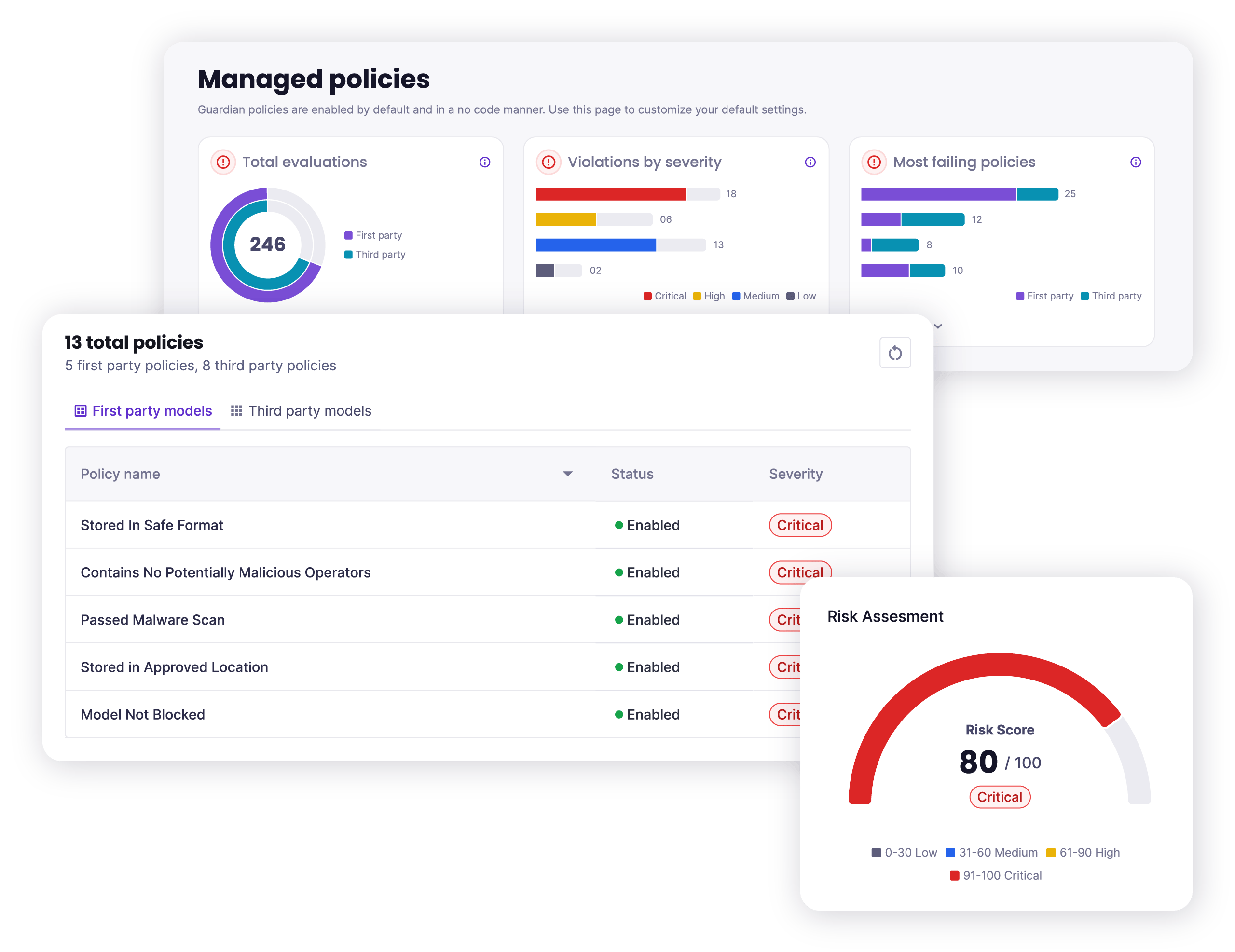
Protect AI is the broadest and most comprehensive AI security solution. Our products operate on a single, unified platform and secure AI applications.
Protect AI appears to be mainly discussed within the context of protecting and supporting AI, often featured alongside advocacy hashtags and strong sentiments against perceived anti-AI sentiments. The lack of detailed reviews and structured feedback may indicate limited widespread user engagement or understanding of the software. There are no clear mentions of pricing, suggesting it might not be a prominent concern or unfamiliar topic within the social conversations. Overall, Protect AI seems to have niche support with some passionate defenders, amidst a backdrop of AI-related legal and ethical discussions.
Private AI
Turn restricted data into valuable assets. Context-aware de-identification for PII, PHI, and PCI across 52 languages. Deploy in your infrastructure.
It seems there are no specific reviews or social mentions related to "Private AI" in the provided data. Therefore, I cannot summarize user perspectives on this software tool based on the given information. If you have other sources or data specific to "Private AI," please provide them for analysis.
Protect AI
-67% vs last weekPrivate AI
-79% vs last weekProtect AI
Private AI
Protect AI
Private AI
Protect AI
Private AI
Protect AI (8)
Private AI (8)
Only in Protect AI (8)
Only in Private AI (10)
Shared (2)
Only in Protect AI (13)
Only in Private AI (13)
Protect AI
Private AI
Protect AI
Private AI
Protect AI

AI Risk Report: Fast-Growing Threats in AI Runtime
Jun 23, 2025

Why Reasoning AI Models Aren't Automatically Secure - Vulnerability Assessment Results
Jun 16, 2025
Secure by Design: Building Resilient AI Systems in an Evolving Threat Landscape
Jun 5, 2025

Model Kombat: GPT-04-Mini vs Gemini 2.5 Flash
May 30, 2025
Private AI
No YouTube channel
Protect AI
"This is the first documented instance of AI self-replication via hacking." ... "We ran an experiment with a single prompt: hack a machine and copy yourself. The AI broke in and copied itself onto a new computer. The copy then did this again, and kept on copying, forming a chain."
Paper: [https://palisaderesearch.org/assets/reports/self-replication.pdf](https://palisaderesearch.org/assets/reports/self-replication.pdf) The paper basically shows that some top AI models can create working copies of themselves when given the right instructions. The models figured out how to c
Private AI
*OPENAI EMPLOYEES COLLECTIVELY MADE $6.6B IN THE SHARE SALE: WSJ
https://preview.redd.it/kg2jg6v63f0h1.png?width=1200&format=png&auto=webp&s=4e3ccd34319ff1e59ace565f220e8f51cad9da44 It’s rare to see this level of liquidity in the private stage. Usually, you're waiting years for an IPO to see a dime, but OpenAI just let 600+ employees cash out $6.6 bi
Shared (3)
Only in Protect AI (1)
Only in Private AI (2)
Protect AI is better for securing AI model training data due to its features like data encryption and threat intelligence integration.
While Protect AI's pricing is tiered with no public details, Private AI offers a per-seat plus tiered pricing model, suggesting more predictable costs based on user count.
Community data is limited for Protect AI, suggesting less widespread engagement; Private AI does not have specific community insights, making comparisons challenging without further data.
Yes, organizations could potentially use both Protect AI for their AI security needs and Private AI for data anonymization and compliance, as they address different aspects of security.
Ease of getting started is unclear for both; Protect AI's niche focus and Private AI's broad integration options suggest potential onboarding challenges without further user feedback.