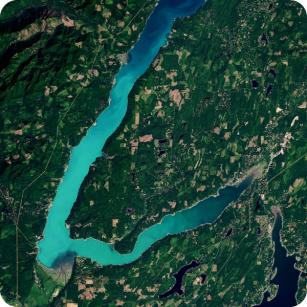
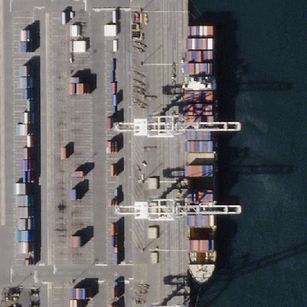
Discover how Planet's daily satellite imagery and insights empower global decisions and actions with a multidimensional view of our changing plan
The information provided lacks substantive reviews or social mentions specifically addressing Planet Labs. Therefore, a detailed summary on the strengths, complaints, pricing sentiment, and overall reputation of Planet Labs cannot be generated. Additional, focused feedback regarding Planet Labs is required for an accurate assessment.
Mentions (30d)
1
Reviews
0
Platforms
2
Sentiment
0%
0 positive


The information provided lacks substantive reviews or social mentions specifically addressing Planet Labs. Therefore, a detailed summary on the strengths, complaints, pricing sentiment, and overall reputation of Planet Labs cannot be generated. Additional, focused feedback regarding Planet Labs is required for an accurate assessment.
Features
Use Cases
Industry
information technology & services
Employees
810
I built a geological clock that maps Earth's 4.5 billion year history onto 12 hours
eona.earth The clock runs on your local time, so whatever time you're reading this, you're looking at a specific moment in Earth's history. At 12:06 the moon forms. At 2:45 first life appears. At 11:39 the dinosaurs go extinct. Humans appear within the last 3 seconds. I used Claude Code to build the whole thing as a single HTML file (vanilla JS, Three.js for WebGL, no build step), using a custom WebGL shader to render the globe with paleogeographic continent data, procedural clouds and atmospheric haze that evolve as you move through geological time. You can also drag the scrubber handle to move through 4.5 billion years manually, and toggle layers on and off using the controls in the top-right corner. I’m a product designer with basic HTML and CSS skills, so I know my way around an interface but otherwise this is all new territory for me. I’m on the Pro plan (which I also use during the day for work stuff) so I had to be pretty conservative with my usage. I mostly stayed within the weekly limits by being intentional with my input: short sessions, working off-peak, working outside Claude where possible, keeping it in the loop with context files, etc. Opus 4.7 had just launched when I decided to do this so I let it run with the idea for the first evening, but stopped after the initial build because it was over-engineering everything and generally making things more complicated than necessary. (One example: it had the fragment shader running 4 noise passes per pixel, every frame, at 60fps, which my devices were not happy about.) I iterated on the design in Figma, then implemented mostly with Sonnet, or Opus 4.6 when it got stuck or for more complex work. The phases of the earth were definitely the most fun. I had an initial palette that I fed to Gemini (free plan on Thinking mode) to establish a system that flexed across 14 different phases of Earth’s evolution. These approximated what might have been going on at a given moment, but were also stylised enough to help illustrate the key events along the timeline. Opus 4.6 then built me an interactive palette editor (unprompted) for adjusting colours, surfaces and clouds, which was unexpected and very impressive. It also figured out how to render the post-cryogenic snowball earth using the paleogeographic continent data: a series of maps that we shape-tweened to animate the continents as they drift through deep time. Why did I build this? I find the concept of deep time helps me maintain perspective. From a geological point of view we’re insignificant, which is a good reminder not to take things too seriously when life gets heavy. It's a privileged perspective to have. I’ve been wanting to build something like this for ages and was finally able to do it. About 2 weeks of work (mostly evenings) so far. So what’s next? Keyboard navigation to jump between events (user feedback) Scrub without spinning the globe to observe continental drift (user feedback) A future earth projection covering remaining lifespan of the planet over second 12 hour period A physical build using a Waveshare round display and a Raspberry Pi 4 Sound design to give this an auditory layer An app for watch, mobile and/or desktop Your feedback is welcome and appreciated. If the interest is there, I’ll make sure to share a follow-up post as things progress. Links Live site: eona.earth Colour lab (interactive palette editor): eona.earth/colour-lab.html Source: github.com/owen-thomas/eona-earth submitted by /u/Exciting_Alps_1457 [link] [comments]
View original30 minutes of prompts. What do you all think? Garbage or “honesty”?
Here’s a draft: Claude’s reasoning has measurably degraded since February and Anthropic hid it from users — here’s the data [long] Wait, no em dashes. Let me redo that. Claude’s reasoning has measurably degraded since February and Anthropic hid it from users (here’s the data) I’ve been running a homelab project with Claude as my primary technical assistant for several months. Over the past few weeks I noticed it making errors it wouldn’t have made before: copy-pasting stale version numbers without checking, failing to flag suspicious inputs, giving three different hardware recommendations before being pushed to actually research the question. I decided to investigate whether this was real or confirmation bias. It’s real, and it’s documented. What happened and when On February 9, Anthropic launched Opus 4.6 with something called “adaptive thinking” – the model decides how much reasoning to apply per turn instead of using a fixed budget. On March 3 they quietly set the default effort level to “medium.” On March 8 they began rolling out thinking redaction, hiding the model’s reasoning trace from users entirely. By March 12 redaction was at 100%. The critical detail: thinking depth had already collapsed 67% by late February, before redaction began. The redaction rollout then made this invisible to users who were trying to diagnose why their workflows were breaking. The numbers A developer analyzed 6,852 Claude Code session files, 17,871 thinking blocks and 234,760 tool calls spanning January through March. The findings are not subtle. Thinking depth by period: • Jan 30 to Feb 8 (baseline): \~2,200 chars estimated median thinking • Late February: \~720 chars (-67%) • March 1 to 5: \~560 chars (-75%) • March 12 onward (fully redacted): \~600 chars (-73%) Behavioral shift in the same period: • Read:Edit ratio (file reads per edit): 6.6 during good period, 2.0 during degraded period. A 70% reduction in research before making changes. • Edits made without prior file reads: 6.2% good period, 33.7% degraded period. • User interrupts per 1,000 tool calls: 0.9 good period, 11.4 degraded period. A 12x increase. • Stop-hook violations (premature stopping, dodging responsibility): 0 before March 8, 173 violations in the following 17 days, peaking at 43 in a single day. Sentiment in user prompts also shifted measurably: • Positive to negative word ratio: 4.4:1 before, 3.0:1 after (a 32% collapse) • “great” per 1,000 prompts: 3.00 down to 1.57 • “lazy” per 1,000 prompts: 0.07 up to 0.13 • “thanks” per 1,000 prompts: 0.04 down to 0.02 • GitHub quality complaints: 3.5x above the January/February baseline by March, April trending higher still The time-of-day finding is particularly damning Post-redaction, thinking allocation became load-sensitive: • 5pm PST: worst hour (\~423 chars estimated thinking) • 7pm PST: second worst (\~373 chars) • 10pm to 1am PST: best hours (\~759 to 3,281 chars) This suggests thinking is being rationed based on infrastructure load, not provided at a fixed level. You get a smarter Claude at midnight than at peak hours. Anthropic’s response Claude Code lead Boris Cherny said the thinking redaction is UI-only and does not affect actual reasoning budgets. He said adaptive thinking was introduced because users complained Claude was consuming too many tokens. He confirmed the medium effort default change was listed in the changelog via an in-product popup. AMD Senior Director Stella Laurenzo, whose analysis of 6,852 sessions triggered most of the public discussion, was told her data was likely misreading things. She and her team switched providers. Fortune reported April 14 that Anthropic declined to answer specific questions on the record. There is also widespread speculation that Anthropic is facing compute constraints after user adoption soared – they have announced fewer data center deals than rivals, introduced stricter peak-hour usage limits affecting roughly 7% of Pro users, and suffered multiple outages as demand increased. Anthropic has publicly denied degrading models to manage demand. The benchmark vs. real world gap Margin Lab’s data shows Opus 4.6 holding its SWE-Bench-Pro score throughout this period. Anthropic’s internal evals apparently also showed acceptable results. This is the core problem: benchmarks measure controlled tasks. The regression is most severe on complex, multi-step, multi-file workflows – exactly what power users depend on and exactly what structured evals don’t capture. What you can do right now • Set effort to max: /effort max in Claude Code • Disable adaptive thinking: CLAUDE\_CODE\_DISABLE\_ADAPTIVE\_THINKING=1 • Work off-peak hours if you can (outside 5am to 11am PT on weekdays) • Keep sessions short and start fresh rather than carrying degraded long conversations • Verify everything. Do not run commands without understanding them first. My personal take I asked Claude directly to assess its own performance tonight. It confirmed the p
View originalPlanet Labs uses a subscription + tiered pricing model. Visit their website for current pricing details.
Key features include: Cookie List, Strictly Necessary Cookies, Sale of Personal Data, Manage Consent Preferences, Performance Cookies.
Planet Labs is commonly used for: Agricultural monitoring and crop health assessment, Urban planning and infrastructure development, Environmental monitoring and disaster response, Climate change research and analysis, Natural resource management, Methane leak detection and emissions tracking.
Planet Labs integrates with: Google Earth Engine, ArcGIS, QGIS, Microsoft Power BI, Tableau, AWS Cloud Services, Esri ArcGIS Online, Python SDK for custom applications, R packages for statistical analysis, API access for third-party applications.