Hatchet and Pipedream are both formidable AI/developer tools with distinct strengths. Hatchet shines in task-queue workflows and AI orchestration, sporting 7,011 GitHub stars, attractive for AI-focused automation tasks. Pipedream, with 11,212 GitHub stars, excels in integrations with over 3,000 apps, ideal for complex API connections and workflow automation.
Best for
Pipedream is the better choice when your team requires extensive integration capabilities across a wide range of services, with customer scenarios involving real-time data processing and varied API interactions.
Best for
Hatchet is the better choice when your team is focused on orchestrating complex AI agents and needs robust support for task scheduling and error handling in data-heavy work environments.
Key Differences
Verdict
Choose Hatchet if your focus is on sophisticated AI workflow automation with needs for high scalability in task scheduling. Opt for Pipedream if your primary requirement is integration-driven, connecting multiple APIs for continuous data flow and custom workflow creations. Both tools offer unique advantages, but your choice should align with your specific needs regarding AI complexity or integration breadth.
Pipedream
Pipedream is the fastest way to build powerful applications that connect all the services in your stack, with code-level control when you need it and
Pipedream is praised for its robust integration capabilities, allowing users to connect with a wide range of APIs and automate workflows easily, especially with Twitter and Fauna event sources. Users are impressed by the platform's ability to run Node.js code and process data effectively, with recent launches and enhancements garnering positive attention. While there are occasional technical issues reported, the team is responsive in addressing and rectifying them, maintaining overall customer satisfaction. Sentiment around pricing isn't directly mentioned, but the availability of free features like processing RSS feeds suggests a favorable view of cost-effectiveness, contributing to its positive reputation in the developer community.
Hatchet
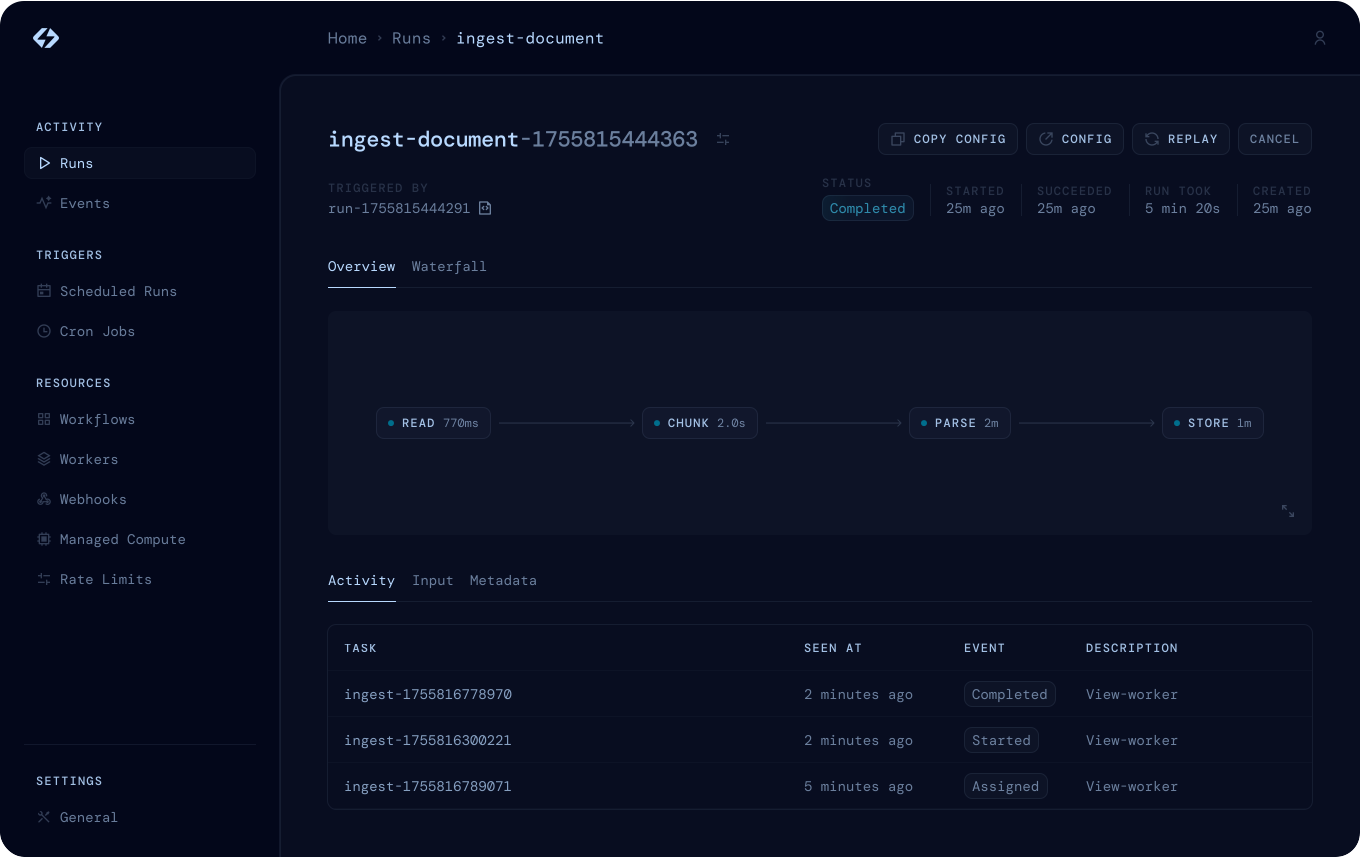
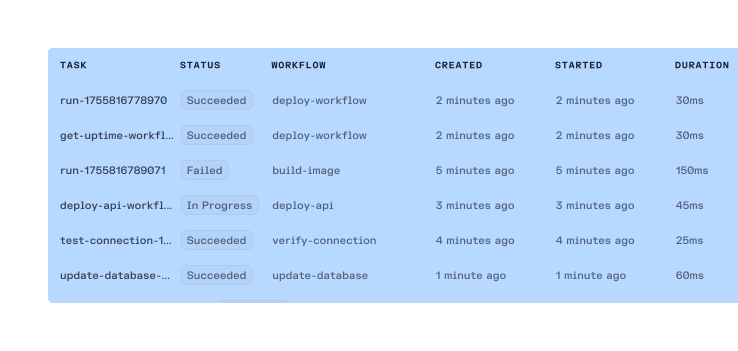
Hatchet is a single platform for orchestrating AI agents, scheduling background tasks, and running mission-critical workflows.
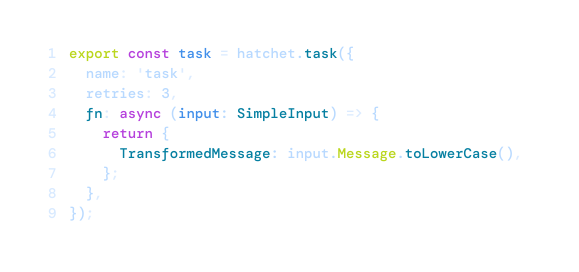
Users appreciate "Hatchet" for its innovative approach to workflow automation, particularly its integration with AI like Claude for generating TypeScript code without relying on a traditional visual editor. However, there are limited specific complaints noted in the provided content, indicating either a lack of widespread usage or undeveloped critique due to newness. Pricing sentiment is not mentioned, leaving it an unknown factor in its reception. Overall, "Hatchet" seems to carry a positive reputation centered around its technical novelty and unique capabilities in streamlining automation processes.
Pipedream
-75% vs last weekHatchet
Not enough dataPipedream
Hatchet
Pipedream
Hatchet
Pipedream
Hatchet
Pricing found: $10, $500 /mo, $1,000 /mo
Pipedream (10)
Hatchet (3)
Only in Pipedream (9)
Only in Hatchet (8)
Shared (5)
Only in Pipedream (10)
Only in Hatchet (10)
Pipedream
Hatchet
No complaints found
Pipedream
Hatchet
No data
Pipedream
No screenshots
Hatchet
Pipedream
Hatchet
Shared (2)
Only in Hatchet (3)
Hatchet is better suited for AI orchestration due to its features designed for managing AI agents and long-running workflows effectively.
Hatchet offers tiered subscription plans at $10, $500, and $1,000 per month, while Pipedream's pricing approach is less defined but perceived as cost-effective due to its free features.
Pipedream likely offers better community support, as evidenced by its higher number of GitHub stars and larger user base, translating to broader shared knowledge and resources.
While there is no explicit indication, it's feasible to use both in complementary capacities, especially if one focuses on AI workflow automation and the other on diverse integrations.
Pipedream might be easier to start with due to its extensive pre-built integrations and larger community that can provide guidance and support during initial deployments.


