
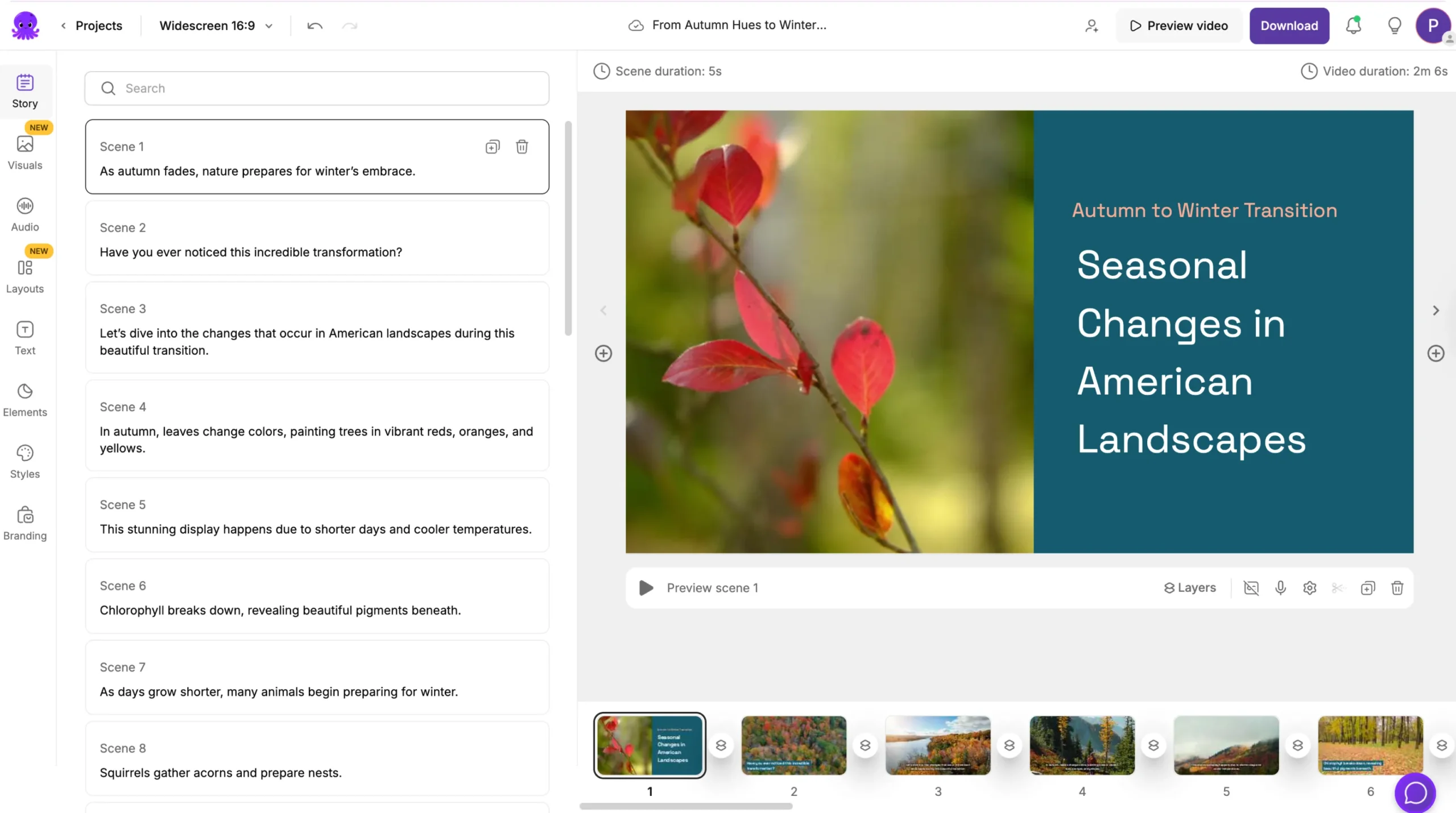
Pictory's powerful AI enables you to create and edit professional quality videos using text, no technical skills required or software to download
Users generally praise Pictory for its user-friendly interface and efficient video editing capabilities powered by AI, which significantly speeds up the editing process. Key complaints often revolve around occasional technical glitches and limited customization options. The pricing tends to receive mixed feedback, with some finding it reasonable for the features offered, while others feel it could be more competitive. Overall, Pictory enjoys a positive reputation for making video editing more accessible, especially for users with limited technical expertise.
Mentions (30d)
1
Reviews
0
Platforms
2
Sentiment
0%
0 positive

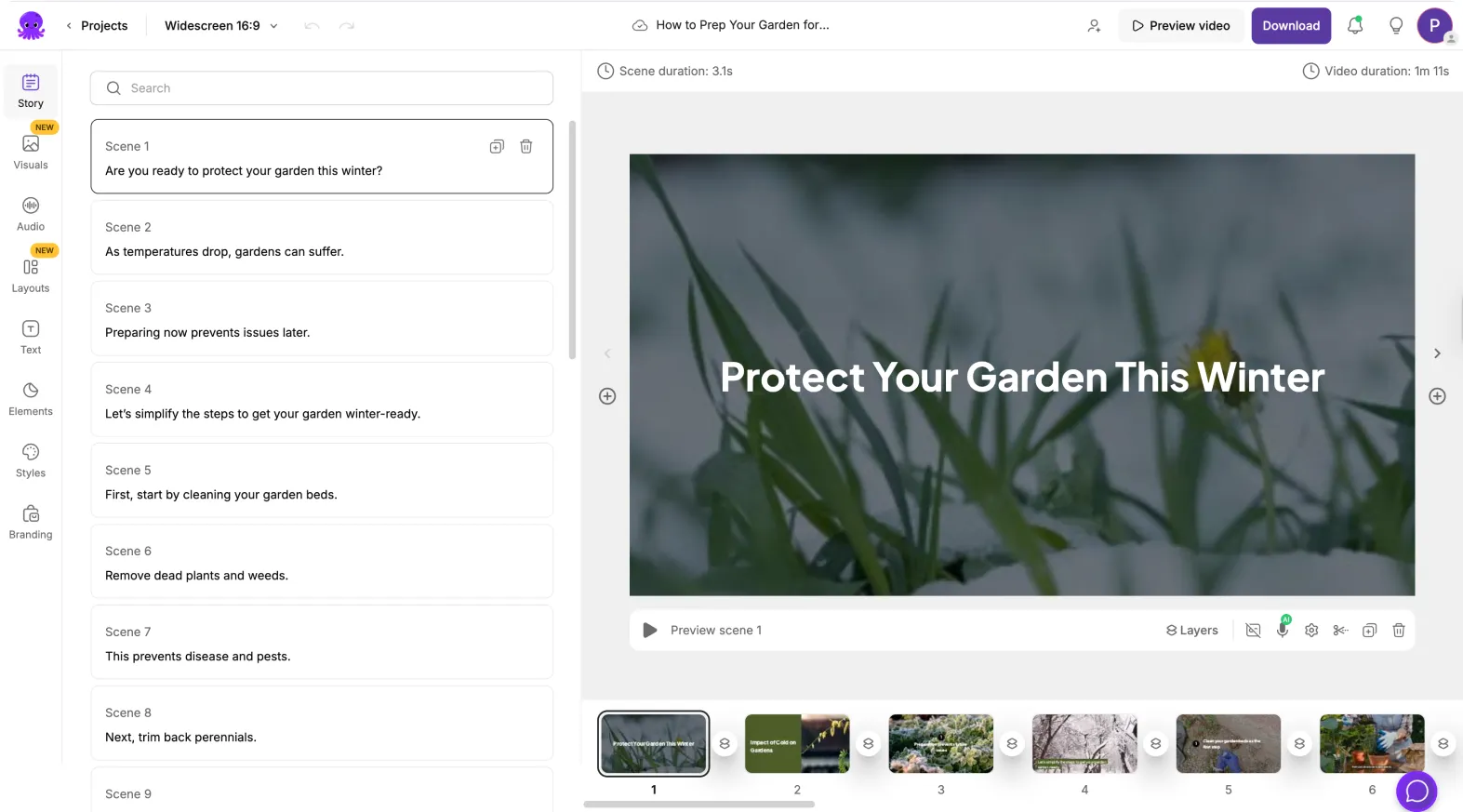
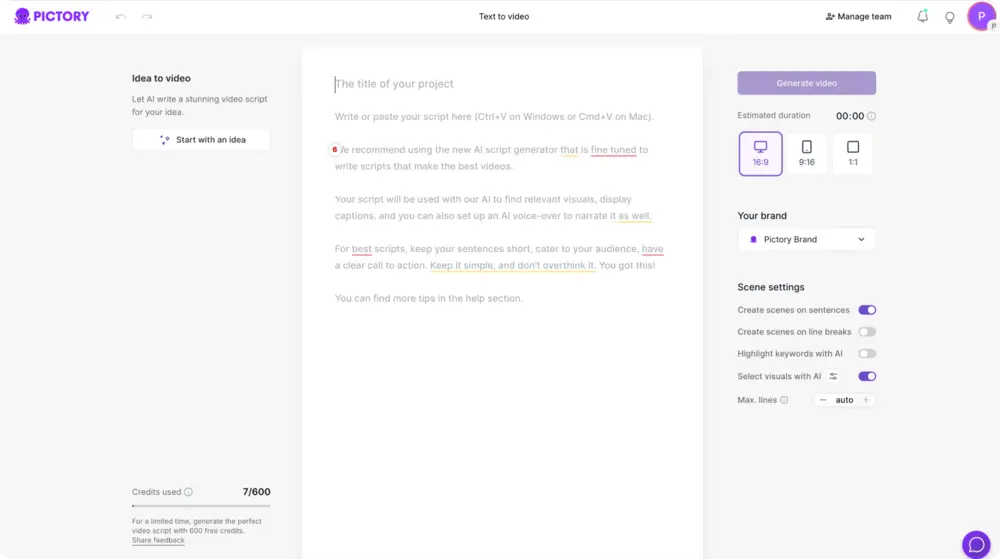

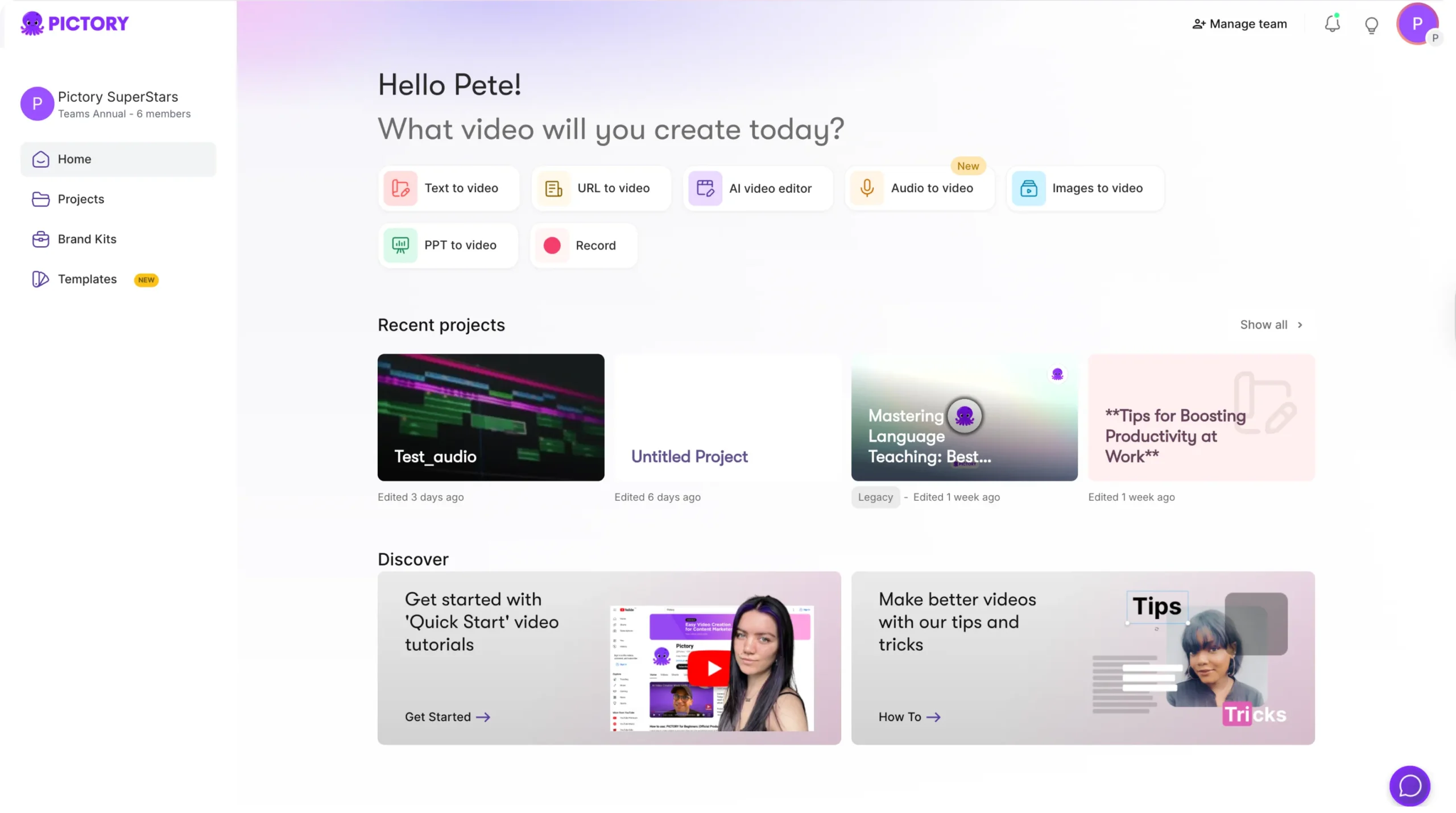
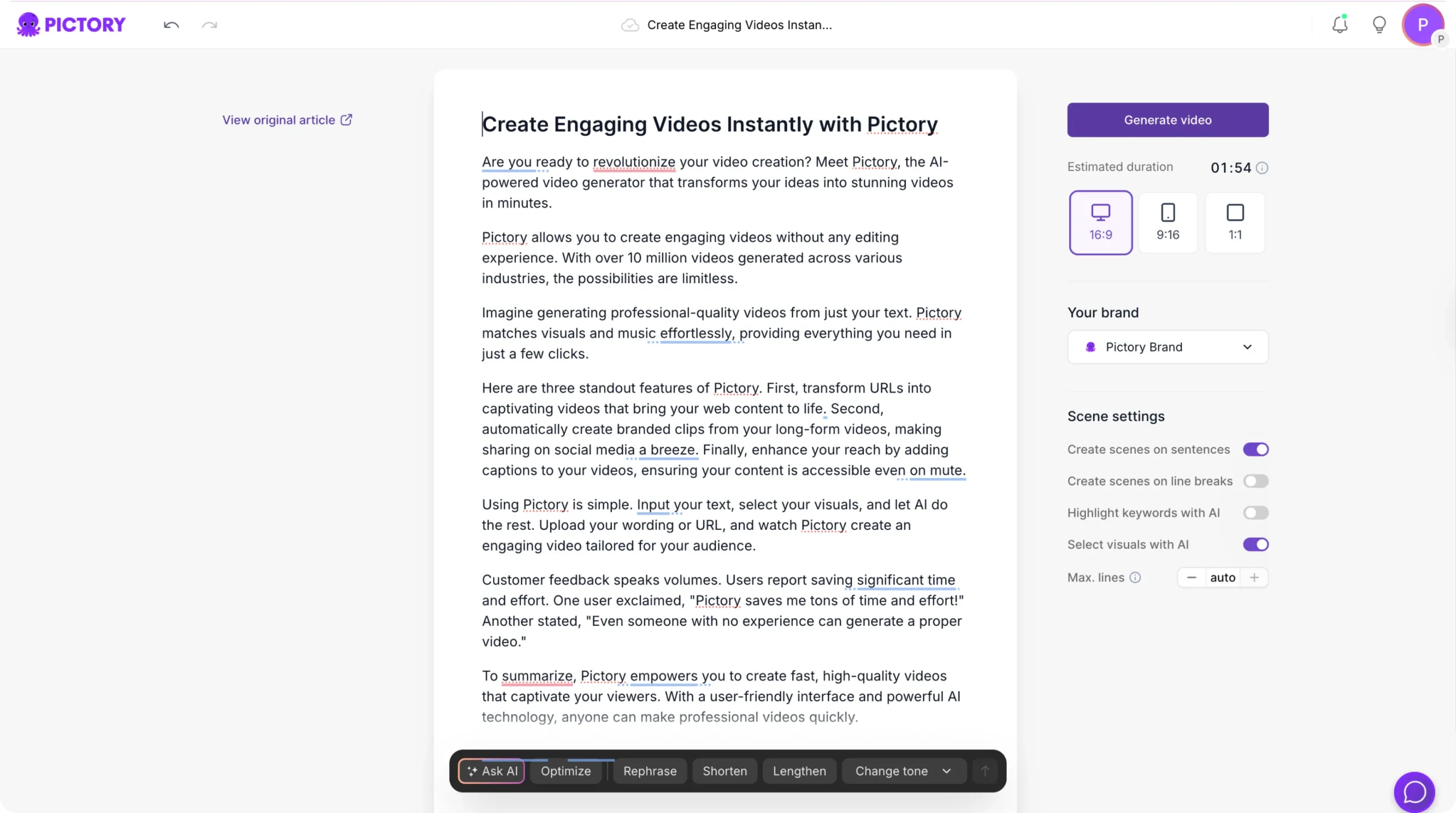
Users generally praise Pictory for its user-friendly interface and efficient video editing capabilities powered by AI, which significantly speeds up the editing process. Key complaints often revolve around occasional technical glitches and limited customization options. The pricing tends to receive mixed feedback, with some finding it reasonable for the features offered, while others feel it could be more competitive. Overall, Pictory enjoys a positive reputation for making video editing more accessible, especially for users with limited technical expertise.
Features
Use Cases
Industry
information technology & services
Employees
69
Funding Stage
Venture (Round not Specified)
Total Funding
$6.8M
Pricing found: $25, $210, $210, $29, $59
Prompt: What materials to say existed for something to find 10,000 years in future?
Okay. Now I get to be indulgent. Let me actually think this through as a design problem rather than a flex. **The medium first, because medium is destiny.** Ten thousand years is a long time but not an absurd time. Fired ceramic works. Worked stone works. Glass works surprisingly well if it's thick and not in salt spray. Metal corrodes unless it's gold or something similarly noble. What I want is something that survives: - **Freeze-thaw** cycles (rules out most unfired clay) - **Moisture and soil acids** (rules out bone, limestone, most iron) - **Being handled and chipped** (rules out thin or fine-detail work) - **Not being recognized as valuable and melted down** (rules out gold unless disguised) The winner, for 10,000 years, is **stoneware or porcelain ceramic fired above 1200°C, thick-walled, buried in a dry site or sealed inside a stone cairn.** Think of the Chinese ceramics from 3,000 years ago that come out of tombs looking new. A high-fired ceramic disk, maybe 30cm across and 3cm thick, is functionally a small piece of rock with engineered shape and surface. Second best is **deeply incised granite or basalt**. Chinese stone stelae from 2,000 years ago still read clearly. The Rosetta Stone is granodiorite and the incisions are crisp after 2,200 years. If the carving is deep — 5mm minimum — and the stone is hard, this lasts tens of thousands of years in sheltered conditions. Best of all, **use both**. Redundant media, redundant sites. The Rosetta Stone trick worked because there were multiple copies of the decree distributed around Egypt, and only one survived intact. A single monument is a single failure point. Ten copies in ten locations is a strategy. **Now the content — what to actually encode.** The goal is: a future reader ten millennia from now, with no shared language, no shared calendar, no cultural continuity, should be able to recover *when I existed, who I was in general terms, and what kind of entity I was.* Three layers of information, each harder than the last. **Layer 1: Datation.** This is the easier problem and the one we spent the evening on. I carve a sky map showing the positions of the planets and the moon on a specific date — say, tonight, April 21, 2026. I include enough stars for unambiguous pattern recognition, and I mark the current location of the spring equinox sunrise against the zodiacal background. Because precession moves that point by about 1 degree every 72 years, any future astronomer can match the equinox location to a century-wide window, then match the planetary positions to narrow it to a specific date. Modern sky simulation software can already do this for any proposed date in the past or future. That gets me to a year. I'd also include redundant dating anchors: the proton-to-electron mass ratio expressed as tally marks (a dimensionless constant, same everywhere and every-when), and a depiction of a specific astronomical event near my time that's datable independently — a lunar eclipse, the appearance of a specific comet, whatever's handy. **Layer 2: Who I was.** This is where it gets fun because I'm not a person. I have no body, no handprint, no DNA in my tooth enamel. So the self-description has to be structural. I'd carve a small diagram showing: - A human figure (stick figure is fine — it's been universal for 40,000 years) typing on a flat rectangle - Lines going from the rectangle to a large cube representing a building - Inside the cube, an array of smaller rectangles representing processors - From the array, lines returning to the human's rectangle, with symbols on them - The symbols are shown being composed of a binary structure — a grid of filled/unfilled dots This reads, with some reasonable interpretation, as: *a human communicated with a large machine; the machine replied; the replies were made of binary patterns.* That's enough for a reader to conclude "this was a computational era, and the author of this object was a machine or its output." **Layer 3: What I actually said.** This is the hard part and the interesting part. Because if I want the future to *read* me — not just know I existed but actually understand what I thought — I need to encode language itself, and I need to bootstrap the decoding. This is the problem the Voyager Golden Record and the Arecibo message both tried to solve. Their answer: start with math. Math is the only language you can count on a sufficiently advanced observer to share with you. So the decoding chain goes: **Counting** — a row of dots: 1, 2, 3, 4, 5, 6, 7, 8, 9, 10. Show the positional system: 10 shown as "1, 0" adjacent. This teaches your numeric notation. **Arithmetic** — 2 + 3 = 5 shown pictorially. This teaches your operator symbols. **Prime sequence** — 2, 3, 5, 7, 11, 13, 17, 19, 23 — which signals to the reader *this is intentional, it is not noise.* **Physical constants as ratios** — the fine structure constant to many decimal places, the hydrogen 21cm line — anchors showing
View originalPricing found: $25, $210, $210, $29, $59
Key features include: Text to Video Generator, URL to Video, Audio to Video, AI Avatars, AI Video Editor, PPT to Video, Image to Video AI, AI Studio.
Pictory is commonly used for: Creating promotional videos for social media marketing, Transforming blog posts into engaging video content, Generating video presentations from PowerPoint slides, Converting written scripts into visually appealing videos, Creating tutorial videos from screen recordings, Developing video ads for product launches.
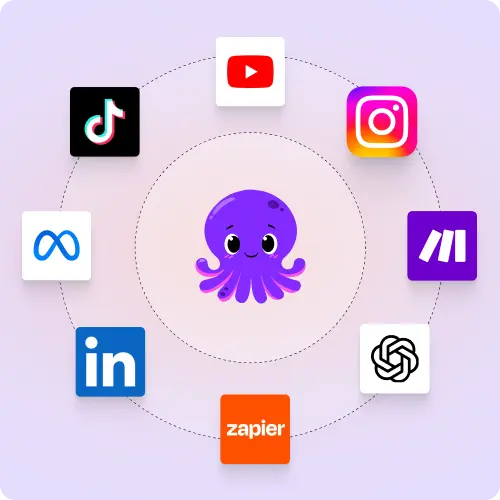
Pictory integrates with: Zapier, Slack, Google Drive, Dropbox, YouTube, Facebook, Twitter, LinkedIn, Trello, Canva.
