Pangea and Protect AI both offer robust security solutions tailored for AI applications. Pangea provides a more comprehensive set of features with a focus on security guardrails, whereas Protect AI is strongly community-driven with a unified platform but lacks wide feature detailing in feedback.
Best for
Pangea is the better choice when seeking a diverse security solution tailored for DevOps workflows and secure app development in mid-sized teams.
Best for
Protect AI is the better choice when looking for an AI security tool with a focus on real-time threat detection and incident response in highly engaged, smaller teams.
Key Differences
Verdict
Both tools excel in AI security but serve different audience needs. Pangea is ideal for mid-sized teams needing comprehensive, feature-rich security integrations. Protect AI, with its dedicated community and real-time capabilities, fits smaller teams focused on specific AI security challenges. Decision-makers should consider the scale and feature integration relevant to their security strategy.
Pangea
Pangea empowers organizations to ship secure AI applications quickly with the industry's broadest set of AI security guardrails that can be added
Pangea is praised for its robust AI capabilities and user-friendly interface, making it accessible for a wide range of users. However, some users report occasional glitches and performance issues, which can disrupt workflow. The pricing is generally perceived as fair, offering good value for the features provided. Overall, Pangea maintains a positive reputation, especially among users looking for innovative AI solutions.
Protect AI
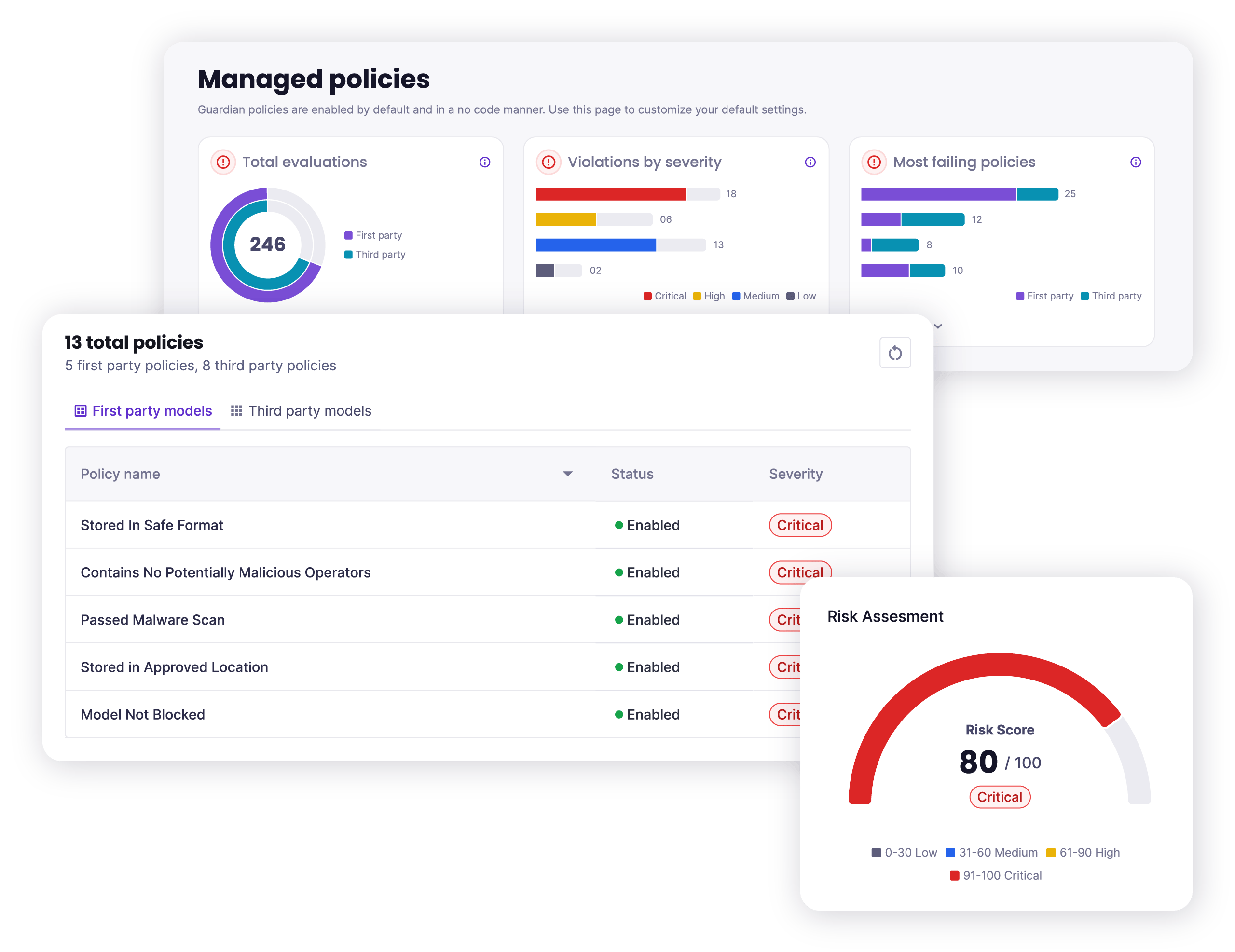
Protect AI is the broadest and most comprehensive AI security solution. Our products operate on a single, unified platform and secure AI applications.
Protect AI appears to be mainly discussed within the context of protecting and supporting AI, often featured alongside advocacy hashtags and strong sentiments against perceived anti-AI sentiments. The lack of detailed reviews and structured feedback may indicate limited widespread user engagement or understanding of the software. There are no clear mentions of pricing, suggesting it might not be a prominent concern or unfamiliar topic within the social conversations. Overall, Protect AI seems to have niche support with some passionate defenders, amidst a backdrop of AI-related legal and ethical discussions.
Pangea
Not enough dataProtect AI
+29% vs last weekPangea
Protect AI
Pangea
Protect AI
Pangea
Protect AI
Pangea (8)
Protect AI (8)
Shared (1)
Only in Pangea (7)
Only in Protect AI (7)
Shared (6)
Only in Pangea (9)
Only in Protect AI (9)
Pangea
No complaints found
Protect AI
Pangea
No data
Protect AI
Pangea
No YouTube channel
Protect AI

AI Risk Report: Fast-Growing Threats in AI Runtime
Jun 23, 2025

Why Reasoning AI Models Aren't Automatically Secure - Vulnerability Assessment Results
Jun 16, 2025
Secure by Design: Building Resilient AI Systems in an Evolving Threat Landscape
Jun 5, 2025

Model Kombat: GPT-04-Mini vs Gemini 2.5 Flash
May 30, 2025
Pangea
Protect AI

Shared (1)
Only in Protect AI (3)
Pangea is better for secure web application development while Protect AI excels in real-time threat detection for AI models.
Pangea uses a subscription and tiered model with perceived fair value, while Protect AI's pricing is less discussed but also tiered without direct cost visibility.
Protect AI has a more visible and engaged community presence, often discussing AI advocacy topics.
Yes, they can be complementary with careful integration planning, particularly if using shared platforms like AWS and Slack.
Pangea is perceived as more user-friendly due to its robust UI, making it easier for new users to start with broader features.


