OpenLLMetry and Evidently AI both offer observability solutions for AI model performance, but they differ significantly in community engagement and pricing models. OpenLLMetry has 6,958 GitHub stars with a focus on open-source customization and a freemium pricing model. Evidently AI, with 7,420 GitHub stars, emphasizes offline capabilities and privacy with a tiered subscription model starting at $80/month.
Best for
OpenLLMetry is the better choice when your team values open-source customization, and you need a tool that integrates seamlessly with existing ML pipelines for real-time monitoring and debugging.
Best for
Evidently AI is the better choice when your organization requires an offline, privacy-focused tool with strong model performance monitoring and data drift detection capabilities for production-ready models.
Key Differences
Verdict
Choose OpenLLMetry if you prioritize open-source customization and integration with existing ML tools. It's ideal for teams looking for a cost-effective and community-driven solution. Evidently AI is preferable if you need robust offline capabilities, stronger data privacy, and are prepared to invest in a subscription for comprehensive model performance monitoring. Both have strong community support, but your decision should be guided by your specific use case and budget constraints.
OpenLLMetry
Traceloop turns evals and monitors into a continuous feedback loop - so every release gets better
OpenLLMetry is perceived to have a very positive reputation, particularly noted for its accessible AI capabilities and ease of use. Users appreciate its open-source nature, which allows for extensive customization and community-driven improvements. While there are limited explicit complaints in the social mentions, the lack of detailed reviews could suggest a nascent user base or limited adoption. Pricing sentiment is not discernible from the available information, indicating it may either be competitive or not a focal point of discussion amongst users.
Evidently AI
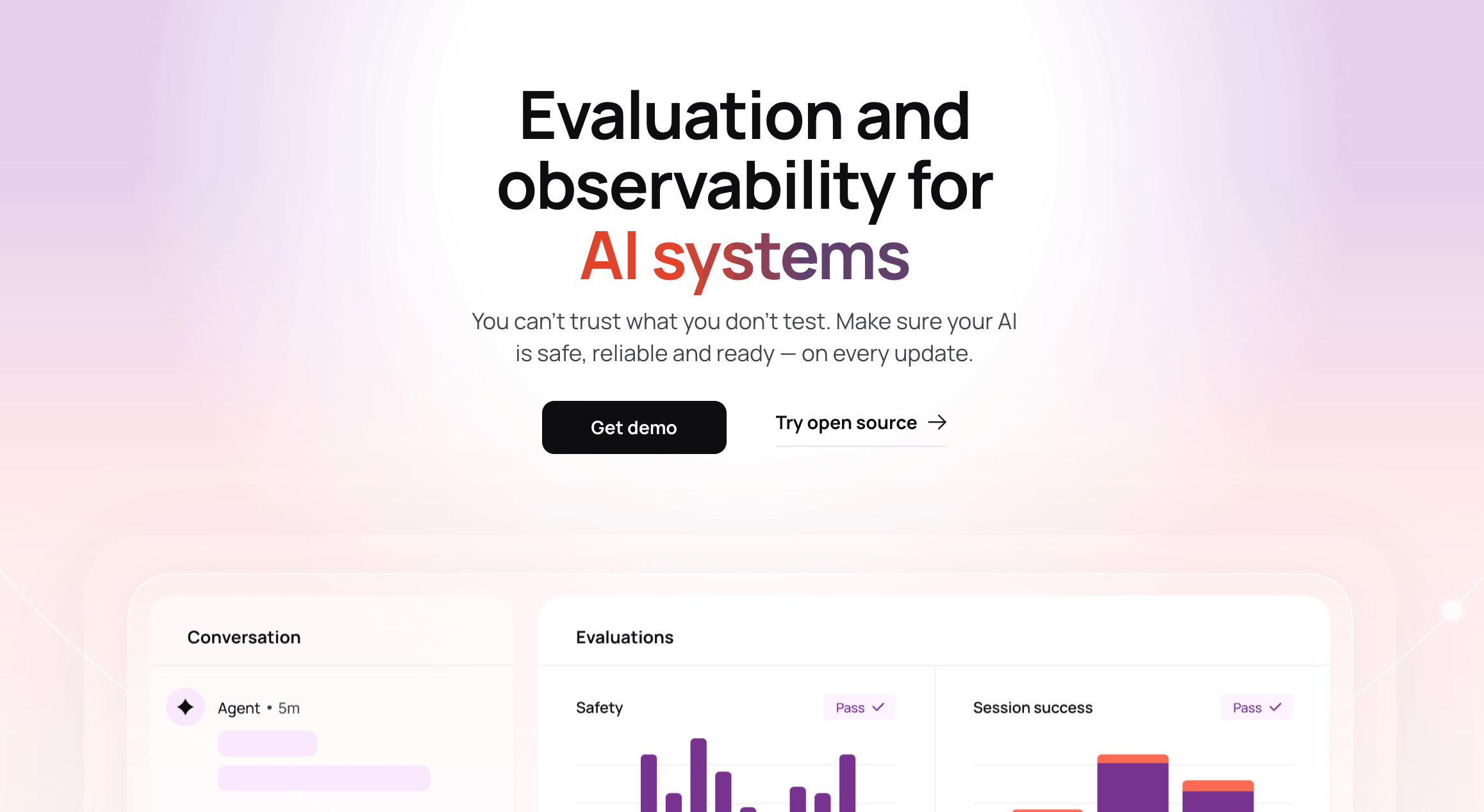
Ensure your AI is production-ready. Test LLMs and monitor performance across AI applications, RAG systems, and multi-agent workflows. Built on open-so
"Evidently AI" is highlighted in social mentions as a locally run, free AI tool designed to streamline repetitive tasks such as re-explaining project details, which users find useful. Its main strength is its ability to operate completely offline, enhancing privacy and control for users. Key complaints or detailed criticisms are not prominent in the mentions provided, suggesting either limited exposure or generally positive reception. Overall, the sentiment appears favorable, especially among users looking for a free and local AI assistant solution. Pricing sentiment is positive due to its free usage model.
OpenLLMetry
Not enough dataEvidently AI
-88% vs last weekOpenLLMetry
Evidently AI
OpenLLMetry
Evidently AI
OpenLLMetry
Pricing found: $0 / mo
Evidently AI
Pricing found: $80 /month, $10, $1
OpenLLMetry (8)
Evidently AI (6)
Only in OpenLLMetry (10)
Only in Evidently AI (8)
Shared (3)
Only in OpenLLMetry (12)
Only in Evidently AI (12)
OpenLLMetry
No complaints found
Evidently AI
OpenLLMetry
No data
Evidently AI
OpenLLMetry
No YouTube channel
OpenLLMetry



Evidently AI


OpenLLMetry
Evidently AI
Shared (2)
Only in OpenLLMetry (2)
Only in Evidently AI (2)
OpenLLMetry is ideal for real-time monitoring and debugging in production environments, while Evidently AI excels in privacy-focused, offline model performance monitoring.
OpenLLMetry offers a freemium model, potentially more cost-effective for smaller teams, whereas Evidently AI's subscription starts at $80/month.
Evidently AI has slightly more community engagement, with 7,420 GitHub stars compared to OpenLLMetry's 6,958, indicating a marginally larger user base and support network.
Yes, both tools can complement each other, with OpenLLMetry focusing on real-time observability and customization and Evidently AI offering offline capabilities and data drift detection.
OpenLLMetry provides zero-setup quality checks and quick tracking, making it potentially easier to start with for teams already integrated with common data science stacks.


