OpenAI
We believe our research will eventually lead to artificial general intelligence, a system that can solve human-level problems. Building safe and benef
Users generally praise OpenAI for its advanced AI capabilities and innovative features, reflected in high ratings on review platforms. However, there is significant debate about the value of its pricing, particularly the $200 per month for ChatGPT Pro, with some users questioning its worth compared to the more affordable Plus plan. Overall, while OpenAI is recognized as a leader in AI development and securing substantial investments, its premium pricing may deter some potential users despite its promising advancements. The company's reputation remains strong, driven by continuous innovation and a focus on expanding AI applications.
Google AI
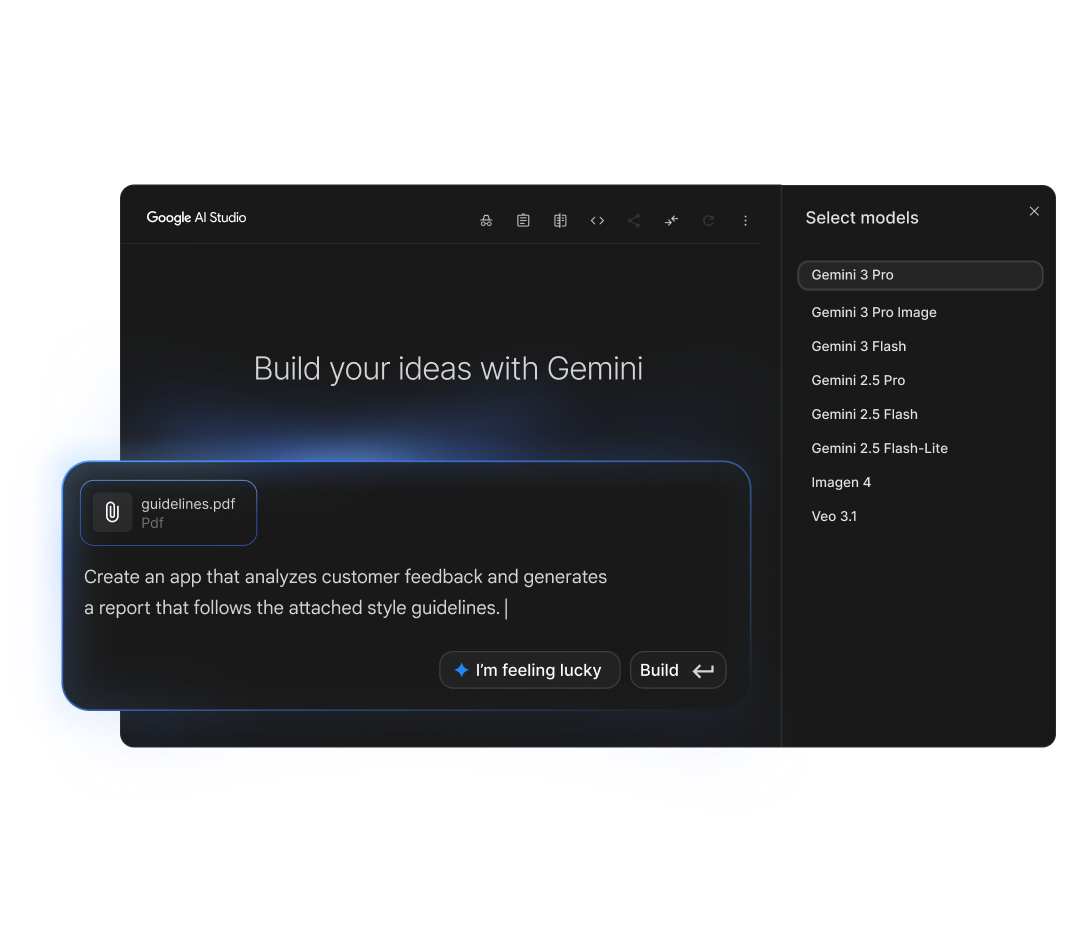
Build with Gemini 2.0 Flash, 2.5 Pro, and Gemma using the Gemini API and Google AI Studio.
Users generally praise Google AI for its robust and versatile capabilities, particularly highlighting the intelligent and rapid processing power of models like Gemini 3.1 Flash. The main strengths lie in innovation and integration with popular tools like Firebase, improving workflow and productivity. However, some users express concerns over the pricing structure, especially for top-tier subscriptions like Google AI Ultra, which costs $249.99. Overall, the reputation of Google AI remains strong, noted for cutting-edge technology and comprehensive support for developers and businesses.
OpenAI
Stable week-over-weekGoogle AI
+11% vs last weekOpenAI
Google AI
OpenAI
Google AI
OpenAI
Google AI
OpenAI
| Model | Input | Output |
|---|---|---|
| gpt-4.1 | $2.00 | $8.00 |
| gpt-4.1-mini | $0.40 | $1.60 |
| gpt-4.1-nano | $0.10 | $0.40 |
| gpt-4o | $2.50 | $10.00 |
| gpt-4o-mini | $0.15 | $0.60 |
| gpt-4.5-preview | $75.00 | $150.00 |
| gpt-4-turbo | $10.00 | $30.00 |
| gpt-4 | $30.00 | $60.00 |
| gpt-3.5-turbo | $0.50 | $1.50 |
| o3 | $10.00 | $40.00 |
| o4-mini | $1.10 | $4.40 |
| o1 | $15.00 | $60.00 |
| o1-preview | $15.00 | $60.00 |
| o1-mini | $3.00 | $12.00 |
| o3-mini | $1.10 | $4.40 |
Google AI
| Model | Input | Output |
|---|---|---|
| gemini-2.5-pro | $1.25 | $10.00 |
| gemini-2.0-flash | $0.10 | $0.40 |
| gemini-2.0-pro | $1.25 | $5.00 |
| gemini-1.5-pro | $1.25 | $5.00 |
| gemini-1.5-flash | $0.07 | $0.30 |
| Usage Tier | OpenAI | Google AI |
|---|---|---|
| Light1M tokens/mo | $0.22 – $105 | $0.16 – $5 |
| Growth50M tokens/mo | $11 – $5,250 | $8 – $238 |
| Scale500M tokens/mo | $110 – $52,500 | $83 – $2,375 |
OpenAI (8)
Google AI (1)
Only in OpenAI (10)
Only in Google AI (10)
Shared (1)
Only in OpenAI (14)
Only in Google AI (19)
OpenAI
What do you like best about Openai?OpenAI has been a game-changer in how people interact with technology. Its tools are intuitive, fast, and genuinely helpful for everything from learning to productivity. The responses feel natural and human-like, making complex tasks much easier. Overall, it’s an impressive step forward in AI innovation. Review collected by and hosted on G2.com.What do you dislike about Openai?While OpenAI tools are powerful, they can sometimes give incorrect or outdated information. Responses may feel overly cautious or generic at times, and there are limits on deeper customization. Occasionally, it also struggles with understanding very specific or nuanced queries. Review collected by and hosted on G2.com.
What do you like best about Openai?What I like best about OpenAI, as someone building internal AI agents, is how quickly we can go from a concept to something real that people can use. The APIs are straightforward, the documentation is good enough to get up and running fast, and there’s a wide range of models and features to choose from. That combination of ease of integration and depth of capabilities lets us experiment, iterate, and then standardize on the patterns that work across the business. Once things are in place, our teams end up using these AI-powered workflows constantly because they’re embedded right into the tools they already work in. Review collected by and hosted on G2.com.What do you dislike about Openai?From an enterprise admin perspective, the main friction points are around control and operational overhead. The core APIs are easy to integrate, but getting to a fully production-ready setup, prompt design, evaluation, monitoring, governance, and cost management takes real effort. The feature set is rich, but that also means there’s a learning curve to choosing the right models and configurations for each use case. Support and guidance have improved, but I’d still like more opinionated best practices and examples geared specifically toward larger teams rolling out multiple agents across the organization. Review collected by and hosted on G2.com.
What do you like best about Openai?It gives quick explanations, supports me with writing and coding tasks, and makes it easier to learn new topics without spending a lot of time searching online. Review collected by and hosted on G2.com.What do you dislike about Openai?Sometimes the responses aren’t fully accurate or up to date, so it’s a good idea to double-check any important information. Review collected by and hosted on G2.com.
Google AI
What do you like best about Vertex AI?the usage of multimodality and agentic coding Review collected by and hosted on G2.com.What do you dislike about Vertex AI?I dislike the high costs, a steep learning curve, and complex, non-intuitive workflows Review collected by and hosted on G2.com.
What do you like best about Vertex AI?I use Vertex AI for content creation, improving workflows, and RAG purposes. It significantly cuts down the time spent on research and allows me to tailor output and formatting, which saves even more time. In terms of workflows, it helps produce copy at a faster rate and capacity while maintaining good quality, allowing us to scale. I love that Vertex AI is an enterprise solution with safety and compliance features. It's a great all-in-one tool for enterprises, capable of RAG, generative text/video/images, building agents, etc. It's just a nice playground to have access to for creating tools, and it's enabled my team and me to do things that were previously not possible. The access to generative AI with Google Search grounding and System Instructions customization is super advantageous, allowing my team to scale production of marketing copy effectively. Review collected by and hosted on G2.com.What do you dislike about Vertex AI?The UI is quite bloated. There are features that could be advertised better (or those that are in preview) like the AI Agent Builder. Depending on the user role, it could be better to adjust the UI to be more accessible and simple, perhaps by renaming some categories and features, including some documentation on the pages themselves. Review collected by and hosted on G2.com.
What do you like best about Vertex AI?I appreciate that Vertex AI helped us extract relevant points faster from documents, turning unstructured information into something we could easily present and share with stakeholders. I love the documentation and how it enabled us to quickly test different approaches from design to practical implementation, building the whole machine learning stack ourselves. Trying different models was also a plus due to its speed. The initial setup was very easy and straightforward, which made it convenient to start using quickly. Review collected by and hosted on G2.com.What do you dislike about Vertex AI?I guess the cost transparency while experimenting with different models and workflows. To be honest, understanding the cost part and where to put limits was a bit tiresome because we were afraid of doing something wrong and no hard stop on spending amount. Review collected by and hosted on G2.com.
OpenAI
Google AI
OpenAI
Google AI
OpenAI
Google AI

OpenAI
Google AI
OpenAI
AI quietly turned HTML into a real alternative to PowerPoint and Word for client-facing docs. The blockers that made it impractical a year ago are falling one by one.
A year ago, generating a polished document as HTML instead of a PPT or a Word file was a fun idea with too many practical problems. Lately I've noticed every one of those blockers either gone or close to gone, and I've quietly stopped reaching for Office on a bunch of deliverables. Curious if others
Google AI
We’re launching a brand new, full-stack vibe coding experience in @GoogleAIStudio, made possible by integrations with the @Antigravity coding agent and @Firebase backends. This unlocks: — Full-stack
We’re launching a brand new, full-stack vibe coding experience in @GoogleAIStudio, made possible by integrations with the @Antigravity coding agent and @Firebase backends. This unlocks: — Full-stack multiplayer experiences: Create complex, multiplayer apps with fully-featured UIs and backends dire
Only in OpenAI (3)
Only in Google AI (5)


