
Create breakthrough AI products and hands-on AI learning.
NVIDIA Jetson is praised for its powerful AI capabilities and robust integration with technologies like ROS2, particularly appealing to developers building advanced robotics and vision systems. However, some users may find it challenging to leverage its full potential due to a steep learning curve. Pricing is regarded as reasonable considering the high performance and capabilities offered. Overall, Jetson maintains a strong reputation as a leading edge AI platform for developers and enthusiasts in AI and robotics fields.
Mentions (30d)
0
Reviews
0
Platforms
2
Sentiment
0%
0 positive
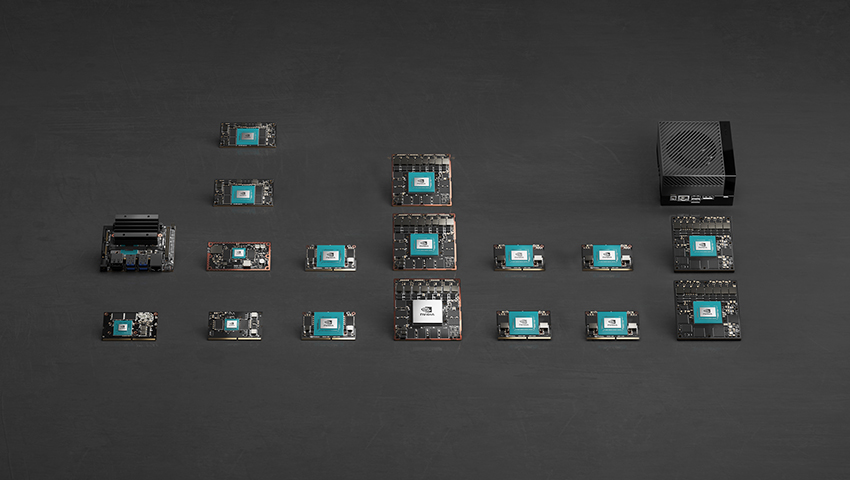
NVIDIA Jetson is praised for its powerful AI capabilities and robust integration with technologies like ROS2, particularly appealing to developers building advanced robotics and vision systems. However, some users may find it challenging to leverage its full potential due to a steep learning curve. Pricing is regarded as reasonable considering the high performance and capabilities offered. Overall, Jetson maintains a strong reputation as a leading edge AI platform for developers and enthusiasts in AI and robotics fields.
Features
Use Cases
Industry
computer hardware
Employees
36,000
I built a complete vision system for humanoid robots
I'm excited to an open-source vision system I've been building for humanoid robots. It runs entirely on NVIDIA Jetson Orin Nano with full ROS2 integration. The Problem Every day, millions of robots are deployed to help humans. But most of them are blind. Or dependent on cloud services that fail. Or so expensive only big companies can afford them. I wanted to change that. What OpenEyes Does The robot looks at a room and understands: - "There's a cup on the table, 40cm away" - "A person is standing to my left" - "They're waving at me - that's a greeting" - "The person is sitting down - they might need help" - Object Detection (YOLO11n) - Depth Estimation (MiDaS) - Face Detection (MediaPipe) - Gesture Recognition (MediaPipe Hands) - Pose Estimation (MediaPipe Pose) - Object Tracking - Person Following (show open palm to become owner) Performance - All models: 10-15 FPS - Minimal: 25-30 FPS - Optimized (INT8): 30-40 FPS Philosophy - Edge First - All processing on the robot - Privacy First - No data leaves the device - Real-time - 30 FPS target - Open - Built by community, for community Quick Start git clone https://github.com/mandarwagh9/openeyes.git cd openeyes pip install -r requirements.txt python src/main.py --debug python src/main.py --follow (Person following!) python src/main.py --ros2 (ROS2 integration) The Journey Started with a simple question: Why can't robots see like we do? Been iterating for months fixing issues like: - MediaPipe detection at high resolution - Person following using bbox height ratio - Gesture-based owner selection Would love feedback from the community! GitHub: github.com/mandarwagh9/openeyes submitted by /u/Straight_Stable_6095 [link] [comments]
View originalNVIDIA Jetson uses a tiered pricing model. Visit their website for current pricing details.
Key features include: Highlights, New NVIDIA® Jetson Thor™ Now available for Order, Discover the NVIDIA Jetson Orin Nano™ Super Developer Kit, NVIDIA Isaac™ for Robotics Development, NVIDIA Metropolis for Vision AI Agents and Applications, Bring Generative AI to the World With Jetson, Explore Jetson Projects from Our Community, Connect With Other Jetson Developer.
NVIDIA Jetson is commonly used for: Autonomous drones for delivery services, Smart surveillance systems using AI vision, Robotic arms for manufacturing automation, Healthcare monitoring systems with real-time analytics, Agricultural robots for crop monitoring and harvesting, Smart retail solutions with customer behavior analysis.
NVIDIA Jetson integrates with: NVIDIA TensorRT for high-performance inference, NVIDIA DeepStream SDK for video analytics, NVIDIA Isaac SDK for robotics development, NVIDIA Metropolis for smart city applications, OpenCV for computer vision tasks, ROS (Robot Operating System) for robotics applications, TensorFlow for deep learning model deployment, PyTorch for flexible AI model development, CUDA for parallel computing, Docker for containerized applications.

