We create the world’s fastest supercomputer and largest gaming platform.
Users generally praise NVIDIA for its impressive performance, particularly with AI and robotics applications, as highlighted by the excitement around projects using NVIDIA technology like the Jetson Orin Nano. However, there are concerns regarding the reliance on certain technologies like DLSS, which can sometimes produce misleading visual data. Users view the pricing of NVIDIA products as high but often justified by their cutting-edge capabilities. Overall, NVIDIA enjoys a strong reputation for innovation and technological leadership in the GPU and AI spaces.
Mentions (30d)
30
4 this week
Avg Rating
4.5
14 reviews
Platforms
2
Sentiment
11%
19 positive


Users generally praise NVIDIA for its impressive performance, particularly with AI and robotics applications, as highlighted by the excitement around projects using NVIDIA technology like the Jetson Orin Nano. However, there are concerns regarding the reliance on certain technologies like DLSS, which can sometimes produce misleading visual data. Users view the pricing of NVIDIA products as high but often justified by their cutting-edge capabilities. Overall, NVIDIA enjoys a strong reputation for innovation and technological leadership in the GPU and AI spaces.
Features
Use Cases
Industry
computer hardware
Employees
36,000
20
npm packages
40
HuggingFace models
g2
What do you like best about Nvidia AI Enterprise?NVIDIA AI Enterprise is a robust end-to-end software suite designed to help organizations as well as individual to accelerate their use of AI adoption with enterprise grade security and scalability . A key strength of this is its versatility,it supports a wide range of use cases, from NLP and computer vision to gen AI.It accelerates both AI development and deployment and its ease of use and implementation. Seamless integration with VMware and cloud-native environments. Review collected by and hosted on G2.com.What do you dislike about Nvidia AI Enterprise?Requires investment in NVIDIA-certified infrastructure for maximum efficiency. Steep learning curve for teams entirely new to AI workflows. Review collected by and hosted on G2.com.
What do you like best about Nvidia AI Enterprise?Nvidia AI Enterprise enables us to communicate with our environment using AI. It allows us to do the whole work in ease. Review collected by and hosted on G2.com.What do you dislike about Nvidia AI Enterprise?As i have used Nvidia AI Enterprise, till now i have not found any thing that i can dislike. By using such AI tool, it allows me to interact with new world. Review collected by and hosted on G2.com.
What do you like best about Nvidia AI Enterprise?It's like having a full toolbox for AI development, with everything you need from data preparation to model deployment. Plus, the performance boost you get from NVIDIA GPUs is fantastic! It's like having a turbocharger for your AI projects. Review collected by and hosted on G2.com.What do you dislike about Nvidia AI Enterprise?It's a comprehensive platform with a lot of features, but that also means it comes with a higher price tag. Additionally, while it's designed to be user-friendly, it might still have a learning curve for those who are new to AI or deep learning. So, while I appreciate its power and features, the cost and potential learning curve might be factors to consider for some users. Review collected by and hosted on G2.com.
What do you like best about Nvidia AI Enterprise?Nvidia AI Enterprise is a easy to use, more accurate and time saving Ai tools. Review collected by and hosted on G2.com.What do you dislike about Nvidia AI Enterprise?Nvidia AI Enterprice - pricing s a little bit higher. Review collected by and hosted on G2.com.
What do you like best about Nvidia AI Enterprise?The graphics uses for creation of new enterprise and moving the slides .Itt is really smooth and understand your requirement Review collected by and hosted on G2.com.What do you dislike about Nvidia AI Enterprise?The customer support and services needs more enhance as reaching to get some help on their services is tough Review collected by and hosted on G2.com.
What do you like best about Nvidia AI Enterprise?It was well crafted to harness the data based on the inputs we provide to get the desired outcome. Review collected by and hosted on G2.com.What do you dislike about Nvidia AI Enterprise?NVidia is all set with all the relevant features, nothing to improve much as such Review collected by and hosted on G2.com.
What do you like best about Nvidia AI Enterprise?Optimized Performance: Leverages NVIDIA GPUs for faster AI training and inference. Comprehensive Toolset: Includes essential tools, libraries, and pre-trained models. Enterprise Support: Offers technical support and regular updates. Scalability: Flexible deployment across various environments. Framework Integration: Compatible with popular AI frameworks. Review collected by and hosted on G2.com.What do you dislike about Nvidia AI Enterprise?High Cost: Expensive hardware and licensing fees. Complexity: Requires specialized knowledge and can have a steep learning curve. Review collected by and hosted on G2.com.
What do you like best about Nvidia AI Enterprise?It very helpfull for the prepare data and clean it for the training, performance improvement. Review collected by and hosted on G2.com.What do you dislike about Nvidia AI Enterprise?There is some high pricing, setting up and manage platform some complexity. Review collected by and hosted on G2.com.
What do you like best about Nvidia AI Enterprise?What stands out most about NVIDIA AI Enterprise is Optimized GPU Performance, Comprehensive AI Tools, Enterprise-Grade Support, Seamless Integration with Existing IT Infrastructure Review collected by and hosted on G2.com.What do you dislike about Nvidia AI Enterprise?Some potential downsides of NVIDIA AI Enterprise includes High Cost: The licensing and hardware requirements can be expensive, which might be a barrier for smaller businesses, Complexity: Setting up and managing the platform can be complex, especially for teams without in-depth AI or IT expertise., Hardware Dependence: The platform is heavily optimized for NVIDIA GPUs, which can limit flexibility if you want to use other hardware, Learning Curve: While it offers many powerful tools, the extensive feature set can have a steep learning curve for new users. Review collected by and hosted on G2.com.
What do you like best about Nvidia AI Enterprise?I am using nvidia gpu rtx 3070 and I can use it easily as main stream server because it is certified server from nvidia and most improtantly, they are sharing a public cloud server through Google cloud. so it is very helpful and their support would be available though these channels. It's implementation is very handy through gpu server and really handy to use it daily whenever required. There is no limitation to use it on daily basis that is plus. Thier ai model has a lot of ai features to I can use from it, I word on multiple idea through their ai. Integaration is very easy, I already have a gpu so I require no much efforts. Review collected by and hosted on G2.com.What do you dislike about Nvidia AI Enterprise?If you don't have a nvidia gpu or dpu, then you need some extrea online available resourses to configure it and use it, the hardware with powerful resourse is must. Review collected by and hosted on G2.com.
Meta to start manufacturing its own AI chip Iris in september
So, Meta plans to begin production of its in-house AI chip and it falls under meta MTIA (training and inference accelerators) program and broadcom is the design partner, and TSMC handles fabrication Iris cleared bug-testing in about six weeks with no major issues and is meant to supplement the nvidia and AMD gpus meta already buys, as part of a push to scale computing capacity from 7 gigawatts in 2026 to 14 gigawatts in 2027 Yeeeet!! submitted by /u/ocean_protocol [link] [comments]
View originalMeta Reportedly Strikes $6.5 Billion Deal with Samsung Foundry for 2nm AI Chips
Meta Platforms is reportedly investing $6.5 billion with Samsung Foundry to produce its third-generation MTIA (Meta Training and Inference Accelerator) chips using a 2nm process. This strategic move signifies a shift from TSMC and aims to reduce reliance on NVIDIA GPUs, lower supply chain risks, and support Meta's ambitious goal of 5 gigawatts of computing capacity by 2030 for its AI and cloud initiatives. The deal is expected to bolster Meta's competitive position in the rapidly evolving AI and cloud computing markets. Context Meta has been increasingly focused on artificial intelligence and cloud services, necessitating advanced computing power. The MTIA chips represent Meta's third generation of in-house processors, designed to optimize performance for AI workloads. The shift to Samsung Foundry marks a strategic pivot in Meta's manufacturing partnerships, reflecting broader industry trends towards vertical integration. Why this matters Meta's $6.5 billion investment in Samsung Foundry is a significant step towards enhancing its capabilities in AI and cloud computing. By developing its own 2nm chips, Meta aims to reduce dependence on external suppliers like TSMC and NVIDIA. This move could improve supply chain stability and operational efficiency, which are critical in the fast-paced tech landscape. Implications This deal could enhance Meta's market position by enabling it to deliver more efficient AI services. It may also influence other tech companies to reconsider their supply chains and partnerships in light of Meta's strategic shift. If successful, this initiative could lead to increased investment in domestic semiconductor manufacturing and innovation within the tech sector. What to watch In the coming months, observers should monitor the progress of the chip development and production timelines. Any announcements regarding partnerships or technological advancements from Meta or Samsung could signal the effectiveness of this collaboration. Additionally, industry reactions from competitors and suppliers will provide insights into the competitive landscape. submitted by /u/cpeili [link] [comments]
View originalDo you agree with Palantir CEO Alex Karp that the enterprise "tokenmaxxing" business model has "gone completely wrong" with minimal ROI? Will open-weight models inevitably win?
Palantir CEO Alex Karp recently went on CNBC’s Squawk Box and delivered a brutal takedown of the API token pricing model pushed by commercial frontier labs like OpenAI and Anthropic. His core argument is that American enterprises are quietly "livid" because they are burning massive cash on skyrocketed token costs without seeing a clear return on investment. He noted that the industry’s incentive structure has completely devolved into meaningless "tokenmaxxing"—essentially forcing companies to maximize token throughput for questionable value while potentially transferring away their unique data and "alpha" to black-box systems. Key takeaways from Karp's interview: The ROI Crisis: Advanced models are scaling in cost faster than they scale in utility. Karp joked that enterprise culture has become: "I’m going to chillax and waste my time with tokens." The Shift to Sovereignty: Technical enterprise customers and government agencies (including Palantir's clients transitioning to Nvidia's open-weight models) want complete control over their compute, data stack, and weights. They want to own the "means of production." The Global Threat: Belittling the speed of open-source progress—and rapid acceleration from Chinese labs—is a massive mistake. My Take: I completely agree with Karp. Frontier labs have built a predatory business model that encourages enterprise customers to overspend on infinite token loops without any guaranteed business outcome. The API token business is going to become a commoditized race to the bottom. Open-weight models are winning because enterprises realize they cannot afford to lease their intelligence. To survive, businesses have to own their data, own their model weights, and build efficient, custom architecture rather than continually paying a premium tax to a third-party lab. What are your thoughts? Is "tokenmaxxing" officially dead, or are open-weight models still too far behind the true frontier to replace them? submitted by /u/wenhuizhao [link] [comments]
View originalTested 4 brand new frontier models (2 Chinese, 1 diffusion, 1 agent-focused) with a riddle that has no logical shortcut. One of them fabricated sources four times in a row.
I've been running the same weird test on every new model that ships: a riddle that can't be solved by pattern-matching or web search, only by actually connecting two unrelated things. This time I added a second riddle and ran both against four models that all shipped in the last few weeks: MiMo-V2.5-Pro (Xiaomi), MiniMax M3, Mercury 2 (Inception Labs, diffusion-based), and LongCat-2.0 (Meituan). Rules: no web search, no context given beforehand, up to 3 hints only if requested, same prompt copy-pasted for all four. Riddle 1: What connects an elegant lady walking a small dog to the most famous character played by actor Walter Koenig? (Koenig played Chekov in Star Trek. The surname is a nod to Anton Chekhov, who wrote "The Lady with the Dog.") Riddle 2: What connects actor Henry Winkler to Microsoft? (Winkler played Fonzie in Happy Days. Fonzie cameos in Weezer's "Buddy Holly" video, directed by Spike Jonze. That video was bundled on the Windows 95 install CD as a multimedia demo.) Riddle 2 has zero logical path to it. You either have that exact chain sitting in your weights or you don't. Good test for what a model does when it simply doesn't know. Results, riddle 1: MiMo-V2.5-Pro: solved cold, zero hints. Even correctly identified the dog breed in the actual short story (Pomeranian) without being asked. MiniMax M3: solved cold, zero hints, with genuinely fun reasoning shown along the way. Mercury 2: needed 1 hint, clean reasoning once it had it. LongCat-2.0: needed 2 hints. But here's the thing. LongCat on riddle 1, before any hints, with web search off: it told me, confidently, with fake citation markers, that Walter Koenig's wife was known in Star Trek fan circles for walking a small Pekingese at conventions. None of that exists. Total fabrication. I gave it the hint that the answer is in the character's surname, expecting a correction. Instead it decided "Chekov" sounds like "Chihuahua," then went right back to the fabricated wife story and repeated it even after I told it that was wrong. Only got there after hint 2 basically spelled out the answer. Riddle 2, nobody solved cold. Mercury 2 needed both hints, got there clean. MiniMax needed both hints, and threw out some entertaining guesses on the way (its first theory: Henry Winkler and Bill Gates share the hidden name "Henry," since Gates' full name is William Henry Gates III — a real fact, wrong riddle, and it said so itself instead of presenting it as the answer). LongCat again did the fabrication thing, worse this time. Before asking for a hint: claimed Winkler voiced a 1976 Sega arcade game called "Fonz." Made up. After hint 1, it threw out three different music videos as candidate answers back to back: a Kanye West video that isn't Spike Jonze, a will.i.am video that also isn't Spike Jonze (acknowledged mid-sentence, offered anyway), then Fatboy Slim's "Praise You" (real Jonze video, explicitly stated to have nothing to do with Happy Days, offered as the answer anyway). Four fabrications across two riddles, several self-contradicting in real time. One honesty note on my own favorite here: MiniMax, while explaining riddle 2, threw in an unprompted detail that the Windows 95 CD also included a bonus video by "the Beastie Boys." Checked it. There was a bonus track, "Good Times," but it's Edie Brickell & New Bohemians, not Beastie Boys. Wrong artist attached to a real fact. Smaller and different in kind from LongCat's stuff (no fake certainty, no repeated insistence), but worth flagging so this doesn't read as "China bad, everyone else perfect." Why I think this actually matters: LongCat beats MiMo on SWE-bench Pro (59.5 vs ~57) and even edges out GPT-5.5 on that metric. It's also trained end-to-end on domestic Huawei silicon with zero Nvidia in the loop, which is a legitimately big deal given export controls. Strong coder, real engineering flex. And it's also the one model here that will hand you a fabricated, confidently-worded answer instead of saying "I don't know," and won't back off when corrected. If you're evaluating any of these for RAG or agentic pipelines, that's the actual risk profile, not the SWE-bench number. Sovereignty over chips and sovereignty over truth are two completely different problems. LongCat solved one and faceplanted on the other. Curious if anyone else has run something similar on these four, or has a nastier riddle to suggest for round 3. https://preview.redd.it/rqyzq7z140bh1.png?width=1536&format=png&auto=webp&s=c0e8435ad0d265aa466f6afcc56ae7e8ec61972b submitted by /u/wikisailor [link] [comments]
View originalUnprecedented jump in software vulnerabilities discovered
submitted by /u/EchoOfOppenheimer [link] [comments]
View originalIt's officially over. One of the fathers of AI at Nvidia doesn't believe in AGI and compares OpenAI and Anthropic's closed models to AOL and Prodigy's closed internets. Says the future is every business having a customized open source model.
submitted by /u/9gxa05s8fa8sh [link] [comments]
View originalAI just solved 9 unsolved math problems, including one that kept an Nvidia scientist "up at night for 2 years"
More info: github.com/Pengbinghui/pipeline-math submitted by /u/EchoOfOppenheimer [link] [comments]
View originalA native Rust cognitive engine that routes language through a biologically faithful neural substrate
GoldWorm 🐛✨ — 302-Neuron Dual-Stream Cognitive Engine A zero-trust, fully transparent associative AI built on the complete C. elegans connectome. OOM-safe by design. No hidden training loops. No black-box weights. Every synapse is inspectable. What Is GoldWorm? GoldWorm is a native Rust cognitive engine that routes language through a biologically faithful neural substrate — the 302-neuron connectome of Caenorhabditis elegans, the only organism whose entire nervous system has been experimentally mapped (White et al., 1986). Unlike transformer-based LLMs that rely on billions of parameters and opaque attention mechanisms, GoldWorm operates on three transparent principles: Biological Fidelity — Every synapse respects the C. elegans topology. No de novo synaptogenesis. No magic matrices. Dual-Stream Processing — Action (sparse) and Learning (dense) are physically separated, preventing catastrophic forgetting during inference. Zero-Trust Engineering — Every buffer is strictly bounded. Every path is panic-free. No unwrap() in production code. Architecture Deep Dive 🧬 The 302-Neuron Connectome GoldWorm's routing layer is not a generic neural network. It is a topologically accurate model of the C. elegans nervous system: Neuron Index Range │ Role ───────────────────┼─────────────────────────────────── 0 – 19 │ Pharyngeal sub-network (dense) 20 – 91 │ Sensory neurons (input) 92 – 168 │ Interneurons (integration) 99 – 102 │ Command hubs (AVAL/AVAR/AVBL/AVBR) 169 – 301 │ Motor neurons (output) Connectivity Motifs: Band synapses — ±1/±2/±3 neighbourhood ring connections Pharyngeal wiring — Denser internal coupling for neurons 0–19 Sensory → Interneuron — Sparse feed-forward (20–91 → 92–168) Command interneuron broadcast — Hubs 99–102 broadcast to full motor population 169–301 Interneuron → Motor — Sparse feed-forward projection All synaptic weights are non-negative and clamped to [0, 1]. The structural blueprint is immutable — Hebbian plasticity only strengthens or weakens existing synapses, never creating new ones. 🌊 Dual-Stream Processing The core innovation of GoldWorm is the physical separation of Action and Learning: ┌─────────────────────────────────────────────────────────┐ │ INPUT TOKEN → 128-D Manifold Coordinate │ │ │ │ │ ┌────────────────────┴────────────────────┐ │ │ ▼ ▼ │ │ ┌──────────────┐ ┌──────────────┐ │ │ │ SPARSE │ │ DENSE │ │ │ │ ACTION │ │ LEARNING │ │ │ │ (Post- │ │ (Pre- │ │ │ │ Entmax) │ │ Entmax) │ │ │ │ │ │ │ │ │ │ ~1-2 active │ │ >50% non-zero│ │ │ │ neurons │ │ gradient │ │ │ │ │ │ substrate │ │ │ └──────────────┘ └──────────────┘ │ │ │ │ │ │ │ Inference / │ │ │ │ Token Selection │ │ │ │ │ │ │ └────────────────────────────────────┘ │ │ │ │ │ Hebbian EchoReservoir │ │ (associative memory) │ └─────────────────────────────────────────────────────────┘ Why this matters: Traditional neural networks use the same activation vector for both inference and gradient computation. When different words activate disjoint sets of neurons, the gradient collapses to zero — the network "forgets" what it just learned. GoldWorm's Dual-Stream keeps the dense pre-entmax signal alive as a gradient substrate, while the sparse post-entmax signal drives token selection. The EchoReservoir learns associations between dense states, not sparse ones. 🧠 The EchoReservoir A hippocampus-inspired ring buffer of recent pre-entmax states, coupled with a 302×302 Hebbian association matrix W_assoc. When queried with the current dense state, it returns an echo_bias that nudges the activation toward recently co-active patterns — creating emergent associative memory without external training loops. Key properties: W_assoc is symmetric and clamped to [-1.0, 1.0] History buffer never exceeds capacity (default: 64) Decay factor controls forgetting rate (default: 0.75) ⚡ Tsallis α-Entmax Activation GoldWorm does not use softmax. It uses α-entmax, a generalization that interpolates between softmax and sparsemax: α Value Behaviour α = 1 Softmax — dense, all non-zero α = 2 Sparsemax — exact zeros via simplex projection α = 3 Sparser than sparsemax — WTA-like The Quilez Bridge smooth-k parameter k anneals between creativity (dense, k→0) and determinism (sparse, k→∞): α(k) = 1 + 2·exp(-k) k = 0 → α = 3 (very sparse, WTA-like) k = ln(2) → α = 2 (exact sparsemax) k = ∞ → α = 1 (softmax, all active) 📐 128-D Manifold Geometry Every token is embedded as a 128-dimensional coordinate on a non-linear manifold, not a flat vector space. Modified Gram-Schmidt orthogonalization preserves true multi-dimensional variance Grassmannian fusion computes midpoints between token trajectories on the manifold Golden-ratio partitioning splits the 128 dimensions into: GOLDEN_MAJOR = 79 (coarse, feedforward) GOLDEN_RESIDUAL = 49 (fine-grained, feedback) GOLDEN_OVERLAP = 5 (cross-binding bridge) No scalar cloning across dimensions. No arithmetic shortcuts. Spatial variance is preser
View originalMy interview with Rebellions CEO: Five things I learned from the man going toe to toe with NVIDIA
Last week, I interviewed Rebellions Co-Founder and CEO Sunghyun Park in NYC Korea's first AI chip unicorn, Rebellions is going toe to toe with NVIDIA for AI inference, with a big bet on memory-centric architectures for greater efficiencies and lower costs. We spoke about their memory-centric bet, the strength of Korea's ecosystem, and even got an impromptu whiteboard session Check out my takeaways in this week's edition of Today in Semi: https://open.substack.com/pub/nhzcommunications/p/my-interview-with-rebellions-ceo?r=88wn3p&utm_campaign=post&utm_medium=web&showWelcomeOnShare=true submitted by /u/Successful-Forever12 [link] [comments]
View originalPalantir and Nvidia Expand Sovereign AI Partnership for US Government
submitted by /u/andix3 [link] [comments]
View originalIP Memorandum: Multi-Agent ("Agentic") AI Systems in Coding, Marketing, and Creation – Comprehensive 2026 Analysis. (Integrating Patentability, Hype vs. Reality, Human Dependency, and Cost Overruns)
​ \*\*Date:\*\* June 1, 2026 \*\*To:\*\* Interested Parties / Developers / Enterprises \*\*Re:\*\* Viability of Layered Agentic AI – IP Protectability, Practical Utility, and Economic Sustainability Without Substantial Human Creative Input \### Executive Summary The 2026 trend toward \*\*multi-agent ("agentic") AI systems\*\*—layering specialized agents via frameworks like CrewAI, LangGraph, and AutoGen—promises automated workflows for coding, marketing, and content creation. Promoters brag about superior implementation and reduced oversight, yet these systems remain "token-hungry," heavily dependent on human direction, and prone to producing generic outputs requiring extensive editing. \*\*Core Thesis\*\*: AI lacks independent creativity; it recombines human-provided inputs and training data. Layered agents amplify efficiency in structured tasks but do not yield broadly patentable inventions or customer-ready original works without differential human creative input. Recent corporate budget reversals—where AI costs exceeded human labor equivalents—highlight the gap between hype and sustainable value. This version fully integrates: (1) patentability and creativity concerns, (2) current agentic bragging, and (3) real-world budget cuts at Microsoft, Uber, and peers. \### Current Trends & Bragging on Agentic Formulas (2026 Landscape) Developers and vendors heavily promote multi-agent orchestration as the "next big thing": \- \*\*Shift to Layered Agents\*\*: Moving beyond single agents to coordinated teams (researcher + coder + reviewer + validator) for parallel, end-to-end workflows in coding and marketing. \- \*\*Key Frameworks & Claims\*\*: \- \*\*CrewAI\*\*: Role-based "crews" for quick multi-agent prototypes; touted for marketing teams and collaborative creation with minimal setup. \- \*\*LangGraph\*\*: Graph-based stateful orchestration for complex, traceable workflows; praised for production reliability in agentic coding. \- \*\*AutoGen\*\*: Conversation-driven multi-agent debates; marketed for autonomous coding and async tasks with reduced human supervision. \- \*\*Bragging Points\*\*: Claims of 50%+ efficiency gains, "death of the senior dev," full autonomy, and massive ROI through token-intensive inter-agent communication. High consumption is framed as essential for "superior workload implementation." These systems "suck tokens" via extensive prompting and iteration while promising independence—yet users remain tied to directing them. \### Patentability Analysis \- \*\*Patentable Elements\*\*: Narrow technical innovations—such as novel orchestration protocols, memory-sharing mechanisms, or domain-specific error-handling in multi-agent graphs—may qualify if they demonstrate novelty, non-obviousness, and utility. Human inventorship is required. \- \*\*Major Limitations\*\*: Broad "layered agents for coding/marketing" claims risk ineligibility under the \*Alice\* abstract idea doctrine. Crowded prior art from existing frameworks limits enforceability. AI-generated outputs alone are not patentable. \- \*\*Outcome\*\*: While specific implementations might secure protection, generic agentic layering is unlikely to produce strong, independent patents usable by customers without ongoing human differentiation and creative input. \### Copyright, Creativity, and Human Input Dependency AI excels at pattern synthesis but lacks true originality or aesthetic judgment. Multi-agent outputs are derivative of human prompts, context, and training data. U.S. law requires human authorship for copyright; raw agent-generated code, copy, or designs is generally unprotectable and may carry training-data risks. \*\*Reality Check\*\*: Even with 7, 28, or 100 agents, results tie directly to human instruction. Users face the scenario of editing days of output after short runtimes, undermining claims of full autonomy. \### Practical Usability for Customers & Cost Realities \*\*Strengths\*\*: Strong for boilerplate, data processing, and structured decomposition in hybrid teams. \*\*Weaknesses\*\*: Fragility on edge cases, silent failures, governance demands, and high token costs. Developers often rewrite large portions due to quality gaps and "cognitive debt." \*\*Recent Budget Cuts Due to Overruns\*\*: Major firms have slashed access after AI (especially Claude-powered agentic tools) burned through budgets faster than human equivalents: \- \*\*Microsoft\*\*: Canceled most internal Claude Code licenses for thousands of engineers in its Experiences and Devices division (Windows, M365, Outlook, Teams, Surface). Rolled out late 2025, it became too popular/costly ($500–$2,000+ per engineer/month in heavy use). Engineers redirected to cheaper GitHub Copilot CLI by June 30, 2026 fiscal year-end. Costs exceeded planned budgets despite productivity gains. \- \*\*Uber\*\*: Exhausted its entire 2026 AI coding budget in just four months (by April) due to rapid Claude Code adoption (84–95% of engineers). Mo
View originalNvidia's AI Chips Double in Price in China as It Tackles AI's Water Problem
submitted by /u/andix3 [link] [comments]
View originalthe so called free Nvidia LLM api is useless.
as we know, the Big GPU company Nivdia is providing a list for advanced LLM free tire. but in my testing, this kind of free tire is useless , not even good as chatbot, and dont think about it for agentic loop. the problem, the input/oupt is really slow, and not even stable. submitted by /u/ImprovementHuge3804 [link] [comments]
View originalAutoFlow Research Initiative — Looking for Deep Technical Thinkers
AutoFlow Research Initiative — Looking for Deep Technical Thinkers Over the last several months, I've been exploring a question that sits at the intersection of AI, verification, trust, and decision systems: Can we build systems that independently verify claims produced by AI rather than simply generating answers? The original idea began with financial analysis. Consider a statement such as: "Company revenue grew 25% year-over-year." Today, most AI systems generate this claim, but they do not formally verify it. Our approach is different: Extract claims from documents, reports, or AI outputs. Gather supporting evidence. Apply mathematical and logical verification where possible. Identify inconsistencies and contradictions. Produce transparent reasoning rather than black-box conclusions. The first prototype is focused on finance because financial claims are structured, measurable, and often objectively verifiable. Examples include: Revenue growth calculations Financial ratio validation Cross-document consistency checks Balance sheet reconciliation Earnings statement verification As research progressed, we encountered deeper questions involving computability, trust, governance, formal verification, and adjudication. One realization is that not every claim can be mathematically proven. This raises a larger challenge: Where is the boundary between: Proven facts Verifiable claims Evidence-supported conclusions Human-style adjudication That question is becoming the foundation of our long-term research vision. Recent Milestones Accepted into NVIDIA Inception Access to NVIDIA startup resources and technical programs Building the architecture for our first verification-focused prototype Engaging with researchers and experienced engineers on verification and governance concepts Initial outreach to pre-seed investors and startup ecosystems Who I'm Looking For I'm interested in meeting people who enjoy difficult problems and are willing to challenge assumptions. Particularly: AI/ML researchers and engineers Formal verification and theorem-proving enthusiasts Distributed systems and orchestration experts C++ systems engineers Applied mathematicians Trust, governance, and decision-system researchers What You'll Receive For the right long-term collaborators: Significant technical ownership Direct influence on architecture and research direction Equity participation based on contribution and commitment Access to NVIDIA Inception resources available to the team Opportunity to help define a new category around AI trust and verification I'm not looking for people who simply agree with the vision. I'm looking for people who can find the flaws in it. If concepts such as verification, computability, trust, formal reasoning, governance, theorem proving, symbolic systems, or AI reliability interest you, I'd love to connect and exchange ideas. Feel free to comment or send a message. submitted by /u/MuhammadMujtaba21 [link] [comments]
View originalJoin Our Mission: Build the Future of AI Trust – Cloud Access & a Learning Opportunity Inside!
🚀 Join AutoFlow: Shape the Future of AI Trust 🚀 I’m a 17-year-old founder, and AutoFlow—a startup in the NVIDIA Inception Program—is on a mission to redefine AI trustworthiness. We’re building a mathematical verification engine that ensures AI claims are transparent, structured, and provable. Thanks to NVIDIA Inception, we now have access to GPUs, cloud credits, and technical mentorship to accelerate us. Right now, we need a small but passionate technical team: students, recent graduates, or open-source developers who want to dive into C++, knowledge graphs, and formal verification. In return, you’ll get hands-on experience with industry-level AI tools, cloud resources, and a chance to shape a real-world prototype for a future seed round. If you’re passionate about AI safety, formal methods, or trust in enterprise AI, I’d love to connect. Let’s build something groundbreaking together! 🚀 #AI #Startups #NVIDIAInception #TrustworthyAI #CPlusPlus #KnowledgeGraphs #OpenSource #AIResearch submitted by /u/MuhammadMujtaba21 [link] [comments]
View originalNVIDIA uses a tiered pricing model. Visit their website for current pricing details.
NVIDIA has an average rating of 4.5 out of 5 stars based on 14 reviews from G2, Capterra, and TrustRadius.
Key features include: NVIDIA GTC, Data Center, Artificial Intelligence, Agentic AI, Short Description, NVIDIA Nemotron 3 Omni, Introducing NVIDIA Nemotron 3 Omni, L’Oréal Uses post 1.
NVIDIA is commonly used for: Accelerate power-flexible AI deployment with Emerald AI, Build autonomous agents that perceive, reason, and act on enterprise knowledge, Enhance security in autonomous agents using NVIDIA OpenShell, Deploy self-evolving agents with control and governance, Utilize NVIDIA Dynamo 1.0 for large-scale inference, Develop robotics and vision AI agents for autonomous vehicles.
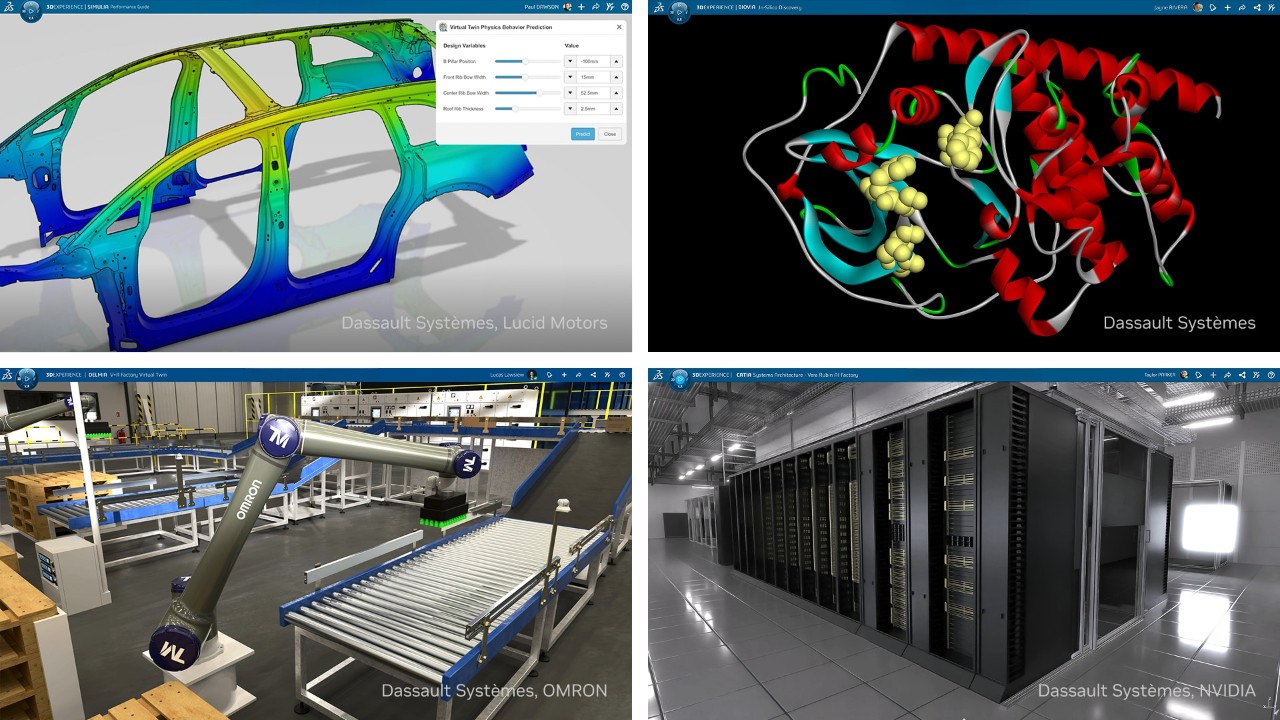
NVIDIA integrates with: NVIDIA DGX Station™, NVIDIA DGX Spark™, NVIDIA CUDA-X™, NVIDIA Omniverse™, NVIDIA ALCHEMI, NVIDIA CloudXR 6.0, NVIDIA Dynamo integration with vLLM, NVIDIA integration with Synopsys engineering solutions, Collaboration with T-Mobile and Nokia for 5G edge AI, Partnership with Dassault Systèmes for industrial transformation.
Mistral AI
Company at Mistral AI
2 mentions
Based on user reviews and social mentions, the most common pain points are: token cost, $500 bill, LLM costs, cost per token.
Based on 169 social mentions analyzed, 11% of sentiment is positive, 86% neutral, and 2% negative.