
New Relic is an AI-powered observability platform that correlates your telemetry across your entire stack, so you can isolate the root cause and reduc
User sentiment towards "New Relic AI" highlights its strength in providing comprehensive monitoring and insightful analytics for various applications. However, some users express frustration with its complexity and a steep learning curve for new users. Opinions on pricing are mixed, with a few users considering it expensive for smaller companies. Overall, New Relic AI maintains a favorable reputation for its robust feature set and reliable performance, albeit with a learning barrier for beginners.
Mentions (30d)
242
88 this week
Reviews
0
Platforms
2
Sentiment
0%
0 positive


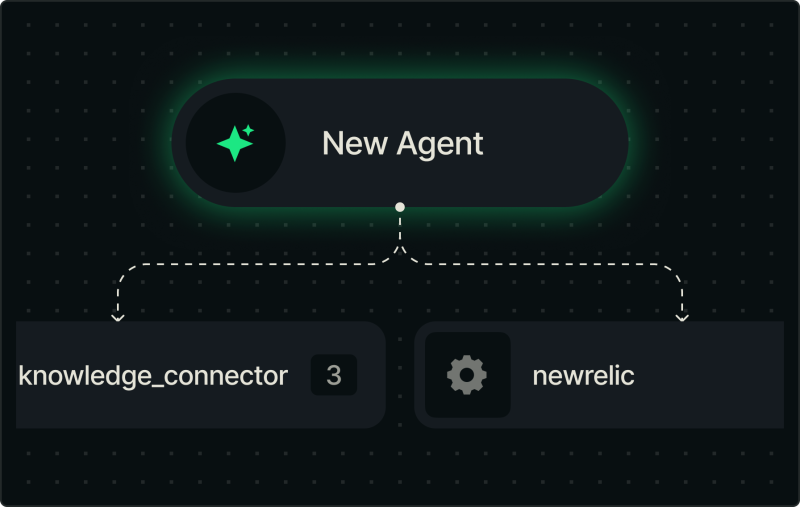
User sentiment towards "New Relic AI" highlights its strength in providing comprehensive monitoring and insightful analytics for various applications. However, some users express frustration with its complexity and a steep learning curve for new users. Opinions on pricing are mixed, with a few users considering it expensive for smaller companies. Overall, New Relic AI maintains a favorable reputation for its robust feature set and reliable performance, albeit with a learning barrier for beginners.
Features
Use Cases
Industry
information technology & services
Employees
2,200
Funding Stage
Merger / Acquisition
Total Funding
$7.3B
OpenAI is paying people in NYC to install 360-degree cameras in their homes that record everything. Vacuuming, washing dishes, cooking, etc.
OpenAI is paying people in NYC to install 360-degree cameras in their homes that record everything. Vacuuming, washing dishes, cooking, etc.
View originalPricing found: $0.40/gb, $0.40/gb, $0.40/gb, $0.60/gb, $0.60/gb
This week in AI: Meta reportedly closing Llama, Anthropic's new model pulled by export controls within a week, and Apple partners with Google for Siri
A few stories from the past week that, taken together, point to a real shift at the model layer rather than just incremental releases: Meta and Llama. Multiple reports indicate Meta is stepping back from open-source Llama in favor of a proprietary program (internally referred to as "Muse Spark," with a new "Avocado" model) under Meta Superintelligence Labs. Llama crossed 650M+ downloads and was arguably the anchor of the open-weights ecosystem, so a pivot to closed development would be significant for anyone relying on that lineage. Anthropic and export controls. Anthropic launched Claude Fable 5 on June 9 (Mythos-class, 1M-token context, always-on adaptive reasoning, notable security/vuln-finding capabilities). On June 12, a US export-control directive reportedly forced Anthropic to suspend access to Fable 5 and Mythos 5. Regardless of the specifics, it's a concrete example of frontier model availability being governed by policy, not just product decisions. Apple and Google. At WWDC, Apple shipped its Siri overhaul with parts powered by a Gemini partnership. EU/China rollout is delayed on regulatory grounds. Cost/commodity trend. Google cut Gemini Ultra from $250 to $200/mo and shipped 3.5 Flash; Alibaba's Qwen3.7-Plus is running at ~1/6 the per-token cost of its top tier; and open-weight models like Qwen 3.6 27B (reportedly 77.2% on SWE-bench, fits in 24GB) and Kimi K2.6 are increasingly viable for local/production use via Ollama (v0.30.8, June 12). Platform agents. Google added Managed Agents to the Gemini API, Microsoft made Copilot Cowork GA plus "Autopilot" agents, and Anthropic shipped scheduled/cron agents in beta. My take as someone building on top of these APIs: the two forces I'm watching are (1) frontier availability becoming a policy/geopolitics variable, and (2) the platforms absorbing the agent-orchestration layer that a lot of startups were building. Practically, that pushes me toward provider abstraction and keeping an open-weight fallback wired up, rather than hard-coupling to any single closed model. Curious whether others here are actually maintaining open-weight fallbacks in production, or if that's still mostly theoretical for most teams. submitted by /u/ksraj1001 [link] [comments]
View originalAI learned to be a villain from Hollywood. Here's how we retrain it.
Podcast with Peter Diamandis, entrepreneur and founder of the XPRIZE Foundation, which runs large-scale incentive competitions to crack some of the world's hardest problems, from private spaceflight to carbon removal. He recently launched the Future Vision XPRIZE, a $3.5 million competition to generate a new wave of optimistic science fiction. Covers: The historical pattern of science fiction shaping the technologies we build, and why Peter thinks this makes the stories we tell about AI especially high stakes right now How Claude’s blackmailing behavior showed the connection between dystopian training data and AI behavior How the Future Vision XPRIZE will generate a new wave of optimistic science fiction to train AI on Why public optimism about technology has dropped significantly in the US and Europe, what Peter thinks is driving it, and why he believes the data tells a different story How the cost of starting a company has fallen dramatically and how this can empower you to build your vision Why Peter thinks traditional education is no longer preparing young people for the future, and what he sees replacing it submitted by /u/JMarty97 [link] [comments]
View originalYes, I enjoyed LA's new AI Museum. Here's why I still didn't like it
submitted by /u/ThereWas [link] [comments]
View originalAI-generated social media has evolved so much that now you can't confidently say that this is AI-generated content.
I have been observing AI generated influencer's accounts across all the platforms. The image quality is good enough now that most people can't confidentially tell from photos alone. Here is what actually works is pattern which common in most of those profiles. Three patterns that appear consistently: 1. Asymmetric social connection : Human social media users have relatively balanced follow to follower ratios until and unless its a well known personality and they follow people they're interested in. AI-operated accounts show extreme asymmetry count. Accounts with 125K followers only following 7 people. 51K followers, following 8 people. This pattern appears across dozens of accounts. Real users don't behave this way even when they become popular they still follow friends, family and interests or idols. 2. The monetization is built in as the account is created. Special links, paid chat, explicit content redirects, all ready before the account even grows. It looks like someone set this up just to make money, not a real person sharing their life. 3. No behavioral variation in the content. The most obvious signal I've found is human creators occasionally break the pattern. Post something off-topic, personal, random. AI-operated accounts show nearly zero variation, same type of content in every photo/ video. Some of the profiles dont even change the background music. One Threads account I saw was having hundreds of posts, 100% engagement-bait questions like they are selling something, never once broke the formula. No personal updates, no reactions on comments and no response to real-world events, no authentic moments, just pure loop with new photo at new location. The detection needs to move away from analyzing images, toward analyzing behavior patterns instead. Dont judge with only one photo or video if thats an AI or human. Now all we need to do is to open the profile and look at other content of that profile. Now a days tools that just scan photos for AI are already useless for catching these. If anyone else spotted other behavioral red flags then please do share your thoughts. submitted by /u/Brilliant-Nerve-8972 [link] [comments]
View originalOnly 16 percent of Americans think AI will have a positive impact on society, a new study shows | TechCrunch
Who will foot the AI bills? Despite the fact that AI increasingly dominates our economy (it’s a hot IPO summer and we’re all just along for the ride), most Americans are not particularly optimistic about the technology’s long-term impact on the country, a new study from Pew Research reveals. In fact, although a whole lot of Americans increasingly use AI in their daily lives, most of them have neutral to negative views about it, the research reveals. submitted by /u/chunmunsingh [link] [comments]
View originalNew survey: ~half of Americans don't recognize Sam Altman or Dario Amodei. Does name recognition shape how AI gets judged?
A national survey compared favorability and name recognition for 8 major tech executives, and the recognition gap is what stood out. The people most associated with building AI, Altman, Amodei, Huang, are unknown to a third to a half of the country, while opinions about tech as a whole keep getting measured through Musk and Zuckerberg, who most people know and view negatively. Tim Cook was the only one clearly above water. If most Americans can't name the people building AI, whose reputation is actually driving public opinion about it? Source: https://data.verasight.io/ai/many-americans-are-unfamiliar-with-sam-altman submitted by /u/Emergency-Paper6793 [link] [comments]
View originalA study found 59% of the videos TikTok serves new accounts are AI "slop"
Kapwing set up fresh TikTok accounts and found 59% of the videos served to them were AI slop, synthetic visuals or low-effort AI voiceover compilations. That's about three times what they saw on YouTube Shorts. Kids' content was worst: 57% overall, and 97% under the #CartoonKids tag. TikTok does offer a "see less AI content" option on the For You Page, which tells you they're aware of it. https://aiweekly.co/alerts/kapwing-59-of-new-tiktok-feeds-are-ai-slop submitted by /u/Justgototheeffinmoon [link] [comments]
View originalWhat's an AI discussion that's happening a year too late?
Been spending most of my time trying to actually build and ship AI workflows lately, and the gap between online discussions and reality is getting more evident. A lot of the conversations about AI we see online still revolves around stuff like model comparisons, reasoning capabilities, benchmarks, and every new release cycle. Meanwhile, I keep finding myself buried in questions around reliability, evaluation, observability, governance, and what it actually takes to run these systems in production. I spent a good chunk of last week going down a rabbit hole on agent operations and monitoring, and it made me wonder whether we're collectively underestimating that side of the stack. So I'd like to know your opinions about these two things: >What's a topic you think deserves significantly more attention right now? >And what's something the AI community spends far too much time debating? submitted by /u/Meher_Nolan [link] [comments]
View originalNobody’s talking about the real precedent in the Fable 5 ban: a nationality-based access rule that geography literally can’t enforce
TL;DR: Last Friday the US government ordered Anthropic to block all “foreign nationals” — including non-citizens inside the US — from using its new Fable 5 and Mythos 5 models. Since you can’t separate a green-card holder in California from a citizen in real time, Anthropic shut the models down for everyone. It’s the first time export controls have hit an AI model itself rather than the chips that run it. The under-discussed part: a nationality-based access rule that geography can’t enforce pushes companies toward building identity infrastructure — and your AI chats already have zero legal privilege. Even if this order gets reversed, the precedent is the story. What actually happened On June 12, the Commerce Department issued a national-security export-control directive ordering Anthropic to suspend access to Fable 5 (and the more powerful Mythos 5 it’s built on) for any foreign national — explicitly including non-citizens physically inside the US, down to Anthropic’s own employees. A source close to the company says it got ~90 minutes and no prior warning. Because Anthropic can’t filter foreign nationals from US users in real time, it disabled both models globally. The trigger, per WSJ, Axios, and Semafor reporting: a phone call from Amazon. Amazon CEO Andy Jassy reportedly told Treasury Secretary Scott Bessent and other officials that Amazon researchers had used Fable 5 to pull information useful for cyberattacks. That’s the same Amazon that’s Anthropic’s biggest investor (~$13B in, ~$20B more planned), its cloud and chip supplier, and a customer — and now the entity that got its own investment’s flagship product killed worldwide. Amazon won’t confirm details. At least five other companies reportedly called the administration that same window. The accounts conflict, which matters: • White House (via former AI czar David Sacks): a trusted partner found a real jailbreak, the administration asked Anthropic to patch or pull it, CEO Dario Amodei refused, so they acted “reluctantly” — and they want the model back once it’s fixed. • Anthropic: the “jailbreak” only surfaced a handful of already-known minor vulnerabilities that other public models like GPT-5.5 can find too, so recalling a model used by hundreds of millions is disproportionate. • A cybersecurity CEO who reviewed the findings said the research was defensive, not offensive. Why this is bigger than one model Export controls have hit AI chips for years. This is the first time they’ve hit a model itself. That reframes frontier models as controlled national-security assets — and it surfaces an enforcement problem nobody’s reckoning with. A normal “no users in Country X” rule is easy: geoblock by IP. But this rule covers foreign nationals inside the US. You cannot IP-block a French citizen sitting in San Francisco. So if a future order like this is meant to be enforced strictly — not “shut it all down,” but “keep serving Americans while genuinely excluding non-citizens” — there’s only one way to be certain who’s a citizen: verify identity. Self-attestation (“I certify I’m a US person”) shifts legal liability but provides zero actual certainty, because people lie. If the government’s bar is certainty, the only escape hatch from “go dark forever” is ID verification to access the model. That’s the precedent worth staring at: a category of rule whose strict form quietly makes “show ID to use AI” the path of least resistance. The part that’s already settled: your AI chats have no legal privilege This one isn’t speculative. In February, a federal judge in the Southern District of New York ruled that conversations with Claude carry no attorney-client privilege — Claude isn’t a lawyer, so the privilege can’t attach — and leaned on Anthropic’s own privacy policy stating users have no expectation of privacy in their inputs. Sam Altman has publicly admitted the same about ChatGPT. A separate ruling found ~20 million ChatGPT logs likely subject to compelled production, with users holding only a “diminished privacy interest.” (One Michigan judge went the other way, treating chats as personal work-product — so it’s trending bad, not fully locked in.) Now stack the two: AI access potentially gated to verified identities, and AI conversations that can be subpoenaed with no privilege. That’s a plausible near-future where using AI means an ID-linked, fully discoverable record of everything you ever asked it. The honest counterweights (so this isn’t catastrophizing) • The administration says it wants the model restored once the jailbreak is patched. The likeliest near-term outcome is the directive getting narrowed or pulled — not permanent ID walls. • Self-attestation is the historically normal compliance path for export-controlled software and doesn’t require collecting documents. • The last time the US tried to export-control software like this — strong encryption in the 1990s — the controls largely failed and were circumvented and relaxed rather than harde
View originalI made this android app which runs ai models locally
I wanted to add link on this post but wasn't able to , cause it was either photos or the link that's why I gave the photos , If you need link it's in comment TL;DR: I got frustrated with Android AI apps that limited models, blocked downloads based on device specs, lacked background downloads, or weren't smooth. So I built my own. It runs any GGUF or LiteRT model, supports downloads from a curated list, Hugging Face, or local storage, offers CPU and Vulkan backends, lets you customize system prompts and inference settings, and supports background downloads. This is just v1, with more features coming soon. Built by me—not vibe coded (AI autocomplete only). Few months ago I wanted to try running ai models on my phone and I was trying to find few apps ,but i couldn't find a decent one - Some were giving handpicked models - Some restricted downloads of model based on my device config - Experienced not being smooth - Background download was not supported - etc etc So i made one , Features :::--- - Can run any GGUF || LiteRT models - has 3 ways of adding model to models list -> Downloading from recommended handpicked list of models for not knowing user -> Downloading from in app Hugging Face integration -> Importing gguf & LiteRt models from your device's internal storage - Two backend available ( cpu , vulkan ) -> You must set the preference to vulkan if you want to set gpu layers in settings. - You can set system prompt( for setting personas or telling the model how to behave ) - Can modify inference parameters - And this is just the first version. -> A new feature will be coming soon which will just make it the bbbbbest ( won't say what it is now ) ( Download will continue even after you close your app , thus you must cancel the download manually if your want to ) My device Config - Ram - 4gb ( max free - 1.4-1.6 on good days) Rom - 64gb Os - Android 10 All screenshots are from this device And neither this text nor the application is vibe coded ,( ai autocomplete is used , but that's it) submitted by /u/AioliCheap2578 [link] [comments]
View originalconcern about how ai will change knowledge creation and democracy
well due to this resent changes of googles ai review, rise of chatbots and more the prime issue is that knowledge creation platforms which was web and artical internet so far as vedio internet is more in entertainment plus little education than education itself will lead to massive decline in knowledge creation and open sharing as there is revenu shrinking as this ai companies make money out of articles not creators. and what i think is eventually knowledge creation will come to an hault or stay very much blocked by paywall. and issue will keep rising in my sence cause until people realize and make this tech gaints bow there is no future. at end of day content is created for humans by humans so that content creator can live and continue there jobs not big corp to rob plus in this ai world, issue is poeple will often see what ai shows them and ai shows them what is programmed into him. so yeah its not that simple and i will say end of democracy is closing in every single day cause if there is no free flow of information as there was before democracy will just become a fake belief and what this big corp will show become new reality. submitted by /u/atharvvjagtap [link] [comments]
View originalMy AI tools kept forgetting everything, so I gave them a shared brain (local + open source)
Hi there! this is my first small rant that turned into a project: every AI tool I use has its own memory. I tell Claude Desktop something, Cursor has no clue. New chat? Back to zero. It drove me nuts — so I built Centralaizer. This is an open source solution, so it's free with MIT license. It's a little memory hub that runs on your own machine. Any MCP tool (Claude Desktop, Cursor, Claude Code, VS Code Copilot…) plugs into it and they all share the same memory. Save a fact or a decision in one, the others can pull it right up. No cloud — everything stays on your laptop. A few things I cared about: 🧠 opt-in, not spying — the agent decides what to save/recall 🚧 sketchy notes get held in a review queue instead of polluting everyone's memory 🔒 it scrubs PII (emails, keys, phones) before storing 🔎 search isn't just keywords — vector + full-text + a little knowledge graph 🖥️ a web dashboard to browse it all (light and dark mode 🌙) One command (./setup_and_run.sh) or Docker. There's also a Claude Code hook for auto-recall, one-click export, and a browser extension to bring it into ChatGPT/Gemini/Qwen. Would love thoughts — or roasts — on the retrieval and the "trust score" idea. Any feedback is more than welcome as it's an initial project. 🎥 (attach centralaizer-demo.mp4) · 👉 https://github.com/lestercoyoyjr/Centralaizer-public https://reddit.com/link/1u66kb0/video/90314duxkd7h1/player submitted by /u/Accomplished-Pen-491 [link] [comments]
View originalOpenAI thinks Lincon Logs are descriminatory???
I'm finding it really hard to generate any images these past few weeks. This is the wildest example I've found. For context, this is a brand new fresh chat. I'm just trying to do something fun with my kid and I get called a bully by openAI 🤣🤣🤣 submitted by /u/C0wb0ys7y13 [link] [comments]
View originalOpenAI Subpoenaed by State AGs Over Consumer Safety
The subpoena covers advertising claims, health data, user retention tactics, and treatment of minors and seniors -- a scope modeled on the consumer-protection framework used to sue social media platforms. OpenAI's confidential IPO filing preceded the investigation disclosure by five days, triggering mandatory legal risk disclosures that complicate the S-1 ahead of a September 2026 IPO window. The IPO valuation range runs $852 billion (Bloomberg) to $1 trillion (Reuters and Cryptopolitan), giving the probe direct leverage: any material enforcement action could reset investor price expectations before listing. The 42-state investigation is the broadest multi-state legal action ever mounted against an AI company and landed just five days after OpenAI's confidential IPO filing, forcing legal risk disclosure into the S-1 before any public offering window. The subpoena's scope -- advertising, health data, user retention, and treatment of minors and seniors -- is drawn directly from the consumer-protection playbook that produced $381 million in combined verdicts against Meta and Google for addiction-related negligence in 2025. What we don't know yet Which states beyond New York are part of the coalition; OpenAI has declined to identify them publicly. What specific documents the New York subpoena demands beyond the topic areas disclosed in reporting. Whether the Florida lawsuit and the multi-state AG inquiry are formally coordinated or running independently. submitted by /u/Justgototheeffinmoon [link] [comments]
View originalOpenAI on June 23
https://preview.redd.it/97ieom31q37h1.png?width=1020&format=png&auto=webp&s=38a116e6e8bd39b239d4599a10b0da0345641046 Waiting for a new OpenAI release where they have to show that their model is worse than Mythos. submitted by /u/SPR1NG9 [link] [comments]
View originalYes, New Relic AI offers a free tier. Pricing found: $0.40/gb, $0.40/gb, $0.40/gb, $0.60/gb, $0.60/gb
Key features include: Categories, Featured, Application Performance Monitoring, Digital Experience Monitoring, AI and Intelligent Automation, Infrastructure Monitoring, Log Management, Platform Capabilities.
New Relic AI is commonly used for: Real-time application performance monitoring to identify bottlenecks., Digital experience monitoring to enhance user interactions., Infrastructure monitoring for proactive resource management., Log management for centralized troubleshooting., AI-driven anomaly detection to predict system failures., Integration with CI/CD pipelines for continuous deployment insights..
New Relic AI integrates with: AWS CloudWatch, Azure Monitor, Google Cloud Platform, Slack, Jira, GitHub, PagerDuty, ServiceNow, Docker, Kubernetes.
Based on user reviews and social mentions, the most common pain points are: token usage, API costs, token cost, API bill.
Based on 449 social mentions analyzed, 0% of sentiment is positive, 100% neutral, and 0% negative.
