Every AI model for video, image, and audio. Intelligent workflows for professional control and collaboration. On-brand production at any scale.
Users generally praise Magnific for its user-friendly interface and efficient performance, highlighting its ability to streamline tasks effectively. However, some complaints revolve around occasional bugs and a steep learning curve for newcomers. The pricing is considered reasonable by most users, providing good value for the features offered. Overall, Magnific has a solid reputation, viewed as a reliable and effective tool within its space.
Mentions (30d)
0
Reviews
0
Platforms
2
Sentiment
0%
0 positive
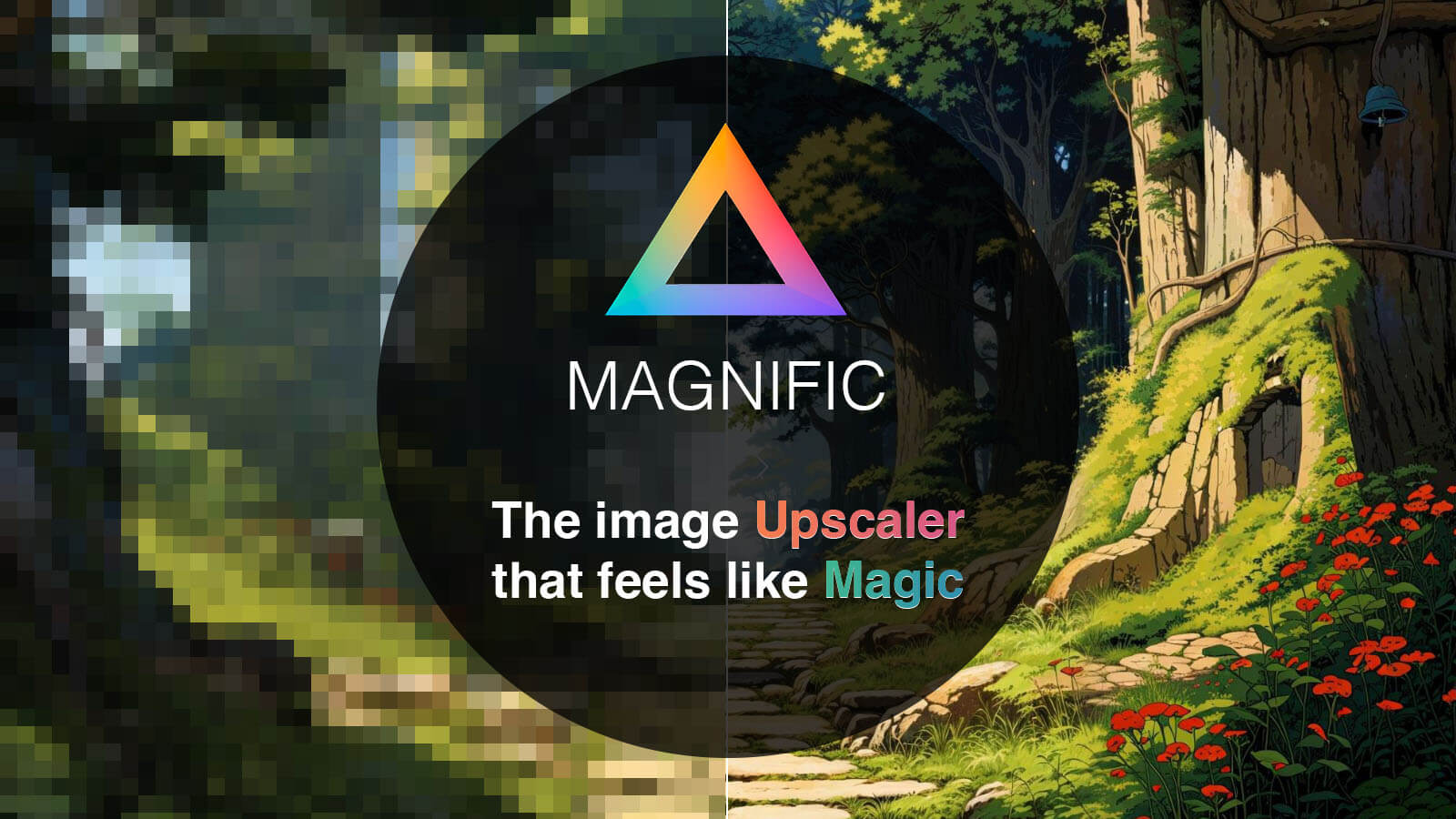
Users generally praise Magnific for its user-friendly interface and efficient performance, highlighting its ability to streamline tasks effectively. However, some complaints revolve around occasional bugs and a steep learning curve for newcomers. The pricing is considered reasonable by most users, providing good value for the features offered. Overall, Magnific has a solid reputation, viewed as a reliable and effective tool within its space.
Features
Use Cases
Industry
information technology & services
Employees
4
Funding Stage
Merger / Acquisition
Is it actually worth using image aggregators for GPT Image 2 instead of generating directly in ChatGPT?
Hey everyone, I’m trying to understand if there’s a real advantage to generating images directly inside ChatGPT versus using an aggregator platform like Higgsfield, Magnific, etc. when the underlying model is supposedly the same, for example GPT Image 2. I get that some platforms may offer better UI, presets, upscaling, batch generation, image management, or maybe higher resolution exports. But in terms of actual image quality, prompt understanding, consistency, and realism, is there a meaningful difference? For context, I’m using AI image generation mostly for cinematic / advertising-style images, product shots, characters, and visual development. So what matters to me is: final image quality realism / less “AI polish” prompt accuracy consistency across generations resolution / export quality cost per useful image, not just cost per generation The thing I’m wondering is: if I’m already paying for ChatGPT, is it actually worth paying extra on an aggregator just to access the same image model? Or am I mostly paying for workflow convenience and higher-res output? For people who have tested both seriously: do you see a real difference, or is it basically the same model with a different wrapper? Would love honest feedback, especially from people using it for professional-looking visuals, ads, film stills, product shots, or image-to-video prep. submitted by /u/ReasonableYou4733 [link] [comments]
View originalNature is losing to AI even on Google Images
https://preview.redd.it/n6rst0kxs66h1.png?width=840&format=png&auto=webp&s=784c711f8efb5234445c68175dab8fde8d1702bc Just wanted some wallpapers lol submitted by /u/MassAppa [link] [comments]
View originalI built a macOS clone in the browser with a single prompt
I gave MiMo-V2.5-Pro a single prompt and it built a full macOS Sequoia clone in the browser. Here's my honest take as someone who uses agentic coding daily. The prompt was straightforward: "A pixel-perfect macOS Sequoia desktop clone built entirely in the browser. Interactive window management, 54 native-style apps, Dock with physics-based magnification, Spotlight, Launchpad, and a working Safari browser." And it delivered. A fully functional macOS UI running in the browser, complete with a working Dock, app windows, Spotlight, and Launchpad all rendered from a single prompt. You can see the result in the screenshots above. Why this matters for agent workflows: The hardest part of agentic coding isn't raw capability, it's context retention across long, complex tasks. MiMo-V2.5-Pro held the full spec across the entire session without drifting or losing track of the original instructions. That's the thing that breaks most models on real projects. I ran this through OpenCode. Setup was trivial since the model exposes OpenAI-compatible endpoints, so it dropped straight into my existing stack. The open-source angle: MIT License. You can use their API or self-host. For teams building agent pipelines that need a capable model without vendor lock-in, this is worth evaluating. On ClawEval it leads the open-source field while using significantly fewer tokens than comparable frontier models. For long agentic runs, that efficiency compounds fast. Bottom line: Not a toy. If you're running serious agent workflows, give it a real test. submitted by /u/Direct-Attention8597 [link] [comments]
View originalMagnific uses a subscription + tiered pricing model. Visit their website for current pricing details.
Key features include: Every tool, ready to go, Your entire creative process on one node-based canvas, One place, whole team, Workflow in one click, Generate image, Generate video, Upscale image, Edit image.
Magnific is commonly used for: Your entire creative process on one node-based canvas, One place, whole team, Workflow in one click.
Magnific integrates with: Adobe Photoshop, Figma, Sketch, Canva, Unity, Blender, CorelDRAW, Maya, Procreate, GIMP.
Alexandr Wang
CEO at Scale AI
1 mention