LLM Guard
Users of LLM Guard note its strong capabilities in safeguarding large language models, particularly emphasizing its function in reducing unnecessary token usage, which has been a significant resource saver in many AI applications. A primary concern, however, is the potential for security vulnerabilities, especially when executing code without protective measures, which has prompted caution among developers. Pricing sentiment around LLM Guard is generally positive, as it’s often highlighted for cost efficiency, particularly in open-source environments. Overall, LLM Guard maintains a solid reputation for enhancing operational efficiency and protection, but users call for stronger security assurances to bolster trust.
Protect AI
Protect AI is the broadest and most comprehensive AI security solution. Our products operate on a single, unified platform and secure AI applications.
Protect AI appears to be mainly discussed within the context of protecting and supporting AI, often featured alongside advocacy hashtags and strong sentiments against perceived anti-AI sentiments. The lack of detailed reviews and structured feedback may indicate limited widespread user engagement or understanding of the software. There are no clear mentions of pricing, suggesting it might not be a prominent concern or unfamiliar topic within the social conversations. Overall, Protect AI seems to have niche support with some passionate defenders, amidst a backdrop of AI-related legal and ethical discussions.
LLM Guard
Stable week-over-weekProtect AI
-83% vs last weekLLM Guard
Protect AI
LLM Guard
Protect AI
LLM Guard
Protect AI
LLM Guard (6)
Protect AI (8)
Only in LLM Guard (8)
Only in Protect AI (8)
Only in LLM Guard (15)
Only in Protect AI (15)
LLM Guard
Protect AI
LLM Guard
Protect AI
LLM Guard
No YouTube channel
Protect AI

AI Risk Report: Fast-Growing Threats in AI Runtime
Jun 23, 2025

Why Reasoning AI Models Aren't Automatically Secure - Vulnerability Assessment Results
Jun 16, 2025
Secure by Design: Building Resilient AI Systems in an Evolving Threat Landscape
Jun 5, 2025

Model Kombat: GPT-04-Mini vs Gemini 2.5 Flash
May 30, 2025
LLM Guard
No screenshots
Protect AI
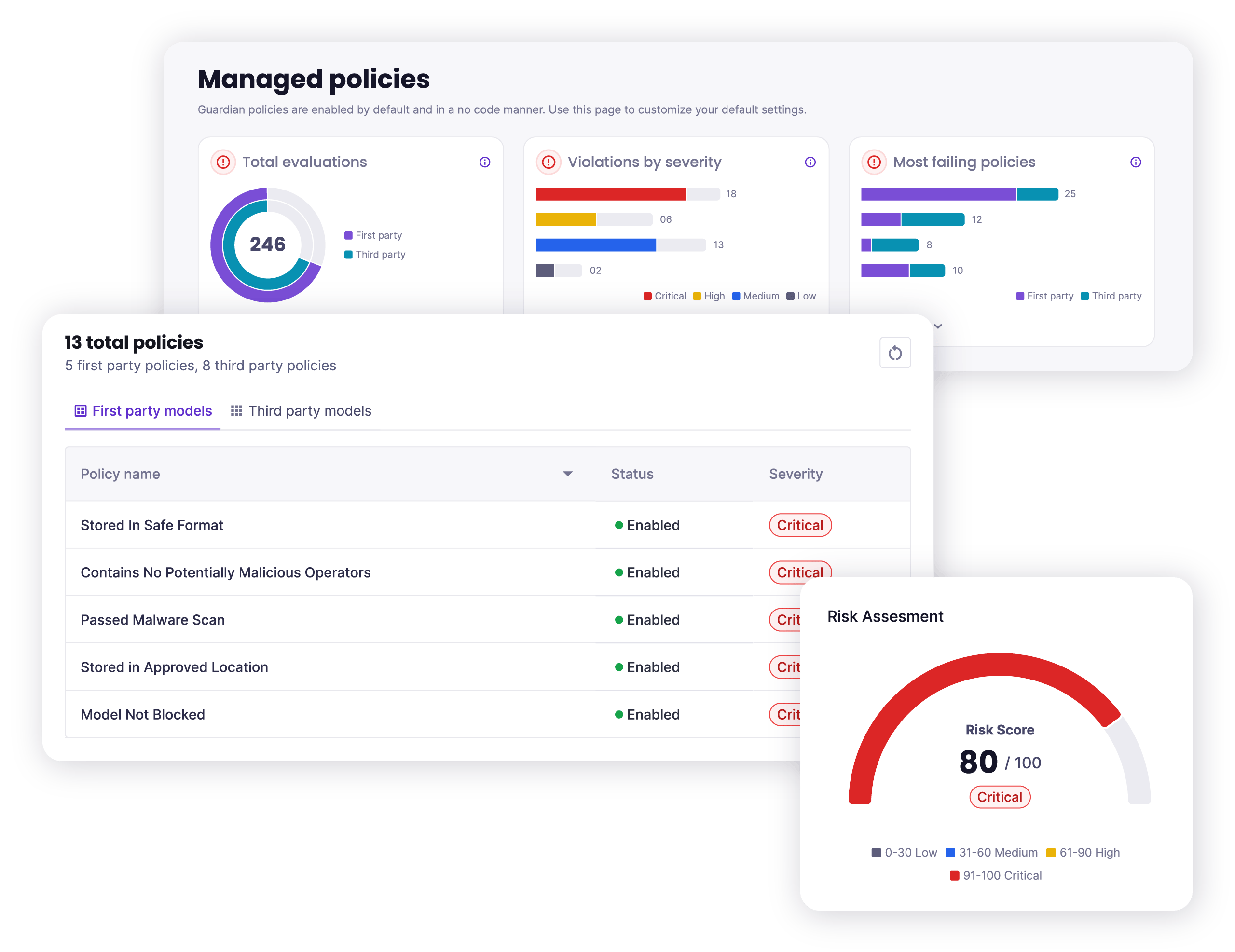

Only in Protect AI (4)


