
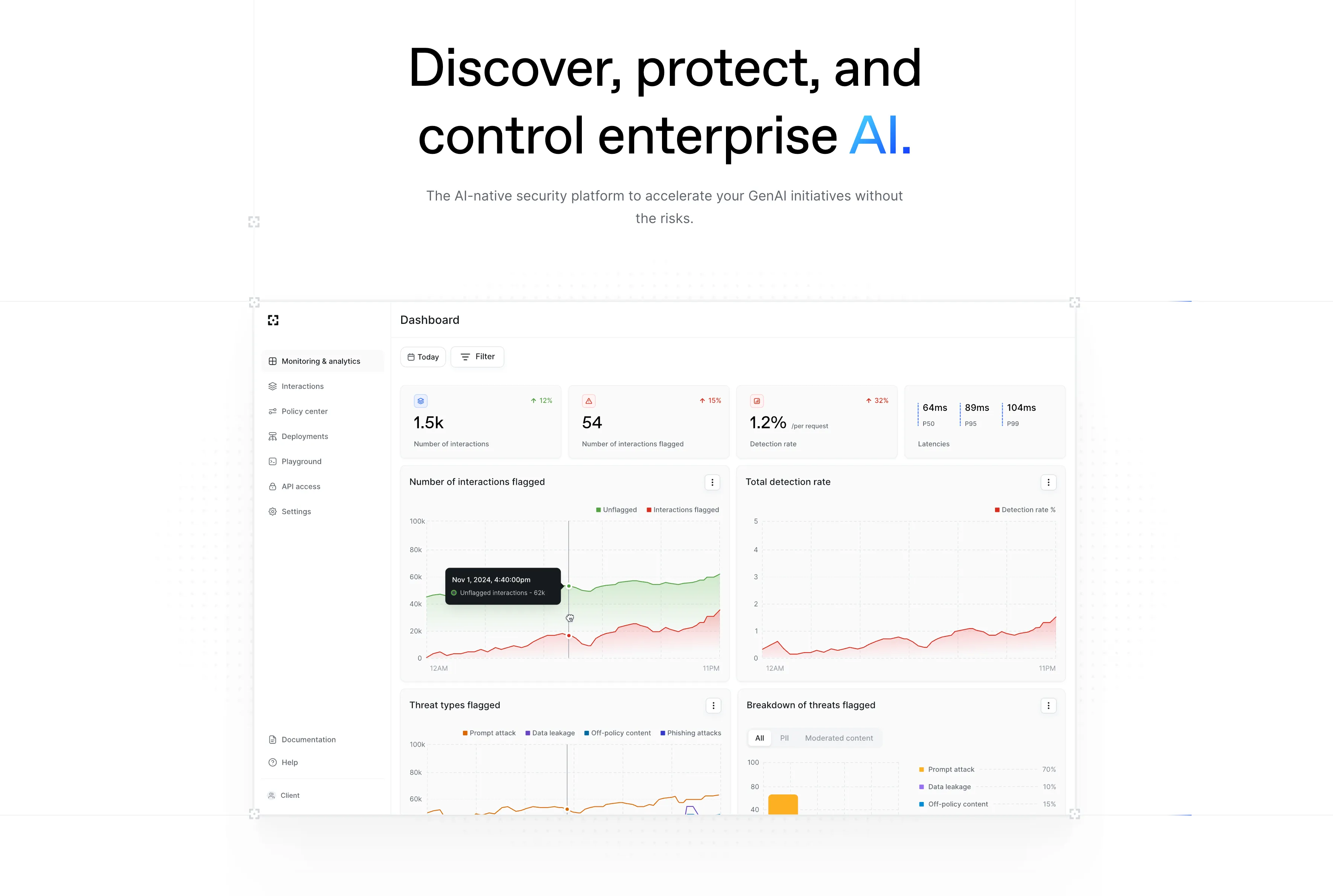
The AI-native security platform to accelerate GenAI initiatives—trusted by Fortune 500s, backed by the world’s largest AI red team.
Based on the available data, Lakera AI is prominently featured and discussed on YouTube, indicating a potential strength in its digital presence and user engagement through video content. However, due to the lack of detailed reviews or diverse social mentions, specific strengths, complaints, or insights on pricing sentiment cannot be determined. The overall reputation seems to hinge on its visibility on platforms like YouTube, suggesting some level of recognition or interest.
Mentions (30d)
0
Reviews
0
Platforms
1
Sentiment
0%
0 positive

Based on the available data, Lakera AI is prominently featured and discussed on YouTube, indicating a potential strength in its digital presence and user engagement through video content. However, due to the lack of detailed reviews or diverse social mentions, specific strengths, complaints, or insights on pricing sentiment cannot be determined. The overall reputation seems to hinge on its visibility on platforms like YouTube, suggesting some level of recognition or interest.
Features
Use Cases
Industry
information technology & services
Employees
120
Funding Stage
Merger / Acquisition
Total Funding
$330.0M
Lakera uses a tiered pricing model. Visit their website for current pricing details.
Key features include: Automated security assessments, Real-time threat detection, Compliance monitoring, User access control management, Data encryption and protection, Incident response automation, Vulnerability scanning, Integration with CI/CD pipelines.
Lakera is commonly used for: Identifying security vulnerabilities in code, Monitoring user access to sensitive data, Automating compliance reporting for regulations, Detecting and responding to security incidents in real-time, Ensuring secure software deployment processes, Providing security training and awareness for developers.
Lakera integrates with: GitHub, GitLab, Jira, Slack, AWS, Azure, Google Cloud Platform, Docker, Kubernetes, Snyk.
