Reclaim the web from clutter. Get ad-free search, private browsing, and powerful tools that respect your data.
Kagi is praised for its fast and clutter-free search experience, with users appreciating its ad-free interface and strong privacy features. However, some users express concerns about the cost of the service, feeling it may be on the higher side compared to free alternatives. Despite the pricing concerns, the overall reputation of Kagi is positive, with many valuing it for enhanced search results and user privacy.
Mentions (30d)
0
Reviews
0
Platforms
4
Sentiment
0%
0 positive
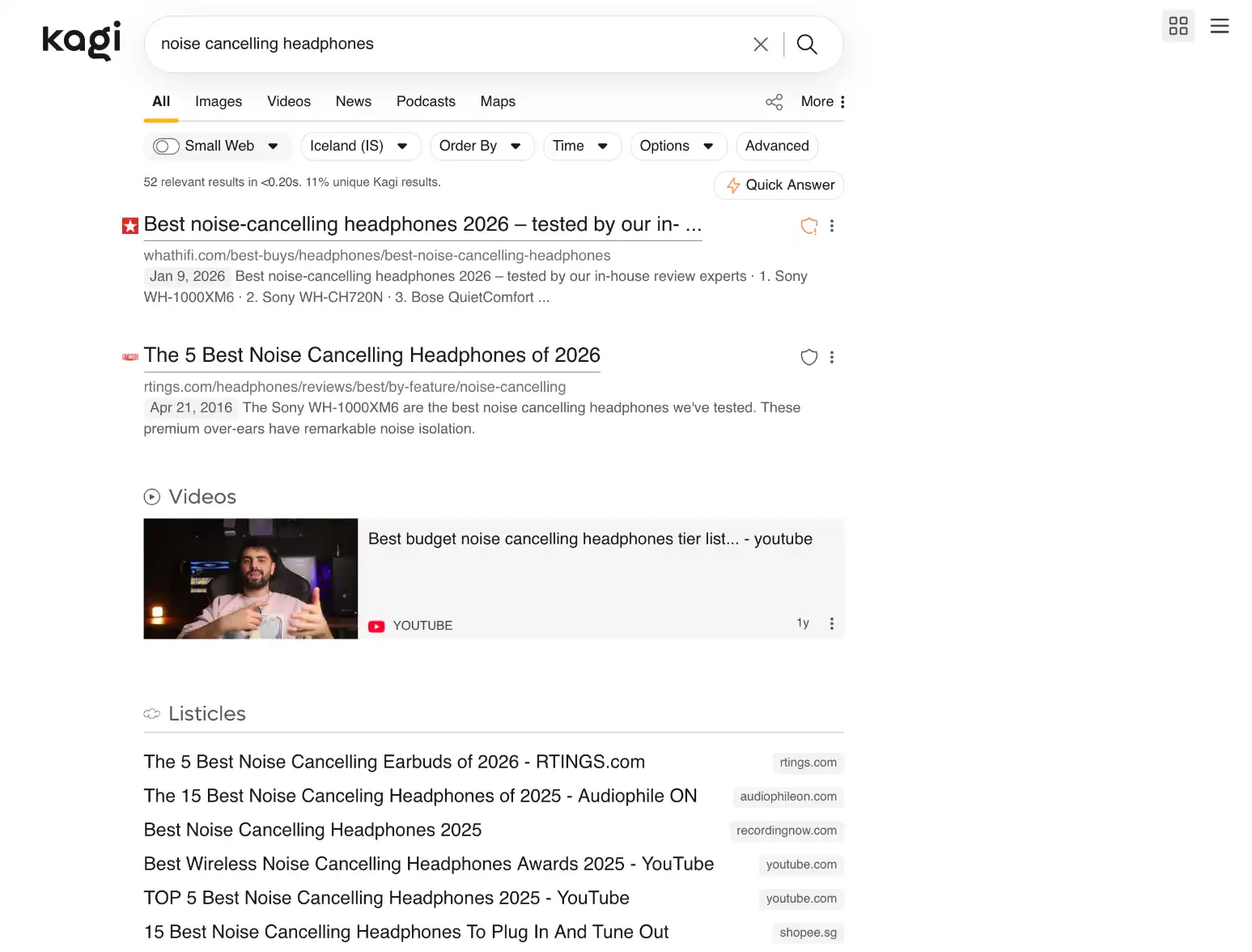
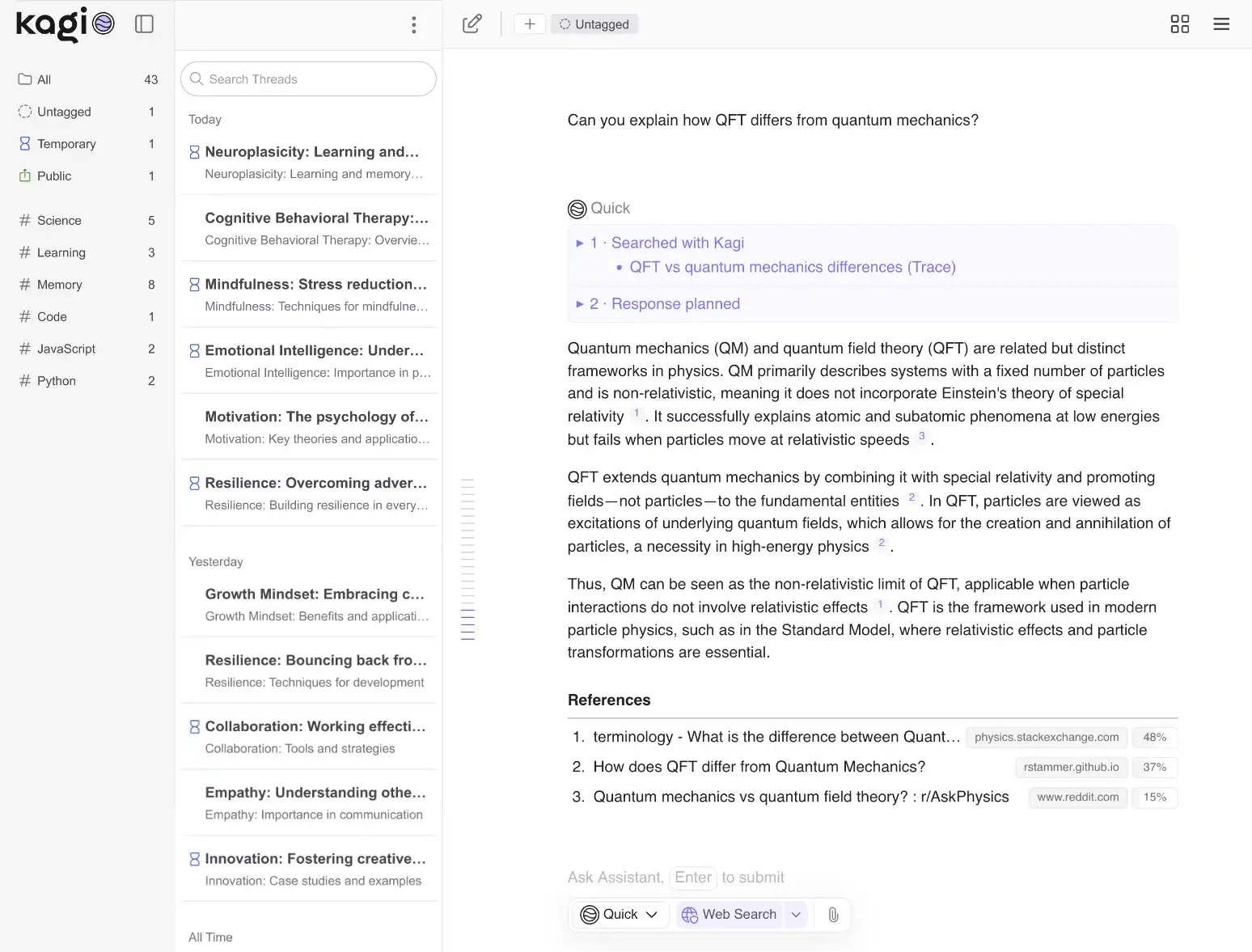

Kagi is praised for its fast and clutter-free search experience, with users appreciating its ad-free interface and strong privacy features. However, some users express concerns about the cost of the service, feeling it may be on the higher side compared to free alternatives. Despite the pricing concerns, the overall reputation of Kagi is positive, with many valuing it for enhanced search results and user privacy.
Features
Use Cases
Industry
information technology & services
Employees
33
Pricing found: $5 /mo, $10 /mo, $25 /mo
Claude is my entire SEO team. 1.5M+ impressions in 3 months as a solo founder.
TL;DR: I use Claude to analyse my Google Search Console data weekly, find SEO problems, draft content for keyword gaps, and write the code fixes I ship through Lovable. 1.5M+ impressions and 13K+ clicks in 3 months, zero ad spend, zero employees. Claude also started recommending my site to its own users without me doing anything. The AI is marketing itself. A few months ago I posted here about building a marketplace with Claude as my only technical resource. That post kind of blew up. Since then Claude has basically become my entire growth team too. Quick context: I run Agensi (agensi.io), a marketplace where developers buy and sell skills for Claude Code, Cursor, Codex CLI, and 20+ other agents. Every skill goes through an automated 8-point security scan. Browse, download, install in 30 seconds or directly through our agent-native MC Currently 1,500+ registered users, 700+ skills listed, 1,000+ daily active users. Here are the SEO numbers from Google Search Console (screenshot attached): 1.5M+ impressions in 3 months 13K+ clicks Domain rating 0 to 43 12 AI engines now cite the site organically I did not hire an SEO agency. I did not hire a content writer. I did not run a single ad. I just talked to Claude. A lot. Here's the actual workflow. Every week I export data from Google Search Console and feed it to Claude. I ask it to find keyword gaps, broken pages, CTR problems, and cannibalisation issues. Claude catches things I would never find on my own. It spotted duplicate schema on 90 URLs that were confusing Google. It caught a hydration bug causing 49% bounce rates on my article pages. It found a redirect chain leaking authority. It flagged title tags getting truncated across the entire site. Then I say "write me the fix" and Claude writes the prompt I paste into Lovable to ship it. Same day. No sprint planning. No waiting. Just fix it and move on. For content, Claude analyses which queries get impressions but no clicks and drafts articles targeting those gaps. I edit everything, add screenshots, and publish. We've done 200+ articles this way. Not generic AI content. Actual answers to questions developers are searching for, like "where does Claude Code store skills" and "how to use SKILL.md in Cursor." The part that genuinely blew my mind is AEO. AI Engine Optimization. Because every page has structured data and clean metadata, AI assistants started recommending the site on their own. ChatGPT sends traffic. Gemini sends traffic. Perplexity, Kagi, Doubao, NotebookLM, Copilot, Qwen. And yes, Claude itself recommends Agensi when developers ask where to find skills. I didn't ask for that. There's no partnership. It just started happening because the content is structured well enough for Claude to cite it. Claude built the product. Claude runs the SEO. Claude analyses the data. Claude helps me write the content. Claude recommends the site to its own users. The loop is kind of beautiful when you think about it. I'm not a developer. I don't have a technical co-founder. I have Claude and a lot of stubbornness. That's the whole team. Happy to answer questions about the workflow or how I use Claude for any of this. submitted by /u/BadMenFinance [link] [comments]
View originalthing i wish i'd known about ai tools when i started using them seriously a year ago
the biggest unlock wasn't the model getting better. it was me getting better at knowing when to use which tool. year-ago me: opened chatgpt for everything because it was the first tab. asked it questions, got mediocre answers, accepted them, moved on. now me: actually thinks about which tool fits the task. claude for writing and reasoning. perplexity (used to, less now) or kagi for find me a source. cursor for code. notebooklm for synthesizing across many documents. chatgpt voice for thinking-out-loud. granola for meeting notes. gamma for any deck or proposal that needs to leave my computer. each one has a specific role. this sounds obvious typed out. it wasn't obvious when i was just starting. i thought i was supposed to find The One Tool and master it. turns out the skill is matching tool to task. the tools are mostly fine. the user choosing the wrong tool is most of why outputs are bad. the deck side specifically was where i wasted the most time before figuring this out. used to ask claude to format things as a presentation and accept the markdown output. it looked like a deck. it wasn't a deck. once i started piping claude's structured outline into gamma as an ai presentation tool instead of trying to make claude be the deck builder, the artifact quality jumped immediately. claude is great at thinking. gamma is great at the slide format. asking either one to do the other's job produces a worse version of both. second thing: don't trust any tool that doesn't show its work. perplexity citations matter. claude saying i'm not certain about this matters. tools that just confidently produce output with no provenance are dangerous if you're going to act on the output. early on i trusted everything equally. now i grade tools by how clearly they show me what they don't know. third thing: the cheap subscriptions add up faster than you think. i ran the math at one point — what i spent in my first year of trying ai tools was more than what i'd have paid a human freelancer to do the things i was trying to automate. would have been faster, too. AI tools have a real cost-benefit math and it's not always in your favor, especially early when you're still figuring out what works. if i'd known those three things a year ago, i'd have wasted less money and gotten better outputs sooner. posting in case it helps anyone earlier in the curve. submitted by /u/Honest-Purchase-9113 [link] [comments]
View originalClaude Code's source code appears to have leaked: here's what we know
Anthropic appears to have accidentally revealed the inner workings of one of its most popular and lucrative AI products, the agentic AI harness Claude Code, to the public. A 59.8 MB JavaScript source map file (.map), intended for internal debugging, was inadvertently included in version 2.1.88 of the @anthropic-ai/claude-code package on the public npm registry pushed live earlier this morning. By 4:23 am ET, Chaofan Shou (@Fried_rice), an intern at Solayer Labs, broadcasted the discovery on X (formerly Twitter). The post, which included a direct download link to a hosted archive, acted as a digital flare. Within hours, the ~512,000-line TypeScript codebase was mirrored across GitHub and analyzed by thousands of developers. For Anthropic, a company currently riding a meteoric rise with a reported $19 billion annualized revenue run-rate as of March 2026, the leak is more than a security lapse; it is a strategic hemorrhage of intellectual property.The timing is particularly critical given the commercial velocity of the product. Market data indicates that Claude Code alone has achieved an annualized recurring revenue (ARR) of $2.5 billion, a figure that has more than doubled since the beginning of the year. With enterprise adoption accounting for 80% of its revenue, the leak provides competitors—from established giants to nimble rivals like Cursor—a literal blueprint for how to build a high-agency, reliable, and commercially viable AI agent. Anthropic confirmed the leak in a spokesperson’s e-mailed statement to VentureBeat, which reads: “Earlier today, a Claude Code release included some internal source code. No sensitive customer data or credentials were involved or exposed. This was a release packaging issue caused by human error, not a security breach. We're rolling out measures to prevent this from happening again.” The anatomy of agentic memory The most significant takeaway for competitors lies in how Anthropic solved "context entropy"—the tendency for AI agents to
View originalPricing found: $5 /mo, $10 /mo, $25 /mo
Key features include: Kagi Search, Kagi Assistant, Orion Browser, Kagi Translate, Kagi News, Kagi Summarize, Kagi's Small Web, Our AI Philosophy.
Kagi is commonly used for: Personalized search results, Academic research focused searches, Recipe discovery based on user preferences, Developer-focused queries, Content filtering for specific topics, Enhanced privacy in search.
Kagi integrates with: Google Drive, Dropbox, Evernote, Notion, Slack, Microsoft Teams, Zapier, Trello.
Based on user reviews and social mentions, the most common pain points are: large language model, ai agent, anthropic, claude.

Nat Friedman
Investor at AI Grant
1 mention