MultiOn excels in facilitating structured AI management with its multi-agent execution capabilities and integration with a wide range of tools, whereas Guru offers a strong focus on knowledge management automation with ease of integration for enterprise solutions. MultiOn's smaller company size (~47 employees) benefits those seeking tailored support, while Guru's larger backing and funding (Series C $76.1M, ~2400 employees) cater to extensive enterprise needs.
Best for
Guru is the better choice when dealing with large-scale knowledge management and AI governance within enterprises, benefiting teams needing a comprehensive AI knowledge system with extensive integrations.
Best for
MultiOn is the better choice when aiming for tailored, multi-agent AI solutions with a focus on structured tasks, ideal for small to mid-sized teams needing personalized AI management.
Key Differences
Verdict
MultiOn is ideal for organizations focusing on day-to-day AI agent execution with a need for high customization in smaller teams. Guru fits large enterprises seeking robust AI-powered knowledge management with scalable infrastructure. Decision-makers should weigh the specific use cases and integration needs against their organizational size and budget constraints.
Guru
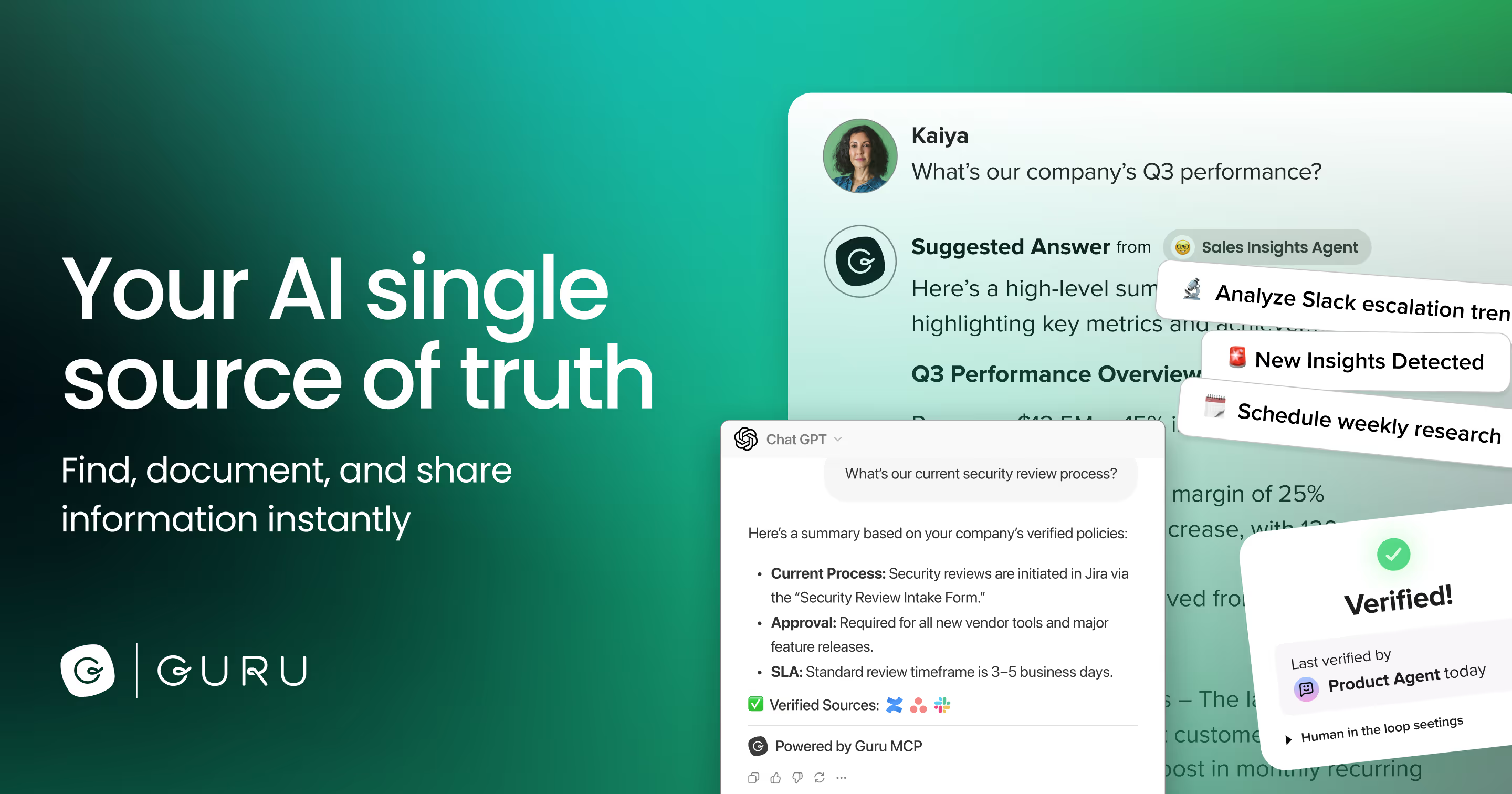
Stop running your business on confidently wrong AI. Guru structures, governs, and continuously improves your knowledge—so every AI answer can be trust
Users appreciate "Guru" for its advanced AI capabilities and ease of integration, highlighting its potential to function effectively without necessitating excessive expenditure on hardware or API fees. A recurring complaint is the perceived complexity of initial setup and limited access in free accounts, which offer minimal features like 1 minute of voice chat per month. The pricing sentiment is mixed; while some users find value in the capabilities offered, others think more features should be accessible at lower price points. Overall, "Guru" has a solid reputation for innovation, particularly among AI enthusiasts, but could improve user accessibility and value perception.
MultiOn
Designing everyday AGI.
Users generally appreciate MultiOn for its versatility in facilitating multi-agent execution and its ability to handle structured work efficiently under governance rules. However, some users express concerns about potential conflicts or data overwriting when multiple agents engage simultaneously. The pricing sentiment is mixed, as some value the capabilities provided, while others find it challenging to justify the cost. Overall, MultiOn is seen as a robust tool with a good reputation among those needing structured AI management solutions, but it may require improvements in conflict resolution and cost transparency.
Guru
-33% vs last weekMultiOn
-46% vs last weekGuru
MultiOn
Guru
MultiOn
Guru
MultiOn
Guru (6)
MultiOn (10)
Only in Guru (3)
Only in MultiOn (10)
Only in Guru (15)
Only in MultiOn (15)
Guru
No complaints found
MultiOn
Guru
No data
MultiOn
Guru
MultiOn

Guru
MultiOn
Guru
AI gurus are pushing setups that cost $100 a day in API fees and $500 hardware. Most people think that's the only way to run an AI agent. It's not. I built an autonomous AI agent that runs 24/7 on a
AI gurus are pushing setups that cost $100 a day in API fees and $500 hardware. Most people think that's the only way to run an AI agent. It's not. I built an autonomous AI agent that runs 24/7 on a computer you already own using completely free models. It took me weeks to crack the right archite
MultiOn
eTPS — Effective Tokens Per Second: A Better Way to Measure Local LLM Performance
# [](https://www.reddit.com/r/ArtificialInteligence/?f=flair_name%3A%22%F0%9F%9B%A0%EF%B8%8F%20Project%20%2F%20Build%22)We're obsessed with raw tokens per second. Every hardware post leads with it. Every quantization comparison is ranked by it. It's the one number everyone agrees to report. It's al
Only in Guru (3)
Only in MultiOn (1)
MultiOn is better for virtual assistant deployment due to its specialized use cases focused on task management and smart assistants.
MultiOn's tiered pricing might appeal to those looking for entry-level access, while Guru's subscription plus per-seat model offers comprehensive scalability for larger teams.
Guru likely has better community support given its larger user base and resources, stemming from extensive funding and a significant employee base.
While both tools offer integrations with similar platforms like Slack and Google Workspace, they fulfill different roles; MultiOn could complement Guru by handling specific task-based agent needs, while Guru manages enterprise knowledge.
MultiOn might offer a simpler initial setup for its focused use cases, while Guru's comprehensive features may present a steeper learning curve for initial deployment.


