Google AI
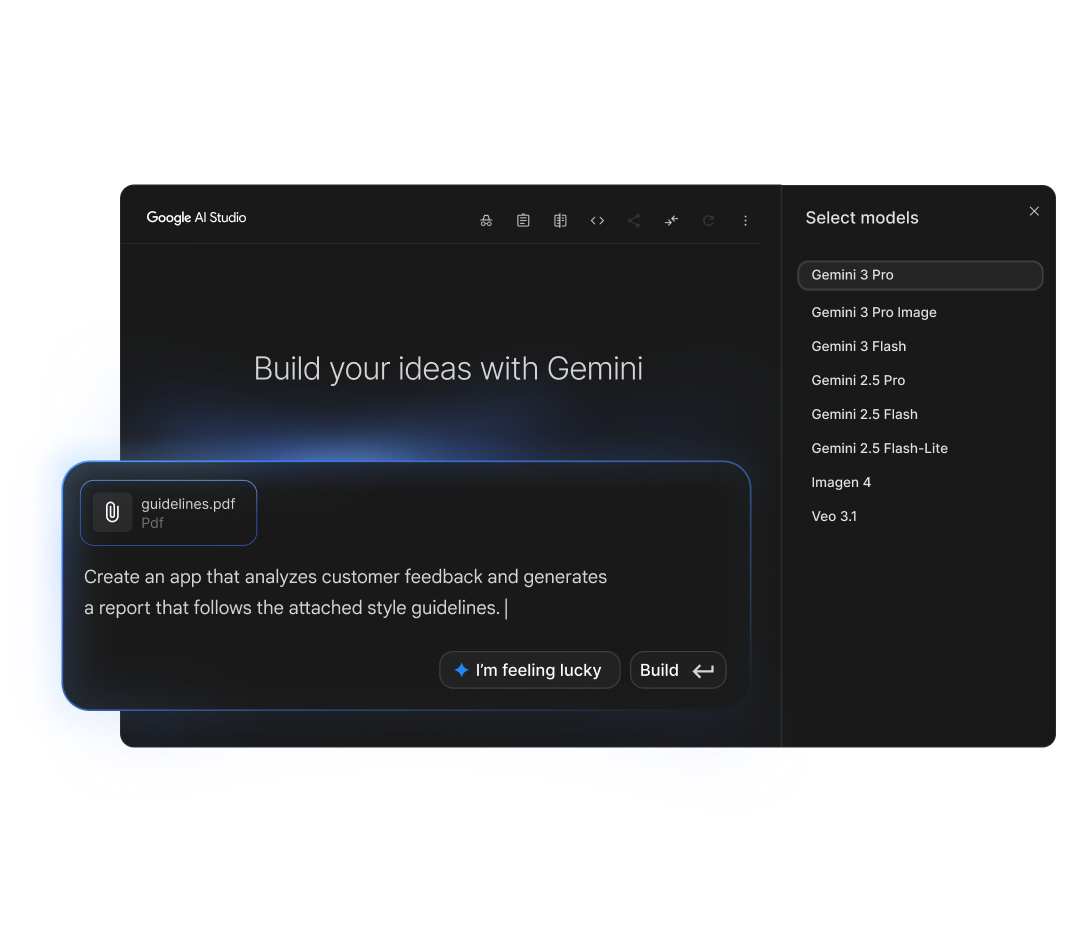
Build with Gemini 2.0 Flash, 2.5 Pro, and Gemma using the Gemini API and Google AI Studio.
Users generally praise Google AI for its robust and versatile capabilities, particularly highlighting the intelligent and rapid processing power of models like Gemini 3.1 Flash. The main strengths lie in innovation and integration with popular tools like Firebase, improving workflow and productivity. However, some users express concerns over the pricing structure, especially for top-tier subscriptions like Google AI Ultra, which costs $249.99. Overall, the reputation of Google AI remains strong, noted for cutting-edge technology and comprehensive support for developers and businesses.
Anthropic
Anthropic is an AI safety and research company that's working to build reliable, interpretable, and steerable AI systems.
Anthropic's main strength lies in its advanced AI model, Claude Opus 4.6, which supports extensive tasks like building a C compiler with a massive 1M token context window. However, users commonly complain about the significant rise in API costs associated with these advanced capabilities, leading to dissatisfaction with its pricing. Pricing sentiment is generally negative due to cost increases and limited usage options for the price point, such as the $200/month plan allowing only five daily prompts. Despite these concerns, Anthropic maintains a strong reputation for pushing AI innovation, although there are hints of financial strain noted in some discussions.
Google AI
+11% vs last weekAnthropic
Stable week-over-weekGoogle AI
Anthropic
Google AI
Anthropic
Google AI
Anthropic
Pricing found: $0, $17, $200, $20, $100
Google AI
| Model | Input | Output |
|---|---|---|
| gemini-2.5-pro | $1.25 | $10.00 |
| gemini-2.0-flash | $0.10 | $0.40 |
| gemini-2.0-pro | $1.25 | $5.00 |
| gemini-1.5-pro | $1.25 | $5.00 |
| gemini-1.5-flash | $0.07 | $0.30 |
Anthropic
| Model | Input | Output |
|---|---|---|
| claude-opus-4 | $15.00 | $75.00 |
| claude-sonnet-4 | $3.00 | $15.00 |
| claude-4-opus | $15.00 | $75.00 |
| claude-4-sonnet | $3.00 | $15.00 |
| claude-3.5-sonnet | $3.00 | $15.00 |
| claude-3.5-haiku | $0.80 | $4.00 |
| claude-3-opus | $15.00 | $75.00 |
| claude-3-haiku | $0.25 | $1.25 |
| Usage Tier | Google AI | Anthropic |
|---|---|---|
| Light1M tokens/mo | $0.16 – $5 | $0.65 – $39 |
| Growth50M tokens/mo | $8 – $238 | $33 – $1,950 |
| Scale500M tokens/mo | $83 – $2,375 | $325 – $19,500 |
Google AI (1)
Anthropic (1)
Only in Google AI (10)
Only in Anthropic (10)
Shared (1)
Only in Google AI (19)
Only in Anthropic (18)
Google AI
What do you like best about Vertex AI?the usage of multimodality and agentic coding Review collected by and hosted on G2.com.What do you dislike about Vertex AI?I dislike the high costs, a steep learning curve, and complex, non-intuitive workflows Review collected by and hosted on G2.com.
What do you like best about Vertex AI?I use Vertex AI for content creation, improving workflows, and RAG purposes. It significantly cuts down the time spent on research and allows me to tailor output and formatting, which saves even more time. In terms of workflows, it helps produce copy at a faster rate and capacity while maintaining good quality, allowing us to scale. I love that Vertex AI is an enterprise solution with safety and compliance features. It's a great all-in-one tool for enterprises, capable of RAG, generative text/video/images, building agents, etc. It's just a nice playground to have access to for creating tools, and it's enabled my team and me to do things that were previously not possible. The access to generative AI with Google Search grounding and System Instructions customization is super advantageous, allowing my team to scale production of marketing copy effectively. Review collected by and hosted on G2.com.What do you dislike about Vertex AI?The UI is quite bloated. There are features that could be advertised better (or those that are in preview) like the AI Agent Builder. Depending on the user role, it could be better to adjust the UI to be more accessible and simple, perhaps by renaming some categories and features, including some documentation on the pages themselves. Review collected by and hosted on G2.com.
What do you like best about Vertex AI?I appreciate that Vertex AI helped us extract relevant points faster from documents, turning unstructured information into something we could easily present and share with stakeholders. I love the documentation and how it enabled us to quickly test different approaches from design to practical implementation, building the whole machine learning stack ourselves. Trying different models was also a plus due to its speed. The initial setup was very easy and straightforward, which made it convenient to start using quickly. Review collected by and hosted on G2.com.What do you dislike about Vertex AI?I guess the cost transparency while experimenting with different models and workflows. To be honest, understanding the cost part and where to put limits was a bit tiresome because we were afraid of doing something wrong and no hard stop on spending amount. Review collected by and hosted on G2.com.
Anthropic
No reviews yet
Google AI
Anthropic
Google AI
Anthropic
Google AI

Anthropic

Google AI
Anthropic
Google AI
We’re launching a brand new, full-stack vibe coding experience in @GoogleAIStudio, made possible by integrations with the @Antigravity coding agent and @Firebase backends. This unlocks: — Full-stack
We’re launching a brand new, full-stack vibe coding experience in @GoogleAIStudio, made possible by integrations with the @Antigravity coding agent and @Firebase backends. This unlocks: — Full-stack multiplayer experiences: Create complex, multiplayer apps with fully-featured UIs and backends dire
Anthropic
OpenAI’s Game-Changing o1 Description: Big news in the AI world! OpenAI is shaking things up with the launch of ChatGPT Pro, priced at $200/month, and it’s not just a premium subscription—it’s a glim
OpenAI’s Game-Changing o1 Description: Big news in the AI world! OpenAI is shaking things up with the launch of ChatGPT Pro, priced at $200/month, and it’s not just a premium subscription—it’s a glimpse into the future of AI. Let me break it down: First, the Pro plan offers unlimited access to cut
Only in Google AI (5)
Only in Anthropic (4)