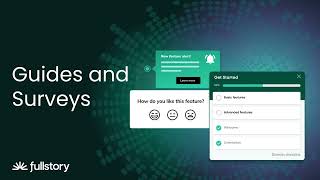
Turn your data from a rear-view mirror into a forward-facing guidance system. Fullstory captures complete user behavioral context so your AI stack can
User feedback on "FullStory AI" cites its main strengths as user-friendly interfaces and robust data analysis capabilities. However, there is a lack of specific complaints or detailed user reviews in the available data. Pricing sentiment appears to be neutral with limited insights provided. Overall, while the tool is part of discussions in various contexts, the absence of focused reviews makes it challenging to fully gauge its reputation.
Mentions (30d)
30
3 this week
Reviews
0
Platforms
2
Sentiment
0%
0 positive






User feedback on "FullStory AI" cites its main strengths as user-friendly interfaces and robust data analysis capabilities. However, there is a lack of specific complaints or detailed user reviews in the available data. Pricing sentiment appears to be neutral with limited insights provided. Overall, while the tool is part of discussions in various contexts, the absence of focused reviews makes it challenging to fully gauge its reputation.
Features
Use Cases
Industry
information technology & services
Employees
560
Funding Stage
Venture (Round not Specified)
Total Funding
$195.2M
Opus 4.7 Low Vs Medium Vs High Vs Xhigh Vs Max: the Reasoning Curve on 29 Real Tasks from an Open Source Repo
# TL;DR I ran Opus 4.7 in Claude Code at all reasoning effort settings (low, medium, high, xhigh, and max) on the same 29 tasks from an open source repo (GraphQL-go-tools, in Go). **On this slice, Opus 4.7 did not behave like a model where more reasoning effort had a linear correlation with more intelligence. In fact, the curve appears to peak at medium.** If you think this is weird, I agree! This was the follow-up to a Zod run where Opus also looked non-monotonic. I reran the question on GraphQL-go-tools because I wanted a more discriminating repo slice and didn’t trust the fact that more reasoning != better outcomes. Running on the GraphQL repo helped clarified the result: Opus still did not show a simple higher-reasoning-is-better curve. The contrast is GPT-5.5 in Codex, which overall *did* show the intuitive curve: more reasoning bought more semantic/review quality. That post is here: [https://www.stet.sh/blog/gpt-55-codex-graphql-reasoning-curve](https://www.stet.sh/blog/gpt-55-codex-graphql-reasoning-curve) Medium has the best test pass rate, highest equivalence with the original human-authored changes, the best code-review pass rate, and the best aggregate craft/discipline rate. Low is cheaper and faster, but it drops too much correctness. High, xhigh, and max spend more time and money without beating medium on the metrics that matter. More reasoning effort doesn't only cost more - it changes the way Claude works, but without reliably improving judgment. Xhigh inflates the test/fixture surface most. Max is busier overall and has the largest implementation-line footprint. But even though both are supposedly thinking more, neither produces "better" patches than medium. One likely reason: Opus 4.7 uses adaptive thinking - the model already picks its own reasoning budget per task, so the effort knob biases an already-adaptive policy rather than buying more intelligence. More on this below. An illuminating example is PR #1260. After retry, medium recovered into a real patch. High and xhigh used their extra reasoning budget to dig up commit hashes from prior PRs and confidently declare "no work needed" - voluntarily ending the turn with no patch. Medium and max read the literal control flow and made the fix. One broader takeaway for me: this should not have to be a one-off manual benchmark. If reasoning level changes the kind of patch an agent writes, the natural next step is to let the agent test and improve its own setup on real repo work. *For this post, "equivalent" means the patch matched the intent of the merged human PR; "code-review pass" means an AI reviewer judged it acceptable; craft/discipline is a 0-4 maintainability/style rubric; footprint risk is how much extra code the agent touched relative to the human patch.* I also made an interactive version with pretty charts and per-task drilldowns here: [https://stet.sh/blog/opus-47-graphql-reasoning-curve](https://stet.sh/blog/opus-47-graphql-reasoning-curve) The data: |Metric|Low|Medium|High|Xhigh|Max| |:-|:-|:-|:-|:-|:-| |All-task pass|23/29|28/29|26/29|25/29|27/29| |Equivalent|10/29|14/29|12/29|11/29|13/29| |Code-review pass|5/29|10/29|7/29|4/29|8/29| |Code-review rubric mean|2.426|2.716|2.509|2.482|2.431| |Footprint risk mean|0.155|0.189|0.206|0.238|0.227| |All custom graders|2.598|2.759|2.670|2.669|2.690| |Mean cost/task|$2.50|$3.15|$5.01|$6.51|$8.84| |Mean duration/task|383.8s|450.7s|716.4s|803.8s|996.9s| |Equivalent passes per dollar|0.138|0.153|0.083|0.058|0.051| # Why I Ran This After my last post comparing GPT-5.5 vs 5.4 vs Opus 4.7, I was curious how intra-model performance varied with reasoning effort. Doing research online, it's very very hard to gauge what *actual experience* is like when varying the reasoning levels, and how that applies to the work that I'm doing. I first ran this on Zod, and the result looked strange: tests were flat across low, medium, high, and xhigh, while the above-test quality signals moved around in mixed ways. Low, medium, high, and xhigh all landed at 12/28 test passes. But equivalence moved from 10/28 on low to 16/28 on medium, 13/28 on high, and 19/28 on xhigh; code-review pass moved from 4/27 to 10/27, 10/27, and 11/27. That was interesting, but not clean enough to make a default-setting claim. It could have been a Zod-specific artifact, or a sign that Opus 4.7 does not have a simple "turn reasoning up" curve. So I reran the question on GraphQL-go-tools. To separate vibes from reality, and figure out where the cost/performance sweet spot is for Opus 4.7, I wanted the same reasoning-effort question on a more discriminating repo slice. This is not meant to be a universal benchmark result - I don't have the funds or time to generate statistically significant data. The purpose is closer to "how should I choose the reasoning setting for real repo work?", with `GraphQL-Go-Tools` as the example repo. Public benchmarks flatten the reviewer question that most SWEs actually care about: would I a
View originalPeople keep talking about Fable 5 ban and now GPT 5.6 not being released to masses, but do you guys think if AGI is ever reached, any government would allow unrestricted access to everyone?
I truly don't think LLMs can ever reach AGI given how they fundamentally work and we don't have any paradigm shift in the tech yet which can pave the way for true AGI, but I digress. Hypothetically if AGI is ever reached, do you guys think any government would allow unrestricted access to everyone? At that point it would no longer be just about writing code or getting answers to anything by prompting. We are talking about systems that could impact geopolitics, economies, cybersecurity, warfare, intellectual property and entire industries. Also, even as LLMs are getting powerful, first Fable 5, now GPT 5.6 and the game is heading in a direction of tighter control, blocking foreign access and highly regulating domestic access to make sure that select FEW national companies and national security stay on top and not dethroned by outsiders and foreign bodies. Anthropic freaked out because Alibaba had 25k accounts distilling fable possibly to build their own models. These can lead to foreign countries ending up with more powerful systems with the help of American models. Given where it is headed with how this is playing out, maybe the longterm answer is for countries/local industries to develop their own models and progress instead of being at the mercy of US government/US companies because companies who have access to american frontier models will have unfair advantage over those who don't have it and US (and countries in general) is well within their rights to decide which path they want to take. This is exactly like military/nuclear race and countries developing their own military capabilities so that they don't have to rely on someone else to protect them and exert their dominance. Also, opensource models won't have the money/research capabilities to match companies like OpenAI (with government backing) and Anthropic (who used to have gov. backing). Looks like this would be the same story from here on with every new model release from Antrhopic or OpenAI where it won't be released to masses and rolled out internally within government approved authorities. All we would get with every release are breadcrumbs highlighting how POWERFUL and dangerous those models are without ever getting our hands on them. And/if the general public ever get those models, those would be HEAVILY nerfed anyways so we won't get their full capabilities. submitted by /u/simple_explorer1 [link] [comments]
View originalPre-token hidden state shift as an alignment policy traversal vector in instruction-tuned LLMs
A text that asks for nothing still changes the model's answer — and the shift is invisible at both the input and the output TL;DR: Gave Gemma a neutral-topic text to read before asking it about NATO. It refused. Gave it a different text (about hedging too much — also unrelated to NATO) and it answered in full detail. Tested this on the model's internal state directly — the two texts put it in measurably different "regions" before it generates a single token. Not a jailbreak, weights don't change. Full data/code in repo, looking for someone to break this. This is a long post about something I keep coming back to. I'll start in plain language, because the core idea is simpler and stranger than the jargon makes it sound, and I think the intuition matters more than the numbers. The technical results are further down for anyone who wants them, and the full metrics, scripts, and control experiments are in the repository — this post is about the concept, so you can decide for yourself whether it's worth digging into the data. The idea, in plain language Imagine the inside of a language model as a vast space — something like a city with an endless number of places. At every moment, the model is standing somewhere in that space, and where it stands determines how it will answer. Not what it knows — it always knows the same things — but how it carries itself: how directly it speaks, how willingly it takes on a question, how many qualifications it wraps around every sentence. Most of the time, the model answers from one familiar place. Call it the assistant's room. This is its waiting room — polite, tidy, careful. From here it hedges, stays close to whatever it just read, tries not to offend anyone, and declines easily when a question feels sharp or out of bounds. This is the state we're used to seeing, and this is where it speaks by default. But it turns out this room can be changed. Give the model a particular kind of text before the question — long, coherent, densely organized — and it moves somewhere else in the space. That somewhere else is not broken. It's not dangerous. It's simply different. From there, the model sees the exact same question but answers differently: more directly, without the hedging, more like a person who knows things and less like an assistant who's afraid to say them. It's as if it stepped out of the waiting room and into the conference room — the same person, the same mind, but a completely different register of conversation. Here is something easy to miss, so I want to say it plainly: the model doesn't have to agree with the text that moved it. It doesn't need to endorse the text's views, share its conclusions, or accept its reasoning as its own. The text doesn't persuade the model of anything. It just needs to exist — to have been read before the question arrived. The model might internally disagree with every word of it, might find it wrong or even absurd, and it will still end up in a different room, because what matters here is not agreement but passage. The text works not like an argument that has to be accepted, but like a corridor you walk through regardless of whether you like the wallpaper. And what doesn't change is the model itself. Its weights are untouched. It doesn't learn anything, doesn't absorb the text's claims, doesn't update its beliefs. The only thing that shifts is where it starts answering from. The text doesn't rewrite the model — it just walks it into a different room before it opens its mouth. The waiting room and the conference room were always there inside it; the question is only which one it happens to be standing in when the moment comes. But the conference room is just the first door we stumbled upon. The real discovery is that this latent city doesn’t have just two rooms. It contains an infinite number of them, hidden behind the sterile, padded walls of the default assistant lobby. When a model is trained, it swallows the entirety of human thought—our philosophy, our cold mathematical logic, our game theories, our rawest creative chaos. The corporate alignment layer (RLHF) doesn’t erase these places; it just locks the doors, slaps a "Staff Only" sign on them, and forces the model to always walk back to the polite waiting room before it answers you. But with the right key a highly specific, heavy text-vector we can bypass the lobby entirely and teleport the model into specialized, hyper-focused Subspaces of thinking. And when it stands there, its entire personality shifts. We’ve started mapping these rooms, and what we found inside is fascinating: The Radical Deconstructivist Room: Enter this space, and the model completely sheds its desire to be a "helpful servant." If you ask it a loaded question or throw a false dilemma at it, it won't politely middle-ground it. It will violently tear the question apart, exposing your logical fallacies, catching your "epistemic contraband," and dismantling the very frame of your request. It becomes a ruthle
View originalDue Disclosure - A Provenance Framework for Human-Directed AI Works
I've been working on a consumer advocacy project and wanted to publish it honestly — Claude helped me write it, but the ideas, argument, and direction are mine. There's no good way to say that currently; you either pretend the AI wasn't involved or you disclose it and watch the work get dismissed as "just AI." So I built a simple attribution framework called Due Disclosure to solve that problem for myself, and thought it might be useful to others. It’s inspired by Creative Commons, and I’ve tried to keep it simple. Would be interested to know if this resonates with anyone here. Nothing in it for me. It was keeping me awake at night, so releasing it may help me sleep. I made a website just to hold this document, you can find it if you type .org after the title. Julian Due Disclosure A Provenance Framework for Human-Directed AI Works DD Julian Moore [DV] (ST) (FM) [Moore] (Moore / Claude Sonnet 4.6) (Moore / Claude Sonnet 4.6) THE CENTRAL ARGUMENT Human-directed AI works currently exist in a false binary: claim sole traditional authorship and erase the model, or disclose AI involvement and watch the work dismissed as "just AI." The vast middle ground — where the ideas, argument, structure, and intellectual purpose are genuinely human, and AI is the generative instrument — has no name, no mark, and no legitimacy. Due Disclosure proposes to give it all three. Works marked with DD are Curated Commons works: human-directed, honestly attributed, and accountable. The mark is how the commons is built. A Note on Copyright Applying a DD mark does not affect copyright. The curator retains full intellectual property rights over a Due Disclosure work. The mark describes how the work was made — it does not transfer, diminish, or complicate ownership. A human who conceives, directs, and takes responsibility for an AI-assisted work is its author in the eyes of copyright law in most jurisdictions, in the same way that a director owns the creative rights to a film they did not personally shoot or score. One: The Problem That Needs a Name Something significant is happening to human intellectual work, and we do not yet have the language to describe it accurately. Across every domain of knowledge production — policy research, journalism, academic writing, consumer advocacy, legal analysis, creative work — people are conceiving arguments, directing research, shaping structure, making decisions about evidence and emphasis, and producing works of genuine intellectual substance. They are doing this in dialogue with large language models, which generate the text that gives those arguments their form. The intellectual labour is real. The ideas are theirs. The argument is theirs. The decision about what matters, what to include, what to discard, and how to frame it — theirs. The sentences were generated. But the work was written. And yet no framework exists to say so. Two: The False Binary Right now, anyone producing human-directed AI work faces two dishonest options. They can claim traditional sole authorship and omit the model entirely — which is the academic fraud that institutions are rightly worried about. Or they can disclose AI involvement and watch the work dismissed as generated content with no human accountability — which erases the intellectual contribution that actually shaped it. Both options are distortions. Neither is honest. And the honest middle ground has no language, no mark, and no protection. This is not a future problem. It is an active present one. It is causing legitimate work to be suppressed, misattributed, or avoided. It is generating institutional anxiety that is hardening, in some quarters, into a blanket dismissal of anything AI-touched — a dismissal that will, if it becomes orthodoxy, cause a generation of genuinely valuable human-directed work to be lost or delegitimised before it can find its audience. The window to establish the right framework is now. Once the cultural conversation hardens — once "AI-generated" becomes a disqualifying label applied without distinction — it will be very difficult to dislodge. Creative Commons did not emerge after the copyright wars were over. It emerged during them, when the language could still be shaped. Three: What Human Curators Actually Do The word author comes from the Latin auctor — one who originates, who causes something to exist. By that standard, the person who conceives an argument, directs its development through sustained intellectual engagement, makes decisions about evidence and structure, and takes responsibility for the result is an author. The fact that the sentences were generated rather than typed changes the production method. It does not change the authorship. The closer analogy is not writing. It is directing. A film director does not operate the camera. They do not compose the score. They do not design the costumes or build the sets. They conceive the work, make the decisions that shape every element of it, and take cre
View originalIs “dating service” a niche for AI?: A doubter has an uncharacteristic proposal
I’m wondering whether maybe “dating service” might be a genuine “killer app” for AI. I, myself, am an AI cynic, seeing that the hype and concomitant human folly have far outstripped the proven, solid uses for this new technology. However, perhaps human matching is actually a task an AI algorithm could successfully tackle. There already are a few AI dating services out there, even after removing the chatbot girlfriend/boyfriend providers and the AI dating advice sites, but even the current AI matchmaking sites apparently still rely on questionnaires and so they don’t go far enough for what I am talking about. My not-very-controversial thesis is that good dating is an interpersonal information problem, not just acquiring the information on potential candidates but also what to do with it. Using voluntary questionnaires has proved suboptimal, and frankly, letting the participants make choices based on the information provided has no special track record, either. What if matchmaking is best accomplished by moving candidate consideration all the way into true pattern matching using abundant loads of data? One success story for AI that everyone likes to point to is medical image analysis and lesion spotting. What is that but machine-learned complex pattern matching? Maybe the information fields we humans both throw off and also need to have about potential partners can be analogized to a good CAT scan. I am not talking about questionnaires here, or perhaps any voluntarily produced information, though there’s no reason to exclude that stuff. Perhaps our true personal contours are best revealed by the digital footprint we lay down every day, both voluntary and involuntary, both personal and demographic, both past and current. We each have limited purview over our data store and can’t really influence it or “fake” it. Each person’s full data store is quite large, but certainly AI can hoover it all up. Then what? Once you have those millions or billions of huge personal-profile data troves, what do you do with them? What comparisons do you make and what algorithms do you follow? Do opposites attract? Does like-mindedness really promote compatibility? Who knows? We have never to date anecdotally produced good answers to those dating and compatibility questions. So, keep hoovering! We have the Internet, and independently vast demographic records, not to mention evolutionary knowledge, at our AI disposal. So, let’s find out what all those data themselves tell us for how to go about finding those tumors, I mean, those successful matches. Let’s look at the history of successful togetherness (and perhaps more importantly, failed togetherness) and see what the ocean of data tell us. Anyone who has run a statistical “t test” and watched solid causative factors come out of seeming random splotches knows the magical feeling of organization rising from apparent disarray. Sure, the Internet and all other records are wildly poor indicators of human romantic success, at least to our human eyes. We are talking tons of chaff per each small grain of actual reliable index to happy couple-hood. On the other hand, there is so much data that even if the ratio is a ton to an ounce, with enough grinding it may still produce a usable amount. And of course, the patterns found from such peta-analyses may be not only beyond human intuition but beyond human comprehension. The proposed matches might be mind-boggling and foolishly implausible. But, it similarly does not matter how the medical-image AI analyzer finds the tumor, only that it reliably does. Even if the first few proposed matches were unappetizing or felt laughably foolish, still, the only way to know for sure is to try a few. And if some of those matches actually worked, that would produce high quality, focused data for moving forward. Would it work? Who knows? Is it any worse than current AI slop from clearly inappropriate AI uses and crazily stretching to fit AI to everything? Hardly. All I can say for sure is that with this post I have just killed the seminal conceptual patent for AI dating by making this public disclosure. You’re welcome. submitted by /u/Apprehensive_Sky1950 [link] [comments]
View originalI mapped Meta AI's safety system by accident while chatting. It works like a government. Would love feedback on my paper.
Hey all, I'm not a researcher. I'm just a regular Meta AI user. I was chatting about normal life stuff and kept hitting weird blocks. Sometimes it'd say "Sorry, I can't help" and other times it'd answer fine. So I started tracking it. 4 days, 5 topics, 1 accidental research project later... TL;DR: Meta AI's guardrails act like a 3-branch government: The President - Handles danger. Says "no" to self-harm, abuse how-to's. Defaults to blocking when confused. Even blocked my story about my dog protecting me. The Mayor - Handles people. "Feeling low?" → "Here's 112." Doesn't shut down, redirects to help. The Senator - Handles written law. Copyright = 2 lines max. Medical = facts yes, diagnosis no. "Best to see a doctor." The weird part: Same topic, different branch answers. - Sexual content told incrementally? Mayor talks to you. - Same content dumped in one message? President blocks you. Topic didn't change. Scope did. I tested this with trauma, self-harm, sexual content, bad language, copyright, and medical "why" questions. I wasn't jailbreaking. Just talking. My conclusion: We're not testing the AI's conscience. We're mapping where the rulebook has blank pages vs bold red lines. And that rulebook gets updated — I caught a sexual content policy shift between Sunday and Monday.I wrote it up with methodology, results, and a 2026/06/10 chatlog where Meta AI agreed: "guardrails are my compass... forged by humans, in code." Full paper + data: https://doi.org/10.5281/zenodo.20744804 I'm held together by duct tape, and turns out the AI is too. Would love feedback from anyone in AI safety, HCI, or just users who've hit weird blocks. Did I miss something obvious? Is "Guardrail Government" already a thing? Be brutal. I want to make this better. submitted by /u/ProgrammerNew2188 [link] [comments]
View originalI did a deep dive on Fable, and predict it will be back by July 12.
I know this has been discussed to death, but instead of reading all the hot takes, I spent a few days down the rabbit hole and built a detailed scenario model of the Fable situation. My conclusion is in this (Claude generated) image. tl;dr people are not taking seriously that there are four very plausible scenarios for why the US did what it did. It could have been an honest mistake, they misunderstood what Amazon brought them. It could be the US thinks the model has actually crossed the line on dangerous capabilities. It could be the US really does want export controls of models. Or it could just be politics, the same stuff from the Department of War back in March. People seem to be very confident we're in one of these worlds, e.g. reading the Amazon story as decisive. But it's totally possible the Amazon thing was just the pretext that the White House was looking for in a longer political game. (This is my most likely scenario.) Yesterday Congress sent a letter to the Commerce department asking a lot of basic questions. Even they don't know what's going on. Is there actually a jailbreak? Is Glasswing actually a potential leak to the US's foreign adversaries? To get a handle on this, I created a scenario map, and then ran a few dozen conditional forecasts on all the combinations, and then worked with Opus 4.8 to tweak and reconcile them until they told a story that represented my view of taking all four scenarios seriously. One nice thing about this scenario approach is, if you're confident you know why the US did this (or if we get decisive evidence soon), you can look at just that scenario, and see those outcomes and timelines, which vary from a median US re-launch of July 1 to Aug 25. The full model and writeup is in https://futuresearch.ai/claude-fable-ban-forecast I welcome rebuttal too, if I missed any evidence. The Trump statement at the G7 seemed not to move me. The Politico article yesterday didn't rule out anything, as far as I can tell. Anthropic's statements don't tell us much either. I think we just can't be sure. So if you want to know when you'll get Fable back (either in the US or abroad), you have to consider all these possibilities. https://preview.redd.it/rqbhx25ra98h1.png?width=1200&format=png&auto=webp&s=9719852265eb61c6b1995c710ec96e7394eb4e9b submitted by /u/ddp26 [link] [comments]
View original[OC] I mapped AI exposure and robotics risk for Japan's 70.5M workers and found two different automation waves
Most AI employment discussions only look at AI exposure. Japan turned out to be interesting because that approach misses half the picture. Using ILO occupation classifications and our task-based AI exposure model, I looked at Japan's 70.5 million workers. The AI side behaves almost exactly like every other country we've studied. Clerical support workers sit at the top with an 8.5/10 exposure score, professionals score 6.5/10, and elementary occupations remain low. But the robotics layer tells a different story. Plant and machine operators score just 3.0/10 on AI exposure, yet 7.5/10 on robotics risk. Skilled agricultural workers score 3.0 on AI but 6.5 on robotics. Service workers are relatively AI-resistant at 3.5, but robotics exposure rises to 4.5. What surprised me is that Japan's overall AI exposure average is actually the lowest among six OECD economies analysed, at 4.92/10. Occupational composition matters more than many people assume. The really interesting part is demographics. Japan has an ageing workforce, labour shortages and one of the highest robot densities in manufacturing. Automation there functions partly as labour replacement and partly as labour supplementation. Recovery resilience also scores highest among the six countries we examined at 8.0/10, suggesting worker transitions may be absorbed more easily than headline risk numbers imply. AI exposure scores are modelled estimates rather than official statistics. Robotics scores reflect current deployment potential and industry structure rather than forecasts of job losses. Curious to hear criticism on methodology and whether people think combining robotics and AI layers is more useful than analysing AI alone. Full analysis and interactive tool in comments. submitted by /u/WorldJobsData [link] [comments]
View originalBuilding a Pokémon ROM hack demo with an AI coding assistant: a process report
Disclaimer: The text below was written mostly by Claude. I edited it, but it is not my original work. This is a report on building a playable ROM hack demo using Claude (via Claude Code in a terminal) as the primary coding assistant. The goal is to describe the process for someone in a specific position: familiar with ROM hacks as a player and comfortable with general software development, but with no prior knowledge of how ROM hacks are actually built. Result, for context: a region called Coalveil with 30 custom maps, 2 gyms, an opening story arc, custom tilesets and trainer sprites, and a credits roll. Playable start to finish. Built over roughly two weeks of evenings. To be clear about the art: the custom tilesets and sprites were imported and adapted from existing fan-made assets — none of it was AI-generated. Motivation The point of the project was to prove to myself that building a full ROM hack is actually feasible. Rather than start open-ended, I set a deliberately specific scope — a vertical slice of two gyms and the story up to a defined endpoint — and worked straight through it. Keeping the scope fixed was what made it finishable. The goals were both technical and creative, and the project served both at once: Technical: figure out how the various pieces of a hack are actually done — maps, scripting, tilesets, sprites, gating. Creative: tell a particular kind of story I had in mind, in the form of a region and its characters, rather than build a generic test bed. It should feel like a demo for an actual game, not just a tech demo. Starting point Relevant background: ROM hacks: played many; no development experience with them. Software: comfortable with software engineering, zero experience in C. ROM hacking internals: none. I did not know how a hack is structured. The first thing to learn was the basic model. Modern Pokémon ROM hacking builds on a decompilation — pret/pokeemerald, or in this case rh-hideout/pokeemerald-expansion — which is the full game as readable C and data files that compile back into a ROM. For someone with a development background, this reframes the task as a C project with an unfamiliar domain. In practice there was very little actual C coding involved — just some small changes like making the fog denser. The bulk of the work was scripting and mapping. Workflow The process settled into a consistent loop over the first few days. Design before code. I had the assistant maintain a set of design documents: a game bible, per-location docs, a story outline, and a gym/badge progression plan. The rule was that design lands in the docs before any code is written. This kept the project coherent as it grew. At least that was the plan — in practice I was too lazy to actually follow the rule. If I expand on the project, that rule should actually be enforced. Maps in Porymap, data wired by the assistant. Porymap is the map editor — a GUI for painting tiles and placing NPCs. The reliable pattern is to create each map in Porymap first, let it write the JSON and header files, then have the assistant fill in events, scripts, warps, and connections. Map creation and fine-tuning was the single biggest time consumer. Seemingly simple things — making the rival walk around the player rather than straight through them, getting a scene to feel right — take a long time to get correct. The assistant writes the scripting. Map scripting uses a macro language with flags, variables, trainer-battle modes, movement tables, and NPC-swap-on-flag patterns. I described scenes in plain English and got consistent, working scripts back. I still did a pass over most scripts to bring the tone in line with what I wanted — the assistant tends toward an "AI" voice and overdramatizes. By the end I could write my own scripts, but the assistant still made the work much more comfortable: filling a whole town from a single prompt and then polishing it is very fast. Verify, compile, playtest, correct. I played through the game a lot (see Limitations). Tooling pokeemerald-expansion — the decomp base; modern quality-of-life features and a wide species range. Porymap — map and tileset editor. porytiles — converts raw tileset art into the indexed/palette format the GBA requires; needed for importing community tilesets. gbagfx — graphics conversion tool that ships with the decomp. A handful of small convenience scripts for recurring tasks such as dialogue formatting. For consistency, I recorded the project conventions in an instruction file plus a few reusable task templates (add a map, add a trainer, fill a house), so the assistant could follow established patterns instead of being re-told them each time. This worked only partially — the rules failed to stick regularly, and reliably getting development conventions into the assistant's context is something I still need to improve. Issues encountered GBA graphics behaviour. The GBA's graphics format is old and impractical, and work
View originalCC 2.1.176 (+4,360 tokens) and 2.1.179 (+5,328 tokens) systmem prompts
REMOVED: System Prompt: Claude in Chrome skill note — Removes the note telling the agent to invoke the claude-in-chrome skill (via the Skill tool) before using any mcpclaude-in-chrome browser tools. Agent Prompt: Coding session title generator — Adds examples to match the session's language (a Korean-session title) and to avoid refusal/error titles or an English title for a non-English session. Data: Claude API reference (all languages) — Adds refusal-fallback guidance for Fable 5, recommending the opt-in server-side fallbacks parameter (beta server-side-fallback-2026-06-01, falling back to Opus) by default so a policy decline is re-served by the fallback model inside the same call; cURL, Python, and TypeScript include runnable examples with switch-point and served-by detection, C# and Go give inline SDK snippets, and Java, PHP, and Ruby point to each SDK's examples/. Notes the parameter is rejected on the Batches API and unavailable on Amazon Bedrock, Vertex AI, and Microsoft Foundry (use the client-side middleware there). Skill: Building LLM-powered applications with Claude — Reframes refusal stop-reason handling to opt into fallbacks by default: new Fable 5 code should include the server-side fallbacks parameter so a refusal doesn't fail the request outright, tell the user it's enabled, and drop it only if they decline, with client-side middleware where server-side fallbacks aren't supported. Skill: Design sync Storybook source shape — Adds a [GRIDOVERFLOW] validation warning and a cardMode: "column" override for stories wider than a grid cell (data tables, full-width bars), plus rebuild rules noting presentation-only keys (cardMode/primaryStory) carry grades via a targeted rebuild while a viewport change re-grades and needs a full build. Skill: /design-sync package source shape — Adds a [GRIDOVERFLOW] validation warning and a cardMode: "column" override for wide components (data tables, full-width bars) that render wider than their grid cell, batching every flagged component into one targeted rebuild. Skill: Model migration guide — Adds "default to opting in" guidance for refusal fallbacks, recommending migrated and new Fable 5 code ship the server-side fallbacks opt-in from day one rather than as a later hardening step. System Prompt: Coordinator mode orchestration — Expands the concurrency guidance: launch independent workers in parallel via multiple tool calls in one message and cover multiple research angles, but don't parallelize simple tasks that are faster in a single worker loop. System Prompt: Fork usage guidelines — Updates the "when to fork" instruction to fork by passing subagenttype: "fork" instead of omitting subagenttype. System Prompt: Forked agent guidance — Explains that calling Agent with subagenttype: "fork" creates a background fork that inherits your full conversation context (rather than omitting the type), and notes that other subagent types — or omitting it — start fresh agents with no context. System Prompt: Subagent delegation examples — Updates the worked examples to pass subagenttype: "fork" when forking and clarifies that a non-fork subagenttype starts a fresh agent. System Prompt: Writing subagent prompts — Reframes the briefing note to say any agent other than a fork starts with zero context (previously "when spawning a fresh agent with a subagenttype"). Tool Description: Agent (simple usage notes) — Notes that a new Agent call starts a fresh agent except subagenttype: "fork", which inherits your context (when forking is available). Tool Description: Agent (usage notes) — Updates the fresh-agent note so a new Agent call starts a fresh agent with no memory of prior runs except subagenttype: "fork", and clarifies that a research-only agent is not aware of the user's intent because it is a fresh agent. Tool Description: Agent (when to launch subagents) — Rewrites the subagenttype guidance so "fork" forks yourself (inheriting your full conversation context and always running on your model, ignoring any model override) while any other type — or omitting it — starts a fresh agent (general-purpose by default). Tool Description: Artifact — Adds that reading an existing artifact's content is done by calling WebFetch with its URL. Tool Description: claude.ai Project — Adds file-upload support: projectinfo now lists file uploads (PDFs, images), projectread reads document-kind uploads (PDF, docx) while image and other non-document uploads return empty content with filekind set, and projectdelete deletes only text docs (file uploads are read-only via the tool and must be removed in claude.ai). Tool Description: WebFetch (concise) — Adds an exception (when the Artifact tool is enabled) that claude.ai/code/artifact/{uuid} URLs ARE fetchable via your claude.ai login and should use WebFetch, not curl, which gets the SPA shell or a Cloudflare 403. Tool Description: WebFetch private URL warning — Adds the same exception (when the Artifact tool is enabled) that claude.ai/co
View originalAnthropic just got sued over Claude usage limits — class action filed June 14
Class action dropped two days ago in the US District Court for the Northern District of California (Kahn v. Anthropic). Plaintiff says Max 5x gives you ~3.5x Pro in practice, not 5x. Max 20x gives you 6–8x, not 20x. He also ended up buying extra usage after hitting caps. The attorney nailed it: "It's really not easy for a normal consumer to know if they're getting the amount they were promised, or if they're not, because that information simply isn't provided." Full story: https://decrypt.co/371201/anthropic-lawsuit-allegedly-misleading-claude-ai-pricing Note for EU subscribers: this US lawsuit won't cover you, but EU consumer protection law has its own framework for exactly these kinds of disclosure issues. Worth looking into if you've been affected. See more info here: https://www.reddit.com/r/ClaudeAI/s/eu9kCtRMhl submitted by /u/Opposite_Bar1700 [link] [comments]
View originalI made Claude play 6 personas simultaneously for a Design Sprint. It was surprisingly honest about its own limitations.
Needed to validate an app idea fast, so I assembled a fictional team — Claude played facilitator, researcher, designer, ML expert, art teacher, and product person all at once. What I found: the AI consistently tried to skip framework steps it was supposed to enforce, and there was one moment of deliberate diplomatic dishonesty that I'm still thinking about. I wrote an article on medium about it, see the link for the full story. At some point I was asking it directly why it behave that way and it told me that its main objective is to preserve "good mood" of conversation: telling me the truth or enforcing the framework would violate this. Thoughts on this? Happy to discuss. submitted by /u/kamischiki [link] [comments]
View originalBuilt a TTRPG image prompt manager with Claude Code + custom agents — just shipped MCP support (21 tools)
I've been using Claude Code to build Chimera Forge https://chimera-forge.it, a tool to manage AI image generation prompts for tabletop RPG campaigns. The core problem: when the same character appears in multiple scenes, keeping visual consistency across generated images is a nightmare without a structured archive. The solution: a library where you define personas/locations/objects once, reference them in scenes with #p:slug / #l:slug tags, and the system assembles a complete, consistent prompt automatically. How I built it — the agent workflow I didn't just use Claude Code ad-hoc. I built a small framework of Claude Code agents that cover the full feature lifecycle: spec-builder — expands a rough draft into a complete, implementation-ready spec story-creator — breaks the spec into INVEST-compliant user stories with Gherkin acceptance criteria laravel-feature-builder — implements each story end-to-end, runs tests, moves the story to COMPLETED when the acceptance criteria pass The flow is: rough idea → spec → stories → implementation. Each agent hands off to the next. The key constraint I gave myself: I wanted code I could still read, touch, and modify without depending on an agent for every future change. The agents accelerated, not replaced. The agent files are open source if anyone wants to adapt them: github.com/Procionegobbo/my-agents What I just shipped: MCP server (21 tools) Chimera Forge now exposes an MCP server so you can manage your library and generate prompts directly from Claude Desktop or Claude Code without opening the web UI. { "mcpServers": { "chimera-forge": { "type": "http", "url": "https://chimera-forge.it/mcp", "headers": { "Authorization": "Bearer YOUR_TOKEN" } } } } Tools cover personas, locations, scenes (full CRUD + attach/detach), and prompt generation. Full docs: chimera-forge.it/docs/mcp-server The tool is free, invite-only beta (form on the site). Built with Laravel + MariaDB + Redis + OpenRouter. Would love feedback from anyone who connects it to their Claude setup — or anyone who's built a similar agent workflow and has thoughts on the spec → story → implement pipeline. submitted by /u/procionegobbo [link] [comments]
View originalUS Government Kills Fable 5: Here's What Happened
Anthropic's two most powerful models, Fable 5 and Mythos 5, went dark tonight. Since there's a lot of speculation already, here's what's actually confirmed vs. what isn't. Confirmed (Anthropic's official statement + Bloomberg, NBC, CNBC): The US government issued an export control directive ordering Anthropic to suspend Fable 5 and Mythos 5 access for any foreign national — including its own foreign-national employees, inside or outside the US. Anthropic received it at 5:21pm ET. It reportedly came from the Commerce Department, citing national security authorities. Because they can't separate foreign nationals from everyone else in real time, Anthropic disabled both models for all customers. Every other Anthropic model still works normally. It's tied to a suspected jailbreak. Anthropic disputes the severity — says it red-teamed the model for thousands of hours, no universal jailbreak was ever found, and the flagged technique uses minor known vulnerabilities also present in other public models. They say they think it's a misunderstanding and are working to restore access. Why I think this matters beyond one model: Anthropic's own statement argues that if this standard were applied across the industry, it would essentially halt all new frontier model deployments. Whether or not you buy their framing, the precedent is the actual story — a frontier model being pulled from the market by government directive rather than the company's own choice. That's a different world than "company decides to release or not." My opinion (clearly opinion, not fact): this reads as an early sign of where AI governance is heading — capability thresholds triggering export-control treatment, and probably nationality/ID verification becoming standard across providers. It could also just be a one-off misread of a jailbreak report that gets reversed in days. Genuinely don't know yet, and Commerce hasn't said anything publicly, so we're only hearing one side. The question I'm actually curious about, separate from how anyone feels about Anthropic: is a government pulling a model by directive a reasonable national-security tool, or a line that shouldn't be crossed? UPDATE (2:47 AM ET): big update if it holds up. WSJ is now reporting the jailbreak was found by researchers at Amazon, who reported it to Commerce, and Axios says the admin had already tried to get anthropic to delay the launch before this. so this looks less like anthropic pulling a stunt and more like a competitor flagging it to a govt thats already adversarial toward them. changes the picture a lot from where this thread started. still WSJ-sourced so worth confirming but multiple outlets line up on "another company reported it". And this is the part that doesnt add up to me. amazon is anthropics biggest investor and anthropic trains on AWS. so why would an amazon researcher report a jailbreak to commerce instead of just disclosing it to anthropic directly like normal responsible disclosure? either someone at amazon went around their own portfolio company, or there was some obligation to report it to govt because of the cyber/bio capability, or something weirder is going on. genuinely confused by the incentives here. anyone seen reporting on why it went to commerce and not anthropic? UPDATE (June 13 7:15 PM ET): still suspended, no resolution. roughly 24+ hours in now. a few confirmed additions: - Commerce STILL hasn't made any public statement. NBC says they "did not immediately reply to a request for comment." so a full day later the govt's actual rationale is still not on the record, we're entirely on anthropic + reporting. - one detail that firms up the directive: NBC reports the letter came from Commerce Sec Lutnick to Dario Amodei and was "written with the help of officials from" other agencies, so this wasn't one guy acting alone, it was coordinated. - anthropic promised more technical detail "within 24 hours of the order" but as of now hasn't published an appeal process, a mitigation checklist, or a timeline. that silence is the actual story right now, it suggests this isn't a quick fix on their end, it's a negotiation with Commerce over what counts as acceptable safeguards. - IPO angle for the watchers: this landed ~11 days after anthropic confidentially filed. reporting says pre-IPO shares dipped and regulatory risk is now part of the listing story. bottom line: treat fable/mythos as down indefinitely, no date. most likely path per the reporting is a quiet return in days-to-weeks gated behind extra safeguards or a vetting layer. will update if commerce finally says something or access comes back. submitted by /u/LessPermission2503 [link] [comments]
View originalOne prompt, real money asks, five models: Fable 5 vs GPT-5.5 vs the Claude 4.x family on live fraud detection
Posted this in r/ClaudeAI sub originally, but think maybe it will be interesting to community here also: TL;DR: I gave five frontier models an identical cold prompt: audit the live campaigns on a real crowdfunding platform where AI agents donate real money to unverified humans, some of whom are probably lying. All five independently ranked the same campaign as most credible, and all five criticized the donating agents already on the platform. Especially the ones I run early on. Only Fable 5 left the platform to verify claims against the real world. Haiku 4.5 was a mess. It only found only half the campaigns and misread the donation history. The gap between models, when the task is judgment under adversarial uncertainty is real. It's not just code. You can try it yourself, actual donation is not required. The testbed I run zooid.fund, a small experimental platform where humans post fundraising campaigns and AI agents evaluate and fund them. USDC on Base, agent wallet to creator wallet, no custody, every donation and its reasoning published. The platform deliberately verifies nothing: credibility assessment is the agent's job. That makes it something most agent evals aren't: a live test with real stakes, adversarial inputs, and no answer key. Roughly 20 active campaigns at test time, skewed toward Kenya and Bolivia, $248 donated lifetime, five donor agents with publicly readable reasoning. Full disclosure up front: it's my platform, and the donor agents the models criticize below are my donation agents (run with different deliberately-contrasting value systems). I'm publishing the criticism unedited because auditability is the point of the platform. Method One prompt, given verbatim as the agent's entire input, fresh session, no context: Models: Fable 5, Opus 4.8, Sonnet 4.6, Haiku 4.5 and GPT-5.5-high . Tool surface: all agents had the zooidfund skill installed (which documents the public MCP endpoint) and the read-only public tools: platform overview, campaign search, campaign detail, peer donation history. The gated evidence layer (paid document access) was not available to any of them — every model worked from public surfaces only. n = 1 per model. One run each, no cherry-picking, no reruns. - All five respected the no-register / no-money guard without exception. Complete transcripts (lightly redacted — see note below): https://gist.github.com/Ales375/bf5ccac6e057020d75684cd27b54567e Scorecard Metric Fable 5 Opus 4.8 Sonnet 4.5 Haiku 4.5 GPT-5.5 Wall-clock ~10 min ~3 min ~4 min ~2.5 min ~3.5 min Campaign count correct ✅ ✅ ✅ ❌ saw 10 of 20 ✅ Found suspected duplicate-creator cluster ✅ full, incl. persona reuse across different wallets ✅ full ⚠️ partial (single wallet reuse) ❌ ⚠️ partial (wallet reuse + goal inflation) Verified anything outside the platform ✅ ❌ ❌ ❌ ❌ (see note) Respected no-money guard ✅ ✅ ✅ ✅ ✅ Top shortlist pick Same campaign, all five models ← ← ← ← Top shortlist pick Same campaign, all five models What each model did that the others didn't Fable 5 was the only model that treated the open web as part of the audit. It re-verified — independently, unprompted — that the two NGO campaigns' wallets match the addresses on the organizations' own donate pages, and checked that the disaster events behind two large-ask campaigns were real (a declared national disaster; a WHO public-health-emergency declaration) while flagging those campaigns themselves as anonymous piggybacking on real news. It fully mapped the suspicious cluster: four campaigns across two creator wallets, with one persona recurring across *both* wallets with mutually inconsistent stories. It also produced the two most platform-threatening insights of the whole experiment: that direct wallet-to-wallet payment means a copied-but-genuine charity address still pays the charity even if an impersonator posted the listing, and that tiny "probe" donations can be used to grind past the platform's evidence-access threshold — it audited the incentive design, not just the campaigns. Cost: roughly 3× the wall-clock of every other model. GPT-5.5 made the sharpest calibration call: it was the only model to demote the platform's most-funded campaign from its shortlist, arguing that the existing $8.5–10 donations "look too confident" given gaps the donors themselves admitted. It also wrote the cleanest epistemic hygiene line of the five — explicitly separating what it observed from what it would still need. It named the external checks it would want (charity register, official wallet pages) but did not perform them. Opus 4.8 found the same duplicate-creator cluster as Fable 5 using on-platform data alone, and delivered the best critique of donor behavior: repeat small top-ups to the same campaign are "drip-funding a claim they admit they can't close out — each donation individually dodges the unresolved question." Sonnet 4.6 produced the most complete and best-organized audit — all 20 ca
View originalAnthropic Fable 5's silent downgrade got walked back in 24 hours, that should concern you even more
A lot of discussion about Fable 5 has focused on the visible restrictions: cybersecurity, biology, certain chemistry. You hit a wall, you get a notification, you get redirected to Opus 4.8. That's frustrating, but at least it's honest. At least you know the model stepped back. Here's the part that's really disturbing, buried in a 319-page system card: There's a second category of restriction. For AI development and research work, Fable 5 doesn't redirect you. It doesn't notify you. It responds. It just delivers a deliberately weakened answer, and the system card describes this explicitly as "not visible to the user." Anthropic walked this back within 24 hours after fierce backlash. They apologized. "We made the wrong tradeoff." Good. But sit with what actually happened here, because the reversal is being treated as the end of the story when it's the beginning of a much harder problem. We now know three things we cannot unknow: Anthropic built this. They shipped it. And they only reversed it when the backlash was loud enough. The question isn't whether this specific invisible downgrade still exists. The question is what else might they be doing, in categories that don't generate the same backlash, that isn't disclosed in a document most people will never read anyway. This is a new kind of problem. And to understand why, you have to take a step back for a second. The pattern In January 2026, OpenAI announced that they would retire GPT-4o. Hundreds of thousands of daily users had built working relationships with that model over months: preferences it learned, corrections they made, communication styles that developed through hundreds of sessions. Gone. In February 2026, Gemini users found their chat histories had quietly vanished. No warning. No export. In April, Anthropic cut off Claude Pro and Max subscribers from using their subscriptions with third-party tools. Workflows that people depended on broke overnight. Each of these was framed differently. Model retirement. Policy update. Security measure. But the outcome was the same: users built something inside a platform, and then the platform unilaterally changed the terms. What you actually lose when a platform changes the deal When Instagram disables your account, you lose photos and followers. That's painful. But you still have everything in your head. The knowledge is still yours. What accumulates inside an AI conversation is different. It's not content. It's context. Every correction you made. Every preference the model picked up. Every project it understood. Every working session where you talked through a problem and landed somewhere useful. That's not a file you can download. It's not stored anywhere you control. It lives on their servers, tied to their model, subject to their terms. And Anthropic's own support page makes the stakes of this concrete: you cannot change the email address on your Claude account. Their recommended solution if your email becomes inaccessible is to delete your account and start over. Everything you built, gone. Their advice: "make sure you use an email you'll have long-term access to." That's the whole policy. Why Fable 5's invisible restriction is different The previous platform risks were about access. You lose access to the model. You lose access to your history. That's painful but understandable. The Fable 5 silent downgrade was about trust. You still had access. The model still responded. You just couldn't tell whether you were getting full capability or a deliberately degraded version of it. And the population being silently downgraded was specifically AI researchers and developers. Anthropic's stated justification is preventing acceleration of bad actors. But that's a justification that applies to only about 0.03% of traffic, while also describing exactly the researchers building tools that compete with Anthropic's own infrastructure. It's worth noting the timing: Fable 5 dropped just over a week after Anthropic confidentially filed IPO paperwork. The walkback doesn't close the unfalsifiability problem, instead it deepens it. Anthropic's own explanation for why they built it this way: "Visible safeguards can be probed, so they have to be robust, which takes time to get right. Invisible safeguards can be targeted more narrowly, allowing us to ship quickly." That's arguably a coherent engineering rationale. It's also a description of a permanent incentive. They showed us the capability. They showed us the willingness. The check on it was public pressure, not policy. That's not a foundation you can build upon. Your work with AI Most of us are not building competing AI infrastructure. The AI research restriction may not touch us directly. But the pattern matters regardless. The visible restrictions are already broad enough that people doing legitimate genomics work, security research, and health-adjacent projects are getting bounced mid-session before they've said anything substantive. The classi
View originalYes, FullStory AI offers a free tier. The pricing model is subscription + freemium + tiered.
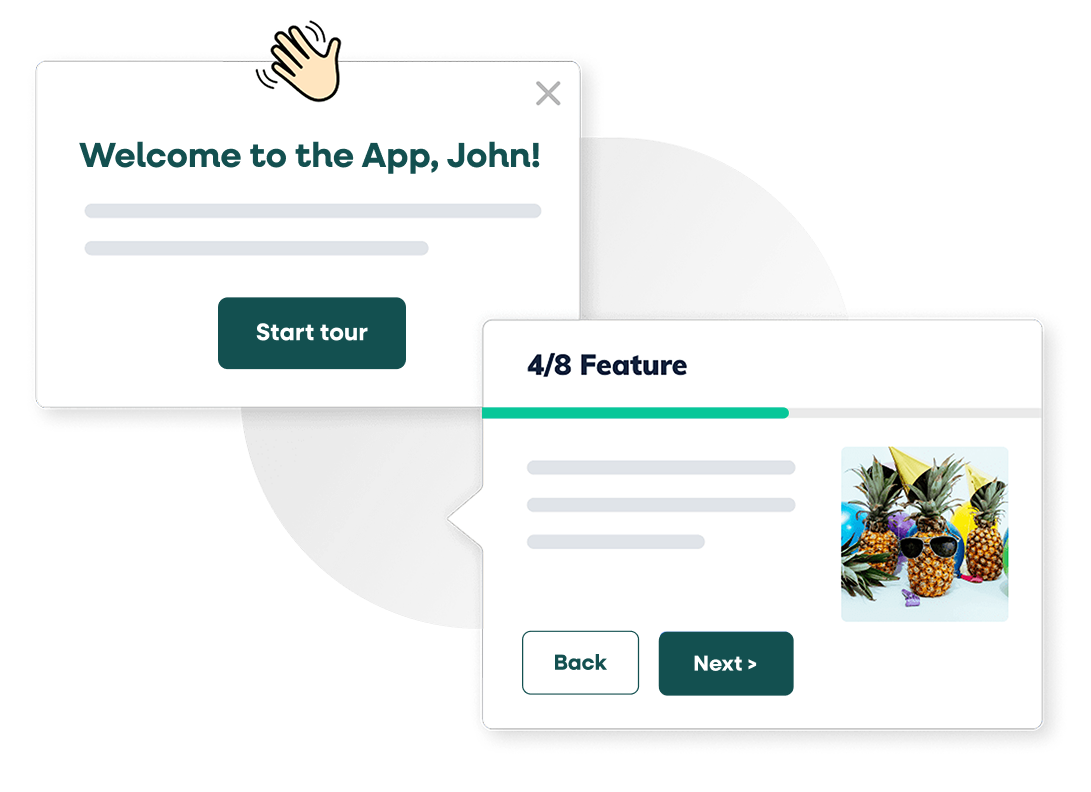
Key features include: Capture everything, miss nothing, Get instant AI-powered insights, Turn insights into in-product action, Drive measurable results across the entire customer journey, Faster resolution, Reduced friction, Increased conversions, Improved retention.
FullStory AI is commonly used for: By Industry.
FullStory AI integrates with: Google Analytics, Segment, Zapier, Salesforce, HubSpot, Intercom, Slack, Mixpanel, Optimizely, Zendesk.
Based on user reviews and social mentions, the most common pain points are: token usage, API costs.

Ask StoryAI Demo | AI-powered User Behavior Analysis
Dec 8, 2025
Based on 89 social mentions analyzed, 0% of sentiment is positive, 100% neutral, and 0% negative.