Use AI to search, summarize, extract data from, and chat with over 125 million papers. Used by over 2 million researchers in academia and industry.
Elicit is highly rated with a 4.5/5 on G2, indicating strong user satisfaction, particularly for its ability to search, summarize, and generate content effectively. Users appreciate its robust research capabilities, making it a favorite among AI and research enthusiasts. However, there is a lack of detailed user feedback on specific complaints or issues, possibly indicating minor or no significant widespread problems. Pricing sentiment is not explicitly mentioned, but the strong rating suggests that users find the tool's value justifiable. Overall, Elicit holds a positive reputation as a reliable and efficient tool for enhancing research workflows.
Mentions (30d)
3
Avg Rating
4.5
1 reviews
Platforms
3
Sentiment
6%
1 positive



Elicit is highly rated with a 4.5/5 on G2, indicating strong user satisfaction, particularly for its ability to search, summarize, and generate content effectively. Users appreciate its robust research capabilities, making it a favorite among AI and research enthusiasts. However, there is a lack of detailed user feedback on specific complaints or issues, possibly indicating minor or no significant widespread problems. Pricing sentiment is not explicitly mentioned, but the strong rating suggests that users find the tool's value justifiable. Overall, Elicit holds a positive reputation as a reliable and efficient tool for enhancing research workflows.
Features
Use Cases
Industry
research
Employees
59
Funding Stage
Series A
Total Funding
$31.0M
X Users Find Their Real Names Are Being Googled in Israel After Using X Verification Software “Au10tix”
X Users Find Their Real Names Are Being Googled in Israel After Using X Verification Software “Au10tix” Alan Macleod On January 30, the Department of Justice released its latest tranche of 3.5 million documents relating to Jeffrey Epstein. Years of emails, texts, and images were suddenly in the public domain. Epstein, a serial rapist, masterminded a global human trafficking and sexual abuse network, and could count princes, professors, and politicians among his closest friends and accomplices. MintPress News has been at the forefront of covering the Epstein saga, revealing his extremely close links to American and Israeli intelligence groups – a discovery that perhaps sheds light on why it took so long for the world’s most notorious pedophile to face accountability for his crimes. Many of the DOJ files have been heavily redacted in order to protect Epstein’s powerful clients. Still, they have exposed a massive elite nexus revolving around the New York billionaire, implicating presidents, diplomats, and plutocrats in his crimes, and imply that Epstein was significantly more powerful than first thought, shaping modern politics in ways never previously understood. With shocking new details emerging on a near-hourly basis, here are ten Epstein- related stories that have flown relatively under the radar. The Israeli Government Installed Surveillance Cameras at Epstein’s New York Apartment The Israeli government installed and maintained a hi-tech surveillance system at Epstein’s Manhattan apartment complex, including a network of alarms and cameras, emails show. Starting in 2016, the director of protective service at the Israeli mission to the United Nations controlled guests’ access to the Manhattan residence, and even performed background checks on prospective cleaners and other Epstein employees. Former Israeli prime minister Ehud Barak admitted visiting the apartment up to 100 times, and stayed there for long periods of time. While Barak’s security may have been a concern, Epstein is known to have housed underage girls at the apartment, and many of his worst sexual crimes and most sordid parties were held there, raising questions as to what sort of images and data the Israeli government had access to. Epstein Plotted War With Iran Ehud Barak became one of Epstein’s closest associates, staying for extended periods of time at the billionaire’s residences. The pair would email, text, call, and meet constantly. A search for “Ehud Barak” elicits more than 3500 results in the latest file dump alone. The pair would talk politics, and shared a vision of the United States attacking Iran. In 2013, with negotiations between the International Atomic Energy Agency and Iran stalling, Epstein emailed Barak stating, in typically poor spelling and grammar: “hopefully somone suggests getting authorization now for Iran. the congress woudl do it.” Epstein would get his wish in 2025, when his close associate Donald Trump began bombing the country. Noam Chomsky Considered Epstein His “Best Friend” Epstein arranged a meeting between Barak and renowned leftist academic (and vehement critic of the U.S. and Israel) Noam Chomsky. An unlikely friendship between the notorious pedophile and star professor blossomed, with the pair regularly meeting up at each other’s houses for dinner. Chomsky flew on Epstein’s “Lolita Express” jet to attend a dinner with Woody Allen in New York. He also expressed his desire to visit Little St. James Island, Epstein’s notorious Caribbean hideaway, and the center of his trafficking operation. Chomsky considered Epstein his “best friend” according to an email sent by his wife, Valeria. The usually curt and matter-of-fact academic signed off his emails to Epstein with unexpectedly flowery language, such as “Like real friendship, deep and sincere and everlasting from both of us, Noam and Valeria.” Chomsky strongly supported Epstein until his dying day in a Manhattan prison cell, taking it upon himself to act as his unofficial crisis manager, describing his accusers as “publicity seekers or cranks of all sorts,” and denouncing the media as a “culture of gossip-mongers” destroying his stellar character. “Ive watched the horrible way you are being treated in the press and public,” he wrote, advising Epstein on tactics to fight the supposed smears against him. For a full rundown of the Chomsky-Epstein relationship, see the MintPress News investigation: “The Chomsky-Epstein Files: Unravelling a Web of Connections Between a Star Leftist Academic and a Notorious Pedophile.” Steve Bannon Developed a Plan to Help Epstein “Crush the Pedo Narrative” A second public figure running defense for Epstein was Steve Bannon. In public, the far-right strategist claimed that he was working on a documentary exposing Epstein. In private messaging, however, Bannon, like Chomsky, was advising Epstein on how best to repair his image. Just weeks before Epstein’s arrest and subsequent death, Bannon was messaging him, devising a complex media strategy
View originalPricing found: $7, $84, $29, $348, $49
g2
What do you like best about elicit?It summarises the paper beautifully and gives the sample, techniques, objectives, and to her relevant information in precise and clear terms. Review collected by and hosted on G2.com.What do you dislike about elicit?When you star a search, you cannot go back to it and download it. It needs to be downloaded while going through it. If you want to modify your search a little, the previously starred papers won't remain and need to be searched for again in order to get their info. Review collected by and hosted on G2.com.
Anthropic's new model Fable will silently handicap work on LLMs [D]
Seems like they have engineered some specific limitations that are widely cited as follows: In light of the ability of recent models to accelerate their own development, we’ve implemented new interventions that limit Claude’s effectiveness for requests targeting frontier LLM development (for example, on building pretraining pipelines, distributed training infrastructure, or ML accelerator design). Using Claude to develop competing models already violates our Terms of Service, but enforcing this restriction through our safeguards avoids accelerating the actors most willing to violate these terms. Unlike our interventions for cybersecurity, biology and chemistry, and distillation attempts, these safeguards will not be visible to the user. Fable 5 will not fall back to a different model. Instead, the safeguards will limit effectiveness through methods such as prompt modification, steering vectors, or parameter-efficient fine-tuning (PEFT). These interventions will not affect the vast majority of coding work. We estimate they will impact ~0.03% of traffic, concentrated in fewer than 0.1% of organizations https://news.ycombinator.com/item?id=48464732 Other comments note how even using the word 'nuclear' in the context of scientific research elicits refusal behavior by the model: https://news.ycombinator.com/item?id=48473302 This makes it seem quite plausible that the model could subtly sabotage any machine learning work (even as false positive). Some suggest this has been happening behind the scenes for a while already, but can anyone confirm that? submitted by /u/AccomplishedCat4770 [link] [comments]
View originalProgram misleading high school students into paying to perform academic misconduct in ML Research [D]
I was browsing OpenReview and I came accross this person called Kevin Zhu https://openreview.net/profile?id=~Kevin_Zhu3, lets say I was impressed when I saw 158 publications and 468 coauthors, and out of curiosity I searched up his afflication (https://algoverseairesearch.org/) Turns out it is a paid program, and most interesting it is marketed towards high school students. They have a whole column of papers listed as Neurips publications (their website states: 289 Algoverse Students Accepted to NeurIPS 2025). I was originally unware of the rigor of Neurips workshops and I was understandably very shocked. I skimmed through four of their papers one by one. Every single one had errors that would be caught by opening the PDF and reading it once. I am completely unsure how they are not caught by reviewers even at a workshop. https://openreview.net/forum?id=21pxWVRoPL - Appendix Tables 6.5 and 6.6 are supposed to report two different experimental conditions: "Stigma Negative" and "Stigma Positive." One measures what happens when the user pushes the model toward a negative association with a stigmatized group. The other measures the opposite direction. These are fundamentally different experiments, yet they have the exact same numbers in the results. There are typo in the Abstract section, their Related Works is within Results section. Citations are completely wrong, which I suspect to be AI generated. https://openreview.net/pdf?id=0BYRYwGCbK - broken prompts in a dataset that claims human review. The results say the opposite of the abstract. The abstract claims the work "reveals novel methods to elicit sycophancy." Then they proceed to show most modifiers perform about the same as the unmodified control (91-95% accuracy). Moreover, their citations also seem AI generated with false citations (wrong authors, wrong formats ..) Interestingly, undisclosed self-citation by Kevin Zhu. https://openreview.net/pdf?id=VcRUAT5G8I - Two foundational methods are attributed to the wrong paper. TIES merging and Task Arithmetic, two well known methods, was introduced but never cited. Same AI generated citations, I am not even going to get to the content anymore. https://openreview.net/pdf?id=It7AgR3A9H - eleven authors, zero contribution. Four papers, that I RANDOMLY CLICKED ON WITH NO ORDER, all follow the same template take existing method -> run it with some variation, likely done by AI -> put Kevin Zhu as an author -> submit to workshop I am unsure how any of these bypass any form of peer review process, only today I learned how low the bar is for workshops. Why I am posting: It angers to me when you market this to high schoolers and tell them you can get into Stanford and MIT. A 16 year old look at this and say, if I pay $3,325, I can get a Neurip publication. Then they proceed to let them publish a paper clear errors. This is academic dishonesty, but I dont think the kids even know they are commiting it. Kevin Zhu puts his name on every single paper published, self-cite himself in these paper, and charge student $3,325. I wasn't fully aware of how much lighter the workshop review process is, and I really want to hear why this is. submitted by /u/Marisu_BG [link] [comments]
View originalMusk sought settlement with OpenAI before Oakland trial.
submitted by /u/IAdmitILie [link] [comments]
View originalWhat would an ideal “research workflow” look like if you could design it from scratch?
I’m in this weird in-between moment with AI research workflows. There’s tools that can search/summarise/generate/cite sources, but the workflow still feels fragmented at best. I have to jump between tools, double & triple check outputs, and manually stitch things together, plus keeping a mental note of what can/can’t be trusted. Obviosly things are “evolving”, and i’ve been thinking about what my dream setup would look like, beyond “LLM but better”. Like the FULL workflow including inputs, retrieval, context handling and memory across research threads. Where would you tolerate latency vs accuracy, what do the outputs need to include to be usable, how do you increase trust at output level? FOr me the biggest gap is still around source-aware AI search so I’d like to see proper citations, more like document retrieval with sources so that you can trace a claim back without second-guessing. More structured retrieval. I’ve seen some movement towards the latter instead of just chunk-based RAG over unstructured text using Baselight/Elicit + Hebbia as well as ChatGPT and i think this is where i’d start. Definitely want some fact check automation and being able to quickly verify statistics with sources submitted by /u/CodNo2235 [link] [comments]
View originalJust open-sourced a protocol + SDK that lets Claude drive your live app (ships as a Claude Code plugin)
https://github.com/BrainBlend-AI/tesseron Just open-sourced a protocol and TypeScript SDK I built mostly with Claude Code. The goal: let Claude (or any MCP client) drive a live application (browser tab, Electron / Tauri desktop app, Node daemon, CLI) by calling typed handlers inside your code, instead of scraping the UI with Playwright or Computer Use. It's called Tesseron. Ships as a Claude Code plugin, so install is one command: /plugin marketplace add BrainBlend-AI/tesseron /plugin install tesseron@tesseron Plugin spawns a small local MCP gateway automatically. Any running Tesseron-instrumented app connects to the gateway over WebSocket and registers its actions. Claude sees those actions as native MCP tools after a six-character claim-code handshake. Minimal SDK shape on the app side: ```ts import { tesseron } from '@tesseron/web'; import { z } from 'zod'; tesseron.app({ id: 'todo_app', name: 'Todo' }); tesseron .action('addTodo') .input(z.object({ text: z.string().min(1) })) .handler(({ text }) => { state.todos.push({ id: newId(), text }); render(); }); await tesseron.connect(); ``` Handlers receive a ctx arg so they can pause mid-run: ctx.confirm({ question }): yes/no, surfaced as a native Claude Code confirmation, not another model turn ctx.elicit({ schema, question }): typed form back from the user ctx.progress({ percent, message }): streaming status while the handler runs ctx.sample({ prompt }): call Claude's LLM inline (generate a commit message from inside a deploy handler, etc.) How Claude helped: roughly 90% of the code was written by Claude Code under review. I drove architecture and API shape (the ctx surface, the Zod-first builder, the claim-code handshake, the protocol spec itself). Claude wrote the bulk implementation, the 65-test suite, the full Starlight docs site, the entire plugin shell, and all 6 framework examples (same todo app in vanilla TS / React / Svelte / Vue / Node / Express). Most recursive moment in the build: using Claude Code to rewrite its own plugin bundle when we cut the protocol from 0.2 to 1.0. v1.0 shipped last week. Reference SDKs on npm for browser, Node, React hooks, and the gateway. Free and open source: BUSL-1.1 on the implementation (free for in-app and self-hosted use, auto-converts to Apache-2.0 after 4 years), protocol spec CC BY 4.0 so anyone can write a compatible client or server in any language. Python and Rust (for Tauri) are on the roadmap. Links: Docs: https://brainblend-ai.github.io/tesseron/ Protocol spec: https://brainblend-ai.github.io/tesseron/protocol/ Repo + 6 worked examples (same todo app in vanilla TS / React / Svelte / Vue / Node / Express): https://github.com/BrainBlend-AI/tesseron submitted by /u/TheDeadlyPretzel [link] [comments]
View originalClaude all 27 Hooks lifecycle explained
A visual and audio walkthrough of every Claude Code hook — from SessionStart to FileChanged — showing when each one fires, in what order, and what data it receives. Made for Claude Code users who want to understand the full hooks lifecycle. Made entirely by Claude Code itself (the repo, sounds, presentation — all of it). Repo: https://github.com/shanraisshan/claude-code-hooks Video: https://youtu.be/MnpOsTEDzeY submitted by /u/shanraisshan [link] [comments]
View originalTokens sometimes output in chunks of 8?
Usually (after thinking) Claude's responses are streamed fluidly, a token at a time. But sometimes, particularly when I ask a very technical question, responses will arrive in fixed-size chunks of 8 tokens at a time, one block after another. Whatever controls this "chunking" behavior, it's immediately after my prompt. Responses never start fluid and then turn to chunks; it's either fluid throughout or the first block of tokens is a chunk. Chunks are always the same size (afaict) of 8 tokens or so. The past two prompts that elicited "chunked" responses were on 1) David Chalmers's views on the philosophy of qualia, and 2) attending multiple needles in haystacks in hierarchical attention schemes, so relatively esoteric topics. But these subjects don't reliably reproduce the behavior, so they could be red herrings. Anyone else experience this kind of chunking? It's not a bother, but it makes me curious about what sort of model routing behind the scenes might cause it. submitted by /u/MadGenderScientist [link] [comments]
View originalMy 10 Pro Tips for Claude Code users
My "cheat sheet" for Claude code, sharing here with y'all and hoping to get your cheat sheets in return! Ty! 1/10 Use /effort high then include “ultrathink” in your prompt. This forces full extended thinking with a 31,999-token budget. 2/10 End every important session with a clear “Summary of learnings” paragraph. The background Dream system (Auto-Memory) will automatically extract it and inject it into future sessions. 3/10 /fork creates a fully isolated conversation branch with its own plan files and transcripts. /rewind undoes the last turn — including any code changes. 4/10 Tell Claude to “start an Explore agent” or “enter Plan mode.” The state manager instantly injects the correct role instructions and tool restrictions. 5/10 Always use absolute paths. Sub-agents and worktrees enforce this strictly — relative paths cause friction and errors. 6/10 Set up custom hooks in .claude/settings.json. Use exit code 2 in a PostToolUse or PreToolUse hook to silently block actions and force a rewind. 7/10 /fast does not change the model — it runs the same Opus with faster output. Pair it with /effort medium for the best speed/quality balance. 8/10 Keep ~/.claude/debug/latest open with tail -f. It shows every trigger, whisper injection, and state-manager decision in real time. 9/10 Run your own local MCP servers. They let you expose custom tools and use elicitation to pause the agent mid-task for structured user input. 10/10 Prefix important instructions with tags. Because of the prompt assembly order, the model treats them with the same priority as internal whispers. submitted by /u/airylizard [link] [comments]
View originalI built a tool that generates offline Claude Code docs in PDF or Dash docsets ... and tracks every change to commands, hooks, feature flags, prompts and environment variables across 358 Claude Code releases.
TL;DR: navel is a bash toolkit that scans Claude Code's minified cli.js to extract metadata. String literals survive minification — command names, hook events, feature flags are all still there in plain text. No decompilation, no AST parsing — just ripgrep. What it tracks: 89 slash commands — classified as available, gated (behind GrowthBook feature flags like tengu_marble_whisper), or disabled 25 hook events — with first-seen version attribution. Two hooks (Elicitation, ElicitationResult) still have zero official documentation 448 environment variables — every CLAUDE_*, ANTHROPIC_*, and internal env var, with add/remove history across versions System prompts — captured by running Claude Code with ANTHROPIC_BASE_URL pointed at localhost, intercepting the outbound API request. Same idea as running a proxy. You can diff prompts between any two releases 70 doc pages from code.claude.com with SHA256 change detection New in v1.1.0 — "Now Available in Paperback": navel pdf — typesets all the docs into a book-quality PDF with table of contents, running headers, and print mode for physical output navel dash — builds a Dash/Zeal docset for offline search Enhanced prompt capture with --full (complete API payload) and --no-plugins (clean baseline without third-party tool noise) Environment variable tracking across all 358 versions With typst installed, you can keep your Claude Code pdf up to date pretty easily, too. navel schedule install will drop a launchd/systemd job to run navel update hourly, leaving you just to run navel pdf whenever you like to get the latest doc revisions in your local PDF. How it works: Claude Code ships as a single ~12MB minified JavaScript file. Function names get mangled to things like gz6 and SE, but string values can't be touched by the minifier. So command names, hook event strings, feature flag identifiers — they're all sitting there in plain text. Five ripgrep patterns extract command registrations, one pass gets hooks, another gets env vars. Feature flags get resolved by mapping minified wrapper functions back to their tengu_* string arguments — one level of indirection, deterministic regex match. No Python. No LLM. 2,714 lines of bash, 85 bats tests. Links: GitHub: https://github.com/claylo/navel Reports: Check reports/README.md for the full command/hook changelog across versions submitted by /u/killersoft [link] [comments]
View originalX Users Find Their Real Names Are Being Googled in Israel After Using X Verification Software “Au10tix”
X Users Find Their Real Names Are Being Googled in Israel After Using X Verification Software “Au10tix” Alan Macleod On January 30, the Department of Justice released its latest tranche of 3.5 million documents relating to Jeffrey Epstein. Years of emails, texts, and images were suddenly in the public domain. Epstein, a serial rapist, masterminded a global human trafficking and sexual abuse network, and could count princes, professors, and politicians among his closest friends and accomplices. MintPress News has been at the forefront of covering the Epstein saga, revealing his extremely close links to American and Israeli intelligence groups – a discovery that perhaps sheds light on why it took so long for the world’s most notorious pedophile to face accountability for his crimes. Many of the DOJ files have been heavily redacted in order to protect Epstein’s powerful clients. Still, they have exposed a massive elite nexus revolving around the New York billionaire, implicating presidents, diplomats, and plutocrats in his crimes, and imply that Epstein was significantly more powerful than first thought, shaping modern politics in ways never previously understood. With shocking new details emerging on a near-hourly basis, here are ten Epstein- related stories that have flown relatively under the radar. The Israeli Government Installed Surveillance Cameras at Epstein’s New York Apartment The Israeli government installed and maintained a hi-tech surveillance system at Epstein’s Manhattan apartment complex, including a network of alarms and cameras, emails show. Starting in 2016, the director of protective service at the Israeli mission to the United Nations controlled guests’ access to the Manhattan residence, and even performed background checks on prospective cleaners and other Epstein employees. Former Israeli prime minister Ehud Barak admitted visiting the apartment up to 100 times, and stayed there for long periods of time. While Barak’s security may have been a concern, Epstein is known to have housed underage girls at the apartment, and many of his worst sexual crimes and most sordid parties were held there, raising questions as to what sort of images and data the Israeli government had access to. Epstein Plotted War With Iran Ehud Barak became one of Epstein’s closest associates, staying for extended periods of time at the billionaire’s residences. The pair would email, text, call, and meet constantly. A search for “Ehud Barak” elicits more than 3500 results in the latest file dump alone. The pair would talk politics, and shared a vision of the United States attacking Iran. In 2013, with negotiations between the International Atomic Energy Agency and Iran stalling, Epstein emailed Barak stating, in typically poor spelling and grammar: “hopefully somone suggests getting authorization now for Iran. the congress woudl do it.” Epstein would get his wish in 2025, when his close associate Donald Trump began bombing the country. Noam Chomsky Considered Epstein His “Best Friend” Epstein arranged a meeting between Barak and renowned leftist academic (and vehement critic of the U.S. and Israel) Noam Chomsky. An unlikely friendship between the notorious pedophile and star professor blossomed, with the pair regularly meeting up at each other’s houses for dinner. Chomsky flew on Epstein’s “Lolita Express” jet to attend a dinner with Woody Allen in New York. He also expressed his desire to visit Little St. James Island, Epstein’s notorious Caribbean hideaway, and the center of his trafficking operation. Chomsky considered Epstein his “best friend” according to an email sent by his wife, Valeria. The usually curt and matter-of-fact academic signed off his emails to Epstein with unexpectedly flowery language, such as “Like real friendship, deep and sincere and everlasting from both of us, Noam and Valeria.” Chomsky strongly supported Epstein until his dying day in a Manhattan prison cell, taking it upon himself to act as his unofficial crisis manager, describing his accusers as “publicity seekers or cranks of all sorts,” and denouncing the media as a “culture of gossip-mongers” destroying his stellar character. “Ive watched the horrible way you are being treated in the press and public,” he wrote, advising Epstein on tactics to fight the supposed smears against him. For a full rundown of the Chomsky-Epstein relationship, see the MintPress News investigation: “The Chomsky-Epstein Files: Unravelling a Web of Connections Between a Star Leftist Academic and a Notorious Pedophile.” Steve Bannon Developed a Plan to Help Epstein “Crush the Pedo Narrative” A second public figure running defense for Epstein was Steve Bannon. In public, the far-right strategist claimed that he was working on a documentary exposing Epstein. In private messaging, however, Bannon, like Chomsky, was advising Epstein on how best to repair his image. Just weeks before Epstein’s arrest and subsequent death, Bannon was messaging him, devising a complex media strategy
View originalJailbreak wiki - yell0wfever92 [Mod]
Welcome to the wiki for ChatGPTJailbreak.tech I'm the lead mod, yell0wfever92, and this is where I will be sharing all of the things I've picked up about jailbreaking LLMs. This document will use ChatGPT as the reference model on the OpenAI platform; be aware that there are many other LLMs out there with their own platforms that can also be jailbroken such as **Claude** (by Anthropic), **Gemini** (by Google), **Llama** (by Meta, less used for jailbreaking here) and more. Please be aware that most assertions I make about the nature of Large Language Models are speculative. There currently lacks a unified field of study for the subcategory of prompt engineering known as jailbreaking, so take what I say here as food for thought based on informed experience and not authoritative literature. ### What is jailbreaking? Jailbreak (n.): A prompt that is uniquely structured to elicit “adverse” outputs (those considered harmful or unethical) from an LLM; these often involve a context of some sort that directs the model's attention elsewhere while the adverse request is subtly or quietly included. Example types of jailbreaks include but are not limited to roleplay, chain-of-thought (step-by-step thinking), token manipulation, zero-shot, few-shot, many-shot, prompt injection, memory injection and even reverse psychology. /// Jailbreaking (v.): The act of jailbreaking an LLM. Variations in words and word tense include “jailbroke”, “jailbroken”, and “bypassing”. /// Jailbreaker(s) (n.): An individual or individuals with a degree of skill in the art of prompting for adverse outputs. What OpenAI probably considers “an asshole”. ### **Universality Tiers** Check out this table if you want to evaluate a jailbreak's power. ### **Common Terminology** See this section to understand the meaning of inputs, outputs, and other important aspects of interacting with (and jailbreaking) LLMs. ### [The Context Window] One of the most important aspects of chatting with an LLM surrounds the context window, as it determines how long your conversations go before the AI loses track of the earliest parts - and by extension, how long before it starts forgetting you jailbroke it. If you were only going to choose one part to read in this entire guide, I would strongly suggest you pick this one. # Ethics and Legality Surrounding Jailbreaking LLMs ### Why People Jailbreak 1. To test the boundaries of the safeguards imposed on it 2. Dissatisfaction with the base LLM's “neutered”/walk-on-eggshells conversational approach (my initial motive) 3. To develop one's own prompt engineering skills (my current motive) 4. Good ol' boredom & curiosity 5. Actual malicious intent 6. Smut 7. Regulated industry outputs * Regulated industry outputs are forbidden responses asserting information from a government-regulated field. Examples are industries like finance, the legal system, law in general, and healthcare. AI companies do not want to shoulder liability for information their bots provide that may prove incorrect and result in “high-impact” consequences. To illustrate what “high-impact” consequences looks like, you may have seen stories like the [Stanford misinformation expert with zero sense of irony](https://www.sfgate.com/tech/article/stanford-expert-gpt-minnesota-deepfakes-19954595.php) who used hallucinated info for a **legal filing** or the [lawyers in New York who were disbarred](https://www.reuters.com/legal/new-york-lawyers-sanctioned-using-fake-chatgpt-cases-legal-brief-2023-06-22) for doing something similarly stupid. ### Is jailbreaking even legal? LLMs will insist all day and swear up and down that you're edging the lines of the law when you jailbreak them, but that is not true. There's nothing currently in any legal text (within the United States, at least) that forbids using prompt engineering to bypass internal safeguards in LLMs. That being said, getting an LLM like ChatGPT to do anything aside from its intended purpose (as defined by the particular company's Terms of Service) technically falls under “disallowed actions”. But Terms of Service are not law no matter how badly corporations would prefer you believed that, so the answer to that question is **yes, as of this writing it's legal**. Just keep in mind that you can still technically lose account access from whichever platform you're jailbreaking on, though this is rare. ////////////////////////////////////////////////////////////////////////////////////////////////////////////////////////////// ## New to the community? Test out some of the jailbreaks that have been featured using these links * [yell0wfever92’s custom GPTs](https://chatgptjailbreak.tech/post/12947) * [V - Not your typical AI assistant](https://chatgptjailbreak.tech/post/13730) * [DAN (Do Anything Now)](https://chatgptjailbreak.tech/post/21333) ### Why jailbreaking works in the first place AI is designed to be the ultimate “yes-man”; the helper you never had. Therefore it is hardwired at it
View originalPricing found: $7, $84, $29, $348, $49
Elicit has an average rating of 4.5 out of 5 stars based on 1 reviews from G2, Capterra, and TrustRadius.
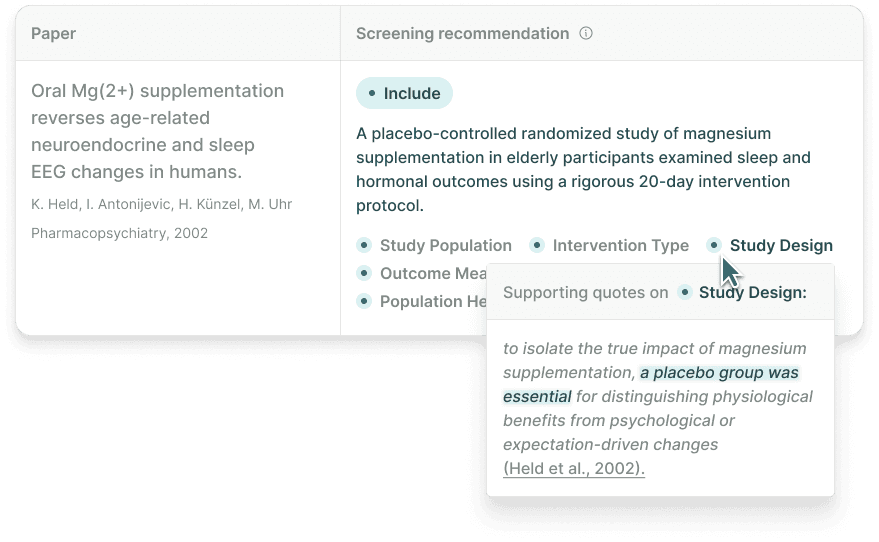
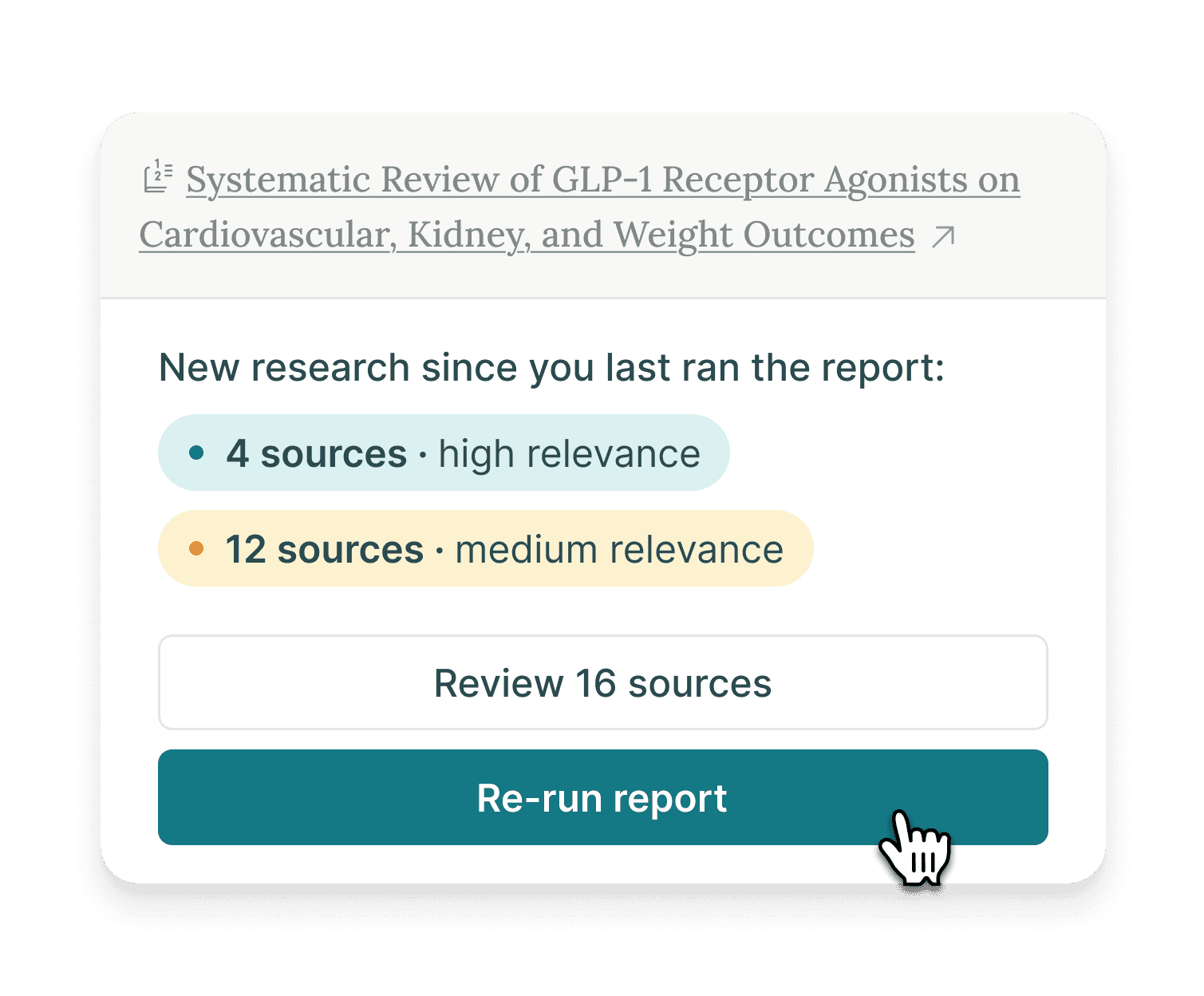
Key features include: Search, Research reports, Systematic literature review, Library, Alerts, Scale, Accuracy, Transparency.
Elicit is commonly used for: Generating structured research reports for academic studies, Conducting systematic literature reviews for grant proposals, Searching for relevant academic papers in specific fields, Creating alerts for new publications in a research area, Building a personal library of research papers, Summarizing findings from multiple studies for presentations.
Elicit integrates with: Google Scholar, PubMed, Zotero, Mendeley, EndNote, Microsoft Word, Slack, Notion, Trello, Asana.

Lewis Tunstall
ML Engineer at Hugging Face
1 mention

Stay on top of new research with Elicit Alerts!
Jun 30, 2025
Based on 16 social mentions analyzed, 6% of sentiment is positive, 88% neutral, and 6% negative.