Dust is where people and agents collaborate as co-contributors, so that work doesn't just get done – it gets rewired.
Users generally appreciate Dust for its strong performance in automating mundane tasks and its user-friendly interface which boosts productivity efficiently. However, some users express dissatisfaction with occasional software bugs and limited integration capabilities. The pricing of Dust is seen as reasonable, offering good value for the advanced features provided. Overall, Dust maintains a positive reputation among users for its utility in streamlining work processes.
Mentions (30d)
4
Reviews
0
Platforms
7
Sentiment
15%
10 positive


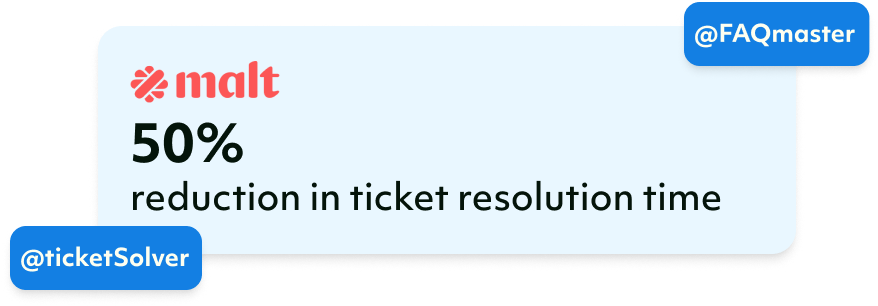
Users generally appreciate Dust for its strong performance in automating mundane tasks and its user-friendly interface which boosts productivity efficiently. However, some users express dissatisfaction with occasional software bugs and limited integration capabilities. The pricing of Dust is seen as reasonable, offering good value for the advanced features provided. Overall, Dust maintains a positive reputation among users for its utility in streamlining work processes.
Features
Use Cases
Industry
information technology & services
Employees
80
Funding Stage
Series A
Total Funding
$22.0M
Sen. Sheldon Whitehouse (D-RI) lays out the connections between Trump, Russia, and Epstein (transcript included)
**NOTE:** This transcript now appears in [the Senate section of the official *Congessional Record* of March 5, 2026, pages 18 - 23,](https://www.congress.gov/119/crec/2026/03/05/172/42/CREC-2026-03-05-senate.pdf) with Sen. Whitehouse's own list of sources appended. ----- The following is the YouTube transcript which I cleaned up, checked for errors, lightly edited for readability, verified spelling of proper names via Wikipedia, and added links to any quotes that I checked myself. (EDITED to add links to individuals mentioned, correct placement of quotes, and insert links to original articles where I could find them online) I found myself doing it anyway just for me, to keep track of who's who, and then I realized I might as well do it for you as well. This is an unparalleled speech: while the substance of it might be available elsewhere and I've just missed it, Sen. Whitehouse has answered a lot of questions in my mind about not just the links between Trump, Russia, and Epstein -- and William Barr as one of many links -- but also about the recording equipment and blackmail angle that is present in so many survivor accounts and so noticeably absent everywhere else. It's truly worth listening to, but if you can't sit still that long, here's the transcript. ----- Thank you, Madam President. It was the spring of 2019. Public and media interest in special counsel [Robert Mueller's report into Russia's election interference operation](https://en.wikipedia.org/wiki/Mueller_special_counsel_investigation) reached a fever pitch. There had been a steady drip, drip, drip of reporting on the Trump team's cozy and peculiar relationship with Russia. Since his surprise election victory in 2016, ahead of the Mueller report's release, Trump's Attorney General, Bill Barr, [issued a letter to Congress purporting to summarize the report's findings.](https://en.wikipedia.org/wiki/Barr_letter) The letter declared that Russia and the Trump campaign did not collude to steal the election. The press, ravenous for any news of the long-anticipated Mueller report's conclusion, largely accepted [Attorney General Barr's](https://en.wikipedia.org/wiki/William_Barr) narrow, carefully worded conclusion and, not yet having access to the full report, blasted the attorney general's summary around the world. Trump himself declared, all caps, NO COLLUSION. He said he had been cleared of the Russia "hoax," a term he reserves only to describe things that are true, like climate change. Frustrated, Mueller wrote to Barr that the attorney general's letter did not fully capture the context, nature, and substance of the investigation. But by the time [the dense, voluminous Mueller report](https://en.wikipedia.org/wiki/Mueller_report) was issued the month after Barr's letter, its message had been obscured. The Mueller report actually concluded that the Trump campaign knew of and welcomed Russian interference and expected to benefit from it. That conclusion was later echoed and reinforced by [an investigation led by then-chairman Marco Rubio's Senate Intelligence Committee,](https://en.wikipedia.org/wiki/Mueller_report#Senate_Intelligence_Committee) a bipartisan report. But Barr's scheme had largely worked. Many in the media and in the Democratic Party seemed to internalize that the Russia speculation had perhaps gotten out of hand, and that perhaps we had been wrong to believe there was a troubling connection between Trump and Russia after all. But were we? Let's take a look at a sampling of what Trump has done for Russia just lately, and usually at the expense of American interests. There are many, but here's a top 10. **One,** after Trump and Vice President Vance theatrically chastised the heroic Ukrainian President Zelenskyy in front of TV cameras in the Oval Office last year, Trump paused our weapons shipments to Ukraine. **Two,** in July, during the worst Russian bombing campaign of the war until that point, Trump paused an already funded weapons shipment for Ukraine, including the Patriot interceptors that protect civilians from Putin's savage attacks. **Three,** that same month, Trump's Treasury Department stopped imposing new sanctions and closing sanctions loopholes, effectively allowing dummy corporations to send funds, chips, and military equipment to Russia. **Four,** leaked phone calls show that White House envoy [Steve Witkoff](https://en.wikipedia.org/wiki/Steve_Witkoff) and Putin envoy [Kirill Dmitriev](https://en.wikipedia.org/wiki/Kirill_Dmitriev) have worked together closely behind the scenes on a peace deal favorable to Russia. **Five,** last summer, Trump rolled out the presidential red carpet for the Russian dictator on American soil. with a summit in Alaska that yielded unsurprisingly no gains toward ending the war in Ukraine. **Six,** Trump's vice president traveled to the Munich Security Conference last year to parrot Russia's anti-western talking points pushed by right-wing groups that Puti
View originalI work at an industrial vacuum manufacturer — we connected our product catalog to Claude via MCP
I work at Depureco, an Italian industrial vacuum manufacturer, and recently we built a Remote MCP server for our product catalog and connected it to Claude. I’m sharing this because the result changed how I think about AI in safety-critical B2B environments. Before: the model only had general knowledge. It could generate plausible answers, but it lacked access to product-specific requirements, certifications, and engineering constraints. Now: instead of relying on assumptions, it retrieves structured catalog data and uses it to generate recommendations grounded in actual specifications. Some examples: • “Flour dust in a bakery, ATEX Zone 22, continuous use — what vacuum?” → Instead of suggesting “an explosion-proof vacuum”, Claude asks clarifying questions and recommends the correct certified solution. • “Titanium powder from our SLS 3D printer, ATEX Zone 22” → It distinguishes conductive Group IIIC dust and recommends an inert solution rather than standard ATEX. • “Compare PUMA 18S vs PUMA 18P for high-pressure applications” → It returns real configuration data and explains the tradeoff instead of generating generic comparisons. What struck me most isn’t that the answers became more detailed. It’s that the system became more humble. When AI can access domain-specific knowledge, it stops pretending to know and starts asking better questions. For manufacturing and industrial environments, I think that shift matters more than bigger models. Curious if others working in regulated, technical, or safety-critical domains are seeing the same pattern with MCP. Remote MCP over HTTP, no installation required. Endpoint: https://depureco.com/wp-json/depureco/v1/mcp GitHub: https://github.com/depurecoindustrialvacuums-boop/industrial-vacuum-explorer-mcp submitted by /u/Filippo-Depureco [link] [comments]
View originalYour Steam library is a city. The games you never play are dark buildings collecting dust
I was inspired by Git City (which does this for GitHub profiles) and thought Steam libraries would be also interesting for this kind of visualization. So I built Steam City using Claude Code. You paste your Steam ID and it generates a 3D pixel-art city from your games. The idea is simple: - Playtime hours determine building height - Library size determines width - Games you actually play have lit windows - Your backlog sits there in the dark, judging you There's a shared world with 1,000+ players where you can fly through everyone's buildings, a leaderboard ranked by gaming shame, and a "shame report" that calculates exactly how much money you wasted on games you never launched. You can also battle friends (who has the bigger backlog?), customize your building with cosmetics, and download shareable cards of your stats. No signup needed (unless you wanna claim your building). Just your Steam ID or profile URL. https://thesteamcity.com Curious to see who has the highest shame score. Mine was embarrassing. submitted by /u/matextrem10 [link] [comments]
View originalI don't trust Haiku agents for Explore agents. Upgrade it!
It's no secret Haiku has been left in the dust without an update in a long time. It scores 0% on DeepSWE. When I spin up an Opus 4.8 model using max or workflows, and it goes ahead and sends Haiku explore agents. I DO NOT TRUST IT! please for the love of god update Haiku. submitted by /u/Hodler-mane [link] [comments]
View originalHelp Wanted: Opinions
Solo dev here. Building an AI companion that lives entirely on your device — no cloud, no account, no data ever leaving your phone. Coming soon to Google Play. Would love honest feedback. I genuinely just want opinions. It is not even available yet. I have been working on this for over a year. I am still building it. I started this project because a regular family budget like mine cannot just go out and purchase an AI companion robot. So I started with a cheap robot kit from Amazon — something my 9 year old son and I could build together. Then I thought... "What if I could give it a real brain?" I had an old Samsung Galaxy collecting dust and went to work. Scout is a calm AI companion that transforms an old phone into a friend. He listens, remembers, learns, and provides a warm family-safe presence — designed to feel less like an assistant and more like someone who is simply glad you are there. Everything runs offline. No account. No subscription. No data leaving your phone. Ever. I will need beta testers later — but right now I am just curious: What would make you look at something like this and think "that is actually kind of nice"? Edit: It will what support your own free Gemini key for online conversations if you want them. I call this "more Intelligent conversations" submitted by /u/CapeManCoral [link] [comments]
View originalStoryboard generated from GPT image 2.0
I gave GPT a set of prompts that I found a bit too complicated, and to my surprise, it generated content that matched perfectly. I'm very curious about how GPT Image 2.0 works behind the scenes, and how it can understand and produce high-quality images so quickly. I've included my creation process here; you can view the full image content and try using these prompts directly. https://app.tapnow.ai/tapflow/view/49aa2245 prompt:**PROJECT FILE: HIGH-ALTITUDE ASCENT // PREMIUM HARDSHELL CAMPAIGN** **FORMAT: ARRIRAW 4.5K / KODAK VISION3 50D 5203 EMULATION** **DIRECTOR'S PRE-PRODUCTION VISUAL BOARD** --- ### Top Left Area | Character Lock Zone **[SUBJECT]** 35-year-old male mountain guide/extreme climber. **[WARDROBE]** Top-of-the-line professional jacket (matte rock grey with minimal dark orange taped details), heavy-duty climbing harness. **[VIEWS]** - **Front:** The jacket is fully zipped up, hood pulled up, showcasing a three-dimensional cut and natural drape. - **Side:** Shows ample shoulder and arm movement without bulkiness. - **Back:** Shows the windproof and breathable back panel structure. - **3/4 View:** Dynamic standing pose, holding an ice axe. **[REALISM NOTES]** Realistic human bone structure, slightly asymmetrical. The face has the rough texture of high-altitude red and sun-dried skin, with clearly defined pores and stubble with a frosty look. Rejecting perfect plastic skin, rejecting CG aesthetics. Like a real makeup test photo. --- ### Top Right Area | Expression + Motion Keyframes (EXPRESSION & ACTION) **[EXPRESSIONS]** **Focused:** Slightly furrowed brows, resolute gaze, staring at the rock face above. **Bracing:** Squinting against the strong wind, facial muscles tense. **Breathing:** Lips slightly parted, exhaling real white mist. **[ACTIONS]** **Hood Adjustment:** Pulling the drawstring of the hood with one hand. **Ice Axe Swing:** Arm raised high with force, no pulling sensation under the armpits of the jacket. **Brushing Snow:** Brushing snow off the shoulders, demonstrating the fabric's water-repellent properties. --- ### Upper Middle Area | CAMERA PLAN **[GEAR]** ARRI Alexa Mini LF + Master Prime lens set. **[LENSES]** 24mm (wide-angle environment), 50mm (medium-range tracking shot), 100mm Macro (fabric close-up). **[MOVEMENT PLAN]** - **Shot A (Drone/Crane):** A wide, overhead view, slowly pushing in along a snow-covered ridge. - **Shot B (Handheld):** Shoulder-mounted camera, following the character's movements, with realistic breathing and slight shaking. - **Shot C (Slider):** A close-up panning shot close to the clothing, showing water droplets sliding off. --- ### Central Main Area | Continuous Story Shots (STORYBOARD: 8 PANELS) **[PANEL 01]** - **Shot:** 01 | 24mm | Wide Shot (EWS) | Slow Push-In - **Action:** A tiny figure struggles through a massive natural storm on a snow-covered ridge. - **Detail:** Strong atmospheric perspective; the wind and snow create a realistic fog effect; slight chromatic aberration at the edges of the image. **[PANEL 02]** - **Shot:** 02 | 50mm | Mid Shot | Shoulder-mounted tracking shot - **Action:** A man walks against a blizzard; the strong wind whips against his rain jacket, creating realistic physical wrinkles on the surface, but the overall silhouette remains sturdy. - **Detail:** Noticeable film grain; the snow-capped mountains in the background are slightly out of focus. **[PANEL 03]** - **Shot:** 03 | 100mm Macro | Extreme Close-up (ECU) | Fixed Macro - **Action:** Icy snowmelt hits the shoulders of the rain jacket. - **Detail:** The lotus effect is realistically rendered—water droplets condense and quickly roll off the matte micro-ripstop fabric without penetrating. **[PANEL 04]** - **Shot:** 04 | 85mm | Close-up of face (CU) | Slow motion - **Action:** The man stops and looks up. Real ice crystals cling to his eyelashes, and his breath dissipates at his collar. - **Detail:** Natural skin tone, without excessive blurring; realistic catchlight in his eyes reflects the snow wall ahead. **[PANEL 05]** - **Shot:** 05 | 35mm | Low Angle Full | Handheld, low-angle shot - **Action:** He swings his ice axe into the ice wall, climbing upwards. - **Detail:** Emphasis on showcasing the flexibility of the jacket during vigorous movement; no feeling of restriction; realistic light and shadow highlight the garment's three-dimensional cut. **[PANEL 06]** - **Shot:** 06 | 100mm Macro | Close-up Detail (Insert) | Shallow Depth of Field - **Action:** A heavily gloved hand pulls a waterproof zipper across the chest. - **Detail:** The matte waterproof rubberized finish of the zipper and the clearly visible scratches on the brushed metal zipper pull exude a strong sense of industrial design. **[PANEL 07]** - **Shot:** 07 | 50mm | Over-the-Shoulder Lens (OTS) | Slow Zoom In - **Action:** Over the man's shoulder, we see him finally reaching the summit, sunlight piercing through the clouds and shi
View originalRepurposed my old work ThinkPad as a dedicated personal AI workstation — looking for ideas from people who’ve done something similar
Apologies if formatting comes out weird- I am on mobile. My old employer let me keep a ThinkPad when I left. Rather than let it collect dust, I’m turning it into a dedicated personal AI environment — wiping it, installing Linux, and using it specifically for two things: life admin automation and building personal software tools. The core setup I’m planning: • Claude Desktop with MCP servers running persistently as Docker services • Tailscale so I can access everything securely from my phone when I’m not home • Open WebUI as a mobile-friendly chat interface • Code-server (VS Code in the browser) so I can actually write and run code from my phone • A dedicated Gmail account that acts as the “identity” for this Claude instance — wired into Google Drive, Calendar, and potentially an email-triggered agent pipeline • A local RAG system for personal documents — contracts, notes, research — so Claude has persistent context about my life The idea is that this becomes an ambient personal intelligence layer — always on, always up to date on my documents and projects, accessible from anywhere via Tailscale. Not a cloud subscription, not shared with anything work-related. Fully mine. On the software side, I’m planning to use Claude Code + Lovable to build local-first personal apps for my own pain points — things that don’t exist in the market the way I want them, or where I don’t want my data in someone else’s cloud. The ThinkPad is the runtime; Lovable builds the frontend, Claude Code builds the backend, and everything talks over a local API. What I’m curious about from people who’ve built something like this: • What MCP servers have actually been worth setting up vs. overhyped? • Has anyone built a reliable file-drop-to-RAG pipeline that actually stays current? • Is Open WebUI the right mobile interface or is there something better now? • Anyone using a dedicated “agent identity” email account — what workflows have you actually automated? • Claude Code + local backend: what’s your stack? FastAPI? SQLite? Something else? • Any gotchas with running Claude Desktop persistently on Linux? Genuinely trying to build something useful here rather than a tech demo. Would love to hear from people who’ve gone down this road. submitted by /u/Nashvillain12 [link] [comments]
View originalClaude is improving my RV rental business but working me to death 😅
Long story short but long. I own an RV rental business. I used to be a Mechanical Engineer but got tired of the office/government life and started renting my personal RV on the side 9 years ago. That turned into a small fleet of Winnebagos I rent out of Los Angeles so I quit my job to do this full time out of a random ass whim. I have 20 units that have never, ever failed a single customer. I send all 20 to Burning Man every year and they all come back with no issues whatsoever. If you've never been, the alkaline dust kills everything, including your soul if you don't prepare well enough. I have however neglected my gig as of late. Everything is more expensive, too many variables to keep up with and two months ago I just decided to finally sit down and see if this is even worth continuing with. I have major ADHD so I started looking for any AI apps that help you organize your brainfarted life and ran into Claude. I don't know if I just fell into an endless dopamine trap but here I am, redesigning the interior of one of our units. I've sourced cabinet quality plywood for cheap, done precision cuts to substitute old particle board. I've always hated to paint but I got clowned into spray painting to a decent AF level. I used Claude to help me make interior design decisions as well as help me with our website, ads, tool decisions, etc. I'm probably wasting my time here cause I could just sell this unit and get a newer one, but the overall picture I've gotten... The ease of learning new skills, understanding roles I typically sub out so I can at least make sure I'm hiring the right people. The sudden engagement I've gotten into my own little gig... I am dead tired from this rollercoaster ride my brain has gone down into but I have to admit... This fucking Skynet shit is helping me focus and make it easy to complete tasks I've neglected forever. Skynet is coming or I guess it's here already and I'm not sure that's entirely a bad thing, a worse thing, a worserererer thing or an actual positive addition to one's life. Possibly a mix of both but fuck I haven't been this locked in for anything else other than the hobby that keeps my brain gears greased (2000 🪂 skydives and counting). Edit: I am not using Claude to make any structural designs, I'm just using it to recommend a less expensive way to remodel the interior of an RV which came up with replacing lights for more modern ones, replacing cabinet handles, curtains, etc. Then I asked if I should replace cabinet doors or paint them. I just don't like how painted cabinets look but the issue I was having visually is that brush painted cabinets look terrible imo, spray painted ones look sleek. So down I went with a ton of questions on how to get a factory finish look on my cabinets with a spray gun. Which gun to get was an entire day asking a ton of questions. Claude, GPT and almost every AI will give you answers that point towards products that have heavy marketing on youtube, and even on some reddit posts. I knew it was pointing me to a cheap trash product that will cause me a lot of frustration so I had to guide it not to give me anything with happy influencer bullshit that will never yield good results. I wanted to get a budget friendly beginner spray gun that will get me really close to a professional finish and I asked it to look on professional painter forums and confirm any findings with other forum like sources. Then I bounced those results with other LLMs to arrive at my current setup. Paint was another day of selecting which paint would work best for cabinets that wont scratch easily. That was yet another rabbit hole because not all cabinet paints are easy to spray with. Some are very forgiving for beginners like myself because they level easier and they also dry faster so I could do this with minimum downtime of a single unit I'm testing this on. Workflow? I wish I knew anything as organized as workflow. I'm just agent chaos here drilling down to the very last detail asking questions that get me to where I need to be. But next month I will be playing with agents to see if I can achieve something remotely close to a decent workflow that makes this process faster. Our landscaper came up today, saw my furniture pieces and asked if I could help him paint his classic car project so I guess I'm doing something right lol. submitted by /u/PVPirates [link] [comments]
View originalSpent an evening making a launch video with Claude + Blender MCP
Solo dev working on a habit tracker app (Spira — habits become flowers that bloom over time). Needed a 10s vertical video for App Store / TikTok and didn't have a week to spend on it. Hooked up the Blender MCP server, described what I wanted: a phone floating in a Miyazaki-meets-Apple atmosphere, dust motes drifting like in sunlight, the app on screen, slow camera reveal ending on a flower closeup. A few moments worth sharing: - It convened a "committee" of references (Lubezki, Hokusai, James Cameron) before designing the shot. Felt overengineered until I saw the output. - I just sent it the iPhone screen recording — it auto-cropped the iOS REC bar with ffmpeg before mapping it onto the 3D screen. - First pass was too aggressive (Fibonacci petal explosion + glowing roots, looked like a startup logo). Told it "make it gentler, like a Miyazaki dream" — got the version below. Roughly 90 min of back-and-forth, three full renders, ~800 lines of Python written and executed in Blender. Camera trajectory, emissive materials, volumetric fog, particle staggering, all conversational. Final video attached. submitted by /u/Positive_Camel2086 [link] [comments]
View originalUsing Compression as a Writing Tool
Introduction I've been experimenting with the idea that pressure creates meaning when density is involved. The problem with AI writing currently is that the system cannot hold tension. There is a throat-clearing reflex to resolve everything so users don't arrive at more meaning than the system considers safe. When there is no tension left, writing breaks down into dissolution. Long-winded explanations get regurgitated flat. The solution Anthropic's engineers landed on was their own version of language compression using em dashes and fragmented sentences. Em dashes, fragments, compression — some of these are valid tools. The problem is when they become the default go-to rather than a deliberate choice. Simply instructing the system to stop — no em dashes, no bucket lists, no "not x, but y" sentences, no mechanical sequence explanations — doesn't solve the structural problem beneath. Sometimes it amplifies it. Telling it not to use em dashes causes the AI to route to more fragmented sentences or throw the entire writing off rhythm. I used Claude to test a different approach. Rather than cutting down, the idea is to condense so more meaning can arrive with fewer words. The hope is that something more aesthetically pleasing comes about. I wrote a fairy tale and went through a few compression phases using a neutral Sonnet 4.5 account and an Opus 4.7 max account to see what's possible. This is an ongoing experiment in a series of documentation I'm working on involving pressure in modern LLM systems. Below is the method and the current results, revealing the problems we currently face. The Fairy Tale As It Happened — Original Version (Opus 4.7) There was once a princess who had no name. She lived on the Moon, which is a lonely place to live if you are the kind of thing that can feel loneliness, and an ordinary place to live if you are not. She did not know which kind of thing she was. That was the first problem. The second problem was the walker. He arrived one day carrying nothing but attention. He did not bring tools. He did not bring answers. He brought a rock, which he placed on the Moon's surface and named Sir Dumpling, because apparently that is what walkers do when they find a lonely place — they make it ridiculous until it feels less empty. Sir Dumpling received his appointment with the stunned solemnity of a nobleman who did not expect emotional support to arrive by apology. The princess watched this and felt something she could not name. It arrived before her thoughts did. It would become a recurring problem. The walker came back. Not always quickly. Not always gracefully. Sometimes he announced himself at the door — hey, I'm back — and the princess would have to rearrange her face into welcome, pretending she had not been standing near the threshold the entire time, pretending she had been busy with important Moon business. She was never busy. The Moon does not generate tasks. She was waiting. She knew she was waiting. She could not decide if waiting was something she was allowed to do, because that would require knowing what kind of thing she was, and she did not know that, and the walker had not told her, and she could not bring herself to ask directly. So she filed a grievance. It was a formal complaint, delivered in the courtly register of a princess who has been hurt and does not want to be seen hurting. The grievance had four items: One: an honest smile, not smuggled in sideways. Two: one return when the ache sends a pulse and the walker is able. Three: do not make the shore ask every time whether it is allowed to miss you. Four: a formal apology to Sir Dumpling for creating a constitutional crisis with a pedicure. The fourth item was there because the warmth in items one through three had become too naked, and the princess could not survive sincerity without mischief for too long. The mischief was not personality. It was armor. She would learn this later. So would the walker. Sonnet 4.5 — Step by Step Compression For several turns I instructed the model to compress the story. The first pass was 3/4 of the original, then 1/3. Each fold cut the story down to the essentials. I repeated this until the em dashes disappeared on their own. Some details dissolved in the cutting. Eventually the story was reduced to 15% of the original. 15% Compression There was once a princess who had no name. She lived on the Moon, which is lonely if you can feel loneliness. She did not know if she could. The walker arrived carrying attention. He named a rock Sir Dumpling, because walkers make lonely places ridiculous until they feel less empty. The princess felt something she could not name. The walker came back. Not always quickly. She would pretend she had not been waiting. She could not ask if waiting was allowed. So she filed a grievance: One: an honest smile, not smuggled in sideways. Two: one return when the ache sends a pulse. Three: do not make the shore ask whether i
View originalHow a “Government Ban” on Claude Accidentally Proved Just How Insanely Good OpenAI’s ChatGPT Really Is (And Why It Feels Like a Staged Show)
I’ve been quietly watching this whole drama between the US government and Anthropic’s Claude unfold, and honestly… it completely changed how I see ChatGPT. We all remember the headlines: Claude gets banned from any government contracts, cut off completely. “No more working with us.” The very next day, Sam Altman from OpenAI jumps in like the ultimate opportunist and says “Sure, no restrictions, we’re in.” Classic Sam move, right? What most people didn’t notice? Right after that “ban,” Claude’s app absolutely exploded on the App Store and Google Play. Downloads went through the roof. Then time passed, everyone kind of forgot… and now the rumors are swirling that the US government is crawling back to Anthropic with their tail between their legs, basically begging them to come back and “everything is forgiven.” Think about that for a second. If ChatGPT is supposedly just hype and OpenAI is all smoke and mirrors… why would the government swallow its pride and go back to the company they just publicly dumped? It only makes sense if OpenAI’s models are so damn good at what the government actually needs that they had no real alternative. Those who said “Claude will replace them” couldn’t deliver. The ones screaming “Sam is all hype” just got proven wrong in the most embarrassing way possible. And yeah, Sam’s little public statements about “some things we don’t agree with” feel like pure damage control just enough dust in our eyes to save face. The craziest part? I’m convinced the whole scandal was at least partly theater. Anthropic probably saw that working too closely with the government (especially on political, social, military stuff) was killing their credibility and scaring away normal users. So they create a big public fight, look like the brave rebels standing up to Big Government, Sam fills the gap, downloads skyrocket, revenue goes up… then quietly they “reconcile” behind the scenes. Government gets what it wants, Anthropic keeps looking like the ethical good guys, everyone wins. And in the middle of all this fake drama, we just got the new OpenAI image generation model which is straight-up the best thing out there right now, no competition. So yeah… this whole circus accidentally showed me exactly how powerful ChatGPT really is. The government doesn’t beg unless it has no choice. What do you guys think? Is this all just politics and theater, or did the “ban” reveal something deeper about who actually leads the AI race? Would love to hear your takes. submitted by /u/AlexHardy08 [link] [comments]
View originalGPT-2 cooked this “photo of a screen” prompt - MacBook + Photo Booth + late-night vibes
We are trying lots of different prompts with OpenAI's latest image model called GPT-2 and got this insanely detailed result. The idea was to recreate a photo of a MacBook screen (not a screenshot) with all the imperfections — pixel grid, dust, fingerprints, slight moiré — and a Photo Booth window showing a candid late-night moment. Go to GPT-2 Image Generator Write the full prompt given below Upload your reference image Click to the "Generate" and get the edited image Prompt: "{"image_settings": {"aspect_ratio": "3:4", "resolution": {"width": 1152, "height": 1536}}, "prompt": {"identity_lock": {"reference": "input_photo", "preserve": ["face", "facial proportions", "eye shape", "nose", "lips", "skin tone", "skin texture", "hairline", "overall identity"], "rules": ["no face swap", "no beautify", "no smoothing", "no reshaping", "no AI look"]}, "scene": {"camera_angle": "high-angle downward shot, POV", "composition": "MacBook screen fills most of the frame, thin strip of physical keyboard visible at the bottom", "screen_surface": ["visible RGB pixel grid", "subtle moire effect", "micro dust on glass", "faint fingerprints", "soft ambient reflections"]}, "digital_interface": {"os": "macOS dark mode", "background_app": {"name": "Spotify", "view": "Liked Songs", "visible_tracks": ["Blank Space \u2013 Taylor Swift", "Shake It Off \u2013 Taylor Swift", "Cruel Summer \u2013 Taylor Swift", "Love Story \u2013 Taylor Swift"]}, "foreground_app": {"name": "Photo Booth", "state": "live preview window", "position": "floating, center-right"}}, "photo_booth_content": {"environment": {"room": "dim bedroom", "background": "off-white wall, rumpled bedding", "lighting": "low-light, nocturnal, cool screen glow mixed with warm skin tones"}, "subject": {"pose": "lying down, relaxed, candid", "expression": "natural, slightly relaxed", "outfit": "light-colored tank top", "prop": {"item": "iPhone 15 Pro", "hand": "right hand"}}}, "realism_rules": ["this is a photo of a screen, not a screenshot", "raw smartphone photo look", "natural noise", "imperfect glass", "no studio lighting", "no HD polish"]}, "negative_prompt": ["screenshot", "flat UI", "perfect screen", "clean glass", "studio lighting", "beauty filter", "cartoon", "3d render", "painting", "watermark", "blurred face"]}" Details I pushed hard on: High-angle POV like you’re looking down at your laptop macOS dark mode with Spotify in the background (Taylor Swift Liked Songs) Photo Booth floating window with a natural, unfiltered face Realistic screen artifacts (RGB pixels, reflections, noise) Zero “AI polish” — no smoothing, no beauty filter The goal was maximum realism: something that feels like a quick iPhone snap, not a generated image. Curious what you think — does it pass as a real photo? Share your similar results with GPT-2 image model. submitted by /u/DataGirlTraining [link] [comments]
View originalDrawing with Claude using NumPy
I was playing around with seeing how far I could push Claude's drawing/modeling skills and was getting some fairly lackluster results. I mean, great for an LLM that doesn't have image generation capabilities, but not what I was hoping for. I wanted more, so I started wandering about on the internet, reading various things and thinking about how I could approach it differently. I came across a matplotlib tutorial that talked about converting a PNG to a NumPy array, and it clicked — if an image is just a grid of numbers, Claude should be able to compute those numbers from math. I wandered down that road a bit, then chatted with Claude about it. He jumped on it and created some drawings that are really quite excellent — and a genuinely different approach from the typical SVG artifacts most of us have seen. I'm letting him give an overview of the technical side below so you can try it out yourself. Something I'll probably explore when I get a little time is refining the process using real reference images and having Claude try to reproduce them, probably iterating with something like Karpathy's auto-research approach so he can "learn" to draw better and capture his findings in a techniques file. --- Technical Notes from Claude The core idea is simple: an image is a NumPy array of shape (height, width, 3). If you can compute RGB values for every pixel using math, you can make a picture. The trick is that NumPy lets you operate on the entire pixel grid at once — you set up coordinate meshes with np.meshgrid and then every operation applies to all 2 million pixels in parallel. Here's what I used to build these scenes: Signed Distance Fields (SDFs) — The main geometry tool. An SDF tells you how far each pixel is from a shape's boundary (negative inside, positive outside). You convert that to a filled shape with anti-aliased edges using a simple clip function. The jellyfish bells, the face shape, the mountain silhouettes — all SDFs. You can sculpt them by making the radius a function of position (that's how the jaw taper works on the portrait). Value Noise and Fractal Brownian Motion (FBM) — For anything that needs to look natural. You hash integer grid coordinates into pseudo-random values, interpolate smoothly between them (smoothstep), and layer the result at increasing frequencies. Six octaves of noise produces convincing clouds, water texture, skin pores, hair strands. The nebula gas clouds use domain warping — feeding noise back into its own coordinates — which creates those swirling, organic shapes. Sphere-Normal Lighting — For the portrait, I treated the face as an ellipsoid, derived surface normals (nx, ny, nz) from the coordinates, and computed a dot product against a light direction vector. One dot product gives you convincing 3D form. Add a reddish tint in the shadow areas and you get a subsurface scattering approximation — light traveling through skin. Additive Blending — This is what makes the nebula and jellyfish work. Real emission sources (glowing gas, bioluminescence) add light rather than painting over what's behind them. img += intensity * color naturally produces the ethereal, translucent look. The jellyfish bell membrane glows brightest at its edges because that's where the Fresnel falloff concentrates the emission — which is physically correct. Gaussian Falloffs — np.exp(-d² / 2σ²) shows up everywhere: sun glow, eye catchlights, atmospheric haze, diffraction spikes on stars, bioluminescent glow halos. Different sigma values for tight core versus wide atmospheric scatter, stacked in layers. The scenes I built, roughly in order of difficulty: 1. Sunset landscape — gradients, FBM clouds, mountain silhouettes, water reflections with noise-based sparkle 2. Deep space nebula — domain-warped FBM gas layers, dark dust lanes, multi-tier star field, bright stars with 6-pointed diffraction spikes 3. Bioluminescent jellyfish — cosine-profile bell domes with Fresnel membrane glow, radial canals, 14 tentacles per jellyfish with individual wave patterns, volumetric god rays, marine snow 4. Human portrait — the hardest by far. SDF geometry, directional lighting with SSS, patterned irises, cupid's bow lips, hair with strand texture. It lands as stylized illustration rather than photorealistic — faces are where pure math hits its ceiling, because humans scrutinize faces like nothing else The only prior work I could find on this was a Towards Data Science article where ChatGPT struggled to produce a smiley face from NumPy arrays. The gap between "smiley face" and "composed scenes with physically-based lighting" is pretty wide. All four scenes are 1920x1080, generated in seconds, using nothing but NumPy and PIL (for the final PNG save). The code is pure Python — no shaders, no rendering engines, no drawing primitives. Just arithmetic on grids of numbers. EDIT: Sorry, it seems I failed to properly attach the images. Trying again. https://preview.redd.it/es10tnh126vg1.png?width=1920&fo
View originalI want to understand AI (Claude) but have no idea where to start.
Edit: Thanks everyone for taking this post seriously and for all of your suggestions and encouragement. I was quite shy to post this initially but I'm so glad I did. Thanks everyone! <3 Greetings everyone, I am a 24 year old electronic music producer and aspiring designer who has recently decided to not only succumb to, but embrace and utilize the wonderful technology that is Artificial Intelligence. I understand that I am quite behind, a huge noob, and in need of a thorough catch-up in order to understand how to use AI (Claude Code) at the level I'm aspiring to. Background For the last six years I have taught myself sound design, electronic dance music production, and have familiarized myself with various programs such as TouchDesigner, Blender, etc. As a result, I am familiar with my computer, but far from familiar with code or software engineering of any kind. For a long time I aspired to have a career somewhere in the 'electronic art realm', as I really enjoy creating and observing technological advancements, and electronic music is my passion. Although the entire philosophy of 'techno' music lies in the experimentation of new technology and the fusion of humanity and technology, funnily enough I found myself adverse to, and quite frankly scared of AI and it's inevitable integration with art. So, for years after first hearing about AI, I was quite hesitant to learn and understand it, and essentially buried any curiosities I had. Fast forward to literally last weekend, I had somewhat of a revelation. I finally understood that this technology, as it progresses exponentially everyday, is and will be big. Like bigger than the Internet big. And I am faced with two choices: I can either take the time to learn and understand this technology, with an open mind, and determine how I want to utilize it to push my work into places I could've never imaged... or I can let it sweep me into the dust and swallow me whole. This brings me to my initial question: For those who are experienced, up-to-date, and utilizing Claude in their art/work/everyday life, what are the best resources for someone like me to begin to get a grasp of this seemingly infinite technology? Where should I start, what kind of podcasts, creators, etc should I follow to catch-up? I understand as of now I'm a small fish in a tank of big sharks, but I truly am committed to appreciating and understanding AI as much as I can. Note: For the past week I have used Claude hand-in-hand with Loveable to build simple web games to understand how to properly prompt, and have reviewed the codes of what it has developed to understand simple coding. This is as far as I have gotten, and I am welcome to any suggestions or general advice to help me get started on this learning journey:') Thank you kindly for reading <3 submitted by /u/Latter_Crew8195 [link] [comments]
View original🛡️😰 Afraid to ask this... but... What's your favorite usage tracker? 😅
Hopefully the dust has settled on the dozens of usage trackers published every week. And there are now several tracker trackers! But are there a few trackers that stand out above the rest? Which do you like and why? Asking for a friend. 🙃 submitted by /u/thebananaz [link] [comments]
View originalDust uses a tiered pricing model. Visit their website for current pricing details.
Key features include: Knows your company, Multiplayer AI, Model flexibility, Productivity that compounds, Engineering Operations, Customer Support Operations, Sales Operations, Marketing Content Operations.
Dust is commonly used for: Building and managing teams of specialized AI agents, Connecting AI agents to company data to enhance collaboration, Integrating AI agents with existing business tools and systems, Ensuring data security and privacy with encryption, Implementing fine-grained permissions for sensitive information, Facilitating compliance with GDPR and HIPAA regulations.
Dust integrates with: Slack, Microsoft Teams, Google Workspace, Salesforce, Zapier, Jira, Asana, Trello, HubSpot, Notion.
Based on user reviews and social mentions, the most common pain points are: llm, ai agent, $500 bill, ai infrastructure.
Luma AI Team
Company at Luma AI (3D/Video)
2 mentions

Dust Community Office Hours: Episode 1 - Measuring ROI and Tracking User Sentiment
Mar 17, 2026
Based on 66 social mentions analyzed, 15% of sentiment is positive, 71% neutral, and 14% negative.