
See metrics from all of your apps, tools & services in one place with Datadog’s cloud monitoring as a service solution. Try it for free.
Datadog AI is often featured on platforms like YouTube, suggesting a strong focus on video content and tutorials. Users on Reddit have highlighted its versatility, particularly for automated incident investigation when integrated with other AI tools like Claude. While there are no explicit complaints mentioned in the available data, the wide use of integrations signifies that its adaptability is a major strength. Pricing sentiment is not clearly indicated, but Datadog's overall reputation seems positive, especially in tech and developer communities.
Mentions (30d)
2
Reviews
0
Platforms
2
Sentiment
0%
0 positive
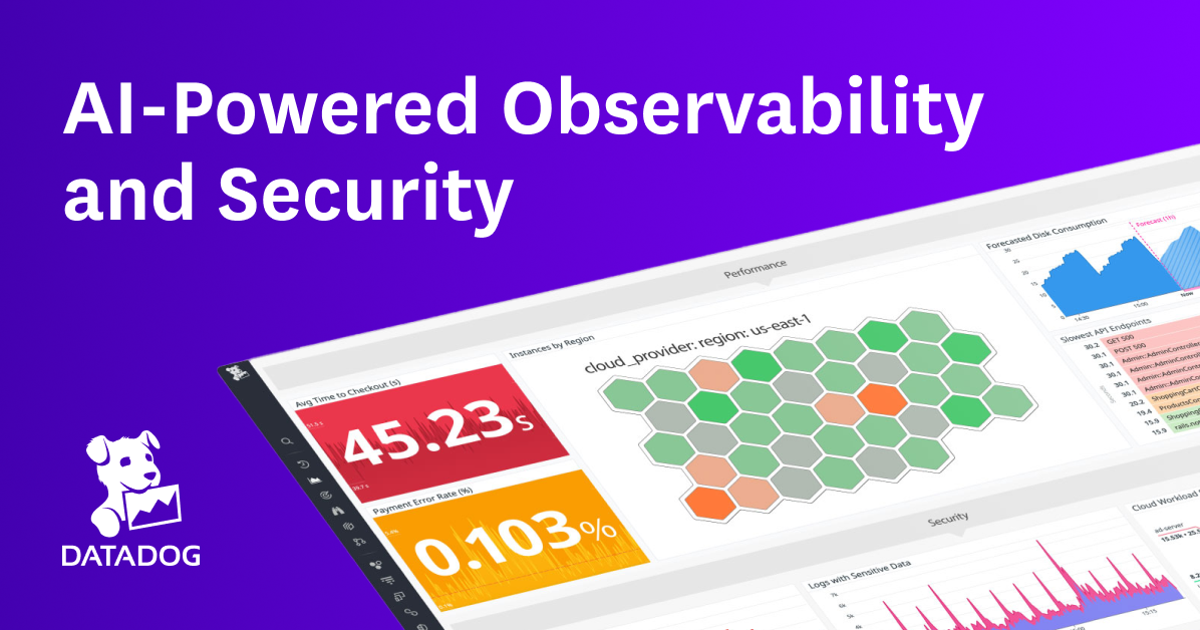
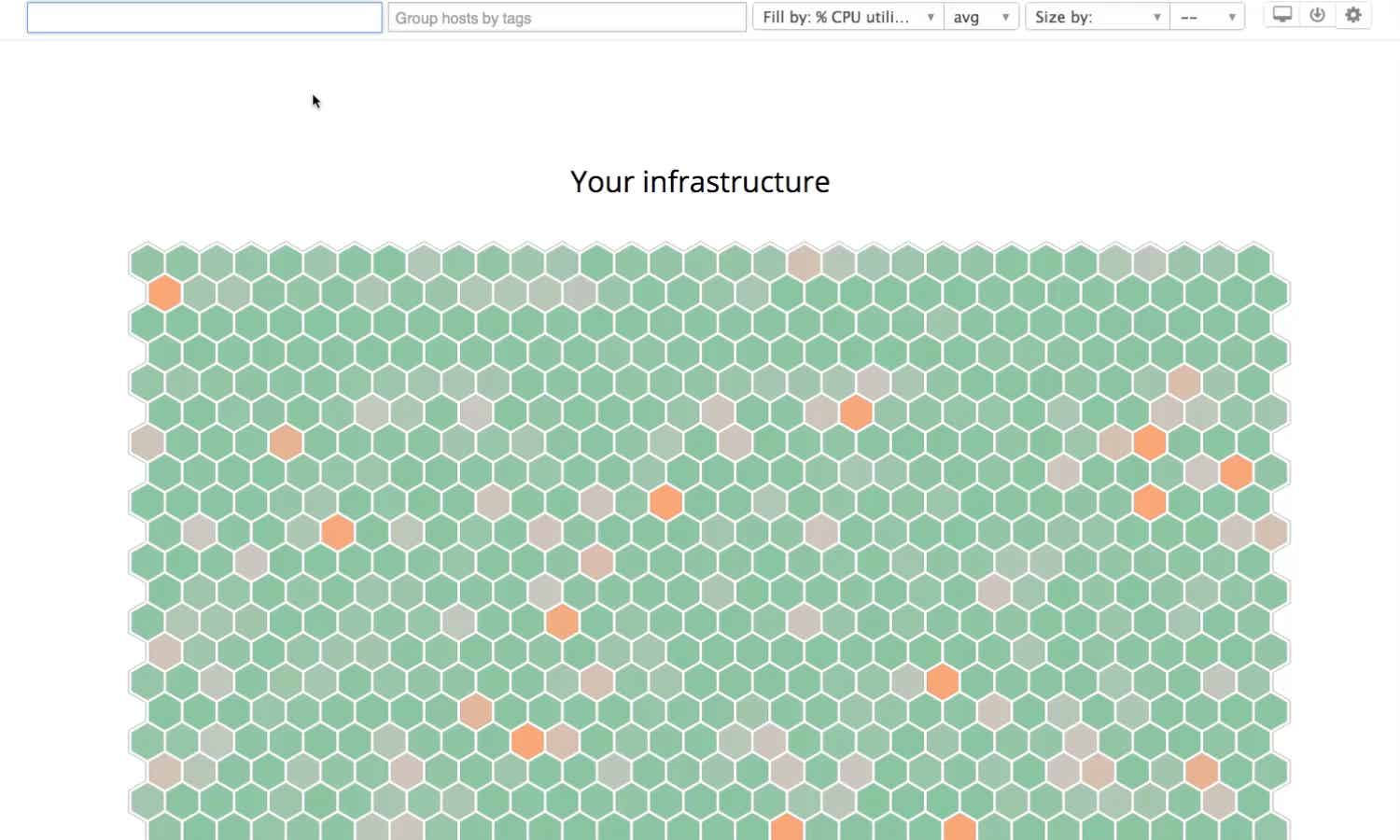

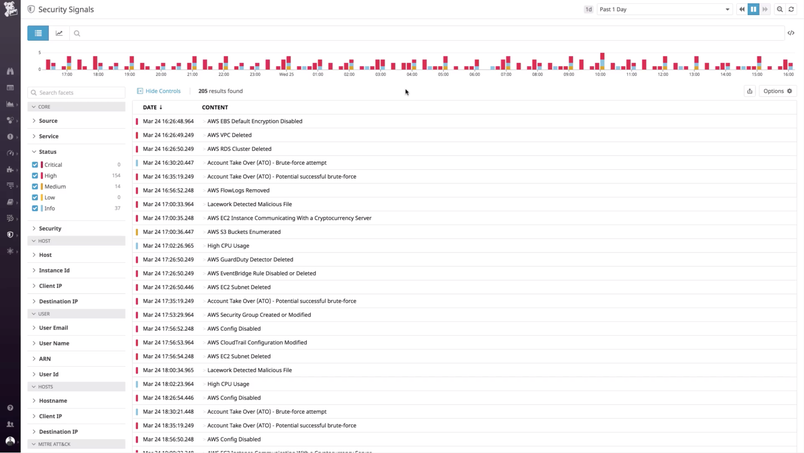
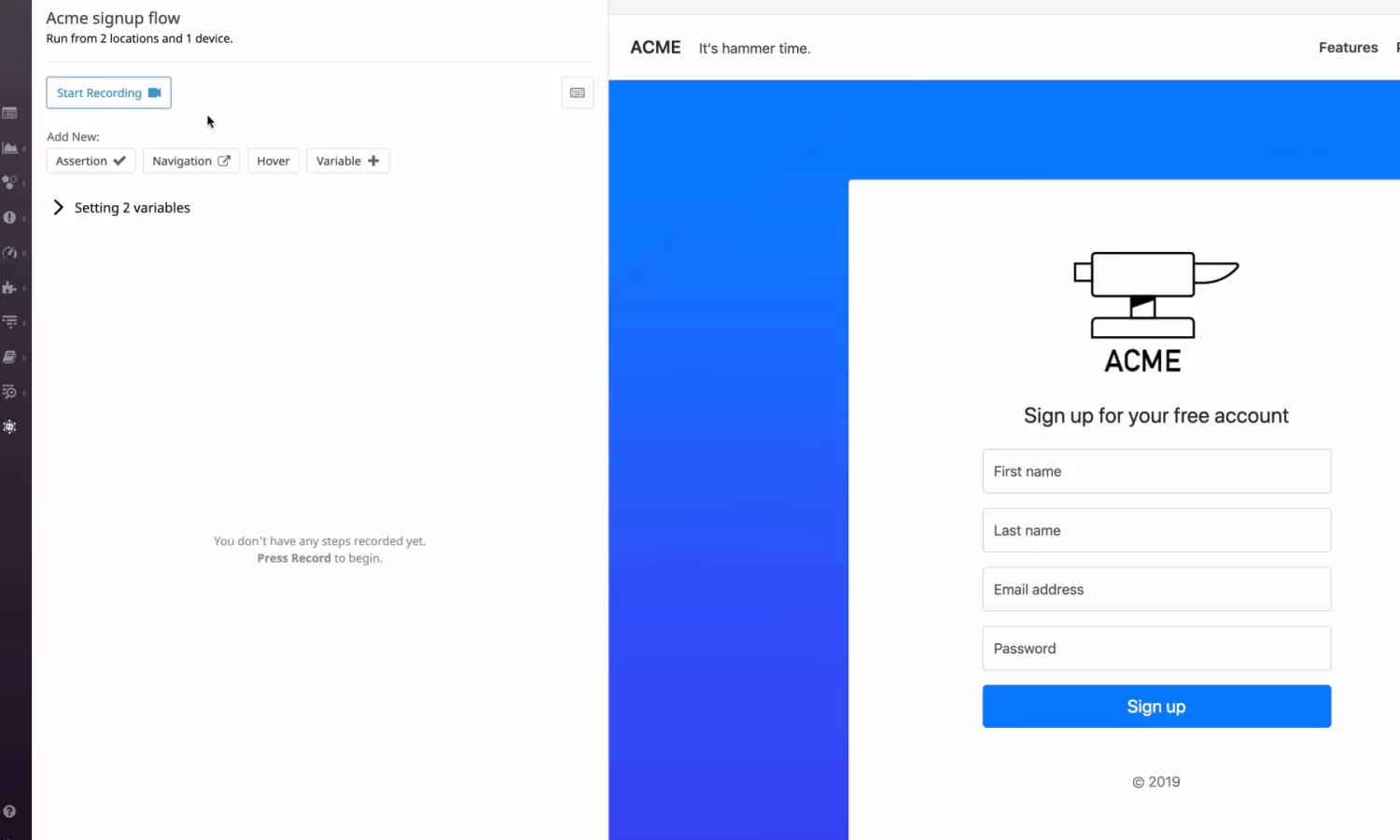

Datadog AI is often featured on platforms like YouTube, suggesting a strong focus on video content and tutorials. Users on Reddit have highlighted its versatility, particularly for automated incident investigation when integrated with other AI tools like Claude. While there are no explicit complaints mentioned in the available data, the wide use of integrations signifies that its adaptability is a major strength. Pricing sentiment is not clearly indicated, but Datadog's overall reputation seems positive, especially in tech and developer communities.
Features
Use Cases
Industry
information technology & services
Employees
8,100
Claude was more useful as an inbox filter than a reply writer
Claude got more useful for me when I stopped asking it to write the reply. The actual problem was after a post went up. A few public comments turn into DMs, then someone wants a quick call, someone asks for a repo review, someone drops a Discord, someone has a question that is actually three questions. My instinct was to answer fast because unanswered messages feel like open tabs in your head. That made the answers worse. Too agreeable, too smooth, and also weirdly needy. The fix has been using Claude one step earlier. I paste the message with anything identifying removed and ask for a small triage note: what is this person actually asking, is there a real problem here or just a pitch, can this be answered in text, have I seen this same question three times this week. Then I write the reply myself. The funny part is that it changed what I post publicly. The useful signal was not upvotes. It was the repeated private questions. People do not say "please build a monetization strategy." They say "can you look at this idea", "am I overbuilding", "would you hop on a call", "how do I find clients without sounding spammy." Those are much better notes than whatever I was trying to infer from a score number. I saw Datadog's AI engineering report this week saying roughly 5% of AI model requests fail in production, and a lot of the failures are boring capacity/ops limits. Different scale, but it rhymes. The hard part is not generating more text. It is noticing where the loop keeps breaking. So my tiny Claude workflow now is: public post, messy replies, triage note, plain human answer, write down the repeated ask. It is unglamorous, but it has saved me from taking calls I did not want and from replying like a customer support bot that got a little too much coffee. Is anyone else using Claude this way, more as an inbox/signal filter than as the thing that writes the response?
View originalPricing found: $2, $240, $200, $160, $1.50
Where I'm at with AI Assisted Building + Current and Future Workflow Overview
I've been in an AI dive bomb for probably a couple of years now. The early days... when models couldn't be trusted for more than 5% of the code you wrote. Over the last 2 years that's evolved so quickly that I now write nearly 0% of my code by hand, on personal projects and at work. I've used all kinds of tools in that time too. OpenCode, Zed, Claude Code, Codex, Cursor, Windsurf, OpenCLAW, Lovable... and probably a bunch more I can't recall in the haze that's been AI ADHD for me. Over that time, I started with just copy-pasting code between ChatGPT's interface and my IDE almost like a slightly faster Stack Overflow search. Then that somewhat evolved with Cursor quite a bit. I sort of went from prompt engineering to something closer to a human relay pattern. Then, with Plan Mode becoming a thing, I think I naturally gravitated more towards planning everything because planning felt so cheap. Originally, I used to think that architectural discussion and planning was something that was reserved for larger features, but with expediting my ability to do research, orient myself within a codebase, and know what tools I have to reach for doing technical specifications for everything felt reasonable. From the human relay pattern, I started evolving into more autonomy, especially when Claude Code came out earlier last year. Between the combination of Cursor and Claude Code, starting to get orchestration, starting to use skills more heavily, starting to create actual agent personas that could replace some of my common prompt chains it was around then that I kinda started going all in on true context engineering, utilizing sub-agents optimizing cache reads, and it's probably when many of my first (I call it) sophisticated commands were born. All of this converged pretty rapidly in November of 2025 with the release of what was probably the biggest step increase for AI as far as code quality went with Opus 4.5 and Codex 5.3. The Codex app and Codex CLI were quickly growing. Claude Code was improving at a breakneck pace, introducing all kinds of new ways to introduce deterministic gates within the autonomy of the harness. Fast forward to today, I have a pretty sophisticated workflow with a combination of agents that do everything within the SDLC, commands for almost every type of entry point for work, and skills for just about everything I could possibly do in my day-to-day the workflow with some of the latest tools is able to run quite autonomously overnight do large feature implementations, minimally supervised while producing production-worthy code quality It somewhat reached a point I realized, probably a month and a half ago or so where I needed to figure out a way to remove myself even more from the loop without jeopardizing the determinism that I bring to what is effectively a probabilistic LLM. The models are exceptional, and they seem to have a massive step increase each release, but continuous execution, strict instruction rigor, and preventing hallucinations is still very much difficult to achieve. That's predominantly what I've been doing. I've effectively offloaded a lot of thinking to the agents and LLMs that I use, but none of the understanding. I've asked myself, "How do I maintain that understanding, though maintain the determinism from my steering, without actually physically being there to steer?" This was essential, and I realized or had a bit of an aha moment, just like how I manage teams of engineers that are working on numerous projects, most of which I can never really go too deeply on even though they do most of the thinking, most of the building, and even most of the implementation planning, I was still there, very close to the architecture. I could speak to enough breadth and enough depth to keep us out of trouble and keep things moving I kind of started thinking more about what the shape of me was within the agentic harness and how I could replicate that. More on what I landed on a little bit later. My Setup and How I Work Today To start, I'll probably just talk a little bit about my current working setup. I am predominantly in the terminal now a days using Claude Code. Claude Code orchestrates both the Claude models, of course, and I use it to orchestrate Codex through a series of run books, skills, and commands that I have set up on several hooks so that Codex, when it gets dispatched, also has access to the same skills and agent personas Claude does. I use Ghostty as my terminal of choice and use the IDE integration in claude code pretty heavily to review Markdown or HTML files in my IDE. I also use it to review code snippets and diff reviews, although lately I find myself only really looking at the code nowadays once it's hit a merge request. Some of my adjacent tools are Wispr Flow for faster steering, since I can speak a lot faster than I can type and then I use quite a few MCPs and tools to improve my token usage, but the big ones are I have a custom doc maintenance suite of
View originalClaude was more useful as an inbox filter than a reply writer
Claude got more useful for me when I stopped asking it to write the reply. The actual problem was after a post went up. A few public comments turn into DMs, then someone wants a quick call, someone asks for a repo review, someone drops a Discord, someone has a question that is actually three questions. My instinct was to answer fast because unanswered messages feel like open tabs in your head. That made the answers worse. Too agreeable, too smooth, and also weirdly needy. The fix has been using Claude one step earlier. I paste the message with anything identifying removed and ask for a small triage note: what is this person actually asking, is there a real problem here or just a pitch, can this be answered in text, have I seen this same question three times this week. Then I write the reply myself. The funny part is that it changed what I post publicly. The useful signal was not upvotes. It was the repeated private questions. People do not say "please build a monetization strategy." They say "can you look at this idea", "am I overbuilding", "would you hop on a call", "how do I find clients without sounding spammy." Those are much better notes than whatever I was trying to infer from a score number. I saw Datadog's AI engineering report this week saying roughly 5% of AI model requests fail in production, and a lot of the failures are boring capacity/ops limits. Different scale, but it rhymes. The hard part is not generating more text. It is noticing where the loop keeps breaking. So my tiny Claude workflow now is: public post, messy replies, triage note, plain human answer, write down the repeated ask. It is unglamorous, but it has saved me from taking calls I did not want and from replying like a customer support bot that got a little too much coffee. Is anyone else using Claude this way, more as an inbox/signal filter than as the thing that writes the response?
View originalSRE AGENT(Datadog) using claude
I built an AI-powered SRE agent that investigates production incidents automatically It connects to Datadog, pulls metrics/logs/traces/service maps, and uses Claude to perform multi-phase root cause analysis — discovery, breadth scan, hypothesis-driven deep dive, and cross-service dependency tracking. You can run it from CLI, or drop it into Slack as a bot — reply to a Datadog alert with "@bot investigate" and get a full RCA report in the thread within minutes, including the dependency chain showing exactly how the failure cascaded across services. Open source: https://github.com/atul-007/Sre-Agent I have been using it to investigate prod issues and it has really helped me so please do try Thank you submitted by /u/MasterSkirt6896 [link] [comments]
View originalYes, Datadog AI offers a free tier. Pricing found: $2, $240, $200, $160, $1.50
Key features include: SaaS and Cloud providers, Automation tools, Monitoring and instrumentation, Source control and bug tracking, Databases and common server components, All listed integrations are supported by Datadog, Trace requests from end to end across distributed systems, Track app performance with auto-generated service overviews.
Datadog AI is commonly used for: Real-time monitoring of cloud infrastructure performance, Automated alerting for application errors and performance issues, Log management for troubleshooting and compliance, End-to-end tracing of requests in microservices architecture, Performance optimization through error rate and latency tracking, Integration of monitoring data with CI/CD pipelines.
Datadog AI integrates with: AWS, Azure, Google Cloud Platform, Kubernetes, Docker, Jenkins, GitHub, Slack, PagerDuty, PostgreSQL.

Running a Security Program Without a Dedicated Team
Apr 8, 2026
Based on user reviews and social mentions, the most common pain points are: token usage.


