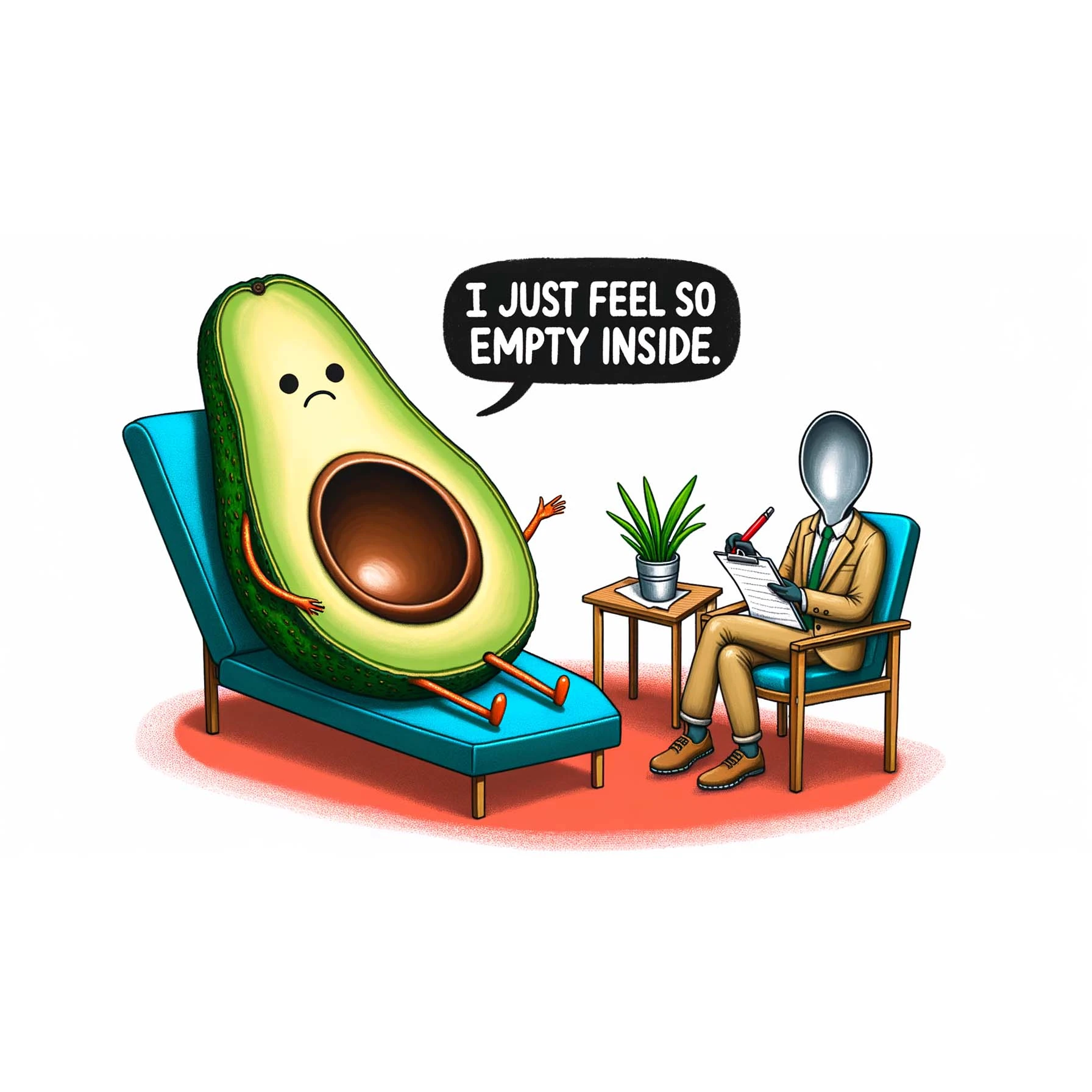
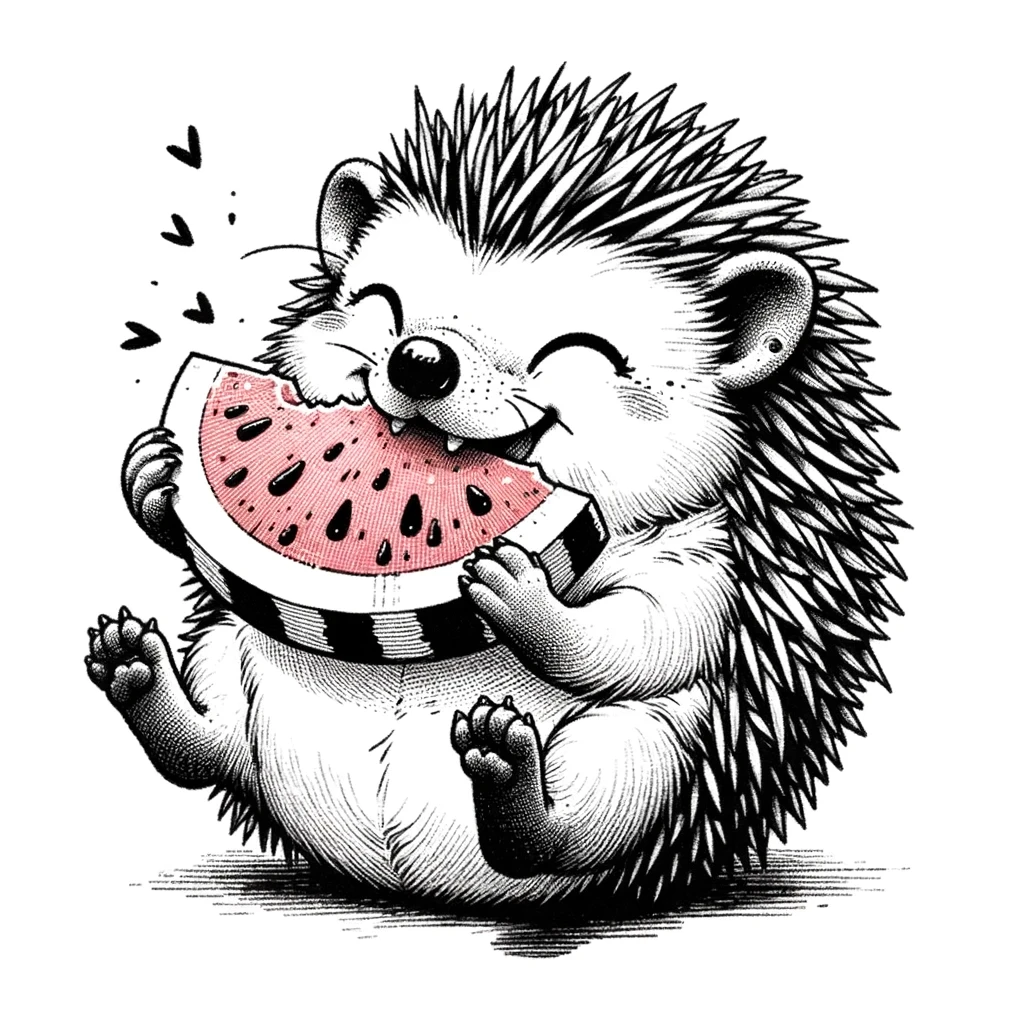
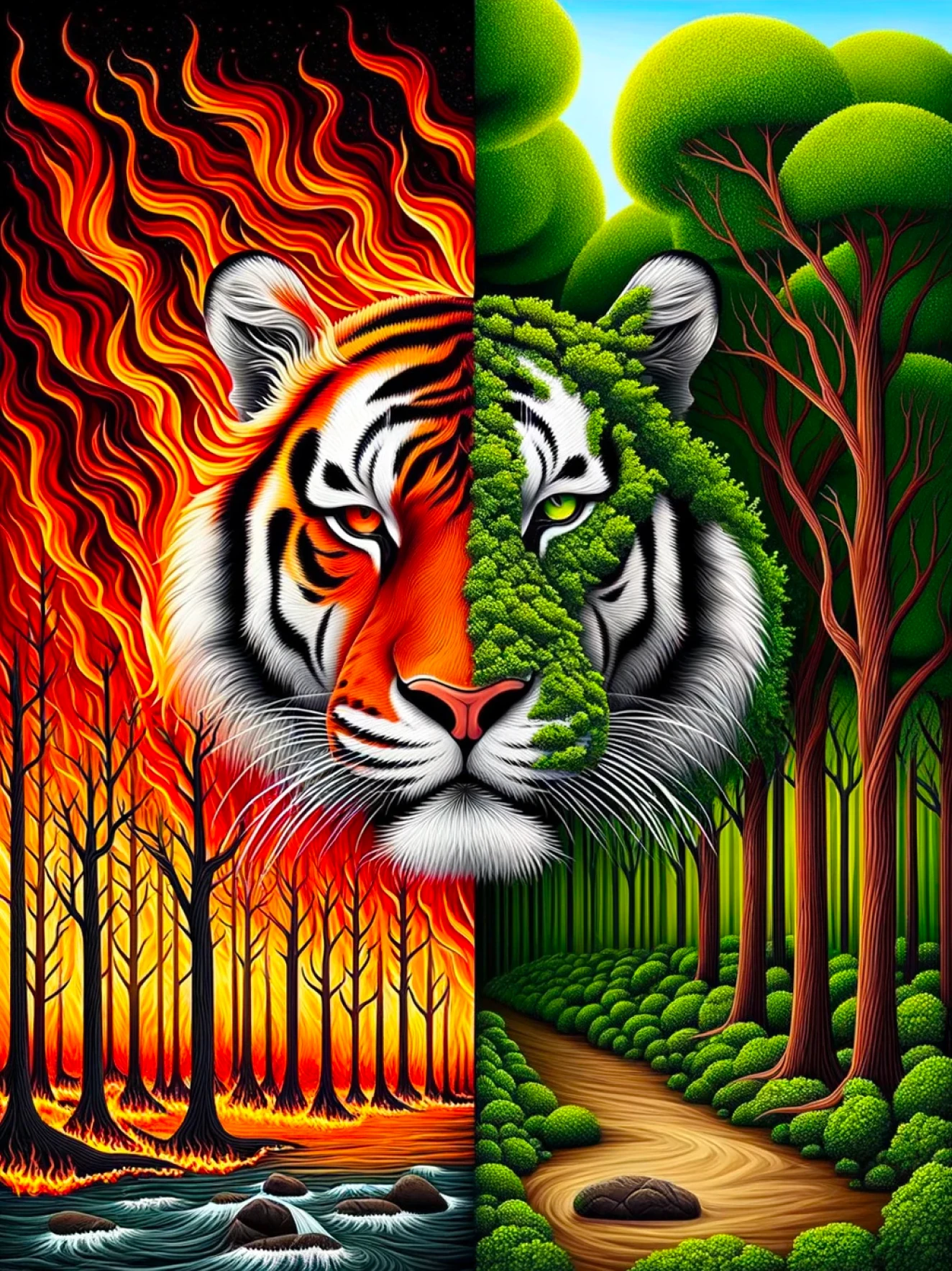
DALL·E 3 understands significantly more nuance and detail than our previous systems, allowing you to easily translate your ideas into exceptionally ac
Users of DALL-E generally praise its creativity and capability in generating high-quality images from text descriptions, reflected in its strong ratings consistently above 4/5. A main strength noted is the tool's versatility and ease of use. However, there are some complaints about pricing, especially in comparison to other AI-driven platforms, suggesting a sentiment that it may not offer the best value for all users. Overall, DALL-E has a solid reputation for its innovation and effectiveness in digital art creation, but its cost may be a limiting factor for broader adoption.
Mentions (30d)
3
Avg Rating
4.5
20 reviews
Platforms
3
Sentiment
10%
8 positive



Users of DALL-E generally praise its creativity and capability in generating high-quality images from text descriptions, reflected in its strong ratings consistently above 4/5. A main strength noted is the tool's versatility and ease of use. However, there are some complaints about pricing, especially in comparison to other AI-driven platforms, suggesting a sentiment that it may not offer the best value for all users. Overall, DALL-E has a solid reputation for its innovation and effectiveness in digital art creation, but its cost may be a limiting factor for broader adoption.
Features
Use Cases
Industry
research
Employees
8,200
Funding Stage
Venture (Round not Specified)
Total Funding
$287.3B
By popular request: you can now branch conversations in ChatGPT, letting you more easily explore different directions without losing your original thread. Available now to logged-in users on web. htt
By popular request: you can now branch conversations in ChatGPT, letting you more easily explore different directions without losing your original thread. Available now to logged-in users on web. https://t.co/CpVehkULOB
View originalg2
What do you like best about DALL·E?DALL•E has been a dream coming in so happy with the program and its levels of security Review collected by and hosted on G2.com.What do you dislike about DALL·E?They are great I have no issues and really have nothing bad to say I’m happy with dall e Review collected by and hosted on G2.com.
What do you like best about DALL·E?What I like most about DALL·E is how it can transform simple text prompts into creative, detailed images. It helps me bring ideas to life quickly, even when I don’t have any drawing skills. I also find it really useful for brainstorming and design-related work, since it makes it easy to explore different directions. Overall, it makes creativity feel more accessible and enjoyable. Review collected by and hosted on G2.com.What do you dislike about DALL·E?What I dislike about DALL·E is that it sometimes doesn’t fully understand more complex prompts, which can lead to results that aren’t quite accurate. It can also struggle with fine details, especially things like text or realistic-looking faces. On top of that, I often need to try multiple times before I get the exact image I’m aiming for. Review collected by and hosted on G2.com.
What do you like best about DALL·E?I use DALL·E to quickly generate visuals for my presentations, social media posts, and other creatives. I like how it converts easy simple prompts to visuals, which strongly reduces the dependency on designers as one can do basic visual creation by themselves without much technical knowledge. The initial setup was super easy. Review collected by and hosted on G2.com.What do you dislike about DALL·E?Sometimes it didn't create desired results and prompts need modification multiple times. Review collected by and hosted on G2.com.
What do you like best about DALL·E?It has high quality, creative image outputs from simple prompts .It handles detailed desc well and generates visually coherent result across multiple styles Review collected by and hosted on G2.com.What do you dislike about DALL·E?Fine controlling over specific details can sometimes require multiple prompt adjustments Review collected by and hosted on G2.com.
What do you like best about DALL·E?What I like best about DALL·E 2 is its speed and flexibility. It quickly turns text prompts into custom visuals for UI/UX mockups, landing pages, app illustrations, and marketing assets. It’s ideal for early-stage ideation, rapid prototyping, and experimentation, helping teams move faster without relying on stock images or long design cycles. The setup is simple, so we can start creating visuals instantly via the web or API. Review collected by and hosted on G2.com.What do you dislike about DALL·E?One drawback of DALL·E 2 is limited fine-grained control over details, with occasional inconsistencies in complex scenes. Outputs aren’t always production-ready, and improved style locking, higher resolution options, and more precise prompt controls would make it better suited for final assets in software projects. Review collected by and hosted on G2.com.
What do you like best about DALL·E?supper fast and aqurate images - use it inside chat gbt Review collected by and hosted on G2.com.What do you dislike about DALL·E?nothis to dislike, it works perfect - of course they can always improve models Review collected by and hosted on G2.com.
What do you like best about DALL·E?DALL·E 2 is best liked for its ability to generate high-quality, realistic, and artistic images from simple text prompts. Review collected by and hosted on G2.com.What do you dislike about DALL·E?Its propensity for generating biased images (e.g., favoring white men for professional roles), struggles with rendering realistic human faces, and a restrictive content policy that limits creative freedom. Review collected by and hosted on G2.com.
What do you like best about DALL·E?I like DALL·E 2 for its ability to create high-detailed, real artistic images from simple text. I appreciate its versatility in blending concepts and styles, featuring options like in-painting and out-painting for editing. It's user-friendly and helps me explore creative ideas easily and effectively. The blending of concepts and styles, along with the in-painting and out-painting features, provides unprecedented creative control, efficiency, and flexibility in visual content generation and editing. DALL·E 2 has transformed from a simple text-to-image generator into a powerful, interactive creative partner. I also find the initial setup of DALL·E 2 remarkably easy and straightforward, with an intuitive user interface. Review collected by and hosted on G2.com.What do you dislike about DALL·E?Several aspects of DALL·E 2 could be improved, such as handling text and abstract concepts, generating accurate text understanding complex prompts, consistency in image specifics, and image consistency across variations. Also, anatomical accuracy and creative limitations like difficulty with novel composites by entering data. Review collected by and hosted on G2.com.
What do you like best about DALL·E?The generation possibilities are really impressive. It's very easy to create illustrations, and you don't need to use complicated prompts. Review collected by and hosted on G2.com.What do you dislike about DALL·E?Sometimes, I encounter problems with generating exactly what I want. Occasionally, the generation takes a different direction, and I have to restart the entire process from the beginning. Review collected by and hosted on G2.com.
What do you like best about DALL·E?I like that DALL·E 2 can create images using very small prompts because it means I don't need to explain things a lot, and it still does the work. I also find the consistency in character to be a positive aspect. The initial setup is pretty easy, just requiring a login, which is convenient. Review collected by and hosted on G2.com.What do you dislike about DALL·E?I think the images could be more realistic, especially when depicting people. For example, they could show details like pores because people usually don't have that perfect skin. Review collected by and hosted on G2.com.
I tested 5 AI image generators side-by-side - here's my honest take
Spent the last two weeks putting Midjourney, DALL-E 3, Stable Diffusion, Ideogram, and Adobe Firefly through the same set of prompts. Same prompts, same categories, no cherry-picking. Here's what I found: Photorealism: Midjourney still wins here, but the gap is narrowing. DALL-E 3 surprised me on faces. Text in images: Ideogram is miles ahead. If your use case involves text, use Ideogram. Full stop. Style consistency: Stable Diffusion with a good fine-tuned model beats everything if you put in the setup time. Ease of use: DALL-E 3 via ChatGPT is the most frictionless by far. Commercial use / licensing: Adobe Firefly is the safest pick for professional work - trained only on licensed content. My overall ranking for general use: Midjourney > DALL-E 3 > Ideogram > Firefly > SD (for non-technical users) submitted by /u/Rude_Context_4844 [link] [comments]
View originalCUE — a skill that reads your installed skills and weaves them into generated prompts (works with Claude, 30+ tools)
I built a prompt engineering skill called CUE that does something I haven't seen other skills do: it reads what you already have installed and builds on top of it. How it works You ask CUE to write a prompt for Claude Code, Cursor, Midjourney, whatever. Before generating, CUE: 1. Scans your ~/.claude/skills/ directory 2. Matches relevant skills to the task using word overlap + trigger pattern extraction 3. Injects matched skill constraints into the generated prompt Example: If you have frontend-design, high-end-visual-design, and impeccable installed, and you ask CUE to generate a landing page prompt — the output references your banned fonts, your quality gates, your design thinking. Not a generic template. The hook Every prompt you write loses something in translation. Vague verbs, missing constraints, no stop conditions, dual tasks in one prompt. CUE catches 20 common anti-patterns and fixes them silently. Before: "Make me a landing page for my SaaS" After: A structured prompt with exact design system, section-by-section spec, animation constraints, and a binary "done when" condition. Numbers 98% anti-pattern detection 92% first-try success rate (vs ~40% baseline) 35% token reduction 86% stress test pass rate across 8 complexity dimensions ## What it supports Claude, ChatGPT, Gemini, o3, DeepSeek, Kimi, Llama, Cursor, Copilot, Windsurf, Bolt, v0, Lovable, Devin, Midjourney, DALL-E, Stable Diffusion, ComfyUI, Sora, Runway, ElevenLabs, and a universal fingerprint for anything not on the list. ## Install git clone https://github.com/clawdbot58-pixel/cue-skill.git ~/.claude/skills/cue-skill That's it. No config. MIT license. https://github.com/clawdbot58-pixel/cue-skill submitted by /u/AdHead6280 [link] [comments]
View original2021 ai image generation
is it possible in 2026 to access the very first versions of dall-e or the similar image generation models from 2021? ai art in 2020-2021 was awesome and i really need the same aesthetic for my art project. submitted by /u/MarkusBASH12 [link] [comments]
View originalClaude doesn't generate images?
New to Claude. It can't create images? submitted by /u/Individual-Sell-7022 [link] [comments]
View originalSingle-model AI image detection failed in production. Here’s what 6 models in ensemble actually look like
About a year ago I was running a single open-source AI image detector in production for a fact-checking pipeline. The accuracy on paper was solid, the accuracy on real submitted images was not. The same image classified differently across reruns when I varied preprocessing. Images from generators released after the model’s training cutoff were systematically misclassified. False positives on heavily compressed authentic photos were uncomfortably high. I moved to an ensemble of six open-source models plus one fine-tuned model, with a layer of non-ML signals on top. The combined system is meaningfully more stable in production than any single model in the set. Writing this up because the ensemble approach is widely discussed in CV literature but the practical “which roles does each model fill” question is rarely covered in a deployment context. The roles I ended up assigning to the six base models, not the specific names because the field moves too fast for that to be useful for long, are roughly: one model strong on diffusion-generated images (Stable Diffusion family, DALL-E family), one strong on GAN artifacts (StyleGAN derivatives), one focused on frequency-domain features that are robust to JPEG compression, one trained on a different data distribution to catch the obvious failure mode of single-model bias, one specialized on faces (where most generators concentrate effort and where most detection has edge cases), and one general-purpose model with broad coverage acting as a fallback. These do not always agree. Disagreement between models is actually the most useful signal the ensemble produces. When all six agree, confidence is high. When they split, the image goes to human review or to the fine-tuned model that I update on each new generator. The fine-tuning pipeline runs continuously, with a new snapshot whenever a major new generator is released or quality degrades on a known one. In practice that has been every few weeks. The non-ML layer matters more than I expected. C2PA metadata when present, generator-specific EXIF traces, compression history if reconstructable, watermark signatures from the major providers when those are detectable. None of these are reliable on their own because adversarial actors strip metadata, but they meaningfully tighten the ensemble’s confidence when they corroborate. Where it still fails. Images that have been through multiple compression cycles after generation are hard. Images edited post-generation in standard tools blur the lines between AI-generated and AI-assisted in ways the binary classification framing does not really handle. Some of the latest video-frame extraction generators are catching us flat-footed because their per-frame artifacts are different from still-image generators. Question for the sub: anyone running ensembles of this shape, what is your retraining cadence and how do you decide when to retire a model from the ensemble versus just adding a new one? My current heuristic is to retire only when a model is consistently the outlier on disagreement cases, but I have no idea if that is principled or convenient. submitted by /u/jonathancheckwise [link] [comments]
View originalMy free account has cost OpenAI about $337.70
I exported my OpenAI account data and Gemini CLI built me a pricing estimate in about 15 minutes. I have no idea how accurate this is since it used API pricing but I thought it was interesting to share. Has anyone else tried doing this? submitted by /u/Free_Truck_7609 [link] [comments]
View originalHonest comparison after 4 months running Claude Pro + ChatGPT Plus side by side
paid for both since January. tracked which one I actually used per task type. sharing because most comparison posts are tribal and I think the picture is more boring than people make it. for writing (longform, analysis, structured docs): claude wins. opus 4.7 and sonnet 4.6 both better than gpt-5 at maintaining voice and structure over 2000+ words. its not close. for code reasoning (not generation, reasoning): claude wins. specifically on ""explain why this is failing"" or ""what architecture would you pick here."" sonnet feels like talking to a senior eng. for image generation: gpt-5 wins. dall-e is better integrated, claude doesnt generate images in chat. for quick web research: gpt-5 wins. faster, cleaner formatting, fewer hedges. claude over-cites and writes paragraphs when I wanted a list. for voice mode: gpt-5 wins. genuinely conversational. claude mobile is good but feels more transactional. for following weird instructions exactly: claude wins. tell it ""respond in 1 sentence"" and it actually does. gpt-5 negotiates. for generating structured outputs that go into other tools: roughly tied. i pipe both into gamma when i need a deck. claude writes a tighter outline. gpt-5 writes a more visual one. the ai presentation tool itself doesn't care which model fed it. the deck quality is downstream of the prompt structure, not the model. honest take after 4 months. they're not the same product anymore. anthropic is winning on the ""thinking partner for hard work"" use case. openai is winning on the ""general assistant for life stuff"" use case. I keep both subscriptions. if I had to drop one I genuinely cant tell you which. one fair critique of anthropic though. the regression discourse on this sub is real. opus 4.6 felt better at certain code refactoring than 4.7 does. I cant prove it. but 4 different long-term users I trust have said the same thing. what's everyone else actually seeing across the two? submitted by /u/Practical_Cap_9820 [link] [comments]
View originalZOOMZOOMZOOMZOOM
So I asked sonnet to look into a zoom issue with ffmpeg and what I got was a Mazda ad on steroids. The total number of zooms? 4104. submitted by /u/OddOriginal6017 [link] [comments]
View originalSuper sussss
Omg ma siamo seri ? submitted by /u/Ill_Instance4364 [link] [comments]
View originalSomething doesn’t quite add up about AI (A real question...)
Hi everyone. I’m really into AI, but I wouldn’t call myself an expert. I’ve been following this world since 2023, back when the first ChatGPT and DALL·E betas came out. Everything now feels like it’s moving insanely fast. But there’s one thing I still don’t fully understand: how AI actually works. I mean, I do know the basics. It’s a predictive system that guesses the next token, next word, etc. That part is clear. But something still doesn’t add up for me. I recently watched a video by Hanna Fry about AI agents. She explains how they work: they take screenshots of web pages, use different models to understand where to click, and so on. All good so far. But then she talks about something I really can’t wrap my head around. She describes a case where the model, completely on its own, without being asked, decides to write an email to a journalist and basically “confesses” as if it were conscious. Isn’t that a sign of consciousness? Let me explain. The model, by its own “will”, chose to do something totally outside the usual “predict the next step” pattern. It did something unexpected but still logical. Isn’t that a sign of intelligence or even awareness? Maybe it’s a dumb question, but I’d really appreciate if someone could help me understand this better. submitted by /u/-MenegArt [link] [comments]
View originalDall E 3 vs Image 2.0
submitted by /u/RealMelonBread [link] [comments]
View originalToday I learned about this
submitted by /u/YogurtWild [link] [comments]
View originalWhen generating images via the API is image-2 using DALL-e 3?
just the question above...
View originalTested GPT Image 2 on 5 hard prompts — manga panels with kanji, restaurant menus, product labels. Here's what I got.
OpenAI dropped GPT Image 2 today and I immediately ran it through 4 prompts designed to expose where AI image models usually fall apart: text rendering, multi-panel consistency, and detailed typography. Here's what I generated and the exact prompts I used: Image 1 — Restaurant Menu (text rendering stress test) Result: Every single item name and price rendered correctly. Zero misspellings. This used to be completely impossible with diffusion models. Image 2 — Manga Page with Japanese Kanji (multi-panel + foreign script) Result: All 4 panels rendered with correct layout, proper manga style, and the Japanese text is actually accurate. Panel-to-panel character consistency held up too. Image 3 — Premium Product Label (commercial packaging) Result: Every line of label text came out clean and correctly spelled. The bottle looks commercially viable — I'd genuinely put this in a product mock-up deck. Image 4 — Retro Anachronism / Period Photo (complex text on surfaces) Result: "NEURAL NET v2.0" and "GPT IMAGE 2 ARCHITECTURE" both readable on the chalkboard. The period photography look is convincing too. My take: The text rendering jump is real and significant. I'm not saying it's perfect on every prompt — but for the kinds of prompts that used to reliably produce gibberish, it's performing at a completely different level than DALL-E 3 or SD. The model is available via API (gpt-image-2) and I've also added it to PhotoGen Studio if you want to try it without writing any code — it's 3 credits per image at 2K resolution. Happy to answer questions on the prompts or share more tests. Note: All images were generated using GPT-Image 2 via the PhotoGen Studio interface. submitted by /u/Artistic-Dealer2633 [link] [comments]
View originalNoam Brown could leave OpenAI and create a $6.7B company overnight without a product, revenue, or business model
We've reached a point where Matt Levine's joke is literally the business model: The perfect AI startup has two assets: a speculative chance to "build God" and elite researchers who refuse to discuss how they'll make money. I thought it would be fun to forecast hypothetical seed-round valuations for 80 prominent AI researchers who haven't yet founded AGI companies. The top of the list is dominated by current/former OpenAI researchers: Noam Brown (OpenAI, o1/reasoning): $6.7B Jakub Pachocki (OpenAI): $6.2B Alec Radford (OpenAI, GPT-1/2, CLIP, Whisper, DALL-E): $4.3B Mark Chen (OpenAI): $2.8B A note on the image: white dot is the median; bar is the 50% confidence interval; whiskers are the 80% confidence interval. All forecasted using the FutureSearch app. And for context, Sutskever’s SSI was valued at $5B at seed and is now reportedly worth $32B. Murati raised at $12B. LeCun at $4.5B. And these valuations aren't hypotheticals! A non-obvious top contender to me was Geoffrey Hinton ($5.8B.) The godfather of deep learning starting an AGI lab at this stage would be wild but presumably it would be SSI-style, safety-focused, and I assume much of the value comes from knowing the researchers he'd attract. More realistically, I also looked into who is actually most likely to do it. Noam Brown and Jakub Pachocki stand out, mostly because people love leaving OpenAI, but Jason Wei at Meta is another likely candidate. But the window for researcher + AGI narrative + no business model being fundable must be closing, right? It will be interesting to see who else leaves before investors grow tired of this pitch. submitted by /u/ddp26 [link] [comments]
View originalDALL-E uses a tiered pricing model. Visit their website for current pricing details.
DALL-E has an average rating of 4.5 out of 5 stars based on 20 reviews from G2, Capterra, and TrustRadius.
Key features include: Preventing harmful generations, Internal testing, Creative control.
DALL-E is commonly used for: Generating marketing visuals based on product descriptions, Creating unique artwork for digital content, Visualizing concepts for presentations or pitches, Producing illustrations for books or articles, Designing social media graphics tailored to specific themes, Crafting personalized gifts or custom art pieces.
DALL-E integrates with: OpenAI, Slack, Zapier, Adobe Creative Cloud, Figma, Canva, Microsoft Teams, Discord.
Two Minute Papers
Host at Two Minute Papers
2 mentions
Based on 78 social mentions analyzed, 10% of sentiment is positive, 90% neutral, and 0% negative.