Credal and Protect AI cater to distinct aspects of security and AI governance, with Credal focusing on departmental AI agent control and Protect AI on securing AI applications. Credal, with its $842 per-seat pricing model, targets intra-organizational workflow automation, while Protect AI offers a broad, platform-based AI security solution that has generated a passionate user community despite its higher pricing due to robust funding.
Best for
Credal is the better choice when the focus is on enabling departments with their own AI tools and maintaining organization-wide governance, especially for mid-sized companies using Microsoft and Google platforms.
Best for
Protect AI is the better choice when the main concern is comprehensive security for AI applications and the protection of sensitive data across various cloud providers, especially suiting enterprises dealing with AI model security.
Key Differences
Verdict
Choose Credal if your organization's primary need is streamlined deployment of AI agents within departments while maintaining control over data access and compliance. For enterprises concerned with AI security and protection of sensitive data against threats, Protect AI presents a robust solution, albeit potentially at a higher price point. Protect AI's passionate community further enhances the support ecosystem for securing AI applications.
Credal
Give every department their own AI agents connected to their knowledge, without ever losing visibility or control.
Based on the social mentions, Credal AI seems to be generating interest, particularly on YouTube, but there is a lack of detailed user reviews available. This indicates a rising curiosity or awareness among potential users. Without specific feedback on strengths or complaints, it's difficult to gauge the pricing sentiment or overall reputation. More detailed user reviews would provide a clearer understanding of Credal AI's place in the market.
Protect AI
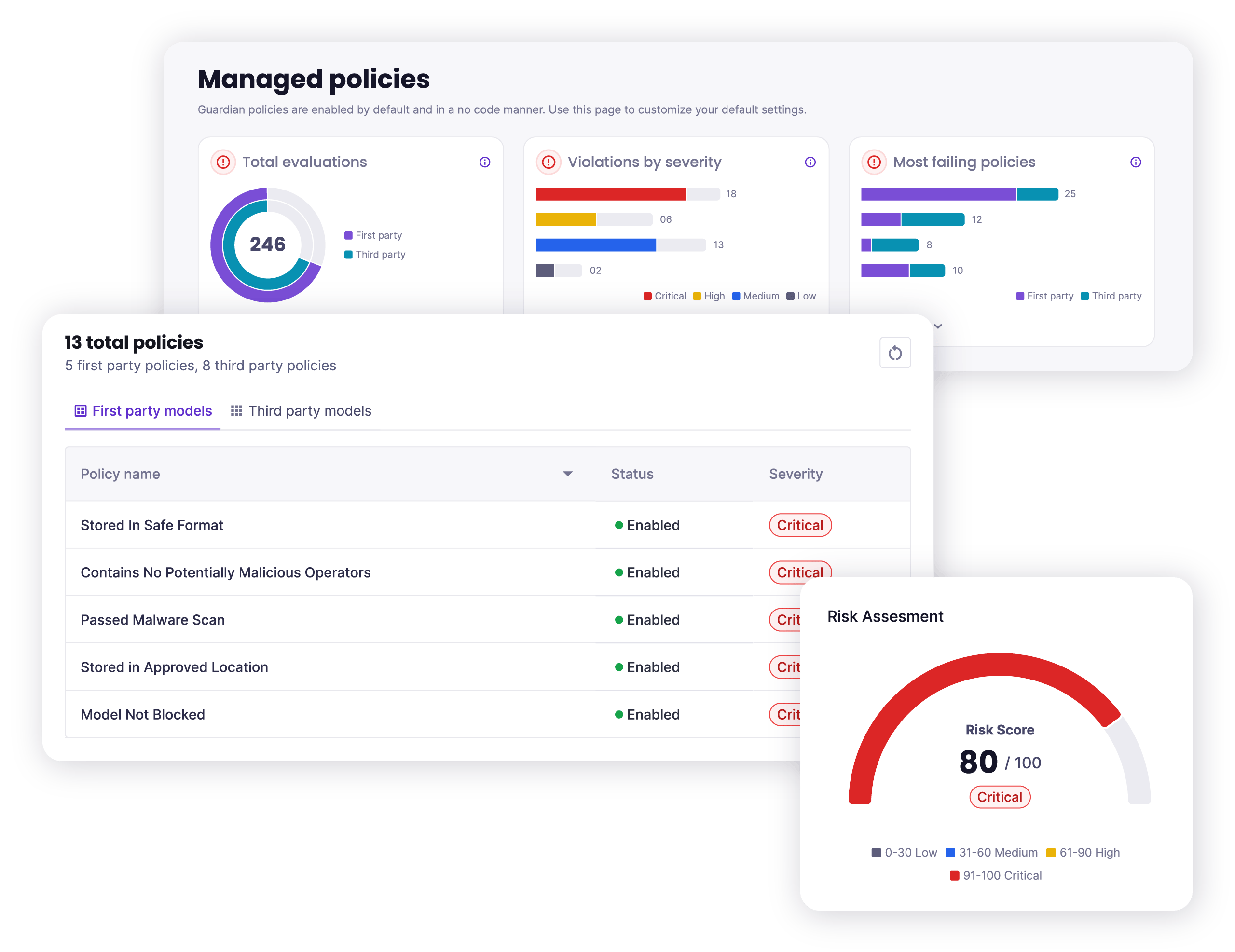
Protect AI is the broadest and most comprehensive AI security solution. Our products operate on a single, unified platform and secure AI applications.
Protect AI appears to be mainly discussed within the context of protecting and supporting AI, often featured alongside advocacy hashtags and strong sentiments against perceived anti-AI sentiments. The lack of detailed reviews and structured feedback may indicate limited widespread user engagement or understanding of the software. There are no clear mentions of pricing, suggesting it might not be a prominent concern or unfamiliar topic within the social conversations. Overall, Protect AI seems to have niche support with some passionate defenders, amidst a backdrop of AI-related legal and ethical discussions.
Credal
Not enough dataProtect AI
+29% vs last weekCredal
Protect AI
Credal
Protect AI
Credal
Pricing found: $842
Protect AI
Credal (8)
Protect AI (8)
Only in Credal (10)
Only in Protect AI (8)
Shared (4)
Only in Credal (11)
Only in Protect AI (11)
Credal
No complaints found
Protect AI
Credal
No data
Protect AI
Credal
No YouTube channel
Protect AI

AI Risk Report: Fast-Growing Threats in AI Runtime
Jun 23, 2025

Why Reasoning AI Models Aren't Automatically Secure - Vulnerability Assessment Results
Jun 16, 2025
Secure by Design: Building Resilient AI Systems in an Evolving Threat Landscape
Jun 5, 2025

Model Kombat: GPT-04-Mini vs Gemini 2.5 Flash
May 30, 2025
Credal

Protect AI

Shared (3)
Only in Credal (2)
Only in Protect AI (1)
Protect AI is better suited for protecting sensitive AI workloads due to its comprehensive security policies and threat intelligence integration.
Credal's pricing is per-seat at $842, whereas Protect AI's pricing details are not explicitly mentioned but are indicated to be higher due to comprehensive solutions.
Protect AI appears to have a more engaged and vocal community, as evidenced by active social media campaigns and community discussions.
While there is no direct integration, both tools could potentially complement each other by using Credal for AI governance and Protect AI for securing the underlying AI applications.
Credal, with its focus on seamless integration with existing tools like Google Drive and SharePoint, might offer a smoother onboarding experience for existing users of these platforms.


