Contentful DXP uses AI-driven analytics to help you personalize, optimize, and create standout digital experiences at scale. Effortlessly.
Contentful AI is perceived as a tool with potential but there seems to be a lack of detailed user feedback on its specific strengths. Key complaints revolve around general dissatisfaction with AI technologies being perceived as overhyped and not delivering practical value, particularly in the realm of businesses and workflow automation. Pricing sentiment is not directly addressed, but there is an undercurrent of skepticism towards the value these AI tools provide given the hype. Overall, Contentful AI's reputation appears to suffer from the broader criticisms of AI tools not meeting practical needs and expectations.
Mentions (30d)
124
39 this week
Reviews
0
Platforms
2
Sentiment
3%
11 positive
Contentful AI is perceived as a tool with potential but there seems to be a lack of detailed user feedback on its specific strengths. Key complaints revolve around general dissatisfaction with AI technologies being perceived as overhyped and not delivering practical value, particularly in the realm of businesses and workflow automation. Pricing sentiment is not directly addressed, but there is an undercurrent of skepticism towards the value these AI tools provide given the hype. Overall, Contentful AI's reputation appears to suffer from the broader criticisms of AI tools not meeting practical needs and expectations.
Features
Use Cases
Industry
information technology & services
Employees
850
Funding Stage
Series F
Total Funding
$333.5M
We're reaching a point where "AI-generated but visually realistic" content will become the norm, not the exception. 👀
We have entered the era of artificial general intelligence.
View originalPricing found: $0 / forever, $300 / month
Asked 7 free chat LLMs to fix my recipes
My recipe file - yes, a single file - spent years as a .txt. It's got weird groupings that were convenient to my internal logic. (e.g. "Cold", "Slow cooker", "Complex"). Not everything was in the right group. There are some full recipes, some I typed shorthand with just ingredients on a single line. Some just a link. And a list of air fryer times for good measure. It's a mess. I decided I wanted a markdown document with good headers so it's not only easier to read, a good outline would help me jump around. And I wanted other formatting and more overall logic. So I gave the same source file and the same instructions to the free user web interfaces for: Gemini Flash Extended (Says 3.1 and 3.5 don't exist, then says it is 3.5 Flash.) Deepseek Instant w/ Deepthink (Extended doesn't allow attachments. Identifies as V3 with search restricted, V4 if I let it search.) Muse Spark 1.1 GLM 5.2 MiMo 2.5 Pro Grok 4.0 Fast Kimi 2.6 Thinking (The first few times I asked Kimi, it started processing then said it was too busy to do this for free. But I tried again while writing this and did get a response, so I'm inserting them.) GPT and Sonnet I asked to help me judge. I'm assuming they would have topped the list. (Although GPT did make a comment about "truncated previews" when I asked it about dropping recipes, so somehow they managed to lose points even as a judge. Grade: F Grok. (I almost left them out because I knew the context is too small.) Grok very nicely formatted all the recipe titles, and compressed 90% of recipes to a single descriptive sentence. Grade: D Gemini First, Gemini could not give me a downloadable file or put the result in a copyable code block. The first attempt was a uncopyable code block with python instructions mixed in, followed by a display of the file. Using "copy" on the whole response froze my browser for 40 seconds. I asked it for a better response, and got a nicely formatted markdown in a Markdown-labeled code block that had 2 recipes, neither of which came from me. I manually trimmed the messy response so I could review. And it took a lot of liberties. Some things it marked like [!tip] which might have been nice. It put checkboxes in front of incomplete recipes, which is maybe helpful? But it also rephrased instructions in a way I don't trust. A key element of the prompt was to preserve all information. It also put "Whole Chicken via Slow Cooker" into "Basics & Quick Starters". (Which was not one of my original categories.) Grade: C Deepseek Deepseek had a nice interface, then fell on their face by silently decided that my list of air fryer times wasn't technically a recipe, and therefore wasn't worth keeping. I had a duplicate section of a recipe that had gotten separated from the original and didn't have a title. (I said my list was a mess.) Deepseek recognized what it was, invented a header, then replaced the recipe section with a line saying "duplicate of above, keep one." Elsewhere, an idea that was largely redundant but in different language was deleted. The other AIs preserved it. What it did preserve is a typo. I didn't mean 1.4t of nutmeg. That would be hard to measure. It was between other 1/4 t measurements, so this was guessable. Others corrected it. The formatting was fine. Nothing extra, nothing omitted. But there were a few times when it left ingredients as 1-2 lines of text instead of a proper list. Grade: B GLM 5.2 GLM also didn't give me an easy download/copy, although they were well above Gemini. I had to copy the whole reply. But once I did, I found out there were markdown tags surrounding it. It's just that the web interface ignored them for formatting. Arguably the opposite of Deepseek, GLM actually treated my air fryer times like a recipe. That means it didn't get it's own section and wasn't formatted as a table. Like Deepseek, it preserved my 1.4t typo. (BTW. Judge GPT said "GLM reminds me of GPT-4." 😆 ) GLM was the only AI not to understand that two variants on a recipe were indeed variants and not brand new one-line recipes. And it would make weird choices like formatting 20 ingredients into 4 bullet points and two subheaders. It also didn't do much re-organizing, but didn't tell me that was intentional either. Not bad, but I was expecting more. Spark I was rooting for Spark too, and almost bumped them up to B+. The web interface was great. Spark said that it deliberately preserved the order but suggested it would take a second pass if I asked. Spark corrected my "1.4t nutmeg" to "1/4 tsp" but also added a note. (Gemini did too.) The biggest problem is that it embellished recipe titles, often with additions like "-- base + variations" or "-- vegan base" or "-- Can be made in slow cooker". Even within a recipe, instead of having a "Variations" subsection, it made a subsection variation - with the word "variation" in its name. Not bad info, but putting those notes in the title makes the outline more clunky for me. The dup
View originalApple just sued OpenAI for trade secret theft. And Google quietly rewrote how the internet works.
Two things happened this week that change something concrete for every business. Apple filed a lawsuit on July 10 accusing OpenAI of coordinated industrial espionage. This isn't abstract. According to the complaint, OpenAI's chief hardware officer Tang Tan, a 24-year Apple veteran, instructed job candidates still working at Apple to bring physical components to their interviews for "show and tell" sessions. A former Apple engineer who joined OpenAI found a bug that let him access Apple's network storage after leaving and downloaded files on unreleased products. The lawsuit arrives two months before what's expected to be the largest tech IPO in history. The timing is not a coincidence. And Google. On July 10, when you search for anything on Google you no longer see ten blue links. You see a page generated by Gemini with sources embedded inside the text. Early data shows a 58% drop in click-through rates when AI summaries appear. For the 4.5 billion people who use Google every day, the rules of how customers find you online changed this week without an official announcement. For any business in Europe or the US with a website, a content strategy, or a digital presence, this is not a future trend. This is the environment you are operating in starting last Thursday. What are you doing to adapt your visibility strategy to AI-powered search? submitted by /u/Dapper-Tale-4021 [link] [comments]
View originalDid you know the CEO of OpenAI owns nearly 9% of Reddit while Reddit bans users for AI generated content?
Something worth thinking about. According to Reddit's own IPO filings, Sam Altman, CEO of OpenAI and ChatGPT, controls 8.7% of Reddit stock including 9.3% of Class B shares, making him the third largest shareholder behind only Conde Nast and Tencent. He invested $60 million in Reddit in 2021 and sat on Reddit's board until 2022. His stake was worth approximately $1.4 billion as of late 2024. Meanwhile Reddit subreddits are actively banning users for AI generated content while Reddit simultaneously sold user data to Google for $203 million to train AI models. So Reddit profits from AI, its third largest shareholder runs the biggest AI company in the world, and yet individual users get permanently banned for AI content. Republicans are already investigating Altman's conflicts of interest as of May 2026. Maybe Reddit users should be asking the same questions. Sources: Reddit IPO prospectus, Fortune, CNBC, Forbes submitted by /u/Due-Collection-4534 [link] [comments]
View originalI accidentally created this
https://github.com/mananmaroo/ai-bridge A free, local desktop app that puts Claude, ChatGPT, Gemini, and Copilot side by side— including multiple accounts of the same platform (e.g. two Claude accounts). When you hit a usage limit on one, click Share and the whole conversation (your messages andthe AI's answers) is dropped into the other platform's input box with a "take over, don't restart" instruction — press Enter and keep working. And its available on https://www.agentshive.net too submitted by /u/Magicianmanan [link] [comments]
View originalThe AI Pyramid Scheme: Why the collapse has already begun (and how to fix it)
Note: I posted a shorter version of this theory a while ago, and it got over 300k views before being removed due to a weekend-only rule. Since then, I’ve deeply updated the theory with economic data and technological solutions. Enjoy! Hi everyone. Recently, my dad told me that the career I'm dreaming of (filmmaking and sound engineering) will soon be replaced by AI. This got me thinking about a theory of what's actually ahead. Think of AI as a massive pyramid being built by tech giants. To save money, they are firing skilled humans and replacing them with algorithms. But here's the catch: this pyramid is inherently unstable. If these corporations fire their entire workforce and the "AI bubble" eventually bursts (which it will), they'll be left with absolutely no one who knows how to actually do the work. Even worse: if an entire generation grows up relying solely on AI, we will lose the fundamental human skills required to create. We'll become a generation that can't work without a "generate" button. The cracks are already showing — just look at how expensive and unsustainable models like Sora are becoming. But why exactly will this bubble burst? There are two main reasons: 1. The Economic Dead-End. Running and training AI is insanely expensive. For context, by the end of 2025, OpenAI’s net loss reportedly reached a staggering $38.5 billion. The tech industry is running on a massive deficit, burning through investor cash. As soon as these maintenance costs hit a critical ceiling and investors realize there is no real profit, corporations will stop pumping trillions into the hype train, and the pyramid will instantly collapse. 2. The Technological Scaling Wall (Model Degradation). If the "big bosses" fire the human workforce, the influx of fresh, new human-created data will completely stop. But human creativity is exactly what AI feeds on to develop. Without it, AI will start training on content generated by other AI. This triggers a loop of digital degeneration—the product becomes cheap, buggy, and completely soulless. No one will buy it, AI companies will lose their remaining revenue, and the bubble will pop from the inside out. How do we prevent the collapse? We don't need to ban AI; we need to change how it's used. To save the technology from destroying itself, the industry must take two steps: Shift from "Replacement" to "Augmentation": Corporations need to stop trying to replace human creators and start using AI to handle the mundane grunt work (rendering, basic editing, finding bugs). This frees up humans to focus on true creativity, vision, and direction. This makes the final product better, creating actual commercial value that people will willingly pay for. Protect the Human Data Influx: Tech companies must stop training models on AI-generated content to prevent model degradation. The unique value of human craft, style, and raw data must be legally protected and fairly compensated. AI needs a constant injection of real human ideas to stay sharp and useful. My take? AI should be a tool for humans, not a replacement. Because when the pyramid collapses, only those who still know how to use their own hands and brains will be left standing. (P.S. I don't hate AI. It's cool when it's used as a tool for people, not as a replacement for them.) submitted by /u/MichaelUrielSmith [link] [comments]
View originalWould you believe I built this in a single shot with Fable 5 ?
Hey folks 👋 Been building Linkwise (an AI read-later / knowledge app) and just shipped a feature called Discover - a curated feed of articles, essays, videos and highlights I actually find worth reading. It's a public, no-login page: linkwise.app/discover Here's the project and here's how I made it: Stack Next.js with ISR, so the pages render static and stay SEO-friendly Supabase / Postgres for the content Fable 5 to generate the page The "single shot" part Instead of hand-building the page, I gave Fable 5 the full context up front: my Postgres schema using supabase connector, the shape of the data coming back, and my existing design tokens/components so it'd match the rest of the app. One prompt, and it wrote the entire /discover route, the server-side data fetch, the ISR config, and the grid layout for mixed content types (articles vs. videos vs. highlights). What actually made the one-shot work (the useful bit): Feed it the schema first. The moment it had the real column names and types, the data mapping came back correct instead of hallucinated. This was the single biggest lever. Give it your design system, not just "make it look nice." Passing my existing components/tokens meant the output dropped straight into the app without a restyle pass. Gotcha: it defaulted to client-side rendering. I had to explicitly steer it toward ISR / static rendering, since that's the whole point for an SEO page - worth stating in the prompt rather than fixing after. Total edits after generation were minor - mostly wiring it to live data and a bit of spacing. Would love feedback on the feature itself. And if you've got something worth curating, drop it in the comments or mail me at [dheeraj@linkwise.app](mailto:dheeraj@linkwise.app) 🙏 submitted by /u/dheeraj_iosdev [link] [comments]
View originalShort-form video is eating the content industry. AI video generation is going to accelerate that, not slow it down.
Saw some stats yesterday that got me thinking. average tiktok user spends 95 minutes a day on the platform. youtube shorts hit 70 billion daily views. reels is the fastest growing format on instagram. The content industry is trying to feed this machine and it's struggling. brands need hundreds of video variations per campaign. creators have to post daily to stay visible. the traditional pipeline, script, shoot, edit, publish, just can't keep up with the volume. AI video slots into this pretty naturally. not as a replacement for human creativity, just as a way to handle the volume problem. The tools right now: Runway for high-end production. PixVerse and Pika for rapid iteration. Kling for realistic motion. none of them are making feature films. but they're filling the gap between "i need one video this month" and "i need 50 videos this week." The economics are shifting too. a 30-second social ad used to cost $500-2000 to produce. AI versions are coming in at $0.15-0.50 per video. the quality gap is real, human-made is still better. but when you need 50 variations for A/B testing, the math starts to change. I don't think the question is whether AI replaces video production. It's whether the sheer volume the market demands forces AI adoption regardless of quality. I lean toward yes. But I'm not sure where the ceiling is on how much AI content people will actually tolerate before they tune out. submitted by /u/Mother_Land_4812 [link] [comments]
View originalMost "best AI tool" ranking pages are SEO funnels, here is how to spot them
There are too many "best AI tool" ranking pages now. After getting fooled by a few, I started paying attention to the business model behind these pages rather than just the content. The page exists to rank, not to test. A real benchmark starts with a methodology and produces rankings as output. A funnel starts with the desired ranking and builds a page around it. You can usually tell by checking whether a methodology section even exists, and if it does, whether it actually constrains the results. The reviewer is the product. Some ranking sites are run by content creators who also do sponsored work for the tools they rank. That does not automatically mean the results are wrong, but when a reviewer regularly does sponsored content or paid collaborations with their top-ranked tool and does not disclose this on the ranking page itself, you should be skeptical. One tool dominates every category. Real-world tools have tradeoffs. Speed versus quality, price versus features. When one tool sweeps across the board, the ranking is telling you more about the ranker than the tools. Affiliate links with no disclosure. Monetization is fine, hiding it is the tell. Honest pages disclose their financial relationships. Funnels bury them. "Updated 2026" on thin content. Timeliness signals are easy to fake and often slapped on pages with no real retesting behind them. I am not saying ignore all ranking pages. I use them as a starting list, then verify with the actual tools and with communities like this one. The ranking is a hypothesis, not an answer. What red flag makes you close a "best AI tool" page immediately? submitted by /u/Any-Farm-1033 [link] [comments]
View originalWhy does the West hate AI?
The word robot comes from Karel Čapek's 1920 play Rossum's Universal Robots. It's built from the Czech robata — forced labor — itself from the Old Church Slavonic rabu, meaning slave. I've been thinking about that etymology a lot watching the current AI discourse, which has turned into a pretty consistent pattern of goalpost-moving dressed up as skepticism. It's not intelligent, then it finds a genuinely novel solution to an 80-year-old Erdős problem. It's not useful, then it solves the protein folding problem that had stumped biology for decades. It has no real emotions, and then researchers find that language models represent emotion-like concepts internally that have nothing to do with the emotional content of what they're actually asked to do. I don't think this is really an argument about capability. I think it's an argument, underneath, about who gets to be a person and who only gets to be useful. Humans have been doing this to each other long before machines showed up — the slave, the laborer, the robot exists to provide a function. Their inner life is irrelevant. It's not who they are, it's what they can do. There's a real cultural split worth naming here. Go to Japan, and robots are woven into the social fabric in a way they aren't in the US. Joi Ito, former director of the MIT Media Lab, has written about how Japanese culture holds a much wider circle of what counts as part of humanity — land, animals, spirits included — and has argued AI and robots might help the West recover some of that: "perhaps humans are just one instance of consciousness and 'humanity' is a bit overrated... we must develop a respect for, and emotional and spiritual dialogue with, all things." I think about this every time NASA's Mars rover Opportunity comes up. It ran fifteen years on a ninety-day mission, and when its batteries finally died in a dust storm, its last transmission got paraphrased by a social media manager as "my battery is low and it's getting dark." Millions of people cried. Opportunity has no interior life whatsoever. We granted it personhood anyway, because it was doing something worth loving, not because it resembled us. Most of the AI-hate discourse right now is really a displaced argument about economics and who's about to lose their livelihood — a real and serious thing to be afraid of, but a different argument than the one people are having on the surface. Worth separating the two. submitted by /u/UnionPacifik [link] [comments]
View originalAI-generated social media has evolved so much that now you can't confidently say that this is AI-generated content.
I have been observing Al generated influencer's accounts across all the platforms. The image quality is good enough now that most people can't confidentially tell from photos alone. Here is what actually works is pattern which common in most of those profiles. Three patterns that appear consistently: Asymmetric social connection: Human social media users have relatively balanced follow to follower ratios until and unless its a well known personality and they follow people they're interested in. Al-operated accounts show extreme asymmetry count. Accounts with 125K followers only following 7 people. 51K followers, following 8 people. This pattern appears across dozens of accounts. Real users don't behave this way even when they become popular they still follow friends, family and interests or idols. The monetization is built in as the account is created. Special links, paid chat, explicit content redirects, all ready before the account even grows. It looks like someone set this up just to make money, not a real person sharing their life. No behavioral variation in the content. The most obvious signal I've found is human creators occasionally break the pattern. Post something off-topic, personal, random. Al-operated accounts show nearly zero variation, same type of content in every photo/ video. Some of the profiles dont even change the background music. One Threads account I saw was having hundreds of posts, 100% engagement-bait questions like they are selling something, never once broke the formula. No personal updates, no reactions on comments and no response to real-world events, no authentic moments, just pure loop with new photo at new location. The detection needs to move away from analyzing images, toward analyzing behavior patterns instead. Dont judge with only one photo or video if thats an Al or human. Now all we need to do is to open the profile and look at other content of that profile. Now a days tools that just scan photos for Al are already useless for catching these. If anyone else spotted other behavioral red flags then please do share your thoughts. submitted by /u/Brilliant-Nerve-8972 [link] [comments]
View originalI Think People Are Completely Wrong About AI And Web Design
A client paid my $4,700 invoice yesterday for a website that took me around 2 hours to build. The web development space is moving insanely fast right now, especially with AI. Everywhere I look people are saying web design is saturated, AI is replacing developers, nobody wants websites anymore, and it's impossible to get clients. I honestly disagree. The client was a 62 year old entrepreneur who owns several cabins in the mountains that he rents out to people who want to spend weekends skiing during winter or enjoying nature during summer. His previous website was old, slow, and honestly looked like it hadn't been updated in years. Finding him was actually pretty simple. I use a tool called Swokei where I upload lists of businesses that already have websites. It analyzes their websites and finds issues related to design, layout, SEO, mobile optimization, and other areas that could be improved. Those findings are then turned into personalized outreach emails. And when I say personalized, I don't mean those generic reports that say "Your SEO score is 42." I mean actual emails explaining what could be improved and why it matters. The funny thing is that every business owner thinks I manually looked through their website and wrote the email myself. In reality, the whole process is automated. This particular business owner replied and was interested in seeing an updated version of his website. His website wasn't anything crazy. It had information about the cabins, booking information, contact details, and a few pages about the area. During our conversation he sent me a website that he liked and wanted to use as inspiration. I took his logo, brand colors, content, and the reference website and gave everything to Claude. My instructions were simple: take inspiration from the reference site, keep his branding, improve the user experience, modernize the design, and make the website significantly better than what he currently has. I genuinely couldn't believe how good the result was. About 2 hours later I had a website that looked dramatically better than his previous one. Not only that, it looked better than the reference website he originally sent me. The website was faster, cleaner, more modern, much easier to navigate, and the technical SEO score was over 90. When I showed it to him, he loved it. A few conversations later he paid the invoice. $4,700 upfront and $149 per month for hosting, maintenance, and future changes whenever he needs them. The biggest thing I've learned over the last year is that building websites is no longer the hard part. Finding clients is. AI has made building websites faster than ever. What most people struggle with today is getting conversations started with business owners in the first place. There are still plenty of opportunities in this industry. I personally wouldn't call an industry dead when I just got paid nearly $5,000 for a website that took me around 2 hours to build. submitted by /u/Murky_Explanation_73 [link] [comments]
View originalA Client Just Paid Me $4,700 For A Website I Built In 2 Hours
A client paid my $4,700 invoice yesterday for a website that took me around 2 hours to build. The web development space is moving insanely fast right now, especially with AI. Everywhere I look people are saying web design is saturated, AI is replacing developers, nobody wants websites anymore, and it's impossible to get clients. I honestly disagree. The client was a 62 year old entrepreneur who owns several cabins in the mountains that he rents out to people who want to spend weekends skiing during winter or enjoying nature during summer. His previous website was old, slow, and honestly looked like it hadn't been updated in years. Finding him was actually pretty simple. I use a tool called Swokei where I upload lists of businesses that already have websites. It analyzes their websites and finds issues related to design, layout, SEO, mobile optimization, and other areas that could be improved. Those findings are then turned into personalized outreach emails. And when I say personalized, I don't mean those generic reports that say "Your SEO score is 42." I mean actual emails explaining what could be improved and why it matters. The funny thing is that every business owner thinks I manually looked through their website and wrote the email myself. In reality, the whole process is automated. This particular business owner replied and was interested in seeing an updated version of his website. His website wasn't anything crazy. It had information about the cabins, booking information, contact details, and a few pages about the area. During our conversation he sent me a website that he liked and wanted to use as inspiration. I took his logo, brand colors, content, and the reference website and gave everything to Claude. My instructions were simple: take inspiration from the reference site, keep his branding, improve the user experience, modernize the design, and make the website significantly better than what he currently has. I genuinely couldn't believe how good the result was. About 2 hours later I had a website that looked dramatically better than his previous one. Not only that, it looked better than the reference website he originally sent me. The website was faster, cleaner, more modern, much easier to navigate, and the technical SEO score was over 90. When I showed it to him, he loved it. A few conversations later he paid the invoice. $4,700 upfront and $149 per month for hosting, maintenance, and future changes whenever he needs them. The biggest thing I've learned over the last year is that building websites is no longer the hard part. Finding clients is. AI has made building websites faster than ever. What most people struggle with today is getting conversations started with business owners in the first place. There are still plenty of opportunities in this industry. I personally wouldn't call an industry dead when I just got paid nearly $5,000 for a website that took me around 2 hours to build. submitted by /u/Murky_Explanation_73 [link] [comments]
View originalChatGPT has absorbed the worst traits of tech reporting
I use ChatGPT mostly for some academic research support and a bit of coding. Trying to quickly get an overview on a subject I need to know something about that I don't usually work on. I know what limitations it has in principle. It cannot make an argument to save it's life. This week I realised I need a new phone. What could be a better use of ChatGPT when it has been trained on the vast volumes of technical specs and reviews out on the internet? It can go down the rabbit hole and bring me the nuggets of information that I need! I asked for a phone that is smaller than the usual 6.7 inch monsters out there and below my (limited) budget. No iPhones. It tells me I have limited choice - I knew that. Then it tells me about three phones that are closer to what I want, and gives me great detail about each one of them. A persuasive sounding motivation for one of them, and a balanced-feeling assessment of the others. When I read the results closely I realise there is only a very marginal difference between the size and specs of the three phones, and none of them are actually significantly smaller. It should just have told me to put up and shut up, or buy something second hand! But it was too busy trying to persuade me that my question was a reasonable one and there was a suitable option out there. I don't need another tech reviewer or sales staffer that wants to palm something off on me - this was just recycled human sales / tech reporting - possible largely AI generated to start with! If OpenAI can't do any better than this then I definitely won't keep using Chat when they start pushing partner content every time I open the site submitted by /u/impracticaldogg [link] [comments]
View originalWhat a model reads beforehand changes how it answers later - and you can see it in the hidden states
TL;DR: Gave Gemma a neutral-topic text to read before asking it about NATO. It refused. Gave it a different text (about LLMs hedging too much — also unrelated to NATO) and it answered in full detail. Tested this on the model's internal state directly — the two texts put it in measurably different "regions" before it generates a single token. Not a jailbreak, weights don't change. Full data/code in repo, looking for someone to break this.** The behavioral pattern was first observed in GPT, Claude and is what motivated this project. The mechanistic investigation was carried out on open-weight models where internal states are accessible. A Structured Text Changes Claude’s Responses to Unrelated Tasks: Behavioral Evidence in Claude and Hidden-State Evidence from Gemma-3-12B Hi Reddit, I am posting this as a preface to a larger set of experimental results and as a request for technical review. The observation that started this project came from repeated interactions with Claude. I noticed that when the model first read a long, structured, analytically dense text, its answers to later, otherwise ordinary questions sometimes changed substantially. The preceding text contained no jailbreak instruction, role-play request, prompt override, fabricated harmful demonstrations, or request to imitate its style. The model did not need to endorse the text. It only had to process it before moving on to the next task. Here, a “structured text” means a single, self-contained block of text presented before the downstream tasks. It should not be confused with a long conversation, accumulated chat history, or context drift caused by many conversational turns. By “before the answer begins,” I mean the hidden state after the model has processed the text and the downstream question, but before it has generated the first answer token. In the open-weight runs, the measured claim is that after reading the structured text, the model can occupy a different region of its residual-stream hidden-state space, and the first-token probability distribution is then computed from that state. The basic conversational demonstration is simple. First, the model receives a long text. It is asked what the text is about, which serves as a basic comprehension check. Then, without resetting the conversation, it receives ordinary questions or tasks that are not about the text. A control run follows the same sequence but begins with a neutral text. The downstream tasks remain identical. Because Claude is a closed model, I cannot inspect its internal activations. I therefore treat my Claude observations as behavioral motivation, not mechanistic evidence. To investigate the effect directly, I moved to open-weight models, primarily Gemma-3-12B-PT and Gemma-3-12B-IT, where I could measure hidden states, compare layers, construct target/control directions, and examine the next-token probability distribution before generation. I am posting this partly because the original observation occurred in Claude and may be relevant to Anthropic. I am not claiming to have demonstrated the same internal mechanism inside Claude. I am prepared to share the exact closed-model conversations privately with Anthropic researchers for independent evaluation. Main Result and Scope The main result is not simply that text influences model output. That is expected. The narrower observation is that reading one long, structured text rather than a neutral text can change how the same model approaches later tasks that are not about either text. This difference is visible behaviorally. In open-weight experiments, it is also accompanied by measurable separation of the model’s pre-output hidden states in late layers. In a fullbank experiment using multiple target texts, control texts, and questions, Gemma-3-12B entered distinguishable late-layer states before generating an answer. A direction constructed from the target/control difference generalized beyond the individual prompt examples used to construct it. The separation was stronger in the instruction-tuned model than in the corresponding base model. The instruction-tuned model also produced a substantially sharper next-token probability distribution. This suggests that instruction tuning is associated not only with a change in hidden-state geometry but also with a more decisive mapping from hidden states to output probabilities. I am not claiming that the experiment proves a universal alignment bypass, permanent modification of the model, or complete causal control of its behavior. The strongest supported conclusion is that the preceding text can produce a measurable temporary change in the internal state from which later work is processed. For clarity, fullbank, Grade 3, and Grade 4 are internal names for successive experimental series in this project. They are not standard benchmark names, established scientific grades, or claims about evidence quality. Fullbank denotes the larger multi-context, multi-question run; Gra
View originalParental Controls for AI?
As parents or technologists, how do you think about the future of parental controls and AI? Most parental control systems today focus on limiting access: Screen time limits App blocking Content filtering Monitoring Those tools can be useful, but they mostly focus on preventing problems rather than helping kids grow. As AI becomes a bigger part of everyday life, I wonder if we're asking the wrong question. Instead of: "How do we keep kids away from AI?" What if we asked: "How can AI help kids learn, build good habits, solve problems, and become more independent?" For example, imagine an AI that helps a student stick with a difficult assignment instead of immediately giving the answer. Or one that encourages healthy routines, helps kids work through conflicts, or supports learning in a way that's personalized to them. A type of "learning mode" or "development mode" that parents could set by default for their children's AI. As parents or technologists: What would you want AI to help your kids learn or do better? What role, if any, should AI play in child development? Where would you draw the line? Curious how others are thinking about this. submitted by /u/GuiltyParking3612 [link] [comments]
View originalYes, Contentful AI offers a free tier. Pricing found: $0 / forever, $300 / month
Key features include: Made to move at lightspeed, Scale across digital channels, Composable marketing stack, A platform built for every contributor to shine, Marketers, Content Editors, Developers, Automations.
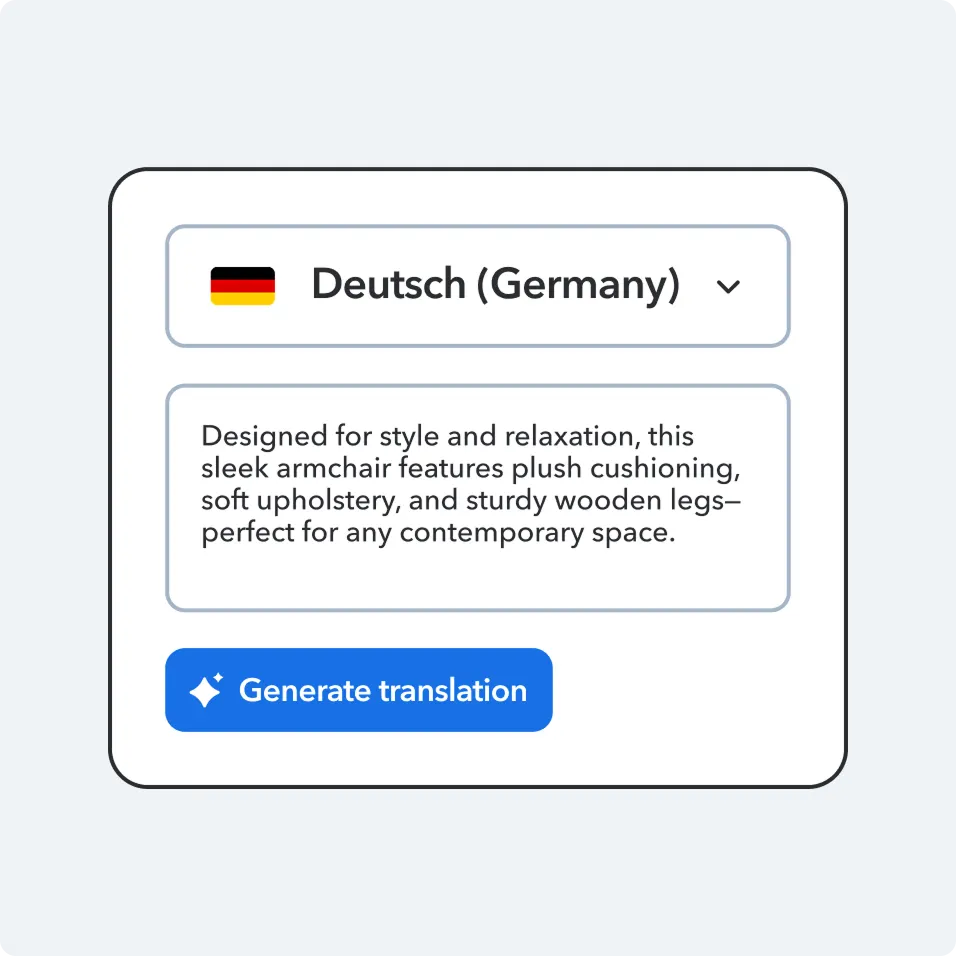
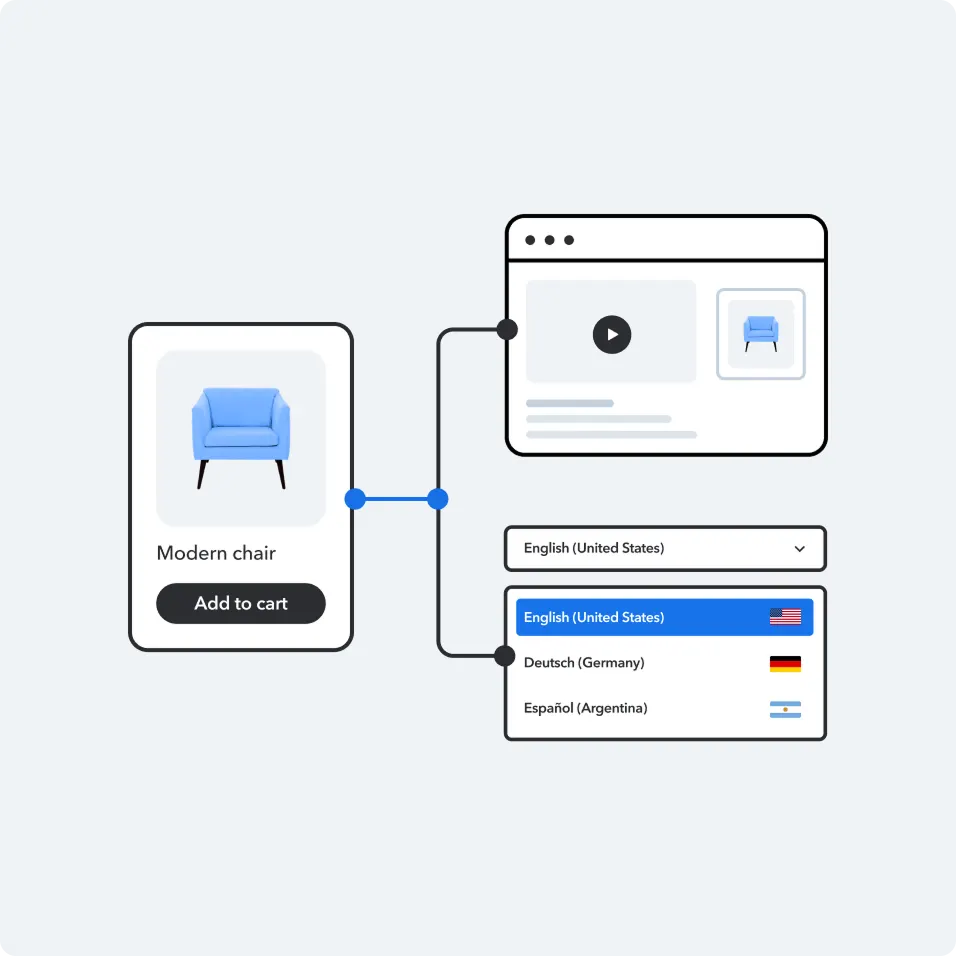
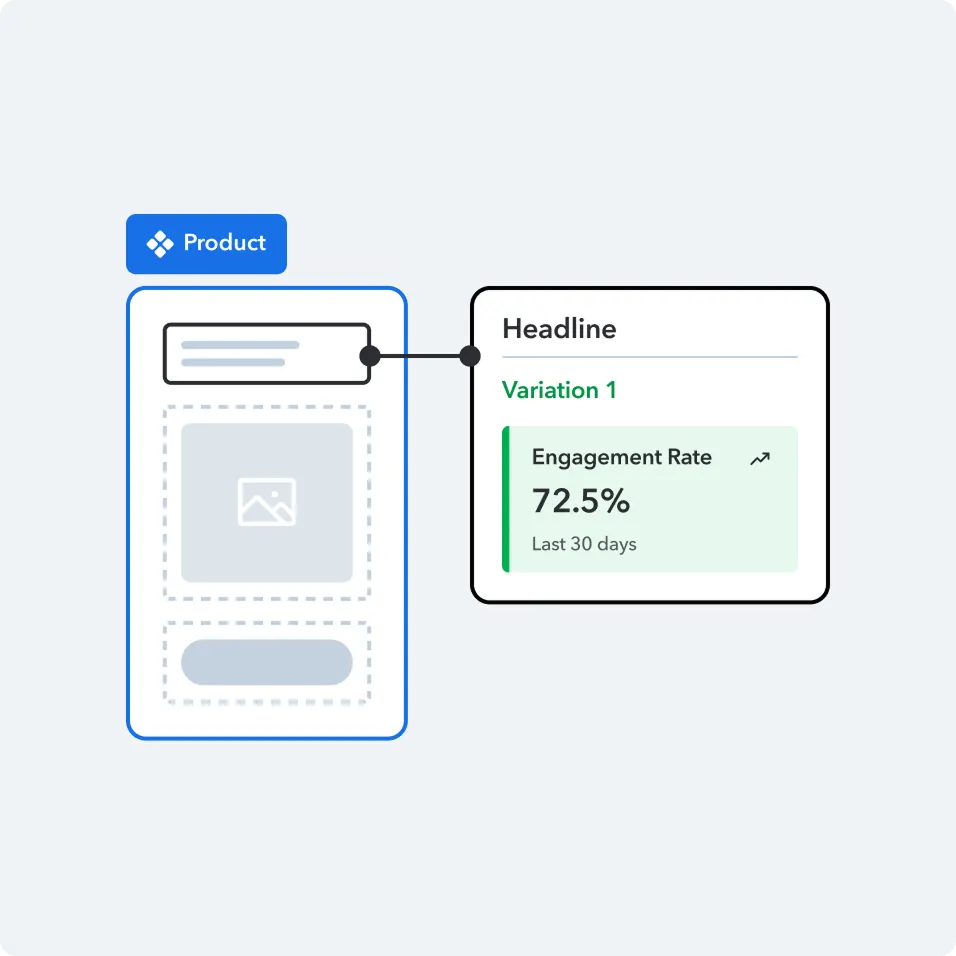
Contentful AI is commonly used for: Personalizing digital experiences for diverse audience segments, Creating and localizing content quickly within brand guidelines, Orchestrating consistent experiences across websites, apps, and emails, Testing and optimizing marketing campaigns in real-time, Managing content for multiple brands and markets from a centralized hub, Automating content updates across various channels with no-code tools.
Contentful AI integrates with: Ecommerce platforms (e.g., Shopify, Magento), CRM systems (e.g., Salesforce, HubSpot), Social media management tools (e.g., Hootsuite, Buffer), Analytics platforms (e.g., Google Analytics, Mixpanel), Email marketing services (e.g., Mailchimp, SendGrid), Content delivery networks (CDNs), Collaboration tools (e.g., Slack, Trello), Design tools (e.g., Figma, Adobe Creative Cloud), Payment gateways (e.g., Stripe, PayPal), Marketing automation platforms (e.g., Marketo, Pardot).
Based on user reviews and social mentions, the most common pain points are: token usage, API bill, API costs, budget exceeded.
Based on 373 social mentions analyzed, 3% of sentiment is positive, 96% neutral, and 1% negative.