Cohere
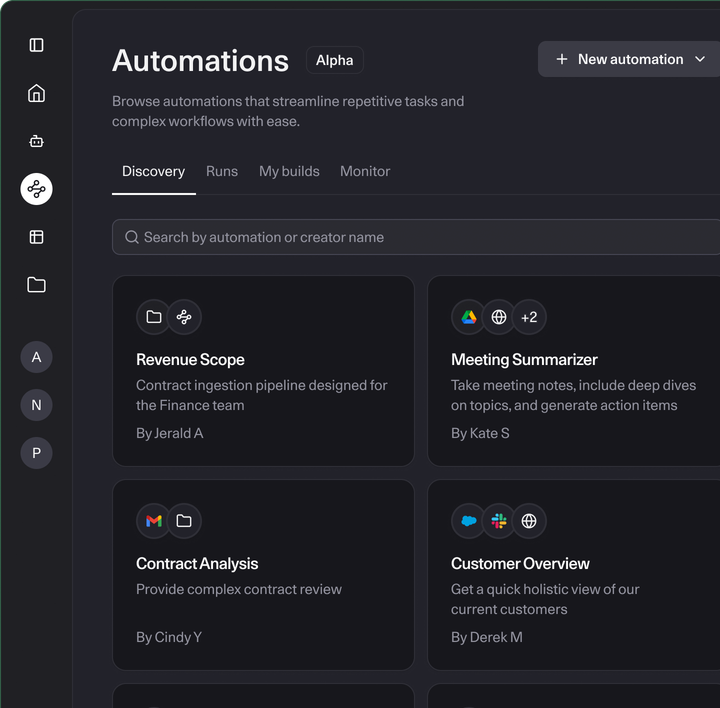
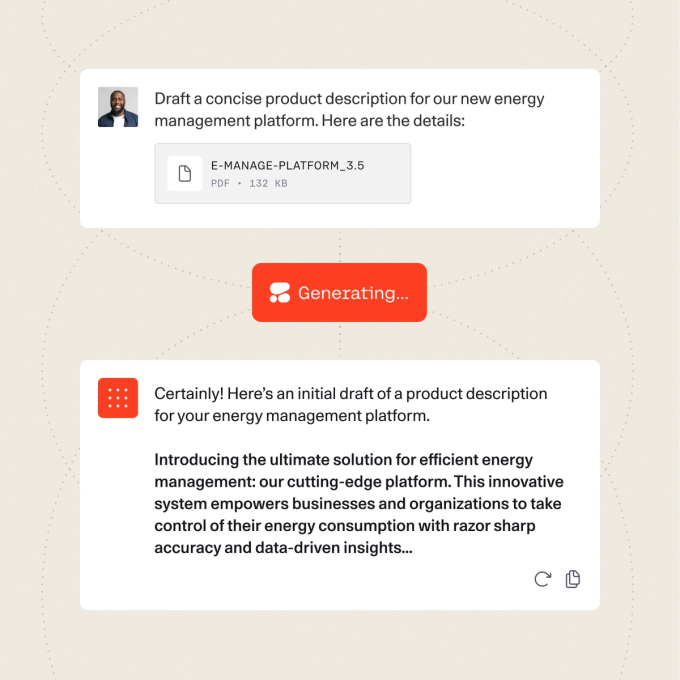
Cohere builds powerful models and AI solutions enabling enterprises to automate processes, empower employees, and turn fragmented data into actionable
Cohere is highly praised for its effective speech recognition capabilities, which users find to be a significant strength, particularly in features like Cohere Transcribe. A common complaint revolves around occasional inconsistencies in language processing, as seen with some users having issues related to multilingual support. The pricing sentiment appears mixed, with some users questioning the cost relative to feature completeness. Overall, Cohere enjoys a good reputation for its innovative approach and strong capabilities in natural language processing, despite some operational and pricing criticisms.
OpenAI
We believe our research will eventually lead to artificial general intelligence, a system that can solve human-level problems. Building safe and benef
Users generally praise OpenAI for its advanced AI capabilities and innovative features, reflected in high ratings on review platforms. However, there is significant debate about the value of its pricing, particularly the $200 per month for ChatGPT Pro, with some users questioning its worth compared to the more affordable Plus plan. Overall, while OpenAI is recognized as a leader in AI development and securing substantial investments, its premium pricing may deter some potential users despite its promising advancements. The company's reputation remains strong, driven by continuous innovation and a focus on expanding AI applications.
Cohere
+150% vs last weekOpenAI
Stable week-over-weekCohere
OpenAI
Cohere
OpenAI
Cohere
Pricing found: $4.00, $2,500, $5.00, $3,250, $5.00
OpenAI
Cohere
| Model | Input | Output |
|---|---|---|
| command-r-plus | $2.50 | $10.00 |
| command-r | $0.15 | $0.60 |
OpenAI
| Model | Input | Output |
|---|---|---|
| gpt-4.1 | $2.00 | $8.00 |
| gpt-4.1-mini | $0.40 | $1.60 |
| gpt-4.1-nano | $0.10 | $0.40 |
| gpt-4o | $2.50 | $10.00 |
| gpt-4o-mini | $0.15 | $0.60 |
| gpt-4.5-preview | $75.00 | $150.00 |
| gpt-4-turbo | $10.00 | $30.00 |
| gpt-4 | $30.00 | $60.00 |
| gpt-3.5-turbo | $0.50 | $1.50 |
| o3 | $10.00 | $40.00 |
| o4-mini | $1.10 | $4.40 |
| o1 | $15.00 | $60.00 |
| o1-preview | $15.00 | $60.00 |
| o1-mini | $3.00 | $12.00 |
| o3-mini | $1.10 | $4.40 |
| Usage Tier | Cohere | OpenAI |
|---|---|---|
| Light1M tokens/mo | $0.33 – $6 | $0.22 – $105 |
| Growth50M tokens/mo | $17 – $275 | $11 – $5,250 |
| Scale500M tokens/mo | $165 – $2,750 | $110 – $52,500 |
Cohere (8)
OpenAI (8)
Only in Cohere (10)
Only in OpenAI (10)
Shared (13)
Only in Cohere (3)
Only in OpenAI (2)
Cohere
No reviews yet
OpenAI
What do you like best about Openai?OpenAI has been a game-changer in how people interact with technology. Its tools are intuitive, fast, and genuinely helpful for everything from learning to productivity. The responses feel natural and human-like, making complex tasks much easier. Overall, it’s an impressive step forward in AI innovation. Review collected by and hosted on G2.com.What do you dislike about Openai?While OpenAI tools are powerful, they can sometimes give incorrect or outdated information. Responses may feel overly cautious or generic at times, and there are limits on deeper customization. Occasionally, it also struggles with understanding very specific or nuanced queries. Review collected by and hosted on G2.com.
What do you like best about Openai?What I like best about OpenAI, as someone building internal AI agents, is how quickly we can go from a concept to something real that people can use. The APIs are straightforward, the documentation is good enough to get up and running fast, and there’s a wide range of models and features to choose from. That combination of ease of integration and depth of capabilities lets us experiment, iterate, and then standardize on the patterns that work across the business. Once things are in place, our teams end up using these AI-powered workflows constantly because they’re embedded right into the tools they already work in. Review collected by and hosted on G2.com.What do you dislike about Openai?From an enterprise admin perspective, the main friction points are around control and operational overhead. The core APIs are easy to integrate, but getting to a fully production-ready setup, prompt design, evaluation, monitoring, governance, and cost management takes real effort. The feature set is rich, but that also means there’s a learning curve to choosing the right models and configurations for each use case. Support and guidance have improved, but I’d still like more opinionated best practices and examples geared specifically toward larger teams rolling out multiple agents across the organization. Review collected by and hosted on G2.com.
What do you like best about Openai?It gives quick explanations, supports me with writing and coding tasks, and makes it easier to learn new topics without spending a lot of time searching online. Review collected by and hosted on G2.com.What do you dislike about Openai?Sometimes the responses aren’t fully accurate or up to date, so it’s a good idea to double-check any important information. Review collected by and hosted on G2.com.
Cohere
OpenAI
Cohere
OpenAI
Cohere

OpenAI

Cohere
OpenAI
Cohere
Cohere Transcribe: Speech Recognition
OpenAI
AI quietly turned HTML into a real alternative to PowerPoint and Word for client-facing docs. The blockers that made it impractical a year ago are falling one by one.
A year ago, generating a polished document as HTML instead of a PPT or a Word file was a fun idea with too many practical problems. Lately I've noticed every one of those blockers either gone or close to gone, and I've quietly stopped reaching for Office on a bunch of deliverables. Curious if others
Shared (2)
Only in Cohere (3)
Only in OpenAI (1)


