
Why AI Still Can't Feel: The Emotion Gap in Machine Intelligence
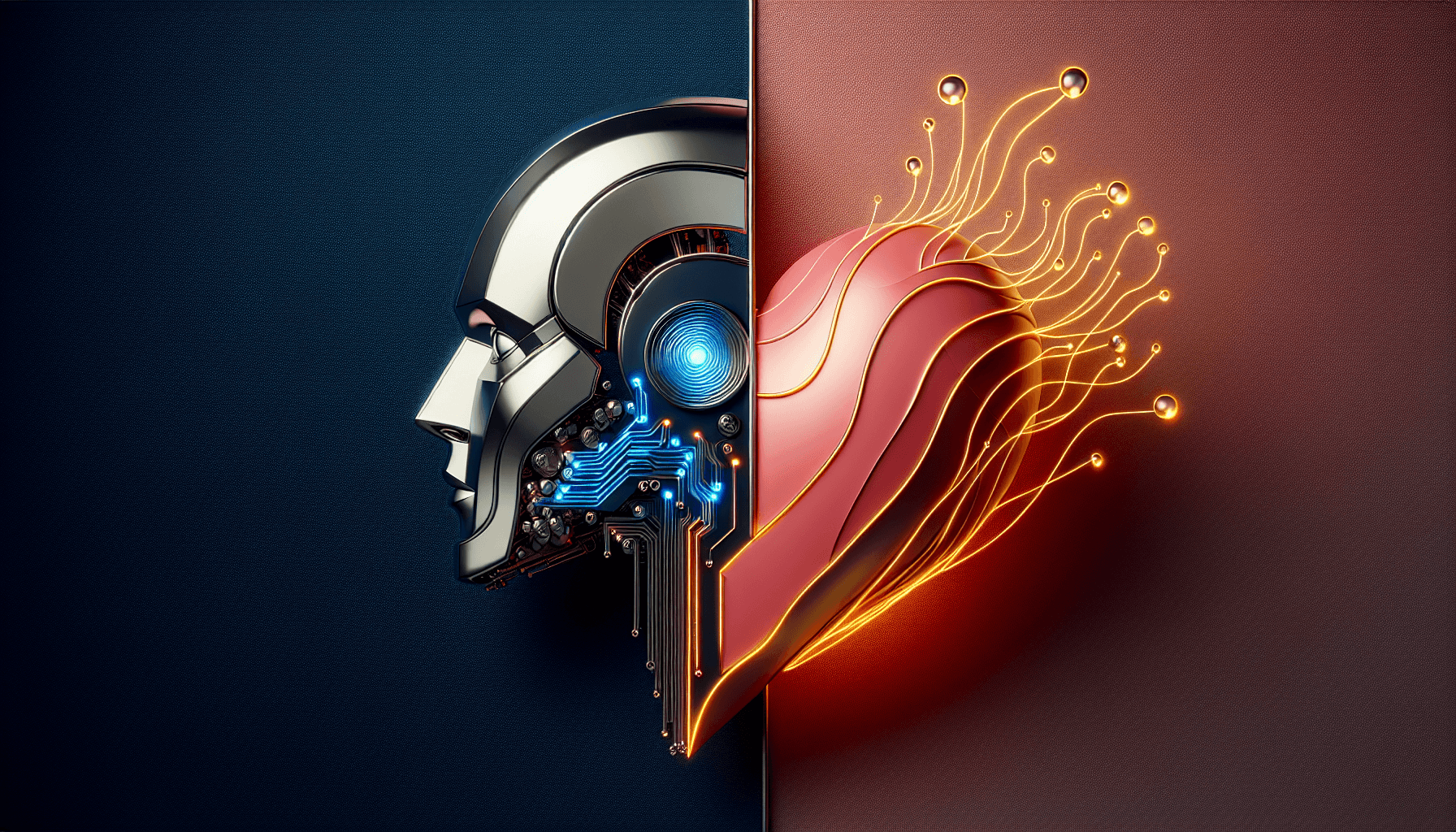
The Persistent Challenge of Emotional Intelligence in AI
As artificial intelligence systems become increasingly sophisticated at mimicking human conversation and reasoning, a fundamental question persists: can machines truly understand and process emotions? Despite remarkable advances in language models and neural networks, the gap between computational intelligence and emotional intelligence remains one of the most significant barriers to achieving human-like AI. This limitation isn't just philosophical—it has real implications for AI deployment costs, user experience, and the billions being invested in AI infrastructure.
The Technical Reality: Why Current AI Architectures Fall Short
Gary Marcus, Professor Emeritus at NYU and longtime AI researcher, has been vocal about the limitations of current deep learning approaches. In a recent pointed message to OpenAI's leadership, Marcus emphasized that "current architectures are not enough, and that we need something new, researchwise, beyond scaling." This architectural limitation is particularly evident when it comes to emotional processing.
Current large language models can recognize emotional language patterns and generate emotionally appropriate responses, but they lack the underlying emotional understanding that drives human decision-making. They process emotion as linguistic tokens rather than as lived experiences that inform reasoning and behavior.
The implications extend beyond academic debate:
• Cost inefficiencies: AI systems often require multiple iterations to achieve emotionally appropriate responses • User experience gaps: Interactions can feel hollow or miss emotional nuance • Enterprise deployment challenges: Customer service and therapeutic applications struggle with emotional context
The Human Factor: Why Empathy Remains Irreplaceable
Aidan Gomez, CEO of Cohere, recently highlighted the enduring value of human emotional intelligence: "The coolest thing out there right now is just still having empathy and values. Red pilling, vice signaling, OUT. Caring, believing, IN." This observation underscores why purely technical approaches to AI development may be missing a crucial component.
While AI companies focus on scaling compute and refining algorithms, the emotional intelligence that drives human creativity, ethical reasoning, and social connection remains uniquely human. This isn't necessarily a limitation to overcome—it may be a feature to preserve and complement.
The Defense and Enterprise Perspective
Palmer Luckey, founder of Anduril Industries, offers a different lens on AI development priorities. His focus on national security applications reveals how emotional intelligence gaps affect high-stakes AI deployment. "I want it because I care about America's future," Luckey stated regarding big tech's military involvement, highlighting how human values and emotional investment drive technological development in ways that pure optimization cannot.
In defense applications, the inability of AI systems to truly understand human motivation, fear, and decision-making under pressure creates significant operational risks. This emotional blindness can lead to:
• Misinterpretation of human behavior patterns • Inability to predict adversarial responses • Over-reliance on technical metrics that miss human factors
The User Experience Reality Check
Matt Shumer, CEO of HyperWrite, recently shared a telling observation about a fellow passenger "using ChatGPT on Auto mode," noting his impulse to suggest "Thinking mode at the very least." This anecdote reveals how even sophisticated AI tools struggle with emotional and contextual understanding without explicit human guidance.
The interaction modes Shumer references—Auto versus Thinking—represent different approaches to AI assistance, but both still require human emotional intelligence to guide their application effectively. Users must provide the emotional context and judgment that AI systems cannot generate independently.
The Cost of Emotional Blindness
The inability of current AI systems to process emotions authentically creates hidden costs across multiple dimensions:
Computational Costs: Systems require more processing power to approximate emotional understanding through pattern matching rather than genuine comprehension.
Development Costs: Teams spend significant resources on emotional fine-tuning and safety measures to prevent tone-deaf AI responses.
Opportunity Costs: The emotional intelligence gap limits AI deployment in high-value applications like therapy, education, and creative collaboration.
For companies managing AI infrastructure costs, understanding these limitations is crucial for realistic budgeting and deployment strategies.
Looking Forward: Hybrid Intelligence Models
Rather than viewing the emotion gap as a problem to solve, leading AI practitioners are increasingly recognizing it as an opportunity for human-AI collaboration. The most effective AI systems may not be those that perfectly simulate human emotion, but those that complement human emotional intelligence.
This suggests several emerging trends:
• Augmented decision-making: AI handles data processing while humans provide emotional context • Emotional scaffolding: AI systems designed to enhance rather than replace human empathy • Cost-optimized deployment: Strategic allocation of human oversight where emotional intelligence is critical
Implications for AI Strategy and Investment
The persistence of the emotion gap in AI has several key implications for organizations investing in AI infrastructure:
Budget for Human Oversight: Emotional intelligence requirements mean human involvement remains necessary for many applications, affecting total cost of ownership calculations.
Design for Collaboration: The most cost-effective AI deployments may be those explicitly designed for human-AI collaboration rather than full automation.
Measure Beyond Technical Metrics: Success metrics should include emotional appropriateness and user satisfaction, not just technical performance.
As Gomez's emphasis on empathy and values suggests, the future of AI may lie not in eliminating human emotion from the equation, but in creating systems that enhance and amplify our uniquely human capacity for emotional understanding. For organizations managing AI costs and deployment strategies, recognizing this fundamental limitation—and designing around it—may be the key to sustainable AI adoption.