
Why AI Is the New Printing Press: Industry Leaders on Transformation
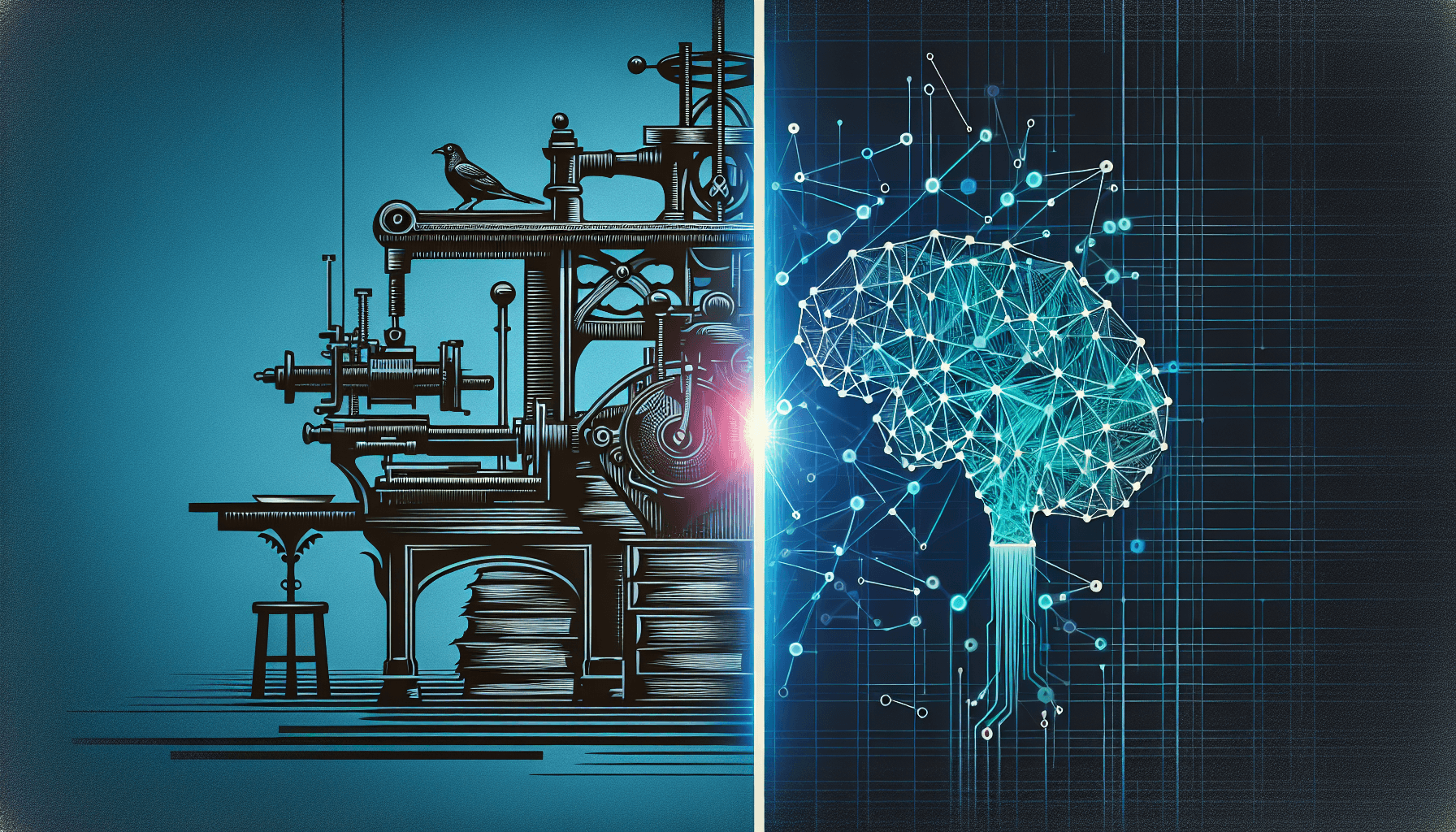
The Printing Press Parallel: Why AI Leaders See History Repeating
Just as the printing press democratized knowledge and fundamentally reshaped civilization in the 15th century, artificial intelligence is poised to become the defining transformative technology of our era. This parallel isn't lost on today's AI leaders, who increasingly draw comparisons between Gutenberg's revolutionary invention and the profound societal changes AI is already unleashing across industries.
The Scale of Transformation: Beyond Technical Innovation
The printing press didn't just make books cheaper—it fundamentally altered how information flowed through society, enabling the Renaissance, the Reformation, and the Scientific Revolution. Similarly, AI's impact extends far beyond technical capabilities to reshape entire economic and social structures. As discussed in AI as the New Printing Press: Transforming Information at Scale, the technology is set to create unprecedented shifts.
Jack Clark, co-founder at Anthropic, has repositioned his role specifically to address this challenge: "AI progress continues to accelerate and the stakes are getting higher, so I've changed my role at @AnthropicAI to spend more time creating information for the world about the challenges of powerful AI." This shift reflects a growing recognition among AI leaders that the technology's societal implications require as much attention as its technical development.
Information Democratization at Unprecedented Speed
Where the printing press took decades to spread across Europe, AI adoption is happening at internet speed. Consider these parallels:
- Knowledge Access: The printing press made books accessible to the masses; AI makes sophisticated analysis and content creation available to anyone with an internet connection, as explored further in The AI Printing Press: How Machine Learning is Reshaping Information Creation.
- Economic Disruption: Print shops displaced scribes; AI is automating knowledge work across industries
- Cultural Impact: Printed books enabled new forms of literature and thought; AI is creating entirely new categories of human-machine collaboration
The Infrastructure Challenge: Building for Scale
Unlike the printing press, which required relatively simple mechanical infrastructure, AI demands massive computational resources that create new cost and accessibility challenges. The democratizing potential of AI risks being limited by the enormous expense of training and running large models.
This infrastructure challenge has created what many consider the next frontier in AI development: making these powerful systems economically viable at scale. Companies like Anthropic, OpenAI, and Google are racing not just to build more capable models, but to make them more efficient and cost-effective. Historical disruption patterns, as highlighted in AI's Printing Press Moment: Why Historical Disruption Patterns Matter, underline the need for careful strategy in this area.
The Cost Intelligence Imperative
As organizations increasingly depend on AI systems, understanding and optimizing these costs becomes critical. Just as early printers had to carefully manage paper and ink costs to remain profitable, today's AI adopters must navigate complex pricing models across different providers and use cases.
The parallel extends to cost optimization: successful printing operations required understanding paper quality, ink efficiency, and press utilization. Similarly, effective AI deployment demands sophisticated cost intelligence to balance model performance, usage patterns, and budget constraints.
Network Effects and Compound Innovation
The printing press created powerful network effects—more readers meant more demand for books, which justified larger print runs and lower costs. AI is generating similar compound benefits, but at exponential speed.
The Acceleration Factor
What makes AI different from the printing press is the rate of improvement. While printing technology evolved gradually over centuries, AI capabilities are advancing monthly. This creates both unprecedented opportunities and urgent challenges for leaders trying to navigate the transformation. The impact of this rapid change is further examined in AI as the New Printing Press: How LLMs Are Reshaping Information.
Clark's emphasis on information sharing reflects this urgency: as AI capabilities accelerate, the window for thoughtful preparation and policy development narrows. The stakes, as he notes, are indeed getting higher.
Looking Forward: Lessons from History
The printing press analogy offers both inspiration and caution. While Gutenberg's invention ultimately democratized knowledge and accelerated human progress, it also disrupted existing power structures and created new forms of inequality—at least initially.
Key Implications for Leaders
- Preparation Time: Unlike the gradual spread of printing, AI adoption timelines are compressed, requiring faster organizational adaptation
- Cost Management: The economic barriers to AI deployment create new strategic imperatives around efficiency and cost optimization
- Information Quality: Just as the printing press enabled both enlightenment and misinformation, AI's information capabilities require careful governance
- Skills Evolution: The transition will be faster than historical precedents, demanding accelerated reskilling and workforce adaptation
The printing press transformed civilization over centuries. AI may accomplish similar transformation within decades. For leaders, the question isn't whether this transformation will happen, but how quickly they can adapt their organizations to thrive in this new paradigm while managing the substantial costs and complexities involved.