
The Gutenberg Moment: How AI is Revolutionizing Software Development
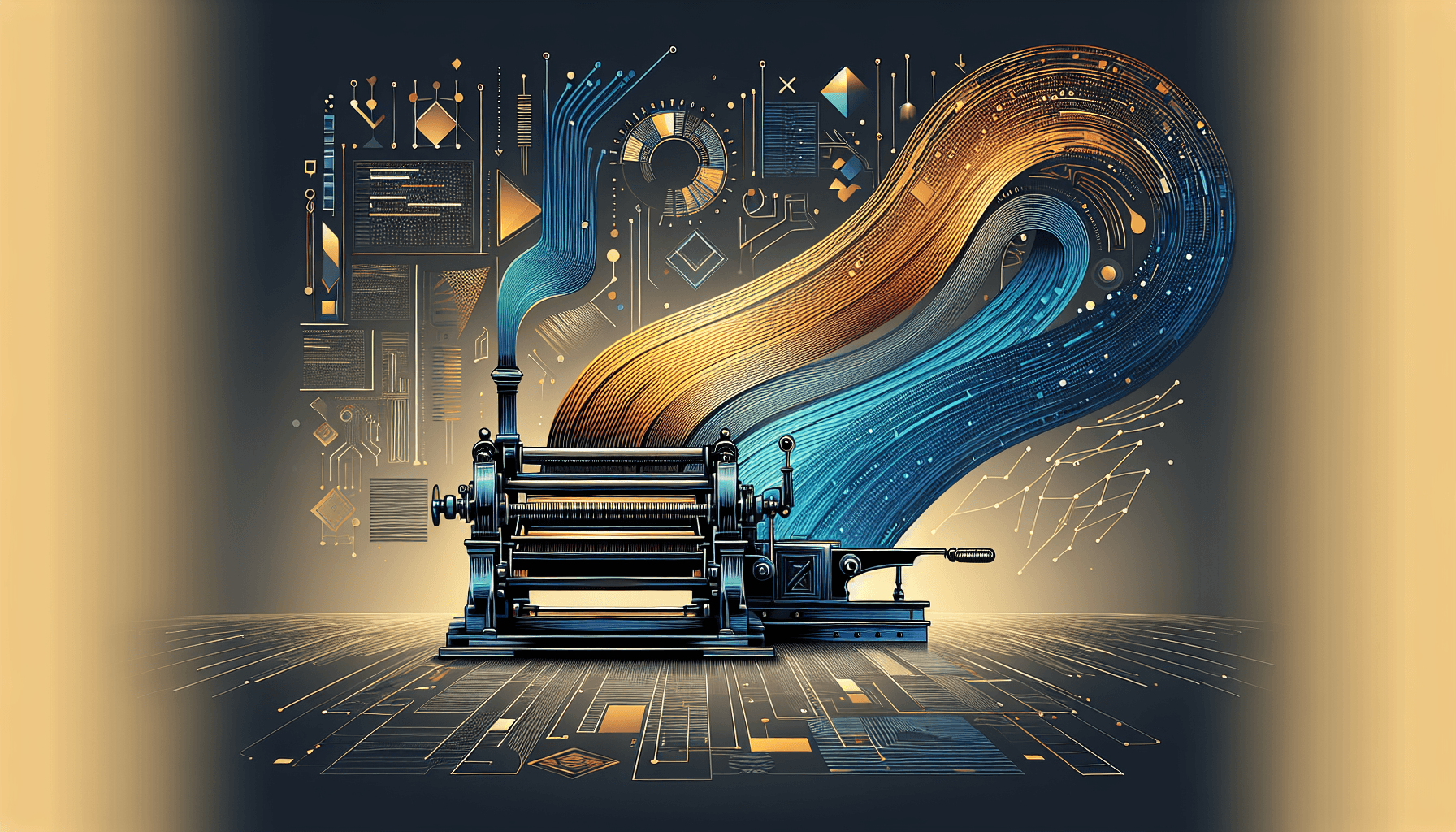
The Programming Revolution: Why We're Living Through Software's Gutenberg Moment
Just as Johannes Gutenberg's printing press democratized knowledge and transformed how information spread across Europe in the 15th century, we're witnessing a similar paradigm shift in software development. AI-powered coding tools are fundamentally changing who can create software, how quickly it gets built, and what constitutes "programming" itself—creating what many industry leaders are calling the "Gutenberg moment" for code.
The New Programming Paradigm: Agents Over Files
The transformation isn't happening the way many predicted. Instead of making traditional development tools obsolete, AI is pushing programming to a higher level of abstraction.
"Expectation: the age of the IDE is over. Reality: we're going to need a bigger IDE," observes Andrej Karpathy, former VP of AI at Tesla and OpenAI researcher. "It just looks very different because humans now move upwards and program at a higher level—the basic unit of interest is not one file but one agent. It's still programming."
This shift represents a fundamental change in how we conceptualize software development:
- Traditional approach: Developers write code file by file, function by function
- AI-augmented approach: Developers orchestrate agents that handle entire workflows
- Emerging reality: The "bigger IDE" manages multiple AI agents working in concert
Democratizing Code Creation: Beyond Traditional Developers
The Gutenberg analogy becomes particularly apt when examining how AI tools are expanding the pool of people who can create functional software. GitHub Copilot alone has over 1.3 million paid subscribers, while tools like Cursor, Replit Agent, and Claude Artifacts are enabling non-programmers to build increasingly sophisticated applications.
Satya Nadella, CEO of Microsoft, captured this democratization during a recent earnings call: "We're moving from a world where you had to learn syntax to express intent, to a world where you can express intent in natural language." This mirrors how the printing press moved society from hand-copied manuscripts accessible only to scribes, to mass-produced books that could reach anyone who could read.
The Economic Implications: Costs and Capabilities
The shift to AI-assisted development isn't just changing how we code—it's transforming the economics of software creation. Companies are seeing dramatic reductions in development time, but with new cost considerations around AI model usage, training, and infrastructure.
Key economic factors emerging:
- Reduced time-to-market: Applications that previously took months now ship in weeks
- New cost structures: Traditional labor costs shift to AI compute and model access fees
- Skill premium changes: Value moves from syntax knowledge to prompt engineering and system design
- Infrastructure evolution: Development environments must support AI model inference and agent orchestration
Enterprise Adoption: The Corporate Gutenberg Press
Major enterprises are already seeing transformative results from AI-powered development tools. Accenture reported that developers using GitHub Copilot completed tasks 55% faster, while maintaining code quality. Similarly, companies using platforms like Replit for rapid prototyping are seeing cycle times compress from weeks to days.
The enterprise implications extend beyond individual productivity:
Organizational Restructuring
- Development teams restructuring around AI-human collaboration
- New roles emerging: AI prompt engineers, agent orchestrators, AI operations specialists
- Quality assurance evolving to validate AI-generated code at scale
Strategic Advantages
- Faster response to market opportunities
- Ability to experiment with more product variations
- Reduced dependency on specialized programming talent in certain areas
The Infrastructure Challenge: Supporting the New Paradigm
As Karpathy's "bigger IDE" concept suggests, the tooling infrastructure needs fundamental evolution. Traditional IDEs optimized for human-written code struggle with AI-generated workflows, agent management, and the new debugging paradigms that emerge.
Modern development platforms are responding by:
- Integrating multi-agent workflows: Tools like GitHub's multi-agent system and Anthropic's Claude can coordinate multiple specialized AI assistants
- Enhanced debugging capabilities: New tools for understanding AI decision-making in code generation
- Cost monitoring integration: As AI usage drives new expense categories, development environments need built-in cost intelligence
For organizations managing these new workflows, the ability to track and optimize AI usage costs becomes critical—particularly as teams scale their adoption of multiple AI coding assistants and agents.
Looking Ahead: The Compound Effects
The Gutenberg printing press didn't just make books cheaper—it enabled the Scientific Revolution, the Protestant Reformation, and the rise of literacy. Similarly, AI's transformation of programming is likely to have compound effects we're only beginning to understand.
Potential second-order impacts include:
- Explosion in software diversity: Lower barriers enabling more niche applications
- Shift in competitive moats: From coding ability to design thinking and system architecture
- New forms of digital literacy: Understanding AI capabilities becomes as important as traditional technical skills
- Industry consolidation: Companies with the best AI development infrastructure may gain significant advantages
Actionable Takeaways for Technology Leaders
To navigate this transformation successfully, technology leaders should consider:
- Invest in AI-augmented development capabilities now: The competitive advantage compounds quickly
- Rethink team structures: Plan for roles that blend traditional development with AI orchestration
- Implement cost monitoring early: As AI usage scales, tracking compute and model costs becomes essential for budget management
- Focus on higher-level skills: Emphasize system design, architecture, and product thinking over syntax knowledge
- Experiment with agent-based workflows: Start small but begin understanding how to manage AI agents as development team members
The Gutenberg moment for software development is happening now. The question isn't whether AI will transform how we build software, but how quickly organizations can adapt to this new paradigm where human creativity combines with AI capabilities to create previously impossible solutions.