
How AI Leaders Are Revolutionizing Education
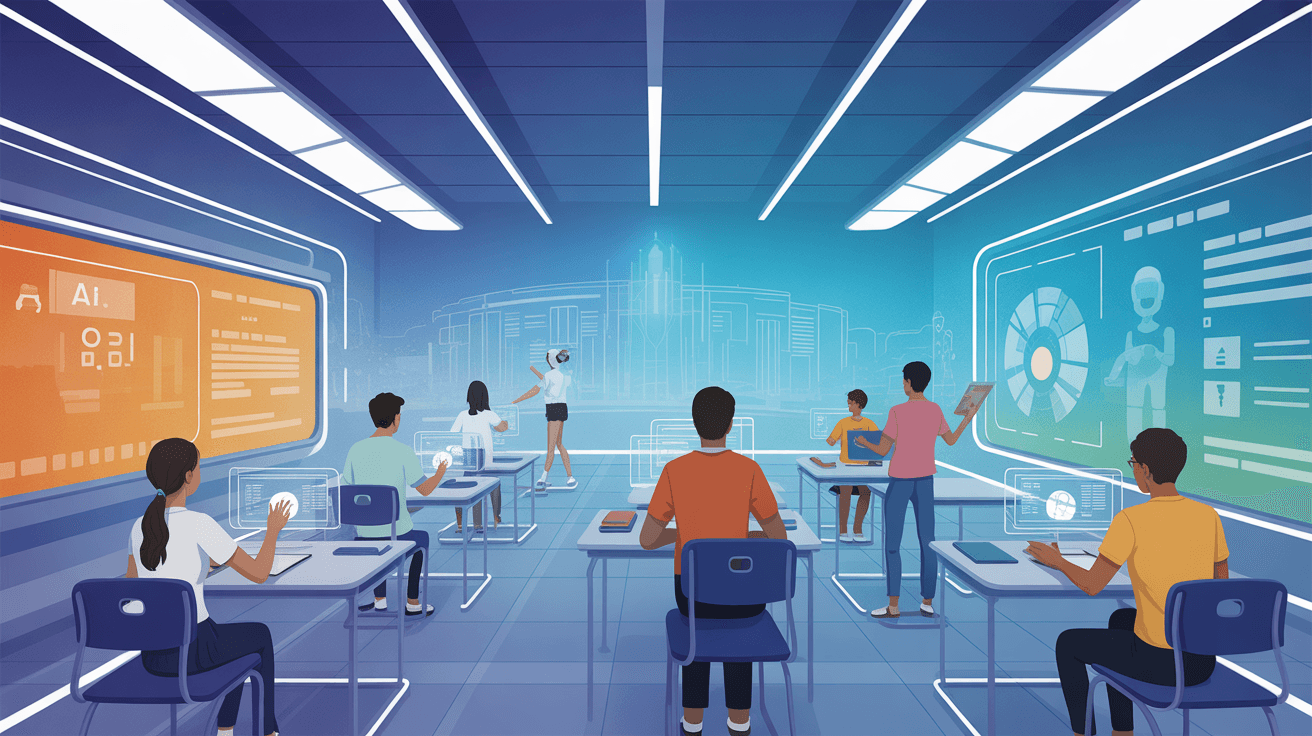
AI in Education: Bridging the Gap Between Possibility and Practice
In the rapidly evolving landscape of artificial intelligence, educational technology stands as a pillar of transformative potential. As AI continues to influence various sectors, educators and developers are reimagining how learning is structured, delivered, and personalized. As insights from industry leaders indicate, the integration of AI into education is not just a trend but a significant shift poised to redefine learning experiences worldwide.
Perspectives from Top AI Voices
Jason Liu's Insights on Codex in Education
Jason Liu, known for his work with the Codex team, discusses the concept of 'Codex maxxing,' a method involving structured outputs that enhance learning routines. Liu’s approach emphasizes using primitives, or fundamental building blocks, to create scalable educational frameworks. According to Liu, these primitives serve as crucial elements in driving effective learning management, allowing educators to construct adaptable lesson plans that accommodate diverse learning needs without fundamentally altering the teaching architecture. "Codex allows for a more dynamic interaction with the educational content, making it possible to tailor experiences based on individual student progression," Liu notes.
Omar Sanseviero and Elvis Saravia on Lesson Generation
Omar Sanseviero and Elvis Saravia, both formidable figures in the AI community, have introduced a new paradigm through their innovative lesson-generator skill. This tool grants educators the ability to create comprehensive courses on virtually any subject, enriched by unique 'nano-banana' imagery and presented as HTML artifacts for ease of access and distribution. Sanseviero highlights how these lesson-generating tools empower educators to craft educational materials that are both engaging and visually appealing. Saravia adds that such innovations are not only revolutionary but also essential for the modern educational landscape, wherein interactivity and accessibility are paramount.
The Broader Implications
- Personalization: AI tools allow for the customization of educational experiences, catering to different learning speeds and styles.
- Scalability: With AI-driven frameworks, education can be scaled both in reach and in content complexity, serving more learners with diverse needs.
- Resource Optimization: AI can significantly reduce the time educators spend on administrative tasks, as noted by Jason Liu, allowing more focus on teaching and engagement.
- Visual Engagement: The integration of interactive tools like nano-banana images makes learning more appealing, aiding knowledge retention.
As Sundar Pichai and other tech leaders converge on the educational discourse, it's clear that AI's role transcends traditional boundaries, optimizing educational resource allocation and accessibility. This aligns seamlessly with platforms like Payloop, which are designed to enhance resource efficiency, highlighting the importance of cost optimization in deploying AI at scale.
Actionable Takeaways
- Explore AI tools that support lesson planning and content creation to enhance the educational experience.
- Leverage primitives and structured outputs from systems like Codex to build flexible and adaptive learning paths.
- Focus on resource optimization by utilizing intelligent platforms to maximize learning delivery while minimizing costs.
With the insights of these educational innovators, educators and institutions can better navigate the AI transformation, constructing a learning ecosystem that is both dynamic and future-proof.